Developmental Delay and Neurology: Milestones, Testing, and Early Intervention

Developmental milestones are useful guides, but children may reach them at slightly different ages. A delay in one area, or delays across several areas, should be discussed with a pediatrician and may require a pediatric neurology assessment.
Key Takeaways
- Developmental milestones are useful guides, but children may reach them at slightly different ages.
- A delay in one area, or delays across several areas, should be discussed with a pediatrician and may require a pediatric neurology assessment.
- Testing may include developmental screening, hearing and vision checks, neurological examination, genetic or metabolic tests and brain imaging when appropriate.
- Early intervention, including speech, physical, occupational and developmental therapy, can improve function and family confidence.
- Parents should seek prompt advice if a child loses skills, has seizures, has feeding difficulties, or is not progressing in communication or movement.
Developmental delay describes slower progress in movement, speech, learning, social skills or daily activities compared with expected milestones. Early assessment by pediatric and neurology specialists can clarify the cause, guide therapy and help each child build skills at the right pace.
Overview
Developmental delay means that a child is taking longer than expected to develop skills in one or more areas. These areas include gross motor skills such as sitting and walking, fine motor skills such as grasping, communication, problem-solving, play, social interaction and daily self-care. A delay is not a diagnosis by itself; it is a description that helps doctors decide what assessment and support may be helpful.
Developmental progress is often described using milestones. Milestones are skills that most children achieve within a typical age range, but they are not a strict timetable. Some children walk or speak a little later than others and still develop typically. Concern increases when a child is far behind expected ranges, has delays in several areas, or loses skills that were previously present.
Pediatric neurology becomes important when delay may be related to the brain, nerves, muscles, seizures, abnormal muscle tone, unusual movements, head growth concerns or developmental regression. The goal of assessment is not only to name a condition, but also to identify the child’s strengths, understand medical needs and start the right interventions early.
Milestones and Types of Developmental Delay
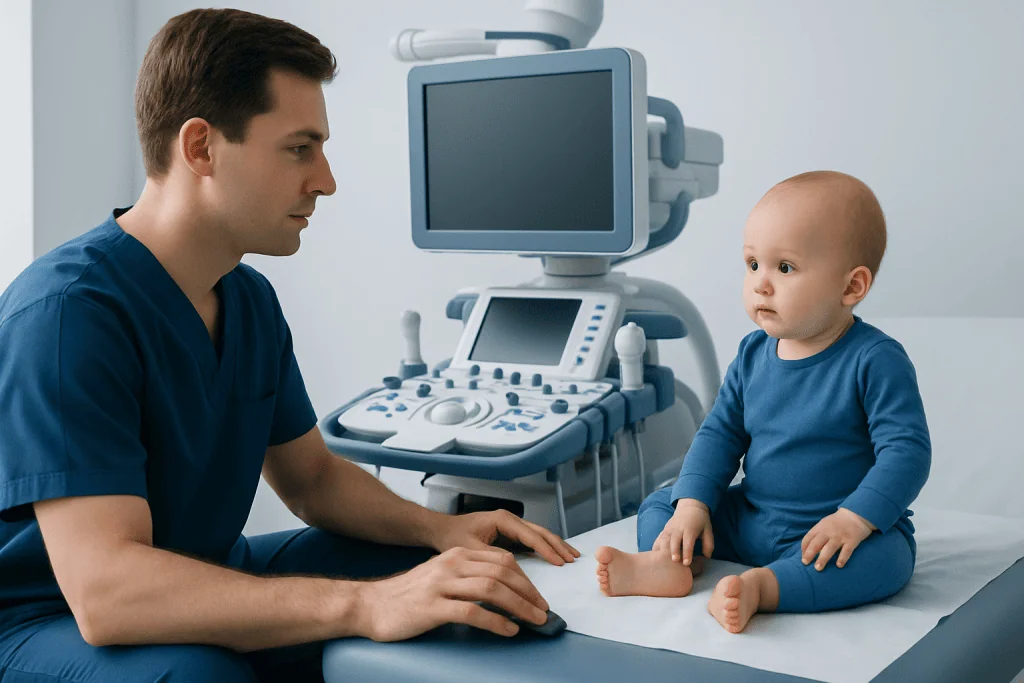
Milestones are usually grouped by developmental domain. Gross motor milestones include head control, rolling, sitting, crawling, standing and walking. Fine motor milestones include reaching, transferring objects between hands, using a pincer grasp, stacking blocks and drawing. Language milestones include babbling, first words, following directions and using phrases or sentences.
Social and emotional milestones include smiling, responding to caregivers, sharing attention, pretend play and interacting with other children. Cognitive milestones include exploring objects, solving simple problems, matching shapes, understanding cause and effect and learning routines. Adaptive milestones include feeding, dressing, toileting and other daily living skills appropriate for age.
Some children have a delay in one area, such as speech delay, while others have delays in multiple areas. When significant delay is present in two or more domains in a young child, doctors may use the term global developmental delay. This term is often used in children under about 5 years of age, before formal testing can reliably determine whether an intellectual disability or another developmental condition is present.
- Motor delay: later sitting, crawling, walking, poor coordination or unusual muscle tone.
- Speech and language delay: limited babbling, words, understanding or social communication.
- Cognitive delay: difficulty learning, problem-solving or understanding age-expected concepts.
- Social communication delay: reduced eye contact, limited sharing of interests, repetitive play or difficulty engaging with others.
- Adaptive delay: challenges with feeding, dressing, toileting or daily routines.
Symptoms and Signs Parents May Notice

Parents are often the first to notice that something feels different about their child’s development. A baby may not hold the head up well, seem unusually floppy or stiff, feed poorly, or show limited visual attention. A toddler may not walk by the expected age range, may fall frequently, may not use gestures such as pointing, or may have few words compared with peers.
Communication concerns are among the most common reasons families seek advice. Signs can include limited babbling, not responding to name, not following simple instructions, not using meaningful words, or losing words that were already learned. Social communication concerns may include reduced eye contact, limited interest in shared play, repetitive behaviors or difficulty adjusting to changes in routine.
Some signs should be discussed promptly with a doctor because they may point to a neurological or medical condition. These include any loss of developmental skills, seizures or seizure-like episodes, persistent vomiting with poor growth, feeding or swallowing problems, abnormal head growth, severe sleepiness, weakness on one side of the body, or a sudden change in behavior or movement.
Causes and Risk Factors
Developmental delay can have many causes, and sometimes more than one factor is involved. In some children, no single cause is found even after careful evaluation. This can be frustrating for families, but therapy and developmental support can still be effective when the exact cause is unclear.
Neurological and genetic causes may include chromosome differences, single-gene conditions, cerebral palsy, epilepsy, brain malformations, neuromuscular disorders or metabolic conditions. Some children have developmental delay after premature birth, low birth weight, oxygen deprivation around birth, significant newborn illness, meningitis, encephalitis, traumatic brain injury or stroke.
Hearing or vision problems can also affect development, especially speech, language, learning and social interaction. Environmental and health factors may contribute as well, including severe malnutrition, untreated thyroid disease, lead exposure, chronic illness, sleep problems and limited opportunities for responsive communication and play. Autism spectrum disorder, attention and learning differences, and developmental language disorder are also important considerations depending on the child’s symptoms.
Risk factors do not mean that a child will definitely have a delay. They simply help doctors decide which children may benefit from closer monitoring or early screening. Regular well-child visits are important because growth, hearing, vision, movement, communication and social skills can be followed over time.
Diagnosis and Neurological Testing
Evaluation usually begins with a detailed history and physical examination. The doctor asks about pregnancy, birth, newborn health, feeding, sleep, growth, family history, milestones, behavior and any loss of skills. Parents may be asked to complete standardized screening forms that compare the child’s skills with expected age ranges. These tools do not label a child; they help identify whether a more detailed assessment is needed.
A neurological examination checks muscle tone, strength, reflexes, coordination, posture, head size, eye movements and signs of seizures or unusual movements. Depending on the child’s needs, additional evaluations may be recommended by a multidisciplinary team. This may include developmental pediatrics, pediatric neurology, child psychology, speech-language therapy, physical therapy, occupational therapy, audiology and ophthalmology.
Common tests may include hearing and vision assessments, blood tests for anemia, thyroid disease or metabolic concerns, and genetic testing when a genetic condition is suspected. Brain magnetic resonance imaging may be considered if there are abnormal neurological findings, seizures, unusual head size, developmental regression, or signs suggesting a structural brain difference. An electroencephalogram, often called EEG, may be used if seizures or abnormal episodes are suspected.
The most useful evaluation is individualized. Not every child needs every test, and testing decisions are based on the pattern of delay, examination findings and family history. A careful explanation of why a test is recommended helps families understand the process and take part in decisions.
Treatment Options and Early Intervention
Treatment focuses on supporting development, improving daily function and addressing any underlying medical condition. Early intervention is the structured use of therapies, education and family coaching during the years when the brain is developing rapidly. Starting support early can help children practice skills, strengthen communication and reduce frustration for both the child and family.
The therapy plan depends on the child’s profile. Speech-language therapy may help with understanding, expressive language, pronunciation, feeding or social communication. Physical therapy may support posture, balance, walking, strength and safe movement. Occupational therapy may help fine motor skills, sensory processing, feeding, dressing, play and school readiness. Developmental or behavioral therapies may support learning, attention, social engagement and daily routines.
Medical treatment may be needed when delay is linked to a specific condition. For example, seizures may require evaluation and treatment by a pediatric neurologist; hearing loss may require hearing aids or other interventions; thyroid disease or nutritional deficiencies require medical care; and muscle tone problems may need rehabilitation, orthotics or specialist management. The care plan is usually reviewed over time because a child’s needs can change as skills develop.
Families play a central role in treatment. Therapists often teach caregivers how to build practice into ordinary routines such as feeding, bathing, reading, play and outdoor activities. Small, repeated interactions such as naming objects, taking turns, praising effort, encouraging movement and following the child’s interests can be powerful parts of the plan.
Prevention, Self-Care and When to See a Doctor
Not all developmental delays can be prevented, especially when genetic or neurological conditions are involved. However, healthy pregnancy care, newborn screening, vaccinations, safe sleep, good nutrition, injury prevention, hearing and vision checks and treatment of chronic illnesses all support development. Limiting exposure to lead and smoke, using car seats correctly and preventing falls or head injuries are also important protective steps.
At home, children benefit from warm, responsive interaction. Talking, singing, reading, playing, giving safe opportunities to move and encouraging age-appropriate independence all support brain development. Screen time should not replace face-to-face communication, active play, sleep or family routines. For children who already have a delay, consistent therapy attendance and home practice can help reinforce progress.
Parents should speak with a pediatrician if they are worried about any area of development, even if the concern seems mild. They should seek prompt medical advice if a child loses skills, has possible seizures, is very stiff or floppy, is not responding to sound, has feeding or swallowing problems, has poor growth, or has a significant delay in movement or communication. Early assessment is a supportive step, not a reason for blame.
For international families needing coordinated evaluation, Acibadem International’s multidisciplinary pediatric, neurology, rehabilitation and diagnostic teams in JCI-accredited hospitals can assess developmental concerns and guide treatment planning. Families should always discuss individual symptoms and decisions with a qualified healthcare professional who can examine the child directly.
Frequently asked questions
What is developmental delay?
Developmental delay means a child is slower than expected to reach skills in areas such as movement, speech, learning, social interaction or daily activities. It is a descriptive term, not a final diagnosis. A doctor may recommend assessment to understand the pattern of delay and what support may help.
Does a late milestone always mean something is wrong?
No. Children develop at different rates, and a single slightly late milestone may not indicate a serious problem. However, significant delay, delays in more than one area, or loss of previously learned skills should be discussed with a pediatrician.
When should a child see a pediatric neurologist?
A pediatric neurologist may be helpful when delay is associated with seizures, abnormal muscle tone, weakness, unusual movements, head growth concerns, developmental regression or suspected brain, nerve or muscle conditions. The pediatrician can help decide when referral is appropriate.
What tests are used for developmental delay?
Testing may include developmental screening, a neurological examination, hearing and vision checks, blood tests, genetic testing, EEG or brain imaging, depending on the child’s symptoms. Not every child needs all tests. The evaluation is tailored to the child’s history and examination findings.
Can early intervention really help?
Early intervention can help many children improve communication, movement, learning and daily function. It may include speech therapy, physical therapy, occupational therapy, developmental therapy and caregiver coaching. Progress varies, but early support gives children more opportunities to practice important skills.
What can parents do at home to support development?
Parents can support development by talking, reading, singing, playing, encouraging movement and responding warmly to the child’s attempts to communicate. Daily routines are useful times to practice skills recommended by therapists. Families should also keep medical appointments and share any new concerns with the care team.
References
- American Academy of Pediatrics
- Centers for Disease Control and Prevention
- World Health Organization
- National Institute of Neurological Disorders and Stroke
- National Institute for Health and Care Excellence
This article is for general information only and is not a substitute for professional medical advice. Please consult a qualified doctor about your individual situation.
Developmental Delay in Turkey — costs, top hospitals & a free quote
JCI-accredited · board-certified surgeons · reply within 24h
Add us as a Preferred Source to see more of our trusted health content across Google Search, AI Overviews and Discover.

Physical Medicine & Rehabilitation
Restoring movement and function after injury, surgery or neurological conditions.
150 specialists in this unit