Dimple in the Buttocks — Explained by Medical Evidence, Not Myths

Most buttock dimples are harmless anatomical variations and do not require treatment. A small dimple near the top of the buttock crease in a baby is often called a sacral dimple.
Key Takeaways
- Most buttock dimples are harmless anatomical variations and do not require treatment.
- A small dimple near the top of the buttock crease in a baby is often called a sacral dimple.
- Pain, swelling, warmth, drainage, or a recurring opening in the buttock crease can suggest pilonidal disease or infection.
- A new area of skin dimpling, especially with a lump or unexplained skin change, should be assessed by a clinician.
- Medical assessment is particularly important for infants with an atypical sacral dimple or other changes around the lower back.
A dimple in the buttocks is commonly a normal feature of skin, fat, and connective tissue. Its significance depends on where it is located, whether it has been present since birth, and whether symptoms such as pain, redness, swelling, drainage, or skin changes are present.
Overview: What Does a Dimple in the Buttocks Mean?
A dimple in the buttocks is usually a harmless indentation caused by the way the skin, underlying fat, and connective tissue attach to deeper structures. Some people are born with one or more dimples, while others notice them as body weight, muscle shape, posture, or skin elasticity changes. In most cases, a stable, painless dimple without skin changes is not a sign of disease.
The location and appearance matter. Dimples on the upper outer buttocks may be normal anatomical features, sometimes called lower-back or pelvic dimples. A small indentation in or just above the buttock crease, particularly in a newborn, may be described as a sacral dimple. A tender opening in the crease that leaks fluid is different and may be related to an inflamed hair follicle or pilonidal disease.
It is also useful to distinguish a true dimple from general unevenness of the skin. Cellulite, scars, prior injections, injury, or inflammation can create localized depressions. A doctor can usually clarify the likely cause through a medical history and physical examination, with tests only when the findings suggest an underlying concern.
Common Types and Locations of Buttock Dimples
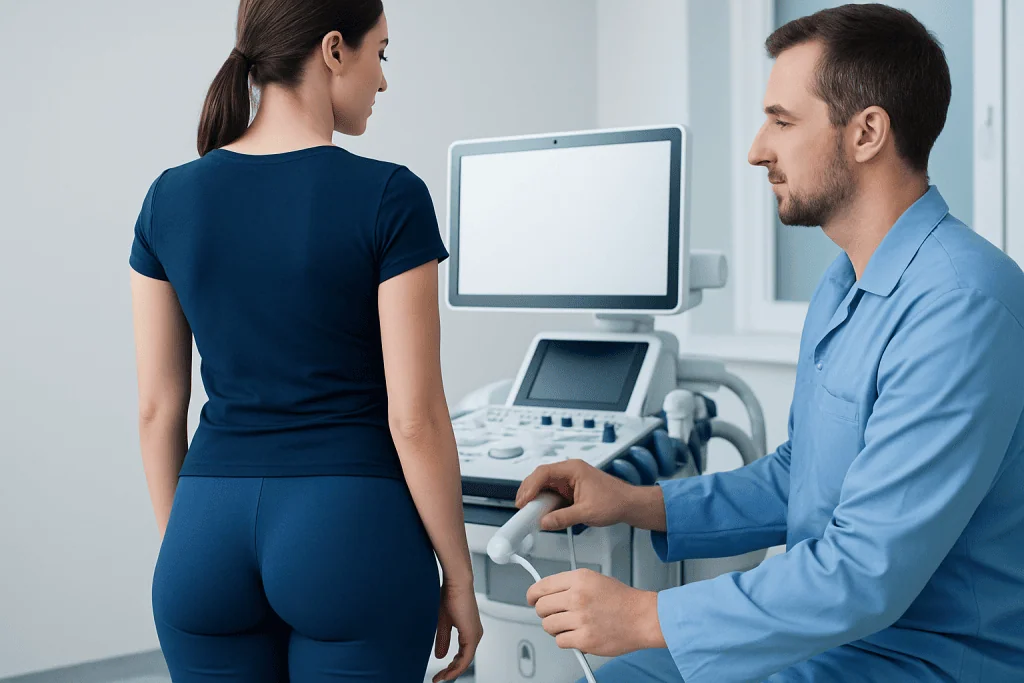
Normal body-contour dimples are often symmetrical and remain unchanged over time. They can occur where fibrous bands naturally connect the skin to tissues beneath it. These dimples are not caused by poor hygiene, weak muscles, or a medical problem, and they do not need treatment unless a person wishes to discuss cosmetic options with a qualified clinician.
A sacral dimple is a small pit or indentation in the midline of the lower back or upper buttock crease. Many are present at birth and are considered simple when they are small, close to the anus, and not accompanied by other skin findings. A simple sacral dimple usually does not affect movement, bladder or bowel function, or spinal development.
Dimples may also appear after healing from a skin infection, cyst, surgery, injury, or injection. In these circumstances, the indentation may represent scar tissue or loss of fat beneath the skin. If it is new, deepening, associated with a lump, or changing in color or texture, it is sensible to have it examined rather than assuming it is a normal variation.
Sacral Dimples in Babies: What Clinicians Look For
Parents often notice a sacral dimple during a newborn examination, diaper change, or bath. Most sacral dimples are isolated and benign. A clinician will look at the exact position, size, depth, and surrounding skin, and will ask whether the baby has any concerns involving leg movement, feeding, bowel habits, or urination.
Further assessment may be recommended when a dimple appears higher on the lower back rather than near the crease, is unusually large or deep, or is accompanied by a tuft of hair, skin tag, birthmark, fatty lump, discoloration, more than one dimple, or an opening that drains. These features do not automatically mean that there is a spinal problem, but they can occasionally be associated with differences in spinal development, including forms of spinal dysraphism.
Depending on the baby’s age and examination findings, a pediatric clinician may recommend an ultrasound of the spine or, less commonly, magnetic resonance imaging. Imaging is not routinely necessary for every sacral dimple. Parents should avoid probing the dimple or applying creams unless advised, and should seek medical advice if there is redness, swelling, fluid leakage, fever, or a change in the baby’s movement or elimination patterns.
Painful or Draining Dimples: Pilonidal Disease and Other Causes
A dimple or small opening in the cleft between the buttocks can sometimes be a pilonidal pit. Pilonidal disease occurs when loose hairs and skin debris enter tiny openings in the skin, leading to irritation, inflammation, or infection. It is more common after puberty and may occur in people who sit for long periods, have coarse body hair, sweat heavily, or have friction in the area, although anyone can develop it.
Symptoms can include tenderness, swelling, redness, a lump near the top of the buttock crease, drainage of pus or blood, odor, or recurrent episodes of discomfort. An acute infection can form an abscess, which often needs prompt in-person evaluation. It should not be squeezed, cut, or treated with harsh products at home, as this may worsen irritation or delay appropriate care.
Other possible explanations include an inflamed follicle, epidermoid cyst, hidradenitis suppurativa, or a scar from a previous skin condition. A clinician may diagnose the cause by examining the area. Treatment depends on the findings and can range from hygiene and hair-management advice to drainage of an abscess, medication when appropriate, or a procedure for persistent pilonidal disease.
How a Dimple in the Buttocks Is Assessed
Assessment begins with a discussion of when the dimple was first noticed and whether it has changed. Important details include pain, itchiness, drainage, bleeding, fever, a nearby lump, previous infections, injury, surgery, injections, and changes in bowel or bladder control. In a child, clinicians also consider developmental milestones, leg strength, and walking when age appropriate.
During the examination, the clinician checks the dimple’s location, depth, symmetry, and surrounding skin. They may look for warmth, tenderness, swelling, hair, discoloration, scars, multiple openings, or signs of infection. For a suspected pilonidal problem, the examination may identify small pits or tracts in the buttock crease.
Most painless, longstanding dimples do not require blood tests or scans. Ultrasound or MRI may be considered for selected infants with atypical sacral features, while imaging for adults is generally reserved for uncertain diagnoses, deep infection, a suspected mass, or other concerning symptoms. The purpose of testing is to answer a specific clinical question, not to investigate every visible skin indentation.
Self-Care, Skin Care, and Prevention
For a harmless, stable buttock dimple, no specific self-care is needed. Gentle washing, drying the skin thoroughly, and avoiding repeated picking or probing are usually sufficient. Skin texture and dimpling can vary naturally with body position, light, hydration, and changes in body composition; these normal changes do not need to be corrected for health reasons.
People who have had pilonidal symptoms may benefit from keeping the buttock crease clean and dry, reducing prolonged friction where possible, and following individualized advice about hair control. A healthcare professional can explain which approaches are suitable, particularly after an infection or procedure. Tight clothing, aggressive scrubbing, and self-treatment of a painful lump should be avoided.
A new dimple after injury, injection, or a healed skin problem may gradually soften as healing continues, but established scar-related changes can persist. Anyone considering cosmetic treatment should first obtain a medical assessment to confirm that the indentation is benign and to discuss realistic benefits and risks. Acibadem International’s multidisciplinary specialists and JCI-accredited hospitals can assess skin, surgical, and pediatric concerns for international patients when specialist evaluation is needed.
When to Seek Medical Care
Medical advice is recommended for a dimple in the buttocks that is new, enlarging, painful, red, warm, swollen, bleeding, or draining fluid. A same-day assessment is especially important if there is a rapidly growing painful lump, pus, fever, or feeling unwell, as these can be signs of an abscess or another infection requiring treatment.
Parents should arrange a pediatric assessment for a baby with a sacral dimple that has unusual surrounding skin features, is located well above the buttock crease, appears deep, or leaks fluid. Urgent advice is appropriate if the baby develops fever, increasing redness or swelling, weakness or reduced movement of the legs, or unusual changes in urination or bowel movements.
Adults should also seek assessment for unexplained skin dimpling with a firm lump, persistent ulceration, marked color change, or dimpling that develops after significant trauma. Although serious causes are uncommon, an in-person examination provides the safest way to identify whether reassurance, treatment, or further investigation is appropriate.
Frequently asked questions
Is a dimple in the buttocks normal?
Yes. Many buttock dimples are normal anatomical variations caused by connective tissue beneath the skin. If the dimple has always been present, is painless, and has no redness, drainage, or changing skin appearance, it is usually harmless.
What is the difference between a buttock dimple and a sacral dimple?
A buttock dimple can refer broadly to an indentation anywhere on the buttocks or lower back. A sacral dimple is a specific small indentation in the midline near the lower back or top of the buttock crease, most often noticed in newborns.
Can a sacral dimple indicate a spinal problem?
Most isolated, simple sacral dimples do not indicate a spinal problem. A clinician may recommend further evaluation when the dimple has atypical features or occurs with other skin findings, because these can occasionally be linked with underlying spinal differences.
Why is there a painful hole or dimple between the buttocks?
A painful opening near the top of the buttock crease may be a pilonidal pit, particularly if there is swelling, drainage, or recurring inflammation. It can also result from a cyst, inflamed hair follicle, or another skin condition, so an examination is recommended.
Can cellulite cause dimples in the buttocks?
Yes. Cellulite can create multiple shallow dimples or a textured appearance because of the way fat and fibrous connective tissue sit beneath the skin. It is common, harmless, and different from a single deep dimple or draining skin opening.
Should a buttock dimple be treated?
Treatment is not needed for a painless, stable dimple that is a normal body feature. Treatment may be needed if the dimple is related to infection, pilonidal disease, a cyst, or another underlying condition; the right approach depends on the diagnosis.
This article is for general information only and is not a substitute for professional medical advice. Please consult a qualified doctor about your individual situation.
Explore treatments in Turkey — costs, top hospitals & a free quote
JCI-accredited · board-certified surgeons · reply within 24h
Add us as a Preferred Source to see more of our trusted health content across Google Search, AI Overviews and Discover.

More from the Health Library

Stress Ulcer: A Complete Medical Overview

Hives on Face — Explained by Medical Evidence, Not Myths

Chemical That Block Iron From Tea: What Patients Need to Know
Pimples on the Eyebrows: An Evidence-Based Guide for Patients

Bad Taste in Mouth: What Patients Need to Know