Do Penis Pumps Work? A Doctor-Reviewed Answer

Penis pumps can help produce an erection by increasing blood flow into the penis. They are most useful for some types of erectile dysfunction, especially when blood flow is part of the problem.
Key Takeaways
- Penis pumps can help produce an erection by increasing blood flow into the penis.
- They are most useful for some types of erectile dysfunction, especially when blood flow is part of the problem.
- The effect is usually temporary, and a tension ring is often needed to maintain the erection for intercourse.
- Correct use matters because misuse can cause pain, bruising, or skin injury.
- Persistent erection problems should be medically reviewed because they can be linked to conditions such as diabetes, heart disease, or hormonal issues.
Yes, penis pumps can work for some people by drawing blood into the penis to help create an erection. They are often a safe, non-drug option when used correctly, but they do not treat every cause of erection problems and results are usually temporary.
Overview: Do penis pumps work?
In many cases, yes. Penis pumps, also called vacuum erection devices, can help some people achieve an erection firm enough for sexual activity. They are non-surgical devices that use gentle suction to draw blood into the penis, and many people use them safely under a doctor’s guidance or by following product instructions carefully.
It is also reassuring to know that occasional difficulty getting or keeping an erection is common and does not always mean there is a serious medical problem. Stress, fatigue, relationship concerns, alcohol, and temporary illness can all affect erections. When erection problems happen repeatedly, last for weeks or months, or cause distress, a medical review is helpful.
Penis pumps can be effective, but they are not a cure for all causes of erectile dysfunction. They may work well when the issue involves blood flow, medication side effects, or recovery after some prostate treatments. They may be less effective if there is significant nerve damage, severe penile pain, or a structural problem such as Peyronie’s disease.
The key point is that a pump can be one tool among several treatment options. A doctor helps determine whether it is suitable, whether another cause needs treatment first, and whether options such as erectile dysfunction treatment or urology care may be more appropriate.
How a penis pump works
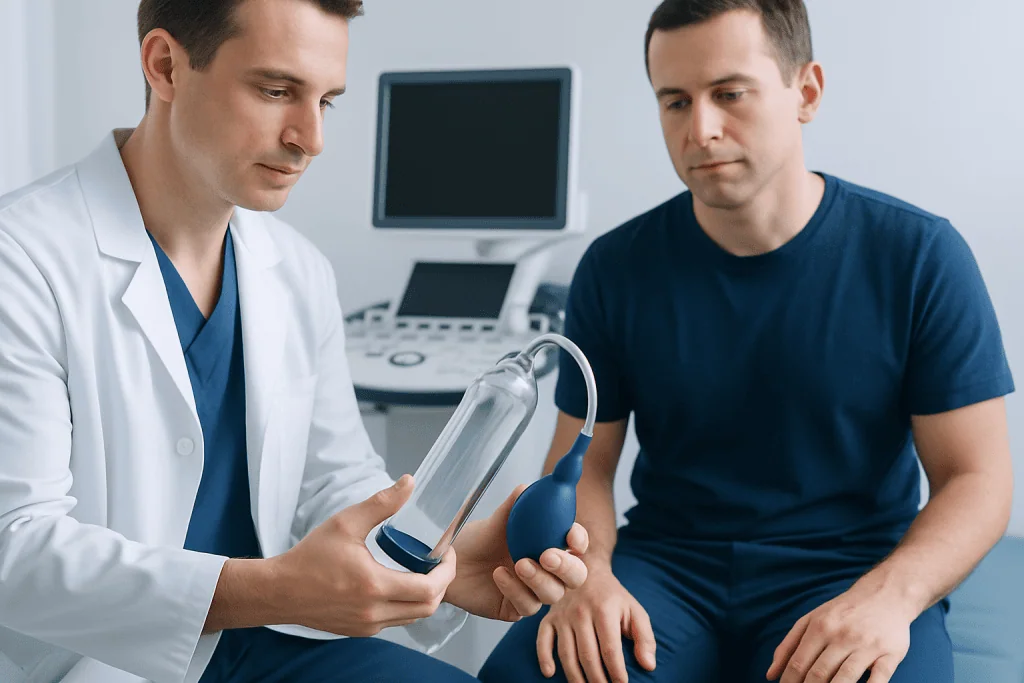
A penis pump usually includes a clear cylinder placed over the penis, a manual or battery-powered pump that removes air from the cylinder, and a constriction or tension ring. The vacuum created around the penis encourages blood to flow into erectile tissue. Once an erection develops, the tension ring may be placed at the base of the penis to help keep blood from flowing back out too quickly.
This is why the answer to “do penis pumps work” is often yes, but with an important detail: the erection is mechanical rather than spontaneous. The device helps create the conditions for an erection, but it does not restore normal erection physiology in the way treating an underlying disease might.
Some people notice that the erection feels different from a natural erection. The penis may feel cooler, firmer in some areas than others, or slightly numb because of the constriction ring. This can still be satisfactory for sexual activity, but expectations matter, and open communication with a partner can help.
Doctors may recommend vacuum devices for people who cannot take certain oral medicines, prefer a non-drug approach, or are recovering from pelvic or prostate treatment. In some cases, a pump may be used as part of a broader plan that also includes lifestyle changes, medication review, or penile implant surgery when other treatments do not help.
Who may benefit most from a penis pump

Penis pumps can be especially useful for people with erectile dysfunction related to reduced blood flow, aging, recovery after prostate surgery, or side effects from some medications. They may also help people who want to avoid oral medicines because of side effects, drug interactions, or personal preference.
They are often considered when erection problems are ongoing rather than occasional. For someone who has had only a few episodes linked to stress or tiredness, reassurance and addressing temporary triggers may be enough. But if erection changes are becoming frequent, a vacuum device may be a reasonable option while the underlying cause is being assessed.
Results vary from person to person. Some people achieve reliable erections with the device, while others find it awkward, uncomfortable, or not firm enough for satisfactory intercourse. Success often improves with practice, proper sizing of the ring, and realistic expectations about what the device can and cannot do.
A penis pump may be less suitable for people with certain bleeding disorders, those who bruise easily, or those taking some blood-thinning medicines, depending on individual circumstances. It may also not be the best fit if there is significant penile curvature, pain, skin injury, or suspected scarring. In these situations, medical advice is important before use.
Safety, side effects, and common concerns
When used as directed, penis pumps are generally considered safe. Even so, they can cause side effects if the suction is too strong, the ring is too tight, or the device is used for too long. Common problems include temporary bruising, mild discomfort, small red spots under the skin, or a feeling of tightness.
Some people also notice temporary numbness, cooler skin, or difficulty ejaculating while the ring is in place. These effects are usually related to reduced blood outflow and pressure at the base of the penis. A doctor or qualified clinician can explain how to reduce these problems, including proper device choice and technique.
It is safest to avoid improvised devices or products from unreliable sources. A medical-grade vacuum device is designed to control suction more safely. Reading the instructions carefully and stopping if there is pain is important. Stronger suction does not mean better results and may increase the risk of injury.
Emergency problems are uncommon, but severe pain, significant swelling, skin discoloration that does not improve, bleeding, or an erection that remains painful or prolonged after use should be medically assessed promptly. These situations are not typical, but they are good reasons not to ignore symptoms.
What doctors look for when erections change
Because repeated erection problems can sometimes be a sign of another health issue, doctors do more than simply recommend a device. They usually begin with a careful history. This includes when the problem started, whether erections are ever normal, what medications are being taken, and whether there are symptoms such as reduced sex drive, pain, urinary symptoms, or penile curvature.
A physical examination may include checking blood pressure, pulses, genital anatomy, and signs of hormone imbalance or nerve problems. Doctors may ask about diabetes, smoking, sleep problems, anxiety, depression, and heart disease because all can affect erections. Erectile dysfunction can sometimes appear before other symptoms of vascular disease, which is why evaluation matters.
Tests are not needed for everyone, but they may include blood sugar, cholesterol, testosterone, and other hormone tests, depending on the person’s symptoms and risk factors. If a structural issue is suspected, a specialist may recommend further assessment through penile Doppler ultrasound or other urologic evaluation.
The goal of diagnosis is to find the most likely cause and match treatment to that cause. Sometimes a vacuum device is the best next step. In other cases, treating diabetes, adjusting medications, supporting mental health, or managing a penile condition makes more sense than relying on a device alone.
Other treatment options and self-care
A penis pump is only one approach to erectile dysfunction. Depending on the cause, treatment may also include oral medications, counseling, hormone treatment when a proven deficiency exists, or specialist procedures. If there is a structural or severe long-term problem, a urologist may discuss advanced options. The right choice depends on overall health, personal preference, and the reason erections have changed.
Self-care can improve erectile function in many people. Stopping smoking, limiting excess alcohol, exercising regularly, sleeping well, and managing stress all support vascular health and sexual function. Good control of blood pressure, cholesterol, and blood sugar also matters, especially when diabetes or cardiovascular disease is present.
Relationship factors can play a role too. Worry about sexual performance can create a cycle where anxiety makes erections less reliable, which then increases more anxiety. A calm, non-judgmental discussion with a partner and, when needed, support from a mental health professional or sex therapist can be very helpful.
If erectile problems continue despite self-care, a doctor can review whether another strategy may suit better. In international care settings, Acibadem International’s multidisciplinary specialists and JCI-accredited hospitals evaluate and treat erectile concerns with individualized plans for patients traveling from abroad.
When to seek medical care
Medical care is advisable if erection problems happen often, persist for several weeks, or begin to affect confidence, relationships, or quality of life. A doctor should also be consulted if erections become painful, if there is a noticeable bend or lump in the penis, or if libido has dropped significantly. These features can point to a condition that needs targeted treatment rather than a device alone.
Prompt assessment is especially important if erectile dysfunction appears alongside chest symptoms, leg pain when walking, poorly controlled diabetes, urinary symptoms, or new medication changes. Erection changes can occasionally be an early sign of circulation or hormone problems. Addressing the underlying issue may improve both sexual health and overall health.
Anyone considering a penis pump should speak with a clinician first if they have a bleeding disorder, use blood thinners, have had recent penile surgery, or have major penile curvature. Proper guidance helps reduce the risk of injury and improves the chance of a useful result.
Most importantly, persistent erectile dysfunction is common and treatable. Seeking care is not overreacting; it is a practical step toward understanding the cause and finding an option that is safe, effective, and appropriate for the individual.
Frequently asked questions
Do penis pumps work for erectile dysfunction?
They can work for some people with erectile dysfunction by helping blood flow into the penis. The effect is usually temporary, and many people need a constriction ring to keep the erection long enough for intercourse.
Are penis pumps safe to use at home?
A properly made device used according to instructions is generally safe for home use. Mild bruising or discomfort can happen, but stronger suction or prolonged use can increase the risk of injury.
Do penis pumps make the penis permanently larger?
No, penis pumps do not permanently increase penis size. They temporarily enlarge the penis by drawing blood into erectile tissue, but that effect usually fades after use.
How quickly does a penis pump work?
Many people can produce an erection within a few minutes. The exact timing varies depending on the device, technique, comfort level, and the underlying cause of erection difficulty.
Who should not use a penis pump without medical advice?
People with bleeding disorders, those who take certain blood thinners, and those with penile pain, major curvature, or recent surgery should get medical advice first. A doctor can help decide whether the device is safe and appropriate.
What if a penis pump does not help?
If the device is not effective, it does not mean treatment will fail overall. A doctor can look for the reason, review technique, and discuss other options such as medication, counseling, or specialist procedures.
References
- American Urological Association
- National Institute of Diabetes and Digestive and Kidney Diseases
- Mayo Clinic
- Cleveland Clinic
- European Association of Urology
This article is for general information only and is not a substitute for professional medical advice. Please consult a qualified doctor about your individual situation.
Explore treatments in Turkey — costs, top hospitals & a free quote
JCI-accredited · board-certified surgeons · reply within 24h
Add us as a Preferred Source to see more of our trusted health content across Google Search, AI Overviews and Discover.