Dorsiflexion — Explained by Medical Evidence, Not Myths

Dorsiflexion describes lifting the foot or toes upward toward the shin. Healthy dorsiflexion supports walking, balance, stair climbing, and squatting.
Key Takeaways
- Dorsiflexion describes lifting the foot or toes upward toward the shin.
- Healthy dorsiflexion supports walking, balance, stair climbing, and squatting.
- Limited dorsiflexion may result from calf tightness, ankle stiffness, injury, arthritis, or nerve problems.
- Persistent pain, weakness, swelling, or foot drop should be assessed by a qualified clinician.
- Treatment depends on the cause and may include exercises, physical therapy, footwear changes, medication, or other medical care.
Dorsiflexion is the movement that brings the top of the foot toward the shin or lifts the toes upward. It is a normal motion used in walking, climbing stairs, squatting, and balance, but pain or restriction can point to tight muscles, joint problems, injury, or nerve-related conditions.
What dorsiflexion means
Dorsiflexion is the upward bending movement at the ankle that brings the top of the foot closer to the front of the lower leg. The same term is also used for lifting the toes upward. In everyday life, this motion happens many times without conscious effort, especially during walking, stepping over objects, climbing stairs, and rising from a chair.
This is not a disease itself. Rather, dorsiflexion is a normal biomechanical movement that can become limited, painful, or weak for different medical reasons. When clinicians talk about “reduced dorsiflexion,” they usually mean the ankle cannot bend upward as far or as comfortably as expected.
Dorsiflexion works together with other ankle and foot motions such as plantarflexion, inversion, and eversion. Muscles in the front of the lower leg help lift the foot, while the calf muscles, Achilles tendon, ankle joint surfaces, and nerves all affect how freely the movement occurs. Because many structures are involved, problems with dorsiflexion may have more than one contributing cause.
Why dorsiflexion matters in daily movement
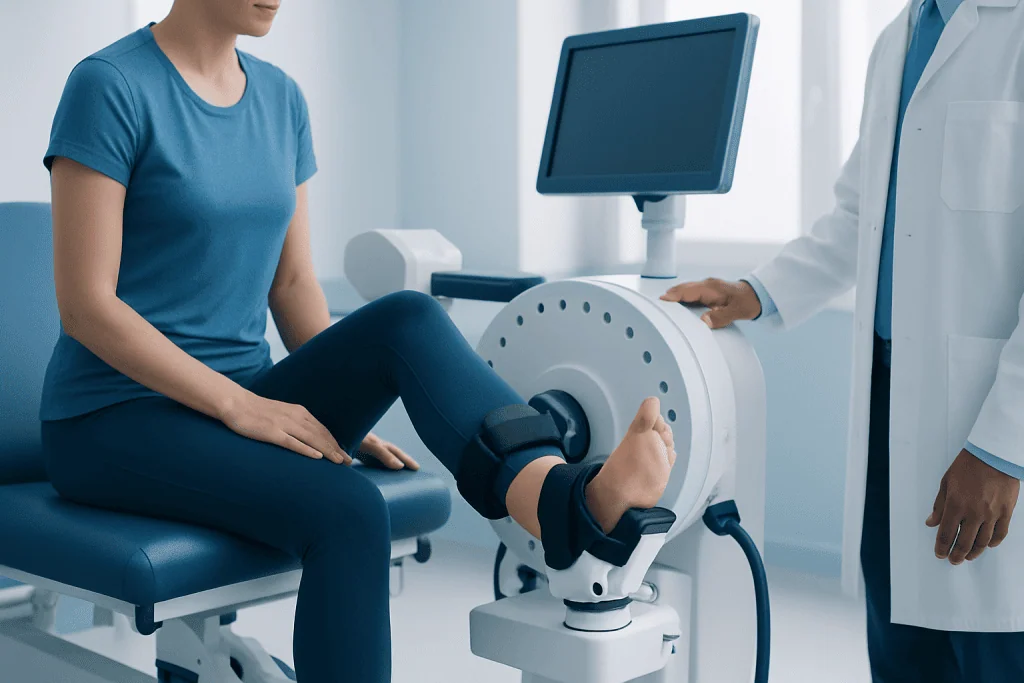
Adequate dorsiflexion is important for efficient, stable movement. During walking, the ankle needs to dorsiflex as the body moves forward over the foot. This helps with a smooth stride and can reduce unnecessary stress on the foot, knee, hip, and lower back.
The motion is also important in activities that require deeper bending through the legs. Squatting, lunging, and descending stairs all rely on ankle dorsiflexion. If the ankle cannot move enough, the body may compensate by lifting the heel early, turning the foot outward, or placing extra load on nearby joints.
In some people, restricted dorsiflexion may contribute to overuse symptoms during sports or exercise. For example, reduced ankle mobility can change running mechanics or place added demand on the plantar fascia and Achilles tendon. It may also make balance tasks feel less steady, particularly in older adults.
Because dorsiflexion affects how force moves through the lower limb, clinicians may evaluate it when a person has recurring ankle sprains, heel pain, calf tightness, knee discomfort, or gait changes. In that context, dorsiflexion is best understood as one part of the broader picture of lower-limb function.
Symptoms and signs of a dorsiflexion problem

Not everyone with reduced dorsiflexion feels pain. Some people notice only stiffness or a sense that the ankle “does not bend.” Others may feel discomfort in the front of the ankle, the calf, the Achilles tendon, or the arch of the foot when they walk, squat, run, or stretch.
Symptoms vary depending on the cause. Joint stiffness may create a blocked or pinching sensation at the front of the ankle. Tight calf muscles may feel like pulling or tension in the back of the lower leg. If nerve function is involved, a person may notice weakness, tripping, numbness, or difficulty lifting the front of the foot.
- Pain when the knee moves forward over the foot
- Reduced ability to squat with the heel down
- Ankle stiffness after rest or in the morning
- Swelling after an injury
- Repeated ankle sprains or a feeling of instability
- Weakness or “foot drop,” where the forefoot drags while walking
It is also possible for the main problem to be elsewhere, with dorsiflexion simply becoming the visible sign. For example, pain from an ankle sprain or inflammation around the Achilles tendon may make a person avoid normal ankle movement. A careful medical assessment helps separate temporary stiffness from a more significant structural or neurologic issue.
Common causes and risk factors
One of the most common reasons for limited dorsiflexion is tightness in the calf muscles or Achilles tendon. This may develop gradually in people who spend long periods sitting, wear shoes that keep the heel elevated, or participate in repetitive sports without enough mobility work. After an ankle injury, the joint may also become stiff from pain, swelling, or scar tissue.
Bone and joint problems can reduce dorsiflexion as well. Osteoarthritis, prior fractures, and impingement at the front of the ankle can mechanically limit upward movement. Inflammatory conditions may lead to swelling and discomfort, while longstanding changes in foot shape can alter how the ankle moves.
Nerve-related causes are especially important when dorsiflexion weakness is more noticeable than stiffness. Compression or injury affecting the peroneal nerve, the sciatic nerve, or the lower spine can impair the muscles that lift the foot. In these situations, foot drop may occur and should not be ignored.
Risk factors include previous ankle sprains, high-impact sports, poor footwear fit, structural foot differences, diabetes-related nerve problems, and neurologic or spinal conditions. Some people have symptoms linked to a specific disorder such as drop foot, while others have a combination of mobility limitation, weakness, and compensation patterns that benefit from a broader musculoskeletal evaluation.
How doctors assess dorsiflexion
Assessment usually starts with a history and physical examination. A clinician asks when symptoms began, whether there was an injury, what activities make the problem worse, and whether there is numbness, weakness, swelling, or instability. They may also ask about footwear, exercise habits, and any history of arthritis, diabetes, or back problems.
On examination, the ankle’s range of motion is checked both actively and passively. This helps distinguish whether the limitation comes mainly from pain, joint stiffness, muscle tightness, or weakness. A commonly used functional test measures how far the knee can move forward over the foot while the heel stays on the floor.
Strength testing, gait observation, and a neurologic exam may be needed if the person seems to drag the foot or has altered sensation. Imaging is not necessary in every case, but X-rays, ultrasound, MRI, or nerve studies may be helpful when fracture, impingement, tendon injury, arthritis, or a nerve disorder is suspected.
Accurate diagnosis matters because treatment is cause-specific. For example, painful restriction after trauma may require a different plan from nerve-related weakness or a chronic joint condition. When needed, doctors may coordinate care with rehabilitation experts, neurologists, or orthopedic specialists.
Treatment options for painful or limited dorsiflexion
Treatment depends on the underlying cause and the severity of symptoms. Many people improve with conservative care aimed at reducing pain, restoring mobility, and improving strength and movement patterns. This may include temporary activity modification, ice after acute strain, supportive footwear, and clinician-guided exercises for the calf, ankle, and foot.
Physical therapy is often central to recovery. A therapist may use stretching, joint mobilization, balance training, gait retraining, and strengthening for the muscles that lift and stabilize the foot. Structured physical therapy and rehabilitation can be especially helpful after ankle injury, surgery, or periods of immobilization.
When symptoms are linked to a specific disease or injury, additional treatment may be recommended. Anti-inflammatory measures, bracing, orthotics, or targeted treatment of arthritis, tendon disorders, or neurologic problems may be appropriate. If a structural problem significantly limits the ankle joint, an orthopedic specialist may discuss advanced options, including orthopedic surgery in selected cases.
For patients with persistent weakness, suspected nerve compression, or gait changes, evaluation may also involve neurology or related specialist care. Near the end of the treatment pathway, some patients benefit from coordinated follow-up at centers such as Acibadem International, where multidisciplinary specialists in JCI-accredited hospitals assess and treat musculoskeletal and neurologic causes of dorsiflexion problems for international patients.
Prevention and self-care
Not all dorsiflexion problems can be prevented, but ankle mobility and foot mechanics often respond well to simple habits. Gradual warm-up before exercise, regular calf stretching, and strengthening of the lower leg can support healthy movement. People who sit for long periods may find it useful to stand, walk, and gently move the ankles throughout the day.
Footwear also matters. Shoes that fit well and suit the activity can improve comfort and stability, while very rigid shoes or long-term use of high heels may encourage calf tightness in some people. Athletes and active individuals may benefit from technique review if they have repeated ankle symptoms or movement restrictions.
- Increase training intensity gradually rather than suddenly
- Address ankle sprains fully before returning to sport
- Maintain calf flexibility and ankle strength
- Use prescribed braces or orthotics if recommended
- Seek care early for recurrent pain, swelling, or tripping
Self-care is most useful when symptoms are mild and improving. If pain is increasing, swelling is significant, or walking feels unsafe, home measures should not replace medical evaluation. The goal is not simply to force more motion, but to restore safe, comfortable function.
When to seek medical care
Medical care is recommended if dorsiflexion is persistently limited, painful, or affecting daily activities. A person should also seek assessment after an ankle injury if swelling, bruising, difficulty bearing weight, or reduced motion does not improve as expected. Early evaluation may help prevent compensation patterns and prolonged symptoms.
Prompt medical attention is important when there is sudden weakness lifting the foot, repeated tripping, new numbness, or a foot drop pattern. These symptoms can suggest nerve involvement and deserve timely assessment. Fever, marked redness, severe swelling, or pain after a major injury also requires urgent review.
It is reasonable to consult a doctor if home stretching and rest have not helped after a short period, or if symptoms keep returning during exercise. People with diabetes, inflammatory arthritis, or neurologic disease should be especially cautious, because foot and ankle symptoms may need earlier professional evaluation.
Frequently asked questions
What is dorsiflexion in simple terms?
Dorsiflexion is the motion of lifting the foot upward toward the shin at the ankle. The term can also refer to lifting the toes upward. It is a normal movement used in walking, climbing stairs, and balancing.
Is limited dorsiflexion always a sign of injury?
No. Limited dorsiflexion can happen because of muscle tightness, joint stiffness, footwear habits, or temporary inactivity, and not only because of injury. However, if it is painful, persistent, or associated with weakness or swelling, a clinician should assess it.
Can tight calves affect dorsiflexion?
Yes. Tight calf muscles and a tight Achilles tendon are common reasons the ankle does not bend upward well. This can make squatting, stair use, and some sports movements feel restricted or uncomfortable.
What is the difference between dorsiflexion and plantarflexion?
Dorsiflexion lifts the foot upward toward the shin. Plantarflexion points the foot downward, as when pressing a gas pedal or standing on tiptoe. Both are normal ankle movements, and both are needed for efficient walking.
Why does dorsiflexion matter for walking and exercise?
During walking, the ankle needs enough dorsiflexion to let the body move smoothly over the foot. If the motion is limited, the body may compensate in ways that increase stress on the foot, knee, hip, or back. In exercise, reduced dorsiflexion can affect squatting, lunging, running, and balance.
When is weak dorsiflexion more concerning?
Weak dorsiflexion is more concerning when the foot drags, tripping becomes frequent, or numbness appears. These features may suggest nerve involvement rather than simple stiffness. They should be evaluated promptly by a qualified medical professional.
References
- American Academy of Orthopaedic Surgeons
- National Institute of Arthritis and Musculoskeletal and Skin Diseases
- American Physical Therapy Association
- National Institute of Neurological Disorders and Stroke
- Mayo Clinic
This article is for general information only and is not a substitute for professional medical advice. Please consult a qualified doctor about your individual situation.
Joint and spine care in Turkey — expert assessment & treatment
JCI-accredited · board-certified surgeons · reply within 24h
Add us as a Preferred Source to see more of our trusted health content across Google Search, AI Overviews and Discover.

More from the Health Library

Somatic Nervous System — Explained by Medical Evidence, Not Myths

Hyperthyroidism: Tremor, Fast Heartbeat, and Treatment Options

Emotional Damage Meme: An Evidence-Based Guide for Patients

Lexapro — Explained by Medical Evidence, Not Myths

Green Tea Matcha: A Complete Medical Overview