Double Jointed Thumb: An Evidence-Based Guide for Patients

A double jointed thumb does not mean that the thumb has an extra joint; it usually reflects joint hypermobility. Flexible ligaments and joint capsules can allow the thumb’s knuckle or tip joint to bend farther than expected.
Key Takeaways
- A double jointed thumb does not mean that the thumb has an extra joint; it usually reflects joint hypermobility.
- Flexible ligaments and joint capsules can allow the thumb’s knuckle or tip joint to bend farther than expected.
- Painless flexibility generally needs no treatment, while pain, instability, or functional difficulty should be evaluated.
- Hand therapy, activity adjustments, and supportive splints can often help symptoms without surgery.
- Sudden deformity, substantial swelling, numbness, or inability to move the thumb needs prompt medical attention.
A double jointed thumb usually describes a thumb that bends or extends beyond the typical range of motion because its joints are unusually flexible. This common trait is often painless and harmless, but assessment is sensible when it causes pain, repeated injury, weakness, or difficulty using the hand.
What Does a Double Jointed Thumb Mean?
A double jointed thumb is a non-medical term for a thumb that moves beyond the usual range at one or more joints. The thumb normally has two main joints: the joint at its base, called the carpometacarpal joint, and the joints farther along the thumb, including the knuckle-like metacarpophalangeal joint and the interphalangeal joint near the tip. A person may be able to bend the tip backward, extend the knuckle unusually far, or move the base joint very freely.
In most cases, this flexibility is due to joint hypermobility. The ligaments and capsule that support the joint may be naturally more elastic, allowing a greater range of movement. It does not mean the thumb has an additional joint, and it is not automatically a disease. Many people notice it in childhood or discover it incidentally when comparing their hands with others.
For some people, a hypermobile thumb is simply an individual physical characteristic. For others, especially when the joint repeatedly moves into an extreme position during gripping or pinching, it can contribute to strain, fatigue, discomfort, or a sense that the thumb is unreliable. The important distinction is not how far the thumb bends, but whether its movement is painful, unstable, or limiting.
How a Hypermobile Thumb May Feel and Look
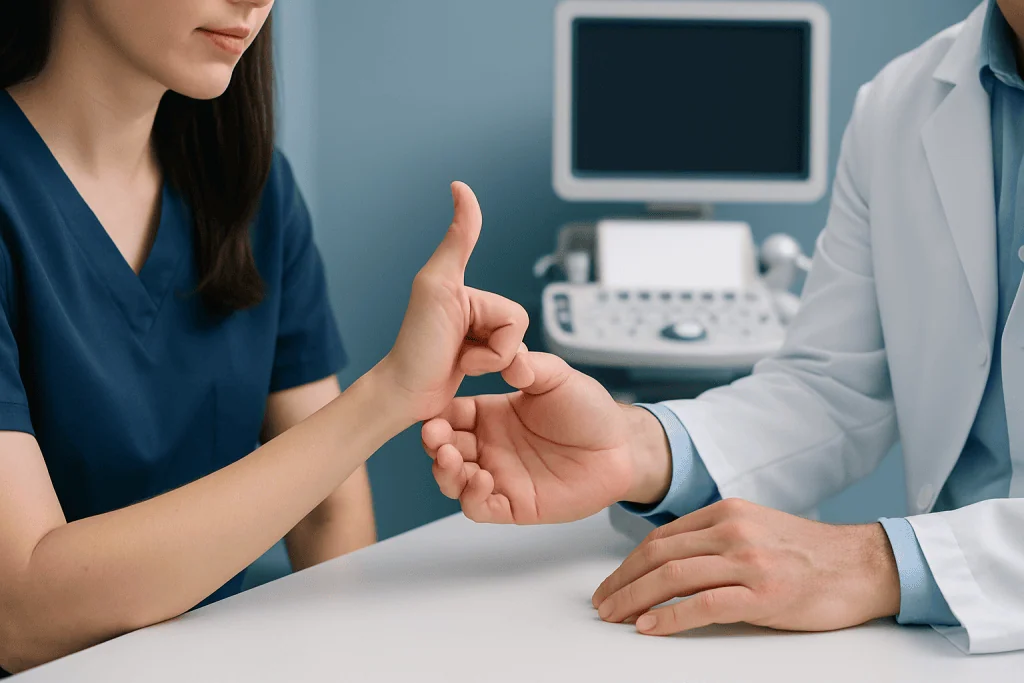
A painless thumb that bends back farther than expected is the most common presentation. Some people can intentionally bring the thumb tip toward the forearm or make the thumb knuckle appear to bend backward. The degree of mobility varies widely, and appearance alone cannot determine whether a joint is healthy or needs treatment.
When symptoms occur, they may include aching after handwriting, gaming, carrying bags, opening jars, using tools, or repeated phone use. The thumb may feel weak during pinching, as when turning a key or fastening buttons. Some people notice clicking, a brief catching sensation, or a feeling that the joint shifts or gives way.
Symptoms can also reflect a separate hand problem rather than hypermobility itself. For example, pain at the thumb base may arise from overuse, tendon irritation, arthritis, or a previous injury. A clinician considers the location of pain, the activities that trigger it, the stability of the ligaments, and the function of the whole hand rather than focusing only on the thumb’s range of motion.
Why Does a Double Jointed Thumb Happen?

Natural variation in connective tissue is the usual reason for a double jointed thumb. Connective tissues, including ligaments, help hold joints in position. When they are more flexible than average, joints can move farther. Hypermobility may run in families and is often present in more than one finger, wrist, elbow, knee, or other joint.
Children and adolescents can appear especially flexible because their tissues are still developing. Flexibility may change over time, and some people become less mobile as they age. In contrast, repetitive loading, muscle weakness around the hand, or poor thumb positioning during certain tasks can make an already flexible thumb feel more symptomatic.
Occasionally, hypermobility is part of a broader condition affecting connective tissue. This is more likely when many joints are unusually mobile and there are additional concerns such as frequent sprains or dislocations, persistent widespread joint pain, unusual scarring, marked skin stretchiness, or a relevant family history. These features do not confirm a diagnosis on their own, but they are useful to discuss with a doctor.
A thumb that suddenly becomes unusually mobile or deformed after a fall, sports injury, or forceful twisting injury should not be assumed to be benign hypermobility. Ligament injuries, fractures, and dislocations need timely assessment because early care can help protect thumb stability and function.
How Clinicians Assess Thumb Hypermobility
Diagnosis usually begins with a medical history and physical examination. A clinician may ask when the flexibility was first noticed, whether there has been an injury, which movements cause symptoms, and whether other joints are flexible or painful. They may also ask about activities involving repetitive gripping, pinching, sport, work, or musical instruments.
During the examination, the clinician gently checks the thumb’s range of motion, alignment, strength, tenderness, and ligament stability. They may assess how the thumb works during pinch and grip. If generalized hypermobility is suspected, they may examine other joints and use a structured mobility assessment such as the Beighton score; this is one part of an overall clinical evaluation, not a diagnosis by itself.
Imaging is not routinely needed for a painless, lifelong flexible thumb. An X-ray may be useful after trauma, with persistent focal pain, or if a fracture, joint alignment problem, or arthritis is suspected. Ultrasound or magnetic resonance imaging may occasionally be considered when clinicians need more detail about ligaments, tendons, or other soft tissues.
Evaluation also helps distinguish hypermobility from conditions that can cause thumb pain or altered movement, including tendon disorders, ligament sprains, joint inflammation, and degenerative changes. This careful approach avoids treating normal flexibility as a problem while identifying issues that may benefit from support or rehabilitation.
Treatment Options: From Simple Support to Specialist Care
If a double jointed thumb is painless and functions normally, treatment is usually unnecessary. Education and reassurance may be all that is needed. Repeatedly forcing the thumb into its maximum range for demonstration or stretching is best avoided, particularly if it causes soreness or a feeling of instability.
For mild symptoms, activity modification can reduce strain. This may mean taking breaks from prolonged gripping, alternating tasks, using larger-handled tools, or changing how the thumb is positioned during typing, handwriting, gaming, or lifting. Gentle strengthening and coordination exercises prescribed by a hand therapist or physiotherapist can improve muscular support around the thumb and wrist.
A removable thumb splint or supportive brace may be recommended for certain activities or during a painful flare. The purpose is to limit painful end-range movement while preserving useful hand function. A clinician may also discuss appropriate short-term pain-relief options when needed, taking into account the person’s health history and other medicines.
Surgery is not a usual treatment for simple thumb hypermobility. It may be considered only in selected cases of significant ligament damage, persistent instability, or ongoing functional impairment that has not improved with well-guided non-surgical care. Decisions are individualized and typically involve assessment by a hand surgeon or orthopedic specialist.
Daily Habits That Can Protect a Flexible Thumb
Joint protection does not require avoiding all hand use. Instead, it focuses on using the thumb in a comfortable middle range rather than repeatedly locking it into its farthest backward position. When lifting objects, holding a device, or opening containers, keeping the thumb aligned and sharing the load across the hand can reduce stress on a mobile joint.
Regular, appropriately guided strengthening may help improve control. Exercises often target the small muscles of the thumb and the muscles of the hand and forearm that support pinch and grip. Exercises should feel controlled rather than painful; forceful stretching is generally not helpful for an already hypermobile joint.
Practical ergonomic changes can make a meaningful difference. Examples include using a jar opener instead of forcing a tight lid, choosing pens with a wider grip, using two hands for heavier items, and taking brief movement breaks during repetitive tasks. If a brace is used, it should fit correctly and be reviewed by a clinician if it causes pressure, skin irritation, stiffness, or reduced function.
People with generalized joint hypermobility may benefit from a broader plan that supports overall strength, pacing, sleep, and physical activity. A healthcare professional can help tailor this plan to symptoms and daily demands, particularly when multiple joints are affected.
When to Seek Medical Care
Medical advice is appropriate when thumb flexibility is accompanied by pain that persists, worsens, or interferes with daily activities. Other reasons to arrange an assessment include recurrent sprains, repeated feelings of the joint slipping, reduced pinch strength, clicking with pain, swelling, or difficulty holding objects securely.
Prompt assessment is important after an injury if there is marked swelling, bruising, deformity, severe pain, numbness, color change in the thumb, or inability to move the thumb normally. These symptoms can occur with a fracture, dislocation, or ligament injury and should not be managed with self-care alone.
A doctor can also help when hypermobility involves many joints and is associated with frequent injuries, persistent fatigue, widespread pain, or concerns about connective tissue disorders. Referral to a hand specialist, orthopedic clinician, rheumatologist, genetic specialist, physiotherapist, or occupational therapist may be considered based on the person’s symptoms and examination findings.
Acibadem International’s multidisciplinary specialists at JCI-accredited hospitals can assess hand and joint concerns and coordinate appropriate diagnostic and rehabilitation care for international patients.
Frequently asked questions
Is a double jointed thumb normal?
A double jointed thumb is often a normal variation in joint flexibility. If it has always been flexible, is painless, and does not affect hand function, it usually does not require treatment. A clinician can assess it if there is uncertainty or discomfort.
Does being double jointed mean there is an extra thumb joint?
No. The phrase double jointed does not mean an extra joint is present. It usually means that the existing thumb joints can move farther than average because the supporting tissues are more flexible.
Can a double jointed thumb cause pain?
It can, particularly if the joint frequently moves into an extreme position during gripping, pinching, or repetitive hand tasks. Pain may also be due to an injury or another thumb condition, so persistent symptoms should be assessed rather than attributed to hypermobility alone.
Should a hypermobile thumb be stretched?
Forceful stretching is generally unnecessary because the thumb already has increased range of motion. Controlled strengthening and movement exercises may be more useful when prescribed by a hand therapist or other qualified clinician. Exercises should not increase pain or instability.
Can thumb hypermobility be cured?
Natural joint flexibility is not usually something that needs to be cured. When it causes symptoms, treatment aims to improve joint control, reduce strain, and support everyday function. Many people manage symptoms well with practical adjustments, therapy, and, when appropriate, temporary splinting.
When is a flexible thumb an emergency?
Seek urgent medical evaluation if a thumb becomes deformed or unusually loose after an injury, or if there is severe pain, major swelling, numbness, blue or pale skin, or inability to move it. These signs may indicate a fracture, dislocation, or significant ligament injury.
References
- American Academy of Orthopaedic Surgeons
- American Society for Surgery of the Hand
- National Institute of Arthritis and Musculoskeletal and Skin Diseases
- National Health Service
- The Ehlers-Danlos Society
This article is for general information only and is not a substitute for professional medical advice. Please consult a qualified doctor about your individual situation.
Joint and spine care in Turkey — expert assessment & treatment
JCI-accredited · board-certified surgeons · reply within 24h
Add us as a Preferred Source to see more of our trusted health content across Google Search, AI Overviews and Discover.

More from the Health Library

Paralytic: An Evidence-Based Guide for Patients

Fracture: What Patients Need to Know

Cereal Breakfast Cereal: A Complete Medical Overview

Septate Hymen: A Complete Medical Overview

Brachial Plexus — Explained by Medical Evidence, Not Myths