Dumbbell for Arms Workout: A Complete Medical Overview

A dumbbell for arms workout can improve strength, daily function, and muscle endurance when performed with proper form. Balanced arm training should include biceps, triceps, forearms, shoulders, and upper back rather than focusing on one muscle group alone.
Key Takeaways
- A dumbbell for arms workout can improve strength, daily function, and muscle endurance when performed with proper form.
- Balanced arm training should include biceps, triceps, forearms, shoulders, and upper back rather than focusing on one muscle group alone.
- Joint pain, numbness, sudden weakness, or pain lasting more than a few days may signal overuse or injury and should be assessed by a doctor.
- Warm-up, gradual load increases, rest days, and recovery habits are important for injury prevention.
- People with shoulder, neck, elbow, or wrist conditions should adapt exercises with professional guidance.
A dumbbell for arms workout can be an effective way to build strength in the biceps, triceps, shoulders, and forearms when movements are controlled and matched to a person’s fitness level. The safest results usually come from good technique, gradual progression, and attention to warning signs such as persistent pain, swelling, or weakness.
Overview: What Is a Dumbbell for Arms Workout?
A dumbbell for arms workout is a strength-training routine that uses handheld weights to train the muscles of the upper limb, especially the biceps, triceps, forearms, and supporting shoulder muscles. For many people, it is a practical and effective way to build arm strength at home or in a gym because dumbbells allow a wide range of movement and can be adjusted to different ability levels.
From a medical perspective, arm training is not only about appearance. Stronger arms can support everyday tasks such as lifting, carrying, pushing, pulling, and maintaining posture during work or sport. When done correctly, these exercises may also contribute to bone health, joint stability, and healthy aging by preserving muscle mass over time.
However, a dumbbell routine is safest when it is balanced. Repeating curls alone may overload the elbow and wrist, while neglecting the shoulders and upper back can reduce stability and increase strain. A well-designed plan includes controlled movement, suitable weight, adequate recovery, and attention to any symptoms that suggest irritation of muscles, tendons, or joints.
How Arm Muscles Work During Dumbbell Training
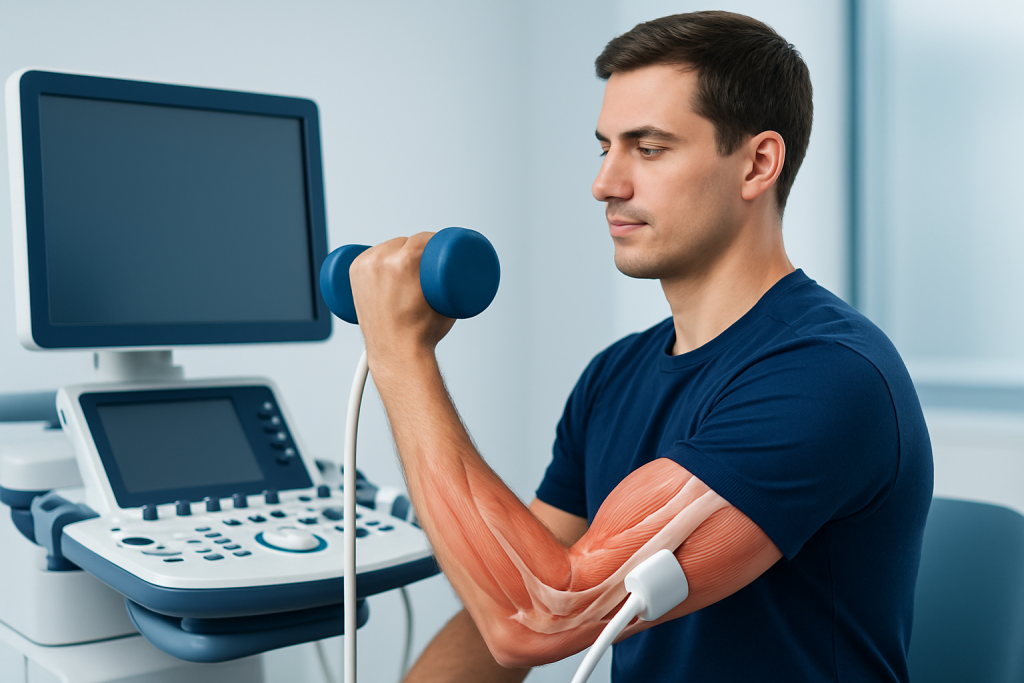
The term “arms” is often used broadly, but several muscle groups work together during upper-limb exercise. The biceps at the front of the upper arm help bend the elbow and assist with turning the forearm. The triceps at the back of the upper arm straighten the elbow. The forearm muscles contribute to grip strength and wrist control, while the shoulders and upper back help position and stabilize the arm.
Because these structures are interconnected, an effective dumbbell for arms workout usually trains more than one area. For example, a biceps curl targets elbow flexion, but the shoulder and core also help control the movement. Similarly, triceps extensions require elbow function as well as shoulder stability. This is why poor posture, weak shoulder muscles, or tight neck muscles may affect how the arm feels during exercise.
In clinical practice, symptoms during arm workouts do not always come from the arm muscles alone. Pain may arise from the shoulder joint, tendon irritation around the elbow, wrist strain, or even nerve compression in the neck. People with ongoing shoulder symptoms may need assessment for conditions such as shoulder impingement syndrome before continuing overhead or repetitive arm exercises.
Benefits and Common Symptoms of Overtraining

When used appropriately, dumbbell arm exercises can improve muscular strength, endurance, movement control, and confidence with daily physical tasks. Resistance training may help support healthy body composition and functional independence, especially in adults who spend long periods sitting or who are rebuilding strength after a less active period.
Even so, more is not always better. Repetitive arm training without enough recovery can lead to soreness that lasts too long, reduced performance, stiffness, or pain around the shoulder, elbow, or wrist. Mild muscle soreness for a day or two after a new routine can be normal. In contrast, sharp pain, swelling, bruising, a popping sensation, or weakness that interferes with lifting may point to a strain or tendon problem.
Warning symptoms deserve attention when they occur during a dumbbell for arms workout. These include pain that worsens with each repetition, numbness or tingling in the hand, reduced grip strength, pain at night, or discomfort that continues for several days despite rest. These patterns may suggest overuse, tendon irritation, or joint-related problems rather than normal exercise soreness.
- Expected after exercise: mild soreness, temporary fatigue, slight stiffness
- Less typical: one-sided swelling, sharp pain, clicking with pain, reduced range of motion
- Medical warning signs: numbness, significant weakness, visible deformity, persistent night pain
Common Causes of Pain or Injury During Arm Workouts
The most common reason a dumbbell for arms workout causes pain is technique that places too much stress on joints or tendons. Examples include swinging the weight during curls, locking the elbows forcefully, lifting overhead with poor shoulder control, or bending the wrist excessively. These movement patterns can increase strain on tissues that are not meant to absorb repeated high loads.
Training errors also matter. Using a weight that is too heavy, increasing repetitions too quickly, exercising through pain, or working the same muscles every day can all lead to overload. People who return to exercise after a break may be especially vulnerable because muscles often regain confidence before tendons and smaller stabilizing structures fully adapt.
Individual risk factors can also contribute. Previous shoulder injury, neck tension, arthritis, poor posture, diabetes, age-related tendon changes, and repetitive work tasks may all affect exercise tolerance. Some people develop pain around the rotator cuff or shoulder mechanics, and these concerns may require assessment and, in selected cases, structured physical therapy and rehabilitation to restore safe movement patterns.
How to Build a Safer Dumbbell for Arms Workout
A medically sound arm routine starts with preparation. A brief warm-up of five to ten minutes can increase blood flow and improve joint readiness. Gentle shoulder circles, light rowing movements, wrist mobility drills, and low-resistance repetitions are often more useful than beginning immediately with challenging weights.
Exercise selection should be balanced and simple. Many people do well with a small group of controlled movements such as biceps curls, hammer curls, triceps kickbacks, overhead triceps extensions if comfortable, lateral raises with light weight, and rows to support shoulder stability. Beginners often benefit from one to three sets per exercise with a manageable load that allows smooth, pain-free form.
Progression should be gradual. A useful principle is to increase only one variable at a time, such as weight, repetitions, or number of sets. Rest between sessions is also important; the same muscle groups usually need recovery time, especially after a more demanding workout. If pain appears during a specific movement, stopping and reviewing technique is safer than pushing through discomfort.
- Keep wrists neutral rather than bent backward
- Move slowly and avoid swinging the dumbbells
- Keep shoulders relaxed and away from the ears
- Breathe steadily and avoid holding the breath
- Stop if pain is sharp, sudden, or accompanied by weakness
Diagnosis: When Arm Pain Needs Medical Assessment
If symptoms do not improve with rest and exercise modification, a medical evaluation can help identify the cause. A clinician will usually ask where the pain is felt, when it started, which movements trigger it, and whether there are symptoms such as tingling, weakness, or limited motion. Questions about work, sports, previous injuries, and general health can also be important.
The physical examination may include checking posture, shoulder and elbow range of motion, grip strength, and signs of tendon or nerve irritation. In some cases, the main problem is not in the arm itself but in nearby structures such as the shoulder or neck. Ongoing pain with lifting or overhead movement may prompt assessment for conditions like rotator cuff tear or other soft tissue injuries.
Imaging is not always needed, but it may be recommended if symptoms are severe, persistent, or linked to trauma. Depending on the situation, doctors may use X-rays, ultrasound, or MRI to evaluate muscles, tendons, joints, or surrounding tissues. These tools help distinguish routine overuse from problems that need a more structured treatment plan.
Treatment Options and Recovery
Treatment depends on the cause and severity of symptoms. For mild overuse, the first steps are often relative rest, temporary reduction of aggravating movements, ice or heat based on comfort, and gradual return to exercise once pain settles. Good recovery also includes sleep, hydration, and enough time between sessions for tissue repair.
If pain persists, rehabilitation-focused care may be helpful. A clinician or physiotherapist may correct exercise mechanics, improve shoulder blade control, strengthen supporting muscles, and address flexibility or posture issues. In some cases, modifying the workout is more effective than stopping all activity, because complete rest can lead to stiffness and loss of strength.
More significant injuries may require specialist review. Persistent weakness, loss of motion, or suspected tendon damage may need coordinated care through orthopedics and traumatology. Near the end of evaluation and treatment, some international patients choose centers such as Acibadem International, where multidisciplinary specialists in JCI-accredited hospitals assess musculoskeletal complaints and guide diagnosis and recovery planning.
Prevention, Self-care, and When to Seek Medical Care
Prevention starts with realistic expectations. Building strength safely usually takes consistency rather than heavy weights from the beginning. Using a training diary, alternating muscle groups, and including rest days can help reduce overload. Supportive habits such as regular movement breaks, posture awareness, and balanced full-body training may also protect the shoulders and arms.
Self-care should focus on listening to the body. Mild soreness that improves within a couple of days is usually manageable, but recurring discomfort means the routine needs adjustment. People with chronic conditions, prior surgery, arthritis, or recent injury should ask a qualified clinician before starting a new strength program, especially if overhead or high-repetition exercises are planned.
Medical care should be sought promptly if there is sudden severe pain, a tearing or popping sensation, marked swelling, a visible deformity, inability to lift the arm, or numbness and tingling that do not resolve. It is also sensible to see a doctor if pain lasts more than several days, keeps returning during workouts, wakes the person at night, or limits normal daily activities.
Frequently asked questions
Is a dumbbell for arms workout good for beginners?
Yes, it can be suitable for beginners when light weights and simple movements are used. The key is to prioritize correct form, controlled speed, and rest days rather than trying to lift too much too soon.
How often should arm dumbbell exercises be done?
Many people benefit from training arm muscles two to three times per week as part of a balanced routine. Recovery matters, so the same muscles generally should not be trained intensely every day.
What is the difference between normal soreness and an injury?
Normal soreness is usually dull, mild to moderate, and improves within one to two days. Injury-related pain is more likely to be sharp, localized, associated with swelling or weakness, or to persist and worsen with repeated movement.
Can dumbbell arm workouts cause shoulder pain?
Yes, especially if exercises are performed with poor shoulder control, excessive weight, or repeated overhead motion. Shoulder pain during arm training can also reflect an underlying issue such as tendon irritation or impingement.
Should a person stop exercising if arm pain starts?
If pain is sharp, sudden, or affects strength or movement, stopping the exercise is the safest step. Mild soreness may only require reducing intensity, but persistent or recurring pain should be assessed by a healthcare professional.
Are heavier dumbbells always better for arm strength?
No. Strength improves best when the load matches the person’s ability and allows proper technique. Heavier weights with poor form can increase the risk of shoulder, elbow, or wrist strain.
References
- World Health Organization
- American College of Sports Medicine
- National Institute of Arthritis and Musculoskeletal and Skin Diseases
- American Academy of Orthopaedic Surgeons
- Centers for Disease Control and Prevention
This article is for general information only and is not a substitute for professional medical advice. Please consult a qualified doctor about your individual situation.
Joint and spine care in Turkey — expert assessment & treatment
JCI-accredited · board-certified surgeons · reply within 24h
Add us as a Preferred Source to see more of our trusted health content across Google Search, AI Overviews and Discover.

More from the Health Library

Sticky Excrement: A Complete Medical Overview

Tirzepatide: What Patients Need to Know

Monophasic: A Complete Medical Overview

Syringomas: An Evidence-Based Guide for Patients

Black Specks in Stool — Explained by Medical Evidence, Not Myths