Dysport: What Patients Need to Know

Dysport temporarily reduces muscle activity and is used both cosmetically and medically. Results are not permanent, and repeat treatment is usually needed to maintain the effect.
Key Takeaways
- Dysport temporarily reduces muscle activity and is used both cosmetically and medically.
- Results are not permanent, and repeat treatment is usually needed to maintain the effect.
- A trained, qualified clinician should assess whether Dysport is appropriate for a person’s goals and health history.
- Common side effects are usually mild and short-lived, but rare complications require medical attention.
- Good aftercare and realistic expectations help support a safe treatment experience.
Dysport is an injectable medicine made from botulinum toxin type A that temporarily relaxes selected muscles. It is commonly used for facial lines and for some medical conditions involving muscle overactivity, and patients usually want to understand how it works, what results to expect, and what risks to discuss with a doctor.
Overview: what Dysport is and what it does
Dysport is a prescription injectable medicine made from botulinum toxin type A. It works by temporarily reducing signaling between nerves and selected muscles, which makes those muscles relax. In practice, this can soften certain expression lines on the face and can also help manage conditions caused by muscle overactivity.
Many patients first hear about Dysport as a cosmetic treatment for frown lines between the eyebrows. However, it is not only an aesthetic product. In some settings, specialists also use botulinum toxin injections to help control muscle spasms, abnormal postures, or other movement-related symptoms. The exact treatment plan depends on the reason for treatment, the muscles involved, and the patient’s medical history.
Dysport is one brand of botulinum toxin, and it is not interchangeable unit-for-unit with other brands. This is important because dosing, injection patterns, and expected spread can differ by product. A qualified clinician chooses the product and dose based on the treatment goal rather than comparing numbers across brands.
Common uses of Dysport
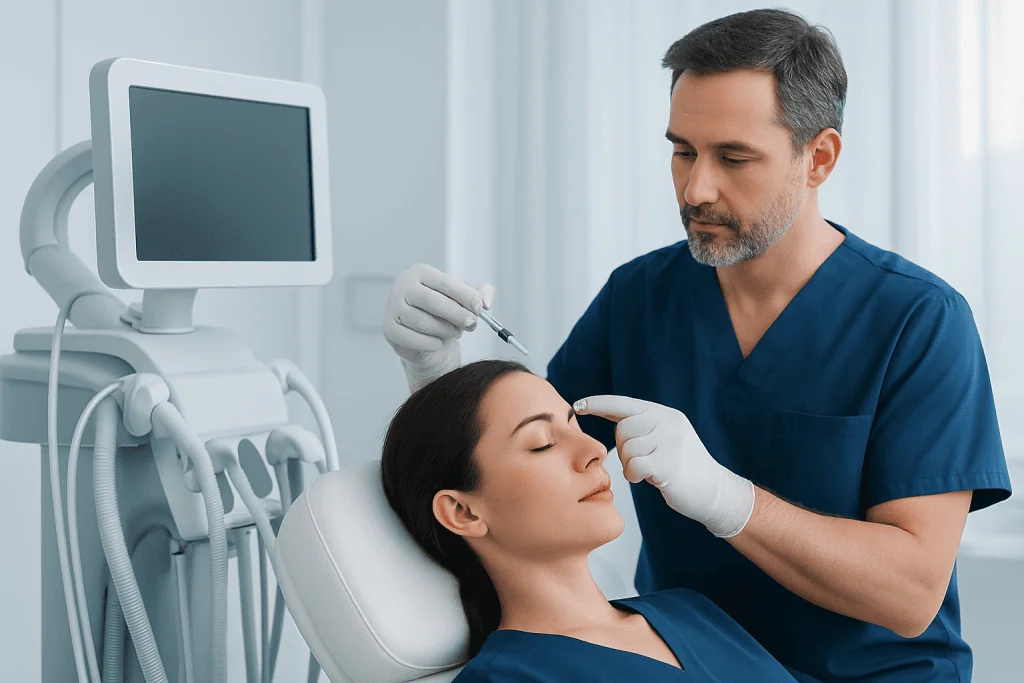
Cosmetically, Dysport is best known for reducing dynamic wrinkles. These are lines caused by repeated muscle movement, such as frown lines, forehead lines, or lines around the eyes. It does not act like a filler, so it does not add volume to the skin. Instead, it reduces the muscle activity that contributes to line formation.
Medically, botulinum toxin may also be used in carefully selected patients with conditions linked to muscle overactivity. Depending on the clinician’s specialty and the patient’s diagnosis, this can include cervical dystonia, spasticity, or other movement-related concerns. Patients who have been evaluated for cervical dystonia may hear Dysport discussed as one possible treatment approach.
In aesthetic practice, treatment may be part of a wider skin and facial rejuvenation plan. Some patients may also discuss options such as botulinum toxin treatment or complementary procedures like dermal fillers when volume loss, deeper folds, or skin texture are also concerns. The best plan depends on anatomy, goals, and what a clinician finds during assessment.
How Dysport works and how quickly results appear

After injection into a targeted muscle, Dysport blocks the release of a chemical messenger that tells the muscle to contract. The effect is localized to the treated area when the procedure is done properly. As the muscle relaxes, the skin above it is pulled less strongly, so expression lines may look softer and the area may appear smoother.
Results are not immediate. Many patients begin to notice changes within a few days, but the full effect may take longer to develop. The timing can vary from person to person based on the treatment area, the dose used, muscle strength, and individual response. A doctor usually advises waiting long enough before judging the final result.
The effect is temporary because the nerve endings gradually recover their signaling function over time. This means repeated treatment is often needed if a patient wants to maintain the same cosmetic or medical benefit. The interval between treatments varies and should be determined by the treating clinician rather than by a fixed schedule taken from social media or personal anecdotes.
Who may be a suitable candidate
A suitable candidate is someone whose concerns match what Dysport can realistically improve and who has been assessed by an appropriately trained clinician. In cosmetic use, the best candidates often have dynamic lines related to muscle movement and understand that the goal is softening, not perfect stillness or dramatic structural change.
Before treatment, the clinician should review medical history, medications, allergies, previous facial procedures, and any past reactions to botulinum toxin. Pregnancy, breastfeeding, certain neuromuscular disorders, active infection at the injection site, and swallowing or breathing problems may affect whether treatment is advised. Patients should always disclose all relevant health information, even if it seems unrelated.
Assessment should also include a discussion of facial symmetry, brow position, eyelid anatomy, and skin quality. This helps the clinician design a safer and more balanced injection plan. For patients exploring broader facial procedures, a consultation about facial rejuvenation options may also be appropriate if skin laxity, rather than muscle movement alone, is the main concern.
What happens during treatment and recovery
Dysport treatment is usually performed in an outpatient setting. After reviewing the plan, the clinician may ask the patient to move the face in certain ways so the active muscles can be identified. The skin is then cleaned, and a series of small injections is placed into selected points. The procedure is typically brief, though the exact time depends on the area being treated.
Most people can return to normal daily activities soon afterward. Mild redness, pinpoint swelling, tenderness, or small bruises at the injection sites may occur and often settle within a short time. A clinician may advise avoiding rubbing the area, strenuous exercise for a period, or lying flat immediately after treatment, depending on the indication and injection pattern.
Recovery expectations should be practical. The area may not look very different on the same day, and early asymmetry can occur before the full effect settles. Follow-up may be recommended to assess the response and decide whether any adjustment is appropriate. Patients should avoid seeking repeated touch-ups too quickly without professional review.
Side effects, risks, and safety considerations
Like any medical procedure, Dysport can cause side effects. Common effects are usually mild and temporary and may include redness, swelling, bruising, headache, injection-site discomfort, or a feeling of tightness. In cosmetic treatment, some people notice that facial expressions feel different at first while they adjust to the muscle relaxation.
Less commonly, the medicine can affect nearby muscles more than intended. This may lead to eyelid drooping, uneven eyebrow position, changes in smile, or difficulty with certain facial movements, depending on the treatment area. When Dysport is used for medical conditions affecting the neck or limbs, the risk profile may differ according to the muscles treated and the person’s underlying health.
Rare but important complications require prompt medical assessment. These include trouble swallowing, speaking, or breathing; marked weakness away from the injection area; allergic-type reactions; or worsening of symptoms that does not seem expected. Safety depends heavily on proper patient selection, accurate injection technique, and treatment by a licensed professional experienced with botulinum toxin products.
How Dysport compares with other options
Patients often ask whether Dysport is better than other botulinum toxin brands. In practice, the best choice depends on the area being treated, the clinician’s experience, the pattern of muscle movement, and the desired effect. Different products can all be effective when used appropriately, but they are formulated differently and should not be directly compared by dose units alone.
It is also helpful to understand what Dysport cannot do. It does not replace surgery for major skin laxity, and it does not restore lost facial volume. If lines are present even when the face is at rest, a combination approach may sometimes be discussed. For some people, skin care, resurfacing, or volume-restoring procedures may address concerns that muscle relaxation alone cannot fully improve.
For medical uses, botulinum toxin is one part of a broader care plan. A person with muscle stiffness, abnormal posture, or chronic movement symptoms may also need physical therapy, oral medicines, rehabilitation, or imaging and neurological evaluation. The right strategy depends on the diagnosis, severity, and effect on everyday function.
When to seek medical care
Patients should contact their treating clinician if they have bothersome swelling, increasing pain, unusual asymmetry that worsens, or side effects that do not improve as expected. Questions are especially important after a first treatment, because individual responses can vary and follow-up may help clarify whether the result is typical or needs reassessment.
Urgent medical care is needed if symptoms suggest a serious reaction or toxin spread. Warning signs include difficulty breathing, swallowing, or speaking; generalized weakness; significant drooping that interferes with vision; or signs of an allergic reaction such as widespread rash or facial swelling. These reactions are uncommon, but they should not be ignored.
Anyone considering Dysport for cosmetic or medical reasons should seek care from a qualified physician who can explain benefits, limits, and alternatives. Near the end of the care journey, some international patients choose evaluation at centers such as Acibadem International, where multidisciplinary specialists in JCI-accredited hospitals diagnose and treat conditions that may involve botulinum toxin therapy as part of a broader plan.
Frequently asked questions
Is Dysport the same as Botox?
Dysport and Botox are both botulinum toxin type A products, but they are different brands with different formulations and dosing units. They are used for similar cosmetic and medical purposes, but they are not directly interchangeable unit-for-unit. A qualified clinician decides which product is most appropriate.
How long does Dysport last?
The effect is temporary, and most patients need repeat treatment to maintain results. How long it lasts varies by person, treatment area, muscle strength, and the reason for treatment. A doctor can give a more tailored estimate after assessment.
Does Dysport hurt?
Most people describe Dysport injections as brief and tolerable. The needles used are very small, and treatment is usually quick. Mild stinging, tenderness, or a small bruise can happen afterward.
Can Dysport make the face look frozen?
Overly limited movement can happen if too much product is used or if the treatment plan does not match the person’s facial anatomy and goals. In well-planned treatment, the aim is usually to soften lines while preserving natural expression. Clear communication with the injector is important.
Who should avoid Dysport?
People with certain neuromuscular disorders, active infection at the injection site, known allergy to ingredients, or significant swallowing or breathing issues may not be suitable candidates. Pregnancy and breastfeeding also require special discussion. A clinician should review the full medical history before treatment.
What should patients avoid after Dysport?
Aftercare instructions vary, but patients are often advised to avoid rubbing the treated area and to follow any activity restrictions given by the clinician. It is also wise to avoid making quick judgments about the result in the first day or two. Following the provider’s instructions helps support the safest outcome.
This article is for general information only and is not a substitute for professional medical advice. Please consult a qualified doctor about your individual situation.
Explore treatments in Turkey — costs, top hospitals & a free quote
JCI-accredited · board-certified surgeons · reply within 24h
Add us as a Preferred Source to see more of our trusted health content across Google Search, AI Overviews and Discover.

More from the Health Library

Basil Seeds Advantages: What Patients Need to Know

Lamisil: An Evidence-Based Guide for Patients

Cytology: A Complete Medical Overview

Thrombosed External Hemorrhoid: A Complete Medical Overview

Uterine Atony: An Evidence-Based Guide for Patients