Eea Surgery: Procedure, Recovery and Results

EEA surgery uses a nasal endoscope and specialized instruments to access selected pituitary and skull-base lesions. It is usually performed by a combined neurosurgery and ear, nose and throat surgical team.
Key Takeaways
- EEA surgery uses a nasal endoscope and specialized instruments to access selected pituitary and skull-base lesions.
- It is usually performed by a combined neurosurgery and ear, nose and throat surgical team.
- Many patients stay in hospital for several days, while full recovery commonly takes weeks and follow-up may continue for months.
- Potential benefits include avoiding a craniotomy, but risks can include cerebrospinal fluid leakage, hormonal changes, infection and vision-related complications.
- Results depend mainly on the diagnosis, tumor size and location, and whether complete removal can be achieved safely.
EEA surgery, or endoscopic endonasal approach surgery, is an operation performed through the nostrils to reach certain pituitary, skull-base and nearby brain conditions without an external facial incision. Recovery and results depend on the condition treated, the extent of surgery and whether hormone, vision or neurological structures are involved.
Overview: what does EEA surgery mean?
EEA surgery means endoscopic endonasal approach surgery. It is a minimally invasive skull-base operation in which surgeons pass a slim camera, called an endoscope, and surgical instruments through the nostrils to reach areas behind the nose, including the pituitary gland and certain regions at the base of the skull.
The term may refer to the surgical route rather than one single diagnosis. An EEA surgical procedure can be used for selected pituitary tumors, cysts, benign skull-base tumors, some cancers and carefully chosen vascular or inflammatory conditions. People may also see terms such as “EEA medical procedure” or, less commonly, “EEEA resection”; these generally describe endoscopic surgery through the nose, although the exact operation should be clarified with the surgical team.
EEA surgery is most often planned by neurosurgeons together with ear, nose and throat surgeons who have skull-base expertise. The goal is to reach the target safely while protecting the brain, optic nerves, blood vessels, pituitary gland and normal nasal structures.
How the endoscopic endonasal approach works
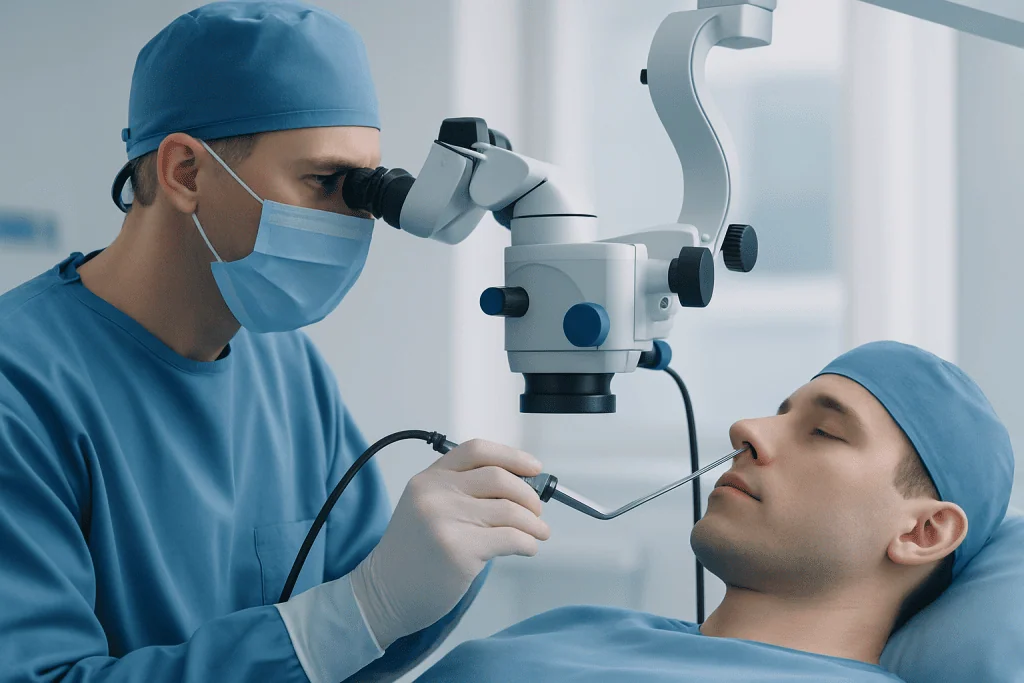
During endoscopic endonasal surgery, an ENT surgeon creates a carefully planned nasal pathway, usually through one or both nostrils. A high-definition endoscope provides magnified, illuminated views, and the neurosurgeon uses fine instruments to remove or biopsy the lesion, drain a cyst, relieve pressure or repair an area at the skull base.
For pituitary surgery, the route often passes through the sphenoid sinus, an air-filled space behind the nose, to reach the sella, the small bony space containing the pituitary gland. This may allow access without opening the skull. However, “minimally invasive” does not mean minor surgery: the operation involves important structures and requires detailed imaging, planning and postoperative observation.
When tissue is removed, the surgeon may reconstruct the skull-base opening with fat, fascia or a vascularized flap of nasal tissue. This reconstruction helps prevent cerebrospinal fluid, or CSF, from leaking from around the brain into the nose.
Who may be a candidate for EEA surgery?

Candidacy is determined individually. EEA surgery may be considered when a lesion is located in the midline or can be safely reached through the nasal and sinus corridors. It is commonly used for selected pituitary adenomas, craniopharyngiomas, Rathke’s cleft cysts, meningiomas and other skull-base conditions.
Doctors consider the lesion’s size, type, growth pattern and relationship to the optic nerves, carotid arteries, pituitary gland and brain tissue. Symptoms such as vision loss, persistent headaches, hormone changes, fluid leakage from the nose or pressure on nearby structures may also influence the decision. Imaging, usually MRI and CT scans, helps define the safest approach.
Not every patient or lesion is suited to the endonasal route. Some tumors extend too far to the side, surround important vessels or require another operation for the safest and most complete treatment. Surgery may also not be needed for small, stable lesions that can be monitored or managed with medicine, radiation therapy or another approach.
Step-by-step: what happens during the procedure?
Before surgery, patients have a preoperative assessment that may include blood tests, hormone testing, vision testing, nasal examination and imaging. They are given general anesthesia, so they are asleep and do not feel the procedure. Depending on the diagnosis, endocrinology, ophthalmology and radiology specialists may contribute to the care plan.
The surgical team inserts the endoscope through the nostril and gently works through the nasal cavity and sphenoid sinus. Navigation technology may be used to compare the instruments’ position with the patient’s CT or MRI scans. The surgeons expose the target area, remove or sample abnormal tissue, and confirm that key structures are protected.
At the end of surgery, the opening is closed with reconstruction material when needed. Nasal packing or splints may be used in some cases, though techniques vary. The length of the operation can range from a few hours to longer for complex skull-base lesions, reconstruction or combined procedures.
Patients generally wake in a monitored setting and may spend the first night in an intensive care or high-dependency unit. Nurses and doctors check alertness, vision, fluid balance, blood sodium levels, pain and nasal drainage closely.
Benefits, limitations and possible risks
A possible benefit of EEA surgery is direct access to selected central skull-base areas without a scalp incision or traditional craniotomy. This can reduce disruption of some tissues and may support a shorter hospital stay for appropriate patients. It can also allow early relief of pressure on the optic nerves in some pituitary and skull-base conditions.
Outcomes are not defined only by how much tissue is removed. The surgical team balances removal with the need to preserve vision, hormones, blood vessels and neurological function. In some situations, leaving a small amount of tumor and monitoring it or using additional treatment may be safer than attempting complete removal.
Possible complications include bleeding, infection, nasal crusting or congestion, reduced smell, sinus problems, CSF leakage, meningitis, injury to nearby blood vessels, vision changes and hormone disturbances. Pituitary surgery can occasionally cause temporary or long-term changes in water balance or hormone production, requiring monitoring and hormone replacement. The treating team explains the risks that are most relevant to the individual condition.
For international patients, Acibadem International’s multidisciplinary specialists and JCI-accredited hospitals can assess and treat selected pituitary and skull-base conditions using coordinated neurosurgical, ENT and endocrine care.
How long does it take to recover from endoscopic endonasal surgery?
EEA surgery recovery time varies considerably. Many patients remain in hospital for approximately two to five days, although a longer stay may be needed after extensive surgery, a CSF leak repair, major hormone changes or other complications. Nasal congestion, mild headache, tiredness and a reduced sense of smell are common during the early recovery period.
Most people need several weeks before returning to usual daily routines, while recovery after a complex skull-base operation can take longer. The care team may recommend avoiding nose blowing, heavy lifting, straining, bending forward for prolonged periods and vigorous exercise for a defined period, because these actions can increase pressure around the surgical site.
Follow-up visits are important. They may include nasal endoscopy, MRI scans, visual-field testing and hormone blood tests. Patients should follow their surgeon’s instructions about saline rinses, prescribed medicines, activity and travel, rather than relying on a general timeline.
Do you feel better after pituitary tumor surgery?
Many people feel better after pituitary tumor surgery when the operation successfully relieves pressure on nearby structures or reduces excess hormone production. For example, vision may improve when pressure on the optic nerves is relieved, and symptoms caused by hormone overproduction may gradually lessen. Improvement may be immediate for some symptoms but slower for others.
Recovery can also involve temporary discomfort, fatigue, nasal blockage and emotional adjustment. Headaches do not always have one cause, so they may not disappear completely after surgery. If pituitary function was affected before or during the operation, patients may need short-term or long-term hormone replacement and ongoing endocrinology follow-up.
Whether a person feels better depends on the tumor type, size, duration of symptoms, degree of nerve or gland involvement and any other health conditions. The surgical team can give the most individualized expectation after reviewing scans, laboratory results and the operative findings.
What is the success rate of endoscopic endonasal surgery?
There is no single success rate for endoscopic endonasal surgery because it is used for different conditions with different goals. A successful result may mean complete tumor removal, safe partial removal, improved vision, normalized hormone levels, relief of pressure, a confirmed diagnosis or a durable repair of a CSF leak.
For pituitary and skull-base tumors, outcomes depend on factors such as tumor type, size, extension into nearby spaces, involvement of blood vessels, prior treatment and the experience of the multidisciplinary team. Some lesions can be fully removed, while others are intentionally treated with a combination of surgery, observation, medication or radiotherapy.
Patients can ask their surgeon about the expected goal in their own case, the likelihood of additional treatment and the team’s approach to monitoring recurrence or regrowth. This discussion is more useful than applying a general figure to an individual diagnosis.
How long does it take to recover from endoscopic ear surgery?
Endoscopic ear surgery is different from endoscopic endonasal or EEA surgery. It uses an endoscope through the ear canal to treat selected middle-ear or eardrum conditions, whereas EEA surgery passes through the nose to reach the pituitary gland or skull base.
Recovery from endoscopic ear surgery often involves a shorter return to basic activities than major skull-base surgery, but timing depends on the operation performed. Ear fullness, mild discomfort, temporary hearing changes or drainage can occur while the ear heals. The surgeon may restrict water exposure, air travel, heavy exercise or forceful nose blowing for a period.
Anyone considering either procedure should confirm the exact name of the operation and its recovery plan. Similar-sounding terms can describe surgery in very different areas of the body.
When to seek medical care
People should seek urgent medical advice after EEA surgery for clear, persistent watery drainage from the nose; fever; severe or worsening headache; neck stiffness; new vision changes; confusion; repeated vomiting; significant nosebleeds; increasing weakness; or symptoms of dehydration. These symptoms do not always indicate a serious complication, but they need timely assessment.
After pituitary surgery, excessive thirst, unusually frequent urination, marked fatigue, dizziness or fainting should also be reported promptly because they may be related to changes in fluid balance or hormone levels. Patients should use the emergency contact instructions given by their hospital and seek emergency care when symptoms are severe or rapidly worsening.
Before surgery, new or progressive loss of vision, double vision, severe sudden headache, clear nasal fluid after head trauma, or symptoms of significant hormone imbalance should be assessed by a qualified clinician. Early evaluation can help identify conditions that need specialist care.
Frequently asked questions
Is EEA surgery the same as transsphenoidal surgery?
EEA surgery is a broader term for endoscopic surgery performed through the nose. Transsphenoidal surgery is a common type of EEA surgery that passes through the sphenoid sinus to reach the pituitary gland. The exact route and extent of surgery depend on the condition being treated.
Will EEA surgery leave a visible scar?
Because the operation is performed through the nostrils, it usually does not leave a visible external facial scar. Internal nasal healing still occurs, and temporary congestion, crusting or altered smell can develop. The surgical team provides instructions to support nasal healing.
How painful is recovery after endoscopic endonasal surgery?
Pain is often described as pressure, headache, sinus discomfort or nasal congestion rather than pain from an external incision. The amount of discomfort varies with the extent of surgery and reconstruction. Clinicians can provide suitable pain-management options and guidance on symptoms that should be reported.
Can a pituitary tumor come back after surgery?
Some pituitary tumors can regrow or recur, particularly if a small portion must be left behind to protect nearby structures. Follow-up MRI scans, hormone testing and specialist review are therefore important. Additional treatment is not always needed, but it may be considered in selected cases.
When can a person return to work after EEA surgery?
The return-to-work timeline depends on the type of job, the extent of surgery and the person’s recovery. Some people may return to light duties after a few weeks, while others need longer, especially after complex skull-base surgery or if hormone replacement is being adjusted. The surgeon should confirm when work, exercise and travel are appropriate.
Can patients blow their nose after EEA surgery?
Patients are commonly advised not to blow their nose for an initial healing period, as this can increase pressure at the surgical site. Sneezing with the mouth open may also be recommended. Instructions differ between procedures, so the individual postoperative plan should always be followed.
References
- National Institute of Neurological Disorders and Stroke
- American Association of Neurological Surgeons
- Endocrine Society
- American Rhinologic Society
This article is for general information only and is not a substitute for professional medical advice. Please consult a qualified doctor about your individual situation.
Explore treatments in Turkey — costs, top hospitals & a free quote
JCI-accredited · board-certified surgeons · reply within 24h
Add us as a Preferred Source to see more of our trusted health content across Google Search, AI Overviews and Discover.