Elisa — Explained by Medical Evidence, Not Myths

ELISA stands for enzyme-linked immunosorbent assay and is used to identify specific substances in the body. The test can help detect antibodies, antigens, hormones, and other proteins depending on the clinical question.
Key Takeaways
- ELISA stands for enzyme-linked immunosorbent assay and is used to identify specific substances in the body.
- The test can help detect antibodies, antigens, hormones, and other proteins depending on the clinical question.
- An ELISA result usually needs to be interpreted alongside symptoms, medical history, and sometimes confirmatory testing.
- Positive or negative results do not always give a complete answer, especially very early in illness or in low-risk situations.
- Most ELISA tests are simple blood tests, though other sample types may also be used.
ELISA is a laboratory test used to detect or measure antibodies, antigens, hormones, or other proteins in a sample, most often blood. It does not diagnose every condition by itself, but it is a well-established tool that helps doctors investigate infections, immune conditions, allergies, and many other health questions.
What ELISA is and why it is used
ELISA, short for enzyme-linked immunosorbent assay, is a laboratory method used to detect and measure specific biological substances in a sample. Depending on what the doctor is investigating, the test may look for antibodies made by the immune system, antigens from an infection, or other proteins such as hormones and inflammatory markers. In everyday medical care, ELISA is best understood as a highly targeted lab tool rather than a disease itself.
Because it can identify very specific molecules, ELISA is widely used in medicine. It may help evaluate infections, immune responses, allergies, autoimmune conditions, and some hormone-related issues. The exact meaning of the test depends on what is being measured, why the test was ordered, and when in the course of an illness the sample was taken.
Many people search for “elisa” expecting a single diagnosis, but ELISA is actually a testing technique. For example, doctors may use an ELISA-based test as part of the work-up for conditions such as Lyme disease or hepatitis B, among many others. This is why any explanation of ELISA should focus not just on the technology, but also on the clinical context.
How the ELISA test works
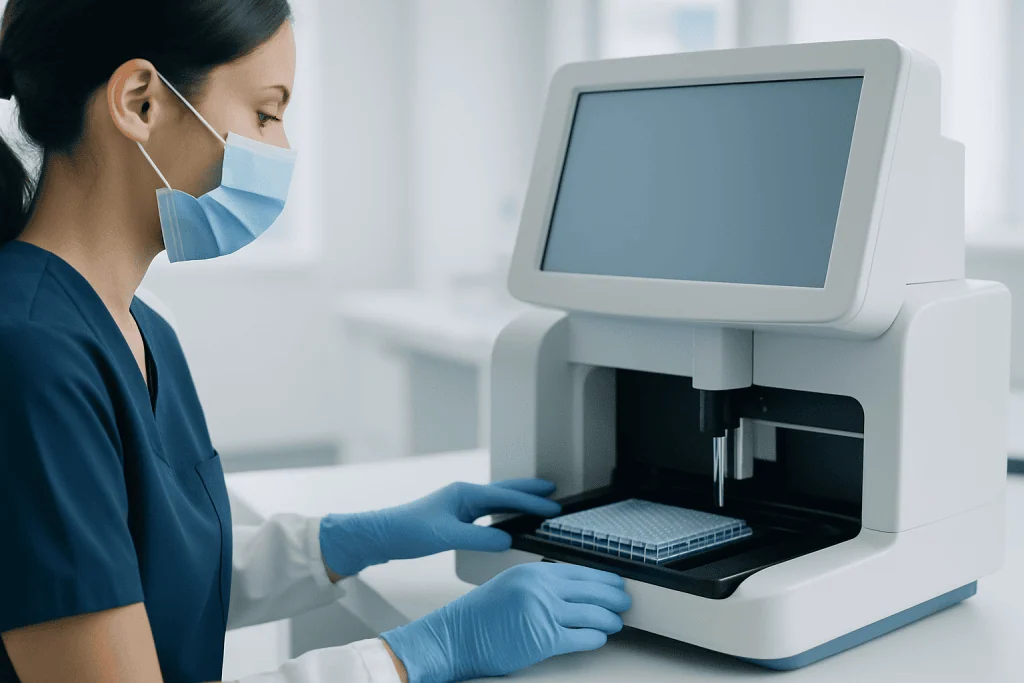
ELISA works by using a carefully designed reaction between a target substance and a matching binding partner, usually an antibody. If the target is present in the sample, it binds to the test surface. A linked enzyme then produces a color change or another measurable signal, which laboratory equipment reads. The strength of that signal helps show whether the target is present and sometimes how much is present.
Several ELISA formats exist, including direct, indirect, sandwich, and competitive ELISA. Patients do not usually need to know these technical differences in detail, but they matter to laboratories because each format is suited to different questions. One type may be better for detecting antibodies, while another may be more useful for measuring antigens or proteins.
In practical terms, the method is valued because it is sensitive, standardized, and suitable for testing many samples efficiently. Even so, like all medical tests, ELISA has limits. A result can be affected by timing, sample quality, underlying health conditions, and the likelihood that a person truly has the condition being tested for.
What conditions can ELISA help assess?

ELISA can support the evaluation of a wide range of medical conditions. It is commonly used in infectious disease testing, including some tests related to HIV, hepatitis viruses, Lyme disease, and certain parasitic or bacterial infections. In other situations, it may be used to detect hormones, food or environmental allergy-related antibodies, or proteins linked to inflammation and immunity.
Doctors may also request ELISA as part of the assessment of autoimmune diseases or immune system activity. However, an ELISA result rarely stands alone. A positive antibody test, for example, may show exposure or an immune response, but it may not confirm active disease without further medical assessment.
Examples of common uses include:
- Screening or supporting diagnosis of some infections
- Measuring antibodies after exposure or immune response
- Checking selected hormone or protein levels
- Supporting allergy and autoimmune evaluations
- Monitoring certain conditions in combination with other tests
If a result suggests an infectious disease, the next step may include a targeted consultation and additional laboratory or imaging tests. In some cases, doctors may combine ELISA findings with broader evaluations in areas such as check-up and screening or specialized microbiology testing.
How ELISA samples are taken and how to prepare
Most ELISA tests are performed on a blood sample taken from a vein in the arm. Some versions may use other sample types, such as urine, saliva, or cerebrospinal fluid, depending on the condition being investigated. The sample collection itself is usually quick and routine, with only minor discomfort from the needle.
Preparation depends on the specific test. Many ELISA-based blood tests do not require fasting, but some hormone or metabolic tests may have special instructions. It is helpful for patients to tell their doctor about medicines, supplements, recent vaccinations, known immune disorders, pregnancy, or recent infections, because these factors can sometimes affect interpretation.
After collection, the sample is processed in a laboratory. Results may come back quickly for some tests, while others take longer depending on the type of analysis and whether additional confirmatory testing is needed. A patient should avoid trying to interpret the result alone before discussing it with a qualified clinician.
Understanding ELISA results
An ELISA result is usually reported as positive, negative, borderline, reactive, nonreactive, or as a measured value with a reference range. The wording depends on what is being tested. A positive result means the target substance was detected, but that does not always mean a person has an active illness. A negative result means it was not detected at the time of testing, but that also may not fully exclude disease.
Timing is one of the most important reasons results can be misunderstood. Early in an infection, the body may not yet have produced enough antibodies to detect. This can lead to a false-negative result. In other situations, a person may have antibodies from a past exposure rather than a current illness. Some tests can also show false-positive results because of cross-reactivity with similar substances.
Doctors interpret ELISA results together with symptoms, examination findings, exposure history, and sometimes imaging or additional laboratory studies. Follow-up testing may include repeat blood work, a more specific confirmatory assay, culture methods, molecular tests, or specialist review. When a test result raises concern for a liver infection or another systemic condition, a broader assessment such as internal medicine evaluation may be appropriate.
In short, ELISA is very useful, but it is not a myth-proof shortcut to diagnosis on its own. The safest way to understand any result is to ask what was measured, how accurate the test is in that setting, and whether more testing is needed.
Benefits, limitations, and possible risks
The main benefit of ELISA is that it can detect specific targets with good laboratory reliability when used correctly. It is also widely available and can be applied to many areas of medicine. For clinicians, it offers a practical way to narrow possibilities and guide next steps.
Its main limitation is that the test answers a narrower question than many people assume. It may show that a certain antibody, antigen, or protein is present, but it does not always explain why it is present or whether it is causing symptoms. This is especially important in diseases where past exposure, vaccination, or immune cross-reactions can influence the result.
Physical risks from the test are minimal and are usually limited to those of standard blood sampling, such as brief pain, a small bruise, or lightheadedness. The more important risk is misinterpretation. Anxiety can rise when people read a result online without context, so direct discussion with a doctor is important whenever a result is unexpected, borderline, or difficult to understand.
When to seek medical care
A person should seek medical care if they have symptoms that may point to an infection, immune condition, or another illness for which testing is being considered. These symptoms vary widely, but may include persistent fever, unexplained fatigue, rash, swollen glands, jaundice, ongoing digestive symptoms, joint pain, or a known exposure to an infectious disease. Testing is most useful when it is chosen for a clear clinical reason.
Medical advice is also important if an ELISA result is positive, borderline, or does not match the person’s symptoms. A doctor can explain whether the result reflects active disease, past exposure, or a need for repeat or confirmatory testing. Urgent assessment is sensible for severe symptoms such as difficulty breathing, confusion, chest pain, dehydration, or signs of significant liver illness.
For patients who need coordinated evaluation, Acibadem International’s multidisciplinary specialists and JCI-accredited hospitals diagnose and treat international patients using laboratory medicine, imaging, and specialty care when needed. Depending on the suspected condition, follow-up may include infectious diseases care or referral to other relevant departments.
Frequently asked questions
What does ELISA stand for?
ELISA stands for enzyme-linked immunosorbent assay. It is a laboratory method used to detect or measure specific substances such as antibodies, antigens, hormones, or proteins in a sample.
Is ELISA a disease or a diagnosis?
No. ELISA is a testing method, not a disease. It helps doctors gather evidence about a possible condition, but the diagnosis usually depends on the full clinical picture and sometimes more tests.
What sample is used for an ELISA test?
Most ELISA tests are done on a blood sample. In some situations, other samples such as urine, saliva, or cerebrospinal fluid may be used, depending on what is being investigated.
How accurate is an ELISA test?
ELISA can be very useful and reliable, but accuracy varies by the condition, the test design, and the timing of the sample. A result may occasionally be false-positive or false-negative, which is why doctors sometimes order confirmatory testing.
Can ELISA detect infections early?
Sometimes, but not always. If the test looks for antibodies, it may be negative very early because the immune system has not yet produced enough antibodies to detect. The timing of the test matters a great deal.
Does a positive ELISA mean someone definitely has the disease?
Not necessarily. A positive result means the target substance was detected, but that may reflect current infection, past exposure, immune response, or occasionally cross-reactivity. A doctor interprets the result together with symptoms and other findings.
This article is for general information only and is not a substitute for professional medical advice. Please consult a qualified doctor about your individual situation.
Explore treatments in Turkey — costs, top hospitals & a free quote
JCI-accredited · board-certified surgeons · reply within 24h
Add us as a Preferred Source to see more of our trusted health content across Google Search, AI Overviews and Discover.

More from the Health Library

Microneedling with Prp: A Complete Medical Overview

Syringomyelia: What Patients Need to Know

Limerence: An Evidence-Based Guide for Patients

Epidural Steroid Injection: An Evidence-Based Guide for Patients

Cogwheeling: A Complete Medical Overview