Endoscopic Myotomy: Preparation, Procedure and Results

Endoscopic myotomy is most commonly used to treat achalasia, a disorder that makes swallowing difficult. The procedure is performed through the mouth with an endoscope under general anesthesia, without external incisions.
Key Takeaways
- Endoscopic myotomy is most commonly used to treat achalasia, a disorder that makes swallowing difficult.
- The procedure is performed through the mouth with an endoscope under general anesthesia, without external incisions.
- Most people stay in hospital briefly and return to usual activities gradually over days to weeks.
- Swallowing usually improves after treatment, although reflux can occur and follow-up remains important.
- Careful assessment with swallowing tests and esophageal manometry helps determine whether POEM is appropriate.
Endoscopic myotomy, often called peroral endoscopic myotomy (POEM), is a minimally invasive procedure used mainly to treat achalasia and certain other esophageal muscle disorders. It works by dividing overly tight muscle fibers at the lower end of the esophagus, helping food and liquids pass into the stomach more easily.
Overview: What Is Endoscopic Myotomy?
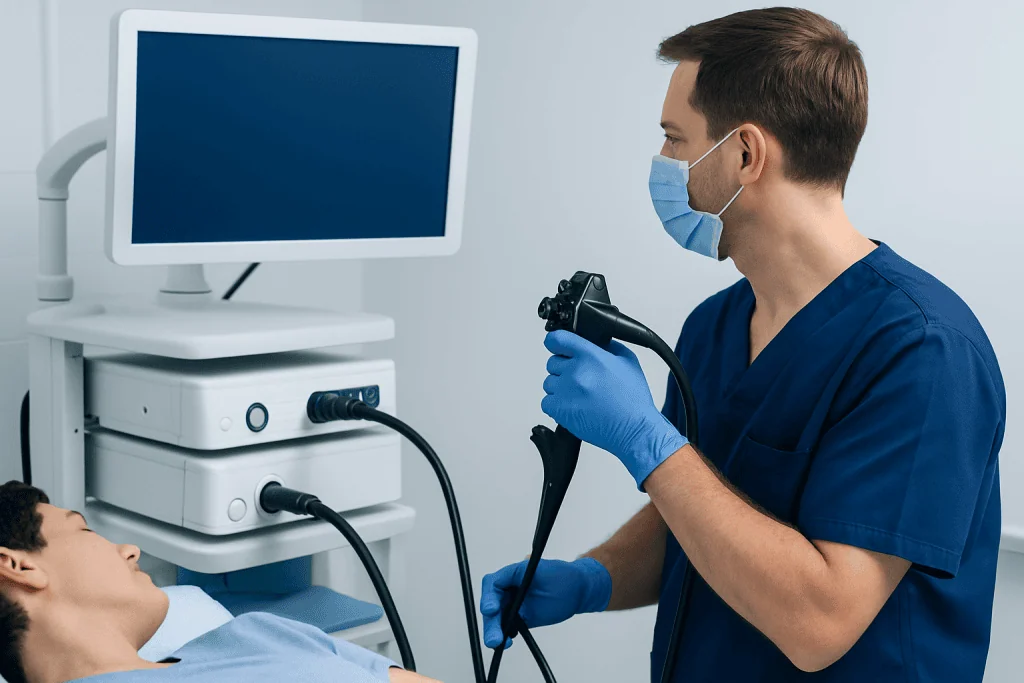
Endoscopic myotomy is a minimally invasive procedure that treats swallowing problems caused by muscles that do not relax normally at the lower end of the esophagus. The esophagus is the tube that carries food from the mouth to the stomach. During the procedure, a specialist uses a flexible camera tube, called an endoscope, passed through the mouth to divide selected muscle fibers inside the esophageal wall.
The best-known form is peroral endoscopic myotomy, or POEM. It is used primarily for achalasia, a condition in which the lower esophageal sphincter remains too tight and normal wave-like movement of the esophagus is reduced or absent. This can lead to difficulty swallowing, regurgitation, chest discomfort, coughing at night, and unintended weight loss.
Endoscopic myotomy is not the same as an endoscopic myomectomy technique. A myomectomy removes fibroids or other muscle growths, commonly from the uterus. In contrast, an endoscopic myotomy cuts tight muscle fibers to improve passage through the esophagus.
How Endoscopic Myotomy Works and Who May Be a Candidate
In achalasia, food and liquid can collect in the esophagus because the valve-like muscle at its lower end does not open properly. An endoscopic myotomy treatment for achalasia creates a controlled division in this tight muscle. This lowers resistance at the stomach entrance and can make swallowing easier.
POEM may be considered for adults with confirmed achalasia, including people with symptoms that continue after medicines, balloon dilation, or previous treatment. It may also be an option for some people with spastic esophageal motility disorders, in which poorly coordinated contractions cause swallowing difficulty or chest pain. The most suitable treatment depends on the exact diagnosis, symptom pattern, anatomy, prior procedures, and the experience of the treatment team.
Before recommending an endoscopic myotomy procedure, clinicians commonly use several assessments. These may include upper endoscopy to examine the esophagus and stomach, a barium swallow study to observe movement of swallowed material, and high-resolution esophageal manometry to measure muscle pressure and coordination. These tests also help exclude structural narrowing, inflammation, or cancer that may cause similar symptoms.
- Symptoms should be linked to a confirmed motility disorder.
- The person should be well enough for general anesthesia.
- Previous treatments and reflux risk should be reviewed carefully.
- Long-term follow-up should be feasible after the procedure.
Preparation and the Endoscopic Myotomy Procedure

Preparation instructions vary by hospital and individual health needs. The care team usually advises a modified diet for a short period before the procedure and fasting beforehand so the esophagus and stomach are as empty as possible. Patients should provide a complete list of medicines, supplements, allergies, previous operations, and conditions such as heart or lung disease. Blood-thinning medicines, diabetes medicines, and some other treatments may need individual adjustment.
Endoscopic myotomy anesthesia is general anesthesia. This means the patient is asleep and does not feel the procedure. An anesthesiologist monitors breathing, blood pressure, heart rhythm, and oxygen levels throughout. The procedure is performed through the mouth, so there are usually no cuts on the chest or abdomen.
During POEM, the endoscopist makes a small entry in the lining of the esophagus and creates a tunnel within its wall. The targeted muscle layer is then divided, usually extending across the lower esophageal sphincter and slightly into the upper stomach. The entry site is closed with endoscopic clips. The duration varies according to the anatomy and type of motility disorder, but the procedure commonly takes one to several hours.
Although people sometimes refer to this as endoscopic myotomy surgery, it differs from open surgery because it does not require external incisions. It is still a specialized intervention and should be performed by an experienced multidisciplinary team with appropriate anesthesia, endoscopy, imaging, and surgical support.
Benefits, Results and Possible Risks
The main intended benefit of endoscopic myotomy is improved swallowing. Many patients experience less regurgitation and less food sticking in the chest after a successful procedure. Improving esophageal emptying may also reduce nighttime cough or aspiration-related symptoms in people whose regurgitation has contributed to these problems.
Results depend on factors such as the achalasia subtype, the degree of esophageal enlargement or scarring, previous interventions, and whether another condition is contributing to symptoms. A myotomy improves the functional obstruction caused by tight muscle, but it does not restore normal esophageal nerve function. Some people may continue to need dietary adjustments, symptom monitoring, or further treatment over time.
Possible complications include bleeding, infection, injury to the esophageal lining, air leakage into surrounding tissues, and a leak from the procedure site. These are uncommon but can require observation, antibiotics, endoscopic treatment, drainage, or surgery in selected cases. Gastroesophageal reflux is an important longer-term consideration because relaxing the lower sphincter can allow stomach contents to move upward more easily.
Follow-up may include symptom review, tests of esophageal emptying, and assessment for reflux. Persistent or returning swallowing problems should not be assumed to be normal; they deserve medical review to identify causes such as reflux-related narrowing, incomplete muscle division, or progression of the underlying motility disorder.
How Long Does It Take to Recover From a Peroral Endoscopic Myotomy (POEM)?
Recovery from a peroral endoscopic myotomy is often faster than recovery from an operation involving external incisions, but it is not identical for everyone. Many patients remain in hospital for observation for one or two days. During this time, the team checks for pain, fever, signs of leakage, and the ability to begin drinking safely.
A swallowing study may be performed before oral intake is advanced, depending on local practice and the individual procedure. Patients commonly start with clear fluids, then progress to liquids and soft foods over days or weeks. The exact plan should come from the treating team because it may differ according to the length of the myotomy, symptoms, and any findings after the procedure.
Light daily activities are often possible within several days, while fatigue or throat discomfort can take longer to settle. Return to work depends on the type of work, general health, travel needs, and recovery progress. Strenuous exercise and heavy lifting may be restricted temporarily. A clinician should confirm when it is safe to resume normal activity.
It is helpful to attend all scheduled follow-up visits. These appointments allow the care team to assess swallowing, nutrition, reflux symptoms, medication needs, and any concerns that develop after returning home.
How Many Days Bed Rest After Endoscopy?
Bed rest is generally not required for several days after a routine endoscopy or after endoscopic myotomy. Following POEM, patients are usually encouraged to get up and walk when their clinical team says it is safe, often on the day of or the day after the procedure. Early gentle movement can support comfort and reduce complications associated with prolonged immobility.
Because POEM is performed under general anesthesia, rest is still important during the first day or two. Patients may feel tired, have a sore throat, or experience mild chest or upper abdominal discomfort. They should avoid driving, making important decisions, drinking alcohol, or being alone immediately after anesthesia unless the care team confirms otherwise.
Individual restrictions may be different for people who have complications, other medical conditions, or a more complex procedure. The discharge instructions provided by the treating hospital should always take priority over general advice.
Is Myotomy a Major Surgery and Can You Eat Normally After Myotomy?
A myotomy is a significant medical procedure because it changes the muscle at the lower end of the esophagus and requires general anesthesia. However, POEM is less invasive than traditional surgical approaches because it is performed through an endoscope rather than through external incisions. Whether it is described as “major surgery” can vary, but it should be approached with the same careful preparation, informed consent, and follow-up expected for any specialized intervention.
Eating normally is usually a gradual process after myotomy. Immediately after the procedure, patients commonly follow a staged diet that begins with liquids and advances to soft foods before returning to a more regular diet. This gives the treated area time to heal and allows clinicians to assess whether swallowing is improving safely.
Over time, many people can eat a varied diet more comfortably than before treatment. Nonetheless, some may find that smaller bites, thorough chewing, eating slowly, and drinking fluids with meals remain useful. Foods that trigger reflux may need to be limited, particularly if heartburn or regurgitation develops.
People should contact their clinician before changing the recommended diet progression. Trouble swallowing that worsens, inability to keep fluids down, repeated vomiting, severe chest pain, fever, or black stools requires prompt medical assessment.
When to Seek Medical Care
Anyone with progressive difficulty swallowing, food coming back up, unexplained weight loss, chest pain, persistent vomiting, or frequent nighttime coughing should arrange medical evaluation. These symptoms can occur with achalasia but can also have other causes, including conditions that need different treatment.
After endoscopic myotomy, urgent medical care is important for severe or increasing chest, neck, or abdominal pain; fever; shortness of breath; vomiting blood; black stools; fainting; or inability to swallow liquids. These symptoms do not always indicate a serious complication, but they should be assessed promptly.
For international patients, Acibadem International’s multidisciplinary specialists and JCI-accredited hospitals can assess esophageal motility disorders and provide coordinated treatment and follow-up planning. A gastroenterologist can explain the potential benefits and limitations of POEM in the context of each person’s diagnosis and health history.
Frequently asked questions
What is the difference between POEM and surgical myotomy?
POEM is performed through the mouth using an endoscope, without external incisions. Surgical myotomy, often called laparoscopic Heller myotomy, uses small abdominal incisions. Both aim to relax the lower esophageal muscle, but the most appropriate option depends on the person’s condition, anatomy, reflux risk, and prior treatment.
Is endoscopic myotomy painful?
The procedure itself is performed under general anesthesia, so the patient is asleep and does not feel it. Afterward, some people have temporary throat soreness, chest discomfort, or abdominal discomfort. Pain that is severe, worsening, or accompanied by fever or breathing difficulty should be assessed promptly.
How successful is endoscopic myotomy for achalasia?
Endoscopic myotomy can provide meaningful improvement in swallowing for many people with achalasia. Results vary by achalasia subtype, esophageal anatomy, prior treatment, and the experience of the clinical team. Ongoing follow-up is needed because symptoms or reflux can develop later.
Will I need reflux medication after POEM?
Some people develop acid reflux after POEM because the lower esophageal sphincter has been relaxed. A clinician may recommend acid-suppressing medicine, lifestyle measures, testing for reflux, or monitoring with endoscopy when appropriate. Not everyone needs the same approach.
Can achalasia return after endoscopic myotomy?
Achalasia is a long-term motility disorder, and symptoms can recur or persist after any treatment. Possible reasons include incomplete muscle relaxation, scarring, reflux-related narrowing, or progression of esophageal changes. New or recurring swallowing symptoms should be discussed with a gastroenterologist.
When can I travel after endoscopic myotomy?
Travel timing depends on recovery, the risk of complications, access to follow-up care, and the duration of travel. Patients are often advised to remain near their treating hospital for an initial recovery period. The treating team should provide personalized guidance, especially before international or long-distance travel.
References
- American College of Gastroenterology
- American Society for Gastrointestinal Endoscopy
- National Institute of Diabetes and Digestive and Kidney Diseases
- Mayo Clinic
- Cleveland Clinic
This article is for general information only and is not a substitute for professional medical advice. Please consult a qualified doctor about your individual situation.
Persistent digestive symptoms? Get evaluated in Turkey
JCI-accredited · board-certified surgeons · reply within 24h
Add us as a Preferred Source to see more of our trusted health content across Google Search, AI Overviews and Discover.
Check your numbers in seconds
BMI, calories, due date, blood pressure and 30+ more clinical calculators — free, instant, doctor-reviewed ranges.