

Endoscopy Back Surgery: Procedure, Recovery and Results

Endoscopic spine surgery may be used to remove a herniated disc fragment or relieve pressure from a narrowed spinal canal. It is not suitable for every type of back pain or spinal condition; imaging findings and symptoms must match.
Key Takeaways
- Endoscopic spine surgery may be used to remove a herniated disc fragment or relieve pressure from a narrowed spinal canal.
- It is not suitable for every type of back pain or spinal condition; imaging findings and symptoms must match.
- Many people walk on the day of surgery, but gradual activity progression and rehabilitation remain important.
- Benefits may include smaller incisions and less muscle disruption, while risks still include infection, nerve injury and persistent symptoms.
- Urgent assessment is needed for new bowel or bladder problems, saddle numbness, or rapidly worsening leg weakness.
Endoscopy back surgery, also called endoscopic spine surgery, uses a small camera and specialized instruments to treat selected causes of back and leg pain through very small incisions. It can offer less disruption to muscle than open surgery, but suitability, recovery and results depend on the spinal condition and the individual patient.
Overview: what is endoscopy back surgery?
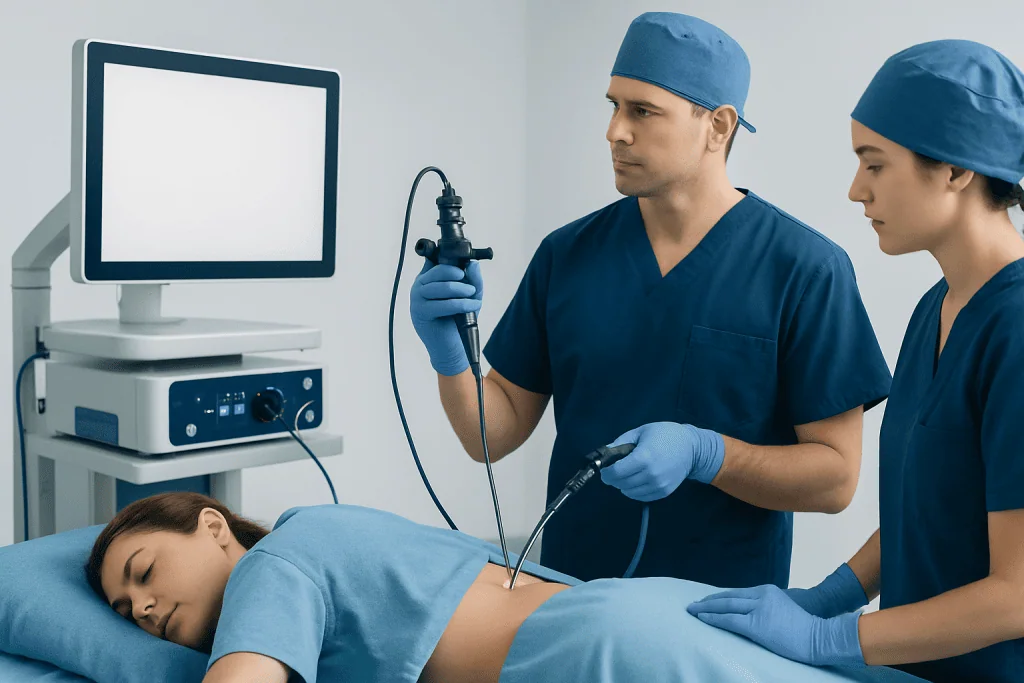
Endoscopy back surgery is a minimally invasive approach to selected spine problems. A surgeon introduces a narrow tube containing a camera, called an endoscope, through a small incision. The camera displays magnified images of the surgical area, helping the surgeon work through a limited opening rather than a larger open incision.
The procedure is most often considered when a spinal structure is pressing on a nerve. Common examples include a lumbar disc herniation causing sciatica and some forms of spinal stenosis, where narrowing around nerves contributes to leg pain, numbness or weakness. It is not a general treatment for nonspecific low back pain, and it does not correct every cause of spinal instability or deformity.
Depending on the diagnosis, the surgeon may remove a piece of disc material, bone or thickened ligament that is narrowing the nerve passage. This is commonly described as an endoscopic discectomy or endoscopic decompression. The aim is to reduce nerve compression while preserving as much normal tissue as possible.
How endoscopic spine surgery works and who may be a candidate
Before recommending surgery, the spine team considers the person’s symptoms, physical examination and imaging, usually magnetic resonance imaging (MRI) and sometimes CT scans or X-rays. The location and pattern of pain matter: leg pain that follows a nerve pathway and corresponds with a clear disc herniation or narrowing on imaging is generally more likely to respond than back pain alone.
A candidate may have persistent sciatica, numbness, weakness or reduced function despite appropriate non-surgical care such as activity modification, physiotherapy and clinician-directed pain management. Surgery may also be advised sooner if weakness is progressing or pain is severely limiting daily life. A detailed assessment helps determine whether endoscopic access can safely reach the affected area.
Endoscopic surgery may be less appropriate when there is marked spinal instability, a major deformity, extensive narrowing at multiple levels, certain recurrent problems, infection, tumor, fracture or a need for fusion. In these situations, another decompression technique or stabilization procedure may offer a more reliable solution. Disc-related nerve compression may overlap with a herniated disc, but the treatment plan should always be individualized.
- Symptoms and scan findings should point to the same compressed nerve.
- Overall health, previous operations and medications are reviewed before surgery.
- The final approach depends on anatomy, the affected spinal level and the surgeon’s judgment.
Step by step: what happens during the procedure?

Preparation usually includes a review of medications, allergies and relevant medical conditions. Patients may be asked to stop or adjust certain medicines, particularly those that affect bleeding, but only under guidance from the prescribing clinician and surgical team. Fasting instructions and arrangements for going home are provided before the procedure.
Endoscopic back surgery may be performed with general anesthesia or, in selected circumstances, sedation with local anesthesia. After positioning the patient, the surgeon uses X-ray guidance to confirm the spinal level and plans a small skin incision. A dilator creates a narrow pathway through soft tissues, and the endoscope is then inserted.
Using the camera view and specialized instruments, the surgeon identifies the compressed nerve and removes the responsible disc fragment or other tissue. The area is checked to ensure the nerve has adequate space, then the instruments are removed and the incision is closed or covered. The operation time varies with the spinal level, anatomy and the work required.
For people who need removal of a symptomatic disc fragment, endoscopic discectomy is a related minimally invasive treatment option. The surgical team explains the planned technique, reasonable alternatives and what result can realistically be expected before consent is given.
How long does endoscopic back surgery take?
Many endoscopic spine procedures take roughly one to two hours, although the actual operating time can be shorter or longer. A single-level disc procedure is often less complex than surgery involving difficult anatomy, scar tissue from prior surgery or narrowing affecting several structures. Time is also needed for anesthesia, positioning and recovery-room monitoring.
Patients should not use operating time alone to judge the size or seriousness of a procedure. Even a short operation requires careful preparation and accurate identification of the affected nerve. The surgeon can provide a more personal estimate after reviewing imaging and discussing the intended approach.
Some patients return home the same day, while others stay overnight for observation, pain control, mobility assessment or management of other health needs. Discharge timing is based on recovery rather than a fixed schedule.
Recovery timeline: how many days should I rest after endoscopy spine surgery?
Most people are encouraged to rest briefly while also getting up for short, supported walks as advised by their team. Complete bed rest for many days is usually not recommended, because gentle movement can support circulation, confidence and a gradual return to normal activity. The first several days are generally focused on wound care, comfortable walking, sleep, hydration and avoiding strain.
For many patients, light daily activities can begin within days, provided they do not increase symptoms. Bending, twisting, heavy lifting, high-impact exercise and prolonged sitting are often limited initially. The exact restrictions vary by procedure and surgeon, so the post-operative plan should take priority over general timelines.
Office-based work may be possible within one to several weeks for some people, while physically demanding work usually requires more time and a staged return. Physiotherapy or a structured exercise plan may be introduced when healing allows. Nerve recovery can continue for weeks or months, particularly when numbness or weakness was present before surgery.
Recovery also involves treating the underlying movement and strength factors that contribute to recurrent symptoms. A spine rehabilitation plan may include posture advice, walking progression, trunk conditioning and safe lifting techniques.
What are the worst days after back surgery?
For many people, the first two to three days can be the most uncomfortable because of incision soreness, muscle tightness, fatigue and the effects of anesthesia. Temporary changes in sleep, appetite and bowel habits are also common after surgery or pain medicines. Symptoms should generally become more manageable over the following days rather than steadily intensify.
Some patients notice intermittent tingling, aching or sensitivity in the leg as an irritated nerve settles. This does not automatically mean the operation has failed, especially if the original nerve was compressed for a long time. However, severe new leg pain, rapidly increasing weakness or symptoms that are clearly worsening should be discussed promptly with the surgical team.
Using prescribed medication safely, walking little and often, following wound instructions and avoiding unapproved activity can make the early period easier. Patients should contact their clinician before adding over-the-counter medicines, supplements or anti-inflammatory drugs, especially if they have kidney disease, stomach ulcers, bleeding risks or take blood-thinning medication.
Benefits, risks and how successful endoscopic spine surgery can be
Potential benefits of endoscopy back surgery include a small incision, reduced disruption of muscles and soft tissues, less blood loss in many cases, and earlier mobilization compared with some open approaches. These advantages do not mean that the procedure is minor or risk-free. The main measure of success is meaningful improvement in the symptoms caused by the compressed nerve, together with safe recovery and improved function.
How successful is endoscopic spine surgery? For carefully selected patients with a clearly identified cause of nerve compression, it can provide substantial relief of leg pain and improvement in daily function. Results vary according to the diagnosis, duration and severity of nerve symptoms, smoking status, general health, rehabilitation and whether another spinal problem is also present. Back pain may not improve to the same degree as leg pain if it has causes beyond the compressed nerve.
Possible complications include bleeding, infection, fluid leak around the spinal nerves, nerve irritation or injury, incomplete symptom relief, recurrent disc herniation, blood clots and reactions to anesthesia. Rarely, a different or additional operation may be needed. The surgeon discusses the specific risks relevant to the planned surgical route and spinal level.
Some patients require a different minimally invasive approach, such as microdiscectomy, when it better matches the anatomy or disc problem. Comparing options with a qualified spine surgeon helps ensure that the expected benefits justify the risks for the individual.
When to seek medical care
Medical review is appropriate for back pain with persistent leg pain, numbness, weakness, difficulty walking or symptoms that continue despite conservative treatment. A clinician can assess whether symptoms may be related to nerve compression and whether imaging or specialist referral is needed. Not all back pain requires surgery, and many people improve with non-surgical measures.
Urgent medical assessment is important for new difficulty controlling the bladder or bowel, numbness around the groin or buttocks, rapidly worsening leg weakness, fever with severe back pain, or back pain after significant trauma. These symptoms can signal conditions that need prompt evaluation.
After an operation, patients should contact their surgical team for fever, increasing redness or drainage from the wound, worsening pain that is not controlled by the agreed plan, calf swelling, chest pain, shortness of breath, or new neurological symptoms. Acibadem International’s multidisciplinary spine specialists and JCI-accredited hospitals diagnose and treat spinal conditions for international patients, with care plans based on individual assessment.
Frequently asked questions
Is endoscopy back surgery the same as laser spine surgery?
No. Endoscopic spine surgery refers to using a small camera and specialized instruments to view and treat a spinal problem through a limited access route. Laser use is not a defining feature of endoscopic surgery, and the appropriate technique depends on the condition being treated.
Can endoscopic spine surgery treat sciatica?
It may help sciatica when the symptoms are caused by a disc herniation or spinal narrowing that is pressing on a nerve and can be reached safely with an endoscopic approach. Sciatica has several possible causes, so a clinical examination and imaging are needed before surgery is considered.
How many days should I rest after endoscopy spine surgery?
A short period of rest is usually combined with gentle walking from the first day or soon after surgery, if the care team advises it. Many people can manage light activity within days, but lifting, twisting and strenuous exercise are commonly restricted for longer. The surgeon’s individualized instructions should guide the pace of recovery.
How successful is endoscopic spine surgery?
Endoscopic spine surgery can be effective for well-selected patients whose symptoms match a clearly identified compressed nerve. Relief of leg pain is often the principal goal, while recovery of numbness or weakness may take longer. Outcomes vary with the diagnosis, overall health, symptom duration and rehabilitation.
How long does endoscopic back surgery take?
Many procedures take about one to two hours, though the duration varies by the spinal level, anatomy and complexity of the problem. Additional time is needed for anesthesia, preparation and observation after surgery. The operating surgeon can provide the most accurate estimate for a specific case.
What are the worst days after back surgery?
The first two to three days are often the most uncomfortable because of incision pain, tiredness and temporary stiffness. Symptoms should gradually improve, although nerve sensations can fluctuate during healing. Worsening weakness, fever, wound drainage, breathing symptoms or bladder and bowel changes require prompt medical advice.
References
- American Academy of Orthopaedic Surgeons
- American Association of Neurological Surgeons
- National Institute of Neurological Disorders and Stroke
- North American Spine Society
This article is for general information only and is not a substitute for professional medical advice. Please consult a qualified doctor about your individual situation.
Joint and spine care in Turkey — expert assessment & treatment
JCI-accredited · board-certified surgeons · reply within 24h
Add us as a Preferred Source to see more of our trusted health content across Google Search, AI Overviews and Discover.

More from the Health Library



Related Specialists

Dr. Erkan Adnan Kelebek
Coronary Intensive Care Unit
Prof. Dr. Erdoğan Ertüngealp
Gynecology & Obstetrics
Prof. Dr. Gökhan Aydemir
Pediatrics
Assoc. Prof. Dr. Burak Özturan
Orthopedic Surgery & Traumatology