

Esophageal Perforation: An Evidence-Based Guide for Patients

Esophageal perforation is a medical emergency that requires urgent evaluation in a hospital. Chest pain, pain with swallowing, shortness of breath, fever, or symptoms after vomiting or an esophageal procedure should not be ignored.
Key Takeaways
- Esophageal perforation is a medical emergency that requires urgent evaluation in a hospital.
- Chest pain, pain with swallowing, shortness of breath, fever, or symptoms after vomiting or an esophageal procedure should not be ignored.
- CT scans, contrast swallowing studies, and selected endoscopic examinations can help confirm the location and extent of a tear.
- Treatment depends on the cause, location, timing, size of the tear, and whether there is leakage or infection.
- Some carefully selected contained perforations can be treated without open surgery, while others need endoscopic treatment, drainage, or surgery.
- Recovery usually includes temporary restriction of eating and drinking, nutritional support, antibiotics, and close follow-up.
Esophageal perforation is a hole or tear in the esophagus, the tube that carries food and liquids from the mouth to the stomach. It is uncommon but potentially serious because saliva, food, stomach contents, and bacteria can leak into the chest or nearby tissues, so prompt medical assessment and treatment are essential.
Overview: what is esophageal perforation?
Esophageal perforation means that the wall of the esophagus has developed a full-thickness tear or hole. The esophagus lies behind the windpipe and heart and passes through the chest to reach the stomach. When its wall is disrupted, material from inside the digestive tract can escape into the neck, chest, or upper abdomen.
This condition needs urgent assessment because leaked fluid can irritate and infect surrounding tissues. In the chest, this may lead to inflammation or infection in the space between the lungs, called the mediastinum, and fluid may collect around a lung. The seriousness varies widely: a small, recognized tear with limited leakage may be managed differently from a large tear with widespread contamination.
Early recognition makes a meaningful difference. Care is usually coordinated by emergency physicians, gastroenterologists, thoracic or upper gastrointestinal surgeons, radiologists, anesthesiologists, and critical care specialists. The main goals are to control leakage, treat or prevent infection, support nutrition, and allow the esophagus to heal.
Symptoms and signs to recognize
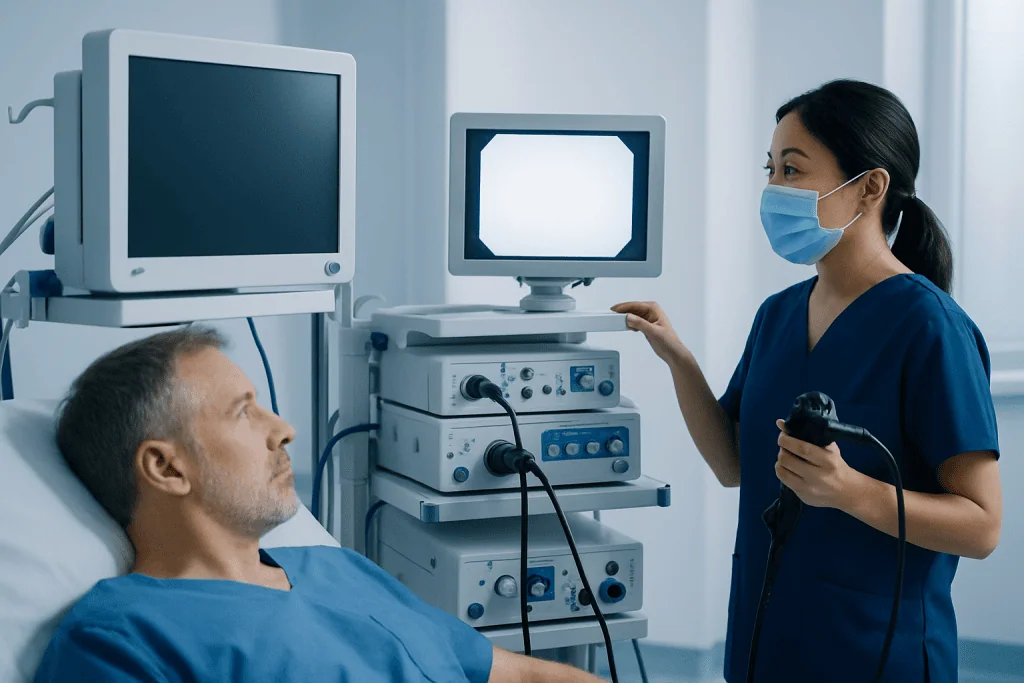
Symptoms can begin suddenly or develop over several hours, depending on the cause and location of the perforation. Severe chest pain is a common symptom, particularly after forceful vomiting, retching, a procedure involving the esophagus, or swallowing a foreign object. Pain may spread to the back, shoulder, neck, or upper abdomen.
Other possible symptoms include painful or difficult swallowing, shortness of breath, rapid heart rate, fever, nausea, vomiting, hoarseness, cough, or a feeling of being unwell. Some people develop swelling or a crackling sensation under the skin of the neck or upper chest due to trapped air. These features can occur with other conditions as well, which is why medical assessment is important.
Symptoms are not always dramatic, especially when a small tear is contained. However, worsening pain, fever, breathing difficulties, confusion, weakness, or fainting can signal a serious infection or systemic illness. People should not try to eat, drink, or take oral medications if an esophageal injury is suspected unless a clinician advises otherwise.
- Sudden chest, neck, or upper abdominal pain after vomiting or a procedure
- Pain or difficulty when swallowing
- Fever, chills, fast heartbeat, or marked weakness
- Shortness of breath, persistent cough, or chest tightness
- Neck swelling or an unusual crackling feeling beneath the skin
Causes and factors that can increase risk

Many esophageal perforations occur during or after medical procedures that involve the esophagus, such as endoscopy, dilation of a narrowed area, stent placement, or certain surgical procedures. These are called iatrogenic perforations. Although such complications are uncommon, the care team monitors for symptoms after procedures and investigates concerns promptly.
A spontaneous perforation can occur after a sudden rise in pressure inside the esophagus, most often from forceful vomiting or retching. This is often referred to as Boerhaave syndrome. It differs from a small surface tear that can cause bleeding after vomiting; a full-thickness perforation is a deeper injury and requires emergency care.
Other causes include swallowing a sharp foreign body, chest or neck trauma, caustic chemical ingestion, severe inflammation, and, less commonly, damage related to an esophageal tumor. Conditions that narrow or weaken the esophagus, such as longstanding swallowing disorders or prior radiation treatment, may affect risk and treatment planning.
Risk cannot always be predicted or prevented, particularly after sudden vomiting or trauma. Sharing a full medical history, including prior esophageal surgery, swallowing difficulties, reflux disease, medications, and previous radiation, helps clinicians choose the safest diagnostic and treatment approach.
How doctors confirm the diagnosis
Clinicians first assess symptoms, vital signs, recent events, and medical history. They will ask whether symptoms started after vomiting, an endoscopic procedure, trauma, swallowing something unusual, or chemical exposure. A physical examination can identify breathing problems, neck swelling, abdominal tenderness, or signs of infection.
Imaging is central to diagnosis. A chest and abdominal CT scan, often using contrast material that can be swallowed and/or given through a vein, can show air or fluid outside the esophagus, collections in the chest, and the likely location of a leak. A contrast swallow study, also called an esophagram, may provide further information about whether and where contrast is leaking.
Endoscopy may be used in selected cases to directly inspect the esophagus and potentially treat the tear. However, it is not automatically the first test for every person because introducing an endoscope requires careful judgment when a perforation is possible. Blood tests help assess inflammation, infection, organ function, and overall clinical stability.
Diagnosis also involves excluding other urgent causes of chest or upper abdominal pain, including heart, lung, stomach, and major blood vessel conditions. This evaluation is one reason suspected esophageal perforation should be assessed in an emergency setting rather than managed at home.
Treatment options and hospital care
Treatment is individualized. Decisions are based on how quickly the injury was identified, the cause and location of the perforation, the size of the leak, whether leaked material is contained, the presence of infection or fluid collections, and the person’s overall health. Most people are admitted to hospital for close monitoring and treatment.
Initial care commonly includes avoiding food and drink by mouth, receiving intravenous fluids, pain relief, and broad-spectrum antibiotics. Some people may also need medication to reduce stomach acid. Nutritional support is important during healing and may be provided through a feeding tube placed beyond the injured area or, in some circumstances, through intravenous nutrition.
A small, contained perforation in a clinically stable person may sometimes be managed without open surgery. This approach requires careful selection, drainage of any collections if needed, repeat imaging, and close specialist observation. It is not the same as simply waiting for symptoms to settle.
Endoscopic treatment may help close selected tears using clips, suturing devices, covered stents, or other techniques. If there is a large tear, ongoing leakage, severe contamination, damaged tissue, or clinical deterioration, surgery may be necessary to repair the esophagus, clean and drain affected areas, or use another tailored approach. Drainage tubes may be placed in the chest or around collections to control infection.
Recovery, nutrition, and follow-up
Recovery time differs considerably between individuals. It depends on the original cause, how early treatment began, whether infection developed, and whether treatment involved endoscopy, surgery, or drainage procedures. The hospital team follows symptoms, temperature, blood tests, drain output when present, and repeat imaging to confirm that leakage has stopped.
Eating and drinking are restarted only when the treating team considers it safe. This may follow a contrast swallow study or other evaluation showing satisfactory healing. Patients often begin with a planned progression of liquids and soft foods before returning gradually to their usual diet. A dietitian can help ensure adequate calories and protein during recovery.
It is important to attend all follow-up appointments. Clinicians may assess for narrowing of the esophagus, reflux symptoms, swallowing problems, or issues related to the underlying cause. New pain with swallowing, fever, breathlessness, vomiting, or recurrent chest pain during recovery should be reported promptly.
Acibadem International’s multidisciplinary specialists and JCI-accredited hospitals provide diagnostic evaluation and treatment planning for international patients with complex esophageal conditions. Care should always be based on an individual specialist assessment and the urgency of the situation.
When to seek medical care
Seek emergency medical care immediately for severe chest, neck, or upper abdominal pain after forceful vomiting, an esophageal procedure, swallowing a sharp object, chest trauma, or suspected chemical ingestion. Emergency assessment is also needed for breathing difficulty, fever, fainting, confusion, rapidly worsening weakness, or inability to swallow saliva.
People who have recently had an endoscopy or another esophageal procedure should contact the treating team urgently or go to an emergency department if they develop persistent or worsening chest pain, abdominal pain, fever, difficulty swallowing, shortness of breath, or repeated vomiting. Mild throat discomfort can occur after some procedures, but significant or progressive symptoms need evaluation.
Do not attempt to induce vomiting, force food or fluids down, or take unprescribed remedies for suspected perforation. If a foreign body or chemical may be involved, bringing information about the object or substance, when safe to do so, can help the emergency team. Prompt specialist care offers the best opportunity to limit complications and support healing.
Frequently asked questions
Is esophageal perforation the same as a tear in the esophagus?
Esophageal perforation is a full-thickness tear or hole through the wall of the esophagus. Some tears caused by vomiting affect only the surface lining and may cause bleeding without a perforation. A clinician needs to determine the depth and seriousness of an injury using symptoms, examination, and imaging.
Can an esophageal perforation heal without surgery?
Some small, contained perforations can heal with carefully supervised non-surgical management. This commonly includes hospital monitoring, no food or drink by mouth initially, antibiotics, nutritional support, and drainage if needed. The decision depends on imaging findings and the person’s clinical condition, and it must be made by experienced specialists.
How quickly should esophageal perforation be treated?
It should be evaluated as soon as it is suspected. Early diagnosis allows clinicians to control leakage, treat infection, and select the most appropriate repair or drainage method. Delaying care can allow inflammation and infection to spread, making treatment more complex.
What happens if an esophageal perforation is missed?
A missed perforation can allow digestive contents and bacteria to leak into the chest, neck, or abdomen. This may cause serious infection, fluid collections, breathing problems, and widespread illness. Prompt emergency assessment is important when warning symptoms occur after vomiting, trauma, or an esophageal procedure.
Will a person be able to eat normally after treatment?
Many people can gradually return to regular eating after the esophagus has healed, but timing varies. The clinical team may use follow-up imaging or swallowing assessments before restarting oral intake. Some people need a temporary modified diet or further treatment if narrowing or swallowing difficulty develops.
Can esophageal perforation be prevented?
Not every perforation can be prevented, especially those linked to unexpected vomiting, trauma, or necessary medical procedures. Avoiding ingestion of sharp objects and caustic substances, seeking prompt care for swallowed foreign bodies, and following instructions after endoscopic procedures can reduce risk. People with ongoing swallowing difficulties should discuss them with a qualified doctor.
References
- American College of Gastroenterology
- American Society for Gastrointestinal Endoscopy
- Merck Manual Professional Edition
- National Institute of Diabetes and Digestive and Kidney Diseases
- Society of American Gastrointestinal and Endoscopic Surgeons
This article is for general information only and is not a substitute for professional medical advice. Please consult a qualified doctor about your individual situation.
Persistent digestive symptoms? Get evaluated in Turkey
JCI-accredited · board-certified surgeons · reply within 24h
Add us as a Preferred Source to see more of our trusted health content across Google Search, AI Overviews and Discover.
Check your numbers in seconds
BMI, calories, due date, blood pressure and 30+ more clinical calculators — free, instant, doctor-reviewed ranges.

More from the Health Library



Related Specialists

Dr. Ahmet Burak Dursun
Occupational Medicine
Fzt. Ece Nur Sonuk
Physical Medicine & Rehabilitation
Prof. Dr. Ramazan Yavuz Akman
Urology
Dr. Alper Gölpınar
Orthopedic Surgery & Traumatology