Exophoria: What Patients Need to Know

Exophoria is a latent outward eye deviation that is usually controlled when both eyes are open. A small amount of exophoria can be normal and may not require treatment.
Key Takeaways
- Exophoria is a latent outward eye deviation that is usually controlled when both eyes are open.
- A small amount of exophoria can be normal and may not require treatment.
- Symptoms can occur when the eyes struggle to maintain alignment, particularly during reading or screen use.
- A comprehensive eye examination can distinguish exophoria from constant or intermittent exotropia.
- Treatment depends on symptoms and may include glasses, prism lenses, targeted eye exercises, or management of related vision conditions.
Exophoria is a common eye alignment finding in which one eye has a natural tendency to turn outward, but the brain and eye muscles usually keep both eyes aligned. Many people have no symptoms, while others may experience eye strain, headaches, blurred vision, or difficulty with sustained close work when this control becomes less effective.
What Is Exophoria?
Exophoria is a tendency for one eye to drift outward when the eyes are not actively working together. It is called a latent eye deviation because it is typically held in check by binocular vision: the brain combines information from both eyes and uses the eye muscles to keep the eyes aligned. The outward drift may become apparent only during an eye examination, when one eye is covered, or when a person is tired or unwell.
Exophoria is not the same as exotropia. In exotropia, an eye turns outward some or all of the time while both eyes are open. With exophoria, the eyes generally appear straight in everyday situations because the person can compensate for the tendency to drift. A small exophoria is relatively common and does not automatically mean that there is an eye disease or that treatment is needed.
The importance of exophoria depends less on the measurement alone and more on whether it causes symptoms, affects reading or work, reduces comfortable single vision, or is associated with another focusing or eye-movement issue. An optometrist or ophthalmologist can assess how well the eyes compensate and whether support is necessary.
How Exophoria May Feel
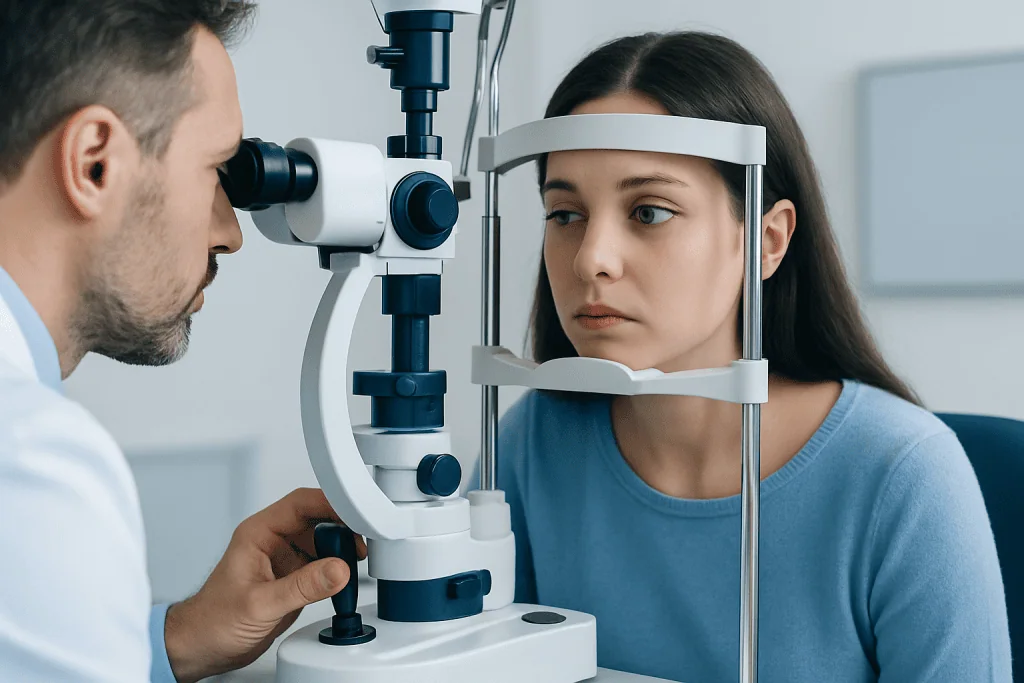
Many people with exophoria do not notice any change in their vision. The brain can often maintain eye alignment automatically, especially when a person is well rested and the visual task is not demanding. Exophoria may therefore be discovered during a routine eye test rather than because of a specific concern.
When the eyes have to work harder to stay aligned, symptoms may be most noticeable during close activities such as reading, studying, sewing, using a phone, or working at a computer. Symptoms can vary from day to day and may become more noticeable after prolonged visual effort, poor sleep, illness, or stress.
- Eye strain, tired or aching eyes
- Headaches, particularly after reading or screen use
- Blurred or fluctuating vision during close work
- Difficulty concentrating on print or losing one’s place while reading
- Words appearing to move, overlap, or become uncomfortable to look at
- Intermittent double vision, particularly when tired
Children may not be able to describe visual discomfort clearly. They may avoid near tasks, rub their eyes, hold reading material unusually close, lose their place often, or report headaches. These signs can have several causes, so a full eye assessment is important rather than assuming they are caused by exophoria alone.
Why Exophoria Happens and Who May Notice It

Eye alignment relies on a coordinated system involving the eye muscles, focusing ability, nerve signals, and the brain’s ability to fuse the two images into one. Exophoria can occur when there is a natural tendency toward outward eye positioning that is usually balanced by the person’s ability to converge, or turn the eyes inward, when needed.
Some people have exophoria from childhood and never develop symptoms. Others become aware of it when visual demands increase, such as during intensive reading, prolonged computer work, or a change in school or work routine. Uncorrected refractive errors, including farsightedness, nearsightedness, or astigmatism, can contribute to visual strain and make it harder to maintain comfortable eye coordination.
Fatigue, fever, stress, alcohol use, certain medications, and general illness can temporarily reduce a person’s ability to control an existing eye deviation. Exophoria may also be found with convergence insufficiency, a condition in which the eyes have difficulty turning inward effectively for close tasks. It is important to note that an outward tendency found on testing does not always explain every headache, reading concern, or screen-related symptom.
How Eye Specialists Diagnose Exophoria
Diagnosis begins with a discussion of symptoms, daily visual activities, medical history, and any change in vision. The eye specialist will check visual acuity, assess the health of the eyes, and determine whether glasses or a change in prescription may improve comfort. Testing is commonly performed both at distance and near because an eye deviation can differ depending on where a person is focusing.
A cover test is one of the main ways to identify exophoria. The clinician covers one eye and watches for a movement as the eye is uncovered. If the covered eye has drifted outward and then moves inward to refixate when uncovered, this may indicate exophoria. An alternate cover test and prism measurements help quantify the deviation and assess how easily the person regains alignment.
Additional tests may evaluate eye movements, near point of convergence, focusing ability, depth perception, and the quality of binocular vision. These examinations help distinguish exophoria from intermittent exotropia, convergence insufficiency, nerve-related eye movement problems, and other conditions that may require a different approach. For children, assessment may also include screening for amblyopia, sometimes called lazy eye, and other developmental vision concerns.
Treatment Options and Everyday Visual Support
Exophoria without symptoms often needs no treatment. Regular eye examinations may be all that is required, particularly when the eyes are well aligned during ordinary activities and visual comfort is good. Treatment is considered when symptoms are persistent, the eye deviation is difficult to control, or testing identifies a related focusing or binocular vision condition.
Correcting refractive errors with glasses or contact lenses may reduce the effort needed to focus and coordinate the eyes. In selected cases, prism lenses can help reduce the amount of compensatory effort required to keep images single. Prism is prescribed individually after careful testing, as it is not appropriate for every type of eye alignment concern.
For symptomatic convergence problems, an eye care professional may recommend structured orthoptic exercises or vision therapy. These programs are designed to improve specific aspects of eye coordination and should be tailored to the diagnosis and monitored by a qualified clinician. General online exercises may not address the underlying issue and can delay appropriate assessment if symptoms are caused by another condition.
Surgery is not usually used for isolated, well-controlled exophoria. It may be considered only in particular circumstances, such as a significant outward deviation that has progressed to poorly controlled intermittent or constant exotropia. The decision is based on repeated examinations, symptoms, visual function, age, and the pattern of eye alignment over time.
Self-Care and Reducing Visual Strain
Healthy visual habits cannot always change the underlying tendency toward exophoria, but they may reduce fatigue that makes symptoms more noticeable. During reading or screen work, regular breaks can help the eyes relax. A practical approach is to look away from near work at intervals and focus briefly on a distant object, while also blinking normally to reduce dryness.
Good lighting, a comfortable working distance, readable text size, and an appropriate screen position can make near tasks less demanding. People who use screens for long periods may benefit from adjusting glare, contrast, and font size rather than pushing through discomfort. Adequate sleep, hydration, and management of dry-eye symptoms can also support visual comfort.
It is helpful to wear prescribed glasses as advised and to arrange follow-up if symptoms continue despite an up-to-date prescription. Children should not be asked to persist through repeated headaches, blurred vision, or reading difficulty without an eye examination. Visual symptoms can overlap with learning, attention, migraine, and other health concerns, so an individualized evaluation remains important.
When to Seek Medical Care
An appointment with an optometrist or ophthalmologist is appropriate for recurring eye strain, headaches with reading, double vision, blurred vision, a noticeable outward eye drift, or increasing difficulty with close work. Prompt assessment is particularly useful if symptoms interfere with school, work, driving, or daily activities. Parents and caregivers should arrange an eye examination if a child’s eye seems to drift, especially when the child is tired or daydreaming.
Sudden double vision, a new eye turn, drooping of an eyelid, unequal pupils, severe headache, eye pain, weakness, numbness, trouble speaking, loss of balance, or sudden loss of vision requires urgent medical assessment. These symptoms are not typical of uncomplicated exophoria and may indicate another condition that needs timely evaluation.
For international patients, Acibadem International’s multidisciplinary specialists and JCI-accredited hospitals can assess eye alignment concerns and provide treatment planning when appropriate. A clinician can explain whether exophoria is a harmless finding, a contributor to visual symptoms, or part of another binocular vision condition.
Frequently asked questions
Is exophoria serious?
Exophoria is often not serious, especially when it is small and causes no symptoms. Many people compensate for it naturally and may only learn about it during an eye examination. It should be assessed if it causes discomfort, double vision, reading problems, or a visible eye drift.
What is the difference between exophoria and exotropia?
Exophoria is a hidden tendency for an eye to move outward that is usually controlled when both eyes are open. Exotropia is an outward eye turn that can be visible during normal viewing, either intermittently or constantly. An eye specialist can distinguish these conditions with alignment testing.
Can exophoria cause headaches?
Exophoria can contribute to headaches when the eyes must work hard to remain aligned, particularly during prolonged close work. However, headaches have many possible causes, including refractive errors, migraine, dry eyes, and non-eye-related health conditions. An eye examination can help determine whether binocular vision is playing a role.
Can exophoria be corrected with glasses?
Glasses can help when an uncorrected refractive error is adding to focusing and eye-coordination effort. Some people may also benefit from prism in their lenses, but this is determined after detailed testing. Glasses do not always eliminate the underlying tendency toward exophoria.
Do eye exercises help exophoria?
Targeted exercises may help some people with specific eye-coordination difficulties, such as convergence insufficiency. They should be recommended and monitored by an eye care professional after a clear diagnosis. Exercises are not necessary for everyone with exophoria and are not a substitute for an eye examination.
Can exophoria get worse over time?
Exophoria may become more noticeable when a person is tired, ill, stressed, or doing demanding near work. In some cases, control can reduce over time and an intermittent outward eye turn may develop. Regular review is useful if symptoms change, double vision appears, or the eye drift becomes visible.
This article is for general information only and is not a substitute for professional medical advice. Please consult a qualified doctor about your individual situation.
Explore treatments in Turkey — costs, top hospitals & a free quote
JCI-accredited · board-certified surgeons · reply within 24h
Add us as a Preferred Source to see more of our trusted health content across Google Search, AI Overviews and Discover.

More from the Health Library

Peptides for Muscle Growth — Explained by Medical Evidence, Not Myths

Trans Fat: An Evidence-Based Guide for Patients

Eye Color Change in Newborns: What Patients Need to Know
Ethmoid Bone — Explained by Medical Evidence, Not Myths

Almond Flour — Explained by Medical Evidence, Not Myths