Extravasation: An Evidence-Based Guide for Patients

Extravasation happens when an infused medicine or fluid leaks from a vein into nearby tissue. Symptoms often include pain, burning, swelling, tightness, or skin color changes around an IV site.
Key Takeaways
- Extravasation happens when an infused medicine or fluid leaks from a vein into nearby tissue.
- Symptoms often include pain, burning, swelling, tightness, or skin color changes around an IV site.
- Some medicines are more harmful than others, especially vesicants, which can injure skin and deeper tissue.
- Early recognition and prompt medical assessment improve outcomes and may prevent complications.
- Prevention focuses on careful IV placement, regular monitoring during infusions, and speaking up quickly if discomfort develops.
Extravasation is the accidental leakage of an IV medication or fluid into the surrounding tissue instead of staying inside the vein. It can cause pain, swelling, and skin changes, and it should be assessed promptly so the right treatment can reduce the risk of tissue injury.
Overview: what extravasation means
Extravasation means that a medication or fluid being given through a vein has leaked out of the blood vessel and into the surrounding tissue. In simple terms, the IV treatment is no longer staying fully inside the vein where it is intended to go. This can happen with a small peripheral IV in the hand or arm, and it can also occur with central venous access devices in some situations.
Not every leak causes the same degree of harm. The effect depends on what substance escaped, how much leaked, how quickly it was noticed, and where it happened. Some fluids cause only mild irritation, while others can injure skin, fat, nerves, or deeper tissues if they remain outside the vein.
Patients often hear both infiltration and extravasation. These terms are related but not identical. Infiltration usually refers to leakage of a non-vesicant fluid, such as standard IV saline, whereas extravasation is commonly used when the leaked substance is more irritating or damaging to tissue. In cancer care, this distinction is especially important because some chemotherapy medicines carry a higher risk of tissue injury; readers interested in cancer-related treatment context may also find chemotherapy information helpful.
Symptoms and early warning signs
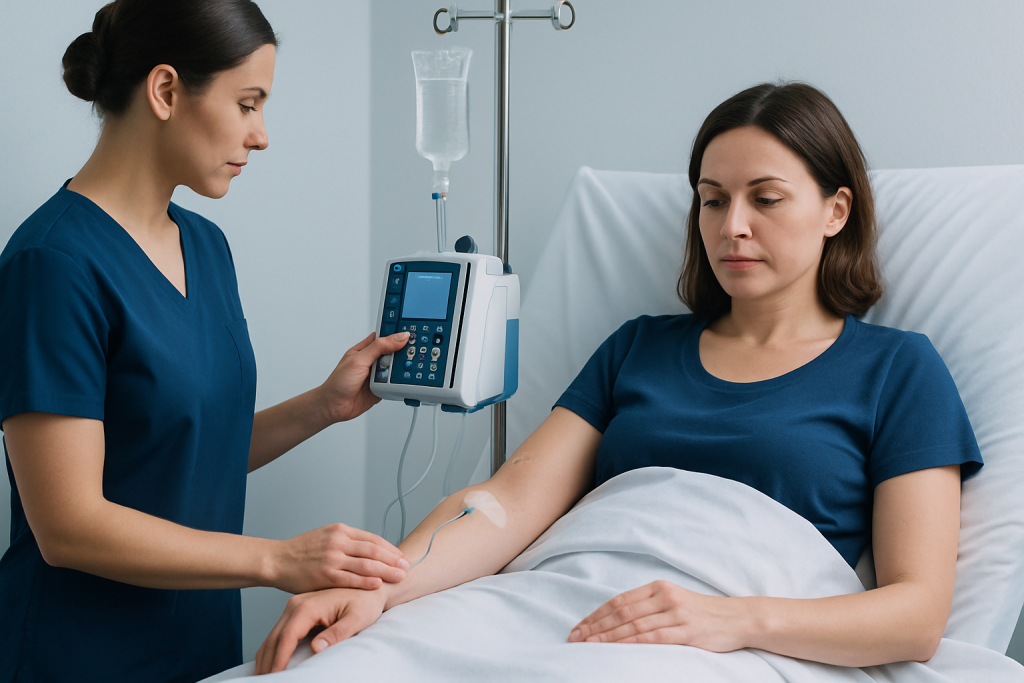
Symptoms of extravasation usually start at or near the IV site. A person may notice pain, burning, stinging, tenderness, or a sense of pressure during the infusion. Swelling is common, and the skin may look pale, red, shiny, or unusually tight. Sometimes the IV seems to slow down, alarm, or stop running normally.
Not all cases are immediately dramatic. Some people have only mild discomfort at first, especially if the area is numb, if they are receiving pain-relieving medicines, or if they have reduced sensation. This is why staff monitor infusion sites closely and ask patients to report even small changes right away.
As tissue irritation progresses, other signs may appear. These can include blistering, firmness under the skin, reduced movement because of pain or swelling, or color changes such as darkening of the skin. In more serious cases, the area may become increasingly painful over hours to days. A delay in recognizing the problem can make treatment more difficult, so early reporting matters.
- Pain, burning, or stinging around the IV
- Swelling or puffiness near the cannula site
- Skin that looks pale, red, or tight
- Slowed infusion or pump alarms
- Blistering or worsening tenderness after the infusion
Why extravasation happens

Extravasation develops when fluid escapes from a vein. This can happen if the IV catheter slips out of place, passes through part of the vein wall, or if the vein becomes fragile and leaks. It may also occur when a vein is very small, curved, scarred, inflamed, or exposed to repeated punctures. Movement of the arm or hand can sometimes shift a catheter and contribute to leakage.
The type of medication also matters. Some medicines are classed as vesicants, meaning they can cause blistering and tissue damage if they leave the vein. Others are irritants, which may cause inflammation and pain but are generally less destructive. Extravasation is especially discussed in oncology because certain intravenous anticancer drugs need careful administration and monitoring; in some treatment plans, chemotherapy is delivered through devices chosen to reduce risk when appropriate.
Risk can be higher in very young children, older adults, people with fragile veins, and patients who cannot easily describe discomfort because of sedation, confusion, or nerve problems. Areas over joints or on the back of the hand can be more vulnerable in some settings. Previous surgery, radiation, or lymphedema may also affect tissues and make monitoring especially important.
How doctors assess and diagnose extravasation
Extravasation is primarily a clinical diagnosis, which means it is usually identified by examining the IV site and reviewing what was being infused. The healthcare team looks at the location, the medicine involved, the amount that may have leaked, and the visible skin and soft-tissue changes. They also ask when symptoms started and whether the infusion became painful or difficult.
Assessment often includes measuring the affected area, checking capillary refill and skin temperature, and testing movement and sensation in the nearby hand, arm, or other body part. These details help determine whether the issue seems mild and localized or whether there may be deeper injury that needs closer treatment or specialist review.
Imaging is not always necessary, but it can be helpful in selected cases. Ultrasound may sometimes be used to evaluate soft tissue or guide management if the extent is unclear. If severe swelling, intense pain, or concern for tissue compromise is present, doctors may involve specialists such as plastic surgery, vascular access teams, wound care clinicians, or other relevant departments. Imaging support such as MRI may occasionally be used in complex cases where deeper tissue involvement needs further evaluation, though many cases are diagnosed without advanced scanning.
Treatment options and immediate management
Treatment begins by stopping the infusion as soon as extravasation is suspected. The IV line is assessed carefully, and the clinical team follows protocols based on the specific medicine or fluid involved. In many cases, the limb is elevated and the area is observed closely. The exact approach varies because different drugs require different responses.
Supportive care may include pain relief, monitoring, and dressings to protect the skin. Depending on the leaked substance, clinicians may use warm or cold compresses as part of management, but this is not universal and should follow professional guidance for the particular medication. Some extravasations also have medication-specific antidotes or treatments designed to limit tissue injury when given promptly.
If there is worsening pain, blistering, skin breakdown, or concern for deeper tissue damage, surgical or specialist input may be needed. This can include wound care, debridement in selected severe cases, and longer follow-up until healing is complete. In hospitals that care for international patients, Acibadem International’s multidisciplinary specialists and JCI-accredited hospitals diagnose and treat extravasation and its complications as part of coordinated IV therapy and wound management pathways.
When ongoing IV treatment is still needed, the team may place a new line in a safer location or consider other access options. For some patients who need repeated or long-term infusions, image-guided vascular access techniques or interventional support may be useful; in selected situations, interventional radiology can assist with complex access planning.
Prevention and self-care after an event
Prevention starts before the infusion begins. Healthcare teams reduce risk by choosing an appropriate vein and catheter, securing the line well, checking for blood return when relevant, and observing the site regularly during treatment. Higher-risk medicines may require additional precautions, slower administration methods, central access, or closer nursing observation.
Patients also play an important role. They should tell staff immediately if they feel burning, aching, pressure, wetness, or unusual discomfort around the IV. It is better to mention a mild symptom early than to wait until it becomes more painful. During treatment, avoiding sudden pulling or repeated bending of the limb can also help keep the line stable.
After an extravasation, home care instructions may include keeping the area clean, protecting fragile skin, elevating the limb if advised, and attending follow-up appointments. Patients should use only the compresses, creams, or dressings recommended by their clinician because the best self-care depends on the substance that leaked and the condition of the skin. If the area seems to worsen rather than improve, medical review is important.
When to seek medical care
Medical attention is needed promptly if extravasation is suspected during an infusion. A patient should alert the nurse or doctor straight away if there is pain, burning, swelling, leakage, or a sudden change at the IV site. Quick assessment gives the best chance of limiting tissue injury.
After leaving the hospital or clinic, patients should seek medical advice if the area becomes more swollen, increasingly painful, blistered, numb, or dark in color. Fever, spreading redness, drainage, or difficulty moving the nearby fingers, hand, or arm should also be assessed.
Urgent review is especially important if a known vesicant medicine was involved, if symptoms are severe, or if the person has diabetes, poor circulation, reduced sensation, or another condition that may affect healing. It is always reasonable to contact the treating team when there is uncertainty about whether a reaction is normal or needs care.
Frequently asked questions
Is extravasation the same as infiltration?
Not exactly. Infiltration usually refers to leakage of a non-harmful or less harmful IV fluid into tissue, while extravasation is often used when the leaked drug or solution can irritate or damage tissue more significantly. In practice, both need prompt attention, but extravasation may require more specific treatment.
How serious can extravasation be?
Severity varies widely. Some cases cause mild swelling and discomfort that settle with observation and supportive care, while others can lead to skin injury, blistering, or deeper tissue damage. The type of medicine involved and how quickly the leak is recognized are major factors.
What should a patient do if an IV starts to burn or swell?
The patient should tell the healthcare team immediately and avoid ignoring the symptom. Burning, pain, or swelling can be an early sign that the IV is not in the correct position. Prompt assessment allows the infusion to be stopped and the area managed appropriately.
Can extravasation happen with chemotherapy?
Yes, it can. Some chemotherapy medicines are vesicants or irritants, which is why these infusions are monitored carefully and patients are asked to report symptoms right away. Not all chemotherapy drugs carry the same risk, and the treatment team uses protocols based on the specific drug.
Will extravasation always leave a scar?
No. Many cases heal without lasting skin changes, especially when recognized and managed early. Scarring is more likely if there is significant tissue injury, blistering, or delayed treatment, but outcomes depend on the substance involved and the extent of damage.
How long does recovery take?
Recovery can range from a few days for mild cases to several weeks or longer if the tissue injury is more severe. Follow-up is important because some reactions evolve over time rather than peaking immediately. A clinician can advise what is expected based on the specific medication and exam findings.
This article is for general information only and is not a substitute for professional medical advice. Please consult a qualified doctor about your individual situation.
Explore treatments in Turkey — costs, top hospitals & a free quote
JCI-accredited · board-certified surgeons · reply within 24h
Add us as a Preferred Source to see more of our trusted health content across Google Search, AI Overviews and Discover.

More from the Health Library

Body Odor: An Evidence-Based Guide for Patients

Rexulti Drug Class — Explained by Medical Evidence, Not Myths

How to lose 20 pounds in a month? A Doctor-Reviewed Answer

Acid Tabs: A Complete Medical Overview

Wrist Irritation: A Complete Medical Overview