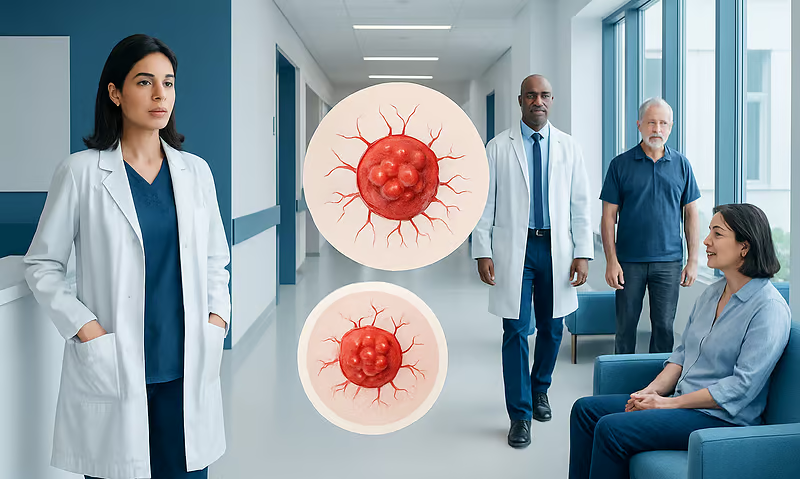
Fertility Preservation Before Cancer Treatment: Options for Women and Men

Some cancer treatments can reduce fertility temporarily or permanently, but the risk varies by treatment type, dose, location, age, and baseline reproductive health. Women may consider egg freezing, embryo freezing, ovarian tissue freezing, ovarian transposition, or selected medicines to help protect ovarian function.
Key Takeaways
- Some cancer treatments can reduce fertility temporarily or permanently, but the risk varies by treatment type, dose, location, age, and baseline reproductive health.
- Women may consider egg freezing, embryo freezing, ovarian tissue freezing, ovarian transposition, or selected medicines to help protect ovarian function.
- Men are usually advised to consider sperm banking before chemotherapy, radiation, or surgery that may affect sperm production or ejaculation.
- Fertility preservation is often possible without a long delay in cancer treatment, especially when referral is made as soon as possible.
- A multidisciplinary oncofertility team can help patients make safe, realistic decisions that respect both cancer treatment priorities and future family goals.
Fertility preservation before cancer treatment can help women and men protect the possibility of having biological children in the future. The best option depends on age, diagnosis, treatment plan, available time, and personal preferences, so early discussion with the cancer care team is important.
Overview
Fertility preservation before cancer treatment is the process of saving eggs, embryos, sperm, or reproductive tissue before therapy begins. It is sometimes called oncofertility because it brings together oncology and reproductive medicine. The goal is to protect a person’s chance of having biological children later, while keeping cancer treatment as the first priority.
Cancer itself and treatments such as chemotherapy, radiotherapy, surgery, targeted therapy, immunotherapy, and hormone therapy may affect the ovaries, testes, uterus, or reproductive hormones. For some patients, fertility returns after treatment. For others, fertility may be reduced or lost permanently. Because this can be difficult to predict, patients who may want children in the future are encouraged to ask about fertility as early as possible after diagnosis.
Fertility preservation does not mean a patient must decide immediately to have children. It means creating future options before treatment affects reproductive cells or organs. Even when treatment needs to start quickly, a short and focused consultation with a fertility specialist can often clarify what is realistic and safe.
How Cancer Treatment Can Affect Fertility
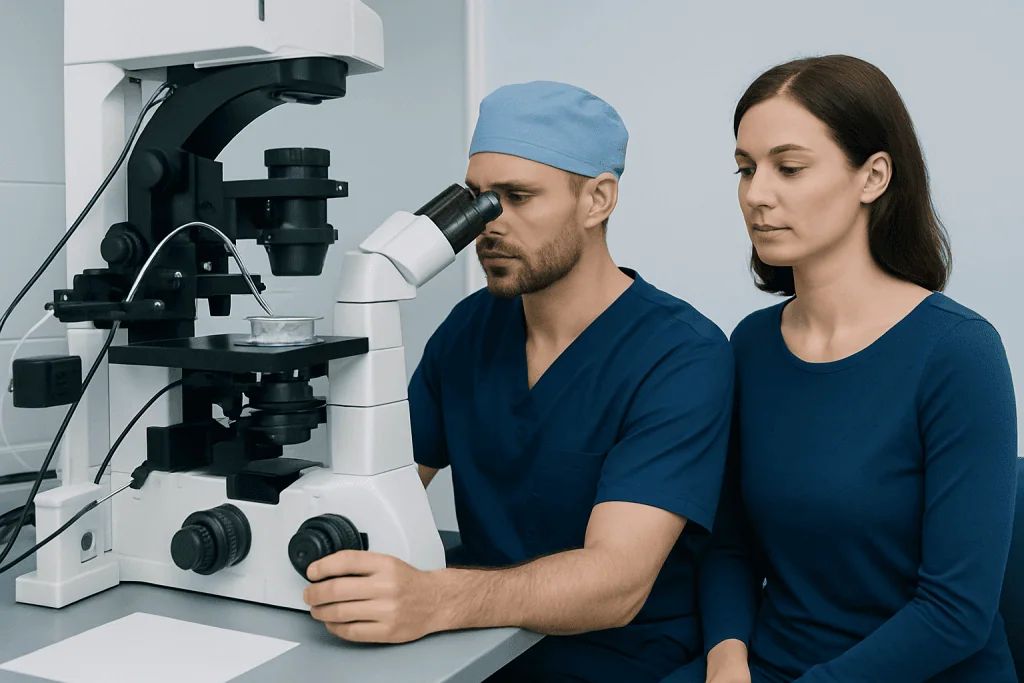
The effect of cancer treatment on fertility depends on several factors, including the patient’s age, the type and stage of cancer, the medicines used, radiation dose and field, surgical area, and baseline fertility. Some treatments have a low risk, while others can significantly affect egg or sperm production. The oncology team can usually estimate whether the planned treatment is low, moderate, or high risk for future fertility.
In women and people with ovaries, chemotherapy can reduce the number and quality of eggs. Radiation to the pelvis, abdomen, spine, or brain may affect the ovaries, uterus, or hormone signals from the brain. Surgery involving the ovaries, fallopian tubes, uterus, cervix, or pelvic organs may also affect the ability to conceive or carry a pregnancy. Some hormone therapies used for breast cancer and other cancers do not always permanently damage fertility, but they may need to be taken for years, delaying pregnancy until an older age.
In men and people with testes, chemotherapy and radiation can reduce sperm production, sometimes temporarily and sometimes permanently. Surgery for cancers of the prostate, bladder, testicle, rectum, or pelvic area may affect ejaculation or the ability to deliver sperm. Some treatments can also change hormone levels, sexual function, or general health in ways that influence fertility.
Because the risk is individual, patients should not assume they are either infertile or fully protected after treatment. A fertility assessment before treatment, and again during survivorship when appropriate, can provide more accurate guidance.
Options for Women and People With Ovaries

The most established fertility preservation options for women are egg freezing and embryo freezing. Both usually require ovarian stimulation with hormone injections for a short period, followed by an egg retrieval procedure performed under sedation. With egg freezing, mature eggs are frozen unfertilized. With embryo freezing, eggs are fertilized with sperm in the laboratory and the resulting embryos are frozen for future use.
Embryo freezing may be suitable for patients who have a partner or who choose to use donor sperm. Egg freezing may be preferred by patients who do not want to use sperm at the time of preservation or who want to keep reproductive choices open. Modern freezing methods have improved outcomes, but no option can guarantee a future pregnancy. The number of eggs or embryos stored, the patient’s age, and future health all influence the chance of success.
Other approaches may be considered depending on the situation:
- Ovarian tissue freezing: A small piece of ovarian tissue is removed surgically and frozen. It may be an option when treatment must begin urgently or for girls who have not reached puberty. In selected cases, tissue may later be reimplanted.
- Ovarian transposition: The ovaries are surgically moved away from the radiation field before pelvic radiotherapy to reduce exposure.
- Medicines to reduce ovarian activity: Gonadotropin-releasing hormone agonists may be used during some chemotherapy plans to help protect ovarian function, but they are not a replacement for egg or embryo freezing.
- Radiation planning and shielding: When possible, radiation techniques may be adjusted to reduce exposure to reproductive organs.
For patients with hormone-sensitive cancers, such as some breast cancers, fertility specialists may use stimulation protocols designed to limit estrogen exposure. These decisions should be coordinated closely with the oncology team so that fertility preservation is aligned with cancer safety.
Options for Men and People With Testes
Sperm banking is the standard and most widely available fertility preservation option for men after puberty. It involves collecting one or more semen samples before treatment begins. The samples are analyzed, divided into portions, frozen, and stored for future use in assisted reproduction. Even one sample may be valuable, especially when treatment must start soon.
If a patient cannot produce a semen sample by masturbation, other medical collection methods may be discussed. In some cases, sperm can be retrieved directly from the testicle or epididymis through a minor procedure. This may be relevant for patients with very low sperm counts, obstruction, or difficulty ejaculating because of illness, anxiety, pain, or prior surgery.
For boys who have not reached puberty, mature sperm are not yet present. Testicular tissue freezing may be discussed in specialized centers, but it remains more limited and may be considered experimental in many settings. Families should receive clear counseling about what is known, what is uncertain, and whether the approach is appropriate.
Men starting cancer treatment should avoid assuming that fertility will remain normal afterward. Sperm counts can change quickly with chemotherapy or radiation, so collection should ideally happen before the first treatment. If this is not possible, the oncology and fertility teams can advise whether collection during early treatment is safe or useful.
Timing, Safety, and Decision-Making
Fertility preservation is most effective when discussed before cancer treatment starts. A referral should be made as soon as a cancer treatment plan is being developed, even if the patient is unsure about future children. Many fertility preservation processes can be organized quickly, and some ovarian stimulation protocols can start at different points in the menstrual cycle rather than waiting for the next period.
Safety is always central. Fertility preservation should not create an unsafe delay in urgent cancer care. The oncology team and fertility specialist work together to decide whether there is enough time, which methods are suitable, and whether any procedure could increase medical risk. For example, patients with blood disorders, severe illness, infection risk, or a need for immediate therapy may require modified plans.
Decision-making may include medical, emotional, ethical, cultural, and financial considerations. Patients may need to think about storage duration, consent for future use, what happens if they are unable to make decisions later, and whether a partner’s consent is required for embryos. Adolescents and young adults may need age-appropriate counseling, with parents or guardians involved according to local law and clinical practice.
Patients with hereditary cancer syndromes may also ask about genetic testing of embryos in the future. This is a separate decision that requires specialist counseling. The fertility preservation visit can help patients understand which questions need to be addressed now and which can wait until they are ready to use stored eggs, sperm, embryos, or tissue.
Using Preserved Fertility After Cancer Treatment
After cancer treatment, some patients will recover fertility naturally, while others will need assisted reproductive techniques. Women who froze eggs or embryos typically use them through in vitro fertilization. Frozen eggs are thawed, fertilized with sperm, and embryos are transferred to the uterus when medically appropriate. Frozen embryos can be thawed and transferred directly in a planned treatment cycle.
Men who banked sperm may use it later for intrauterine insemination, in vitro fertilization, or intracytoplasmic sperm injection, depending on sperm quality and the partner’s fertility factors. Even samples with low sperm counts can sometimes be useful with advanced reproductive techniques. A fertility specialist can explain which method is most appropriate when the patient is ready to try for pregnancy.
For patients who had ovarian tissue frozen, use may involve reimplanting tissue to restore hormone function and possibly allow natural conception or egg retrieval. This is not suitable for every cancer type, because in some cases there may be concern about reintroducing cancer cells. The decision requires careful review by oncology and reproductive specialists.
The timing of pregnancy after cancer depends on the cancer type, treatment received, risk of recurrence, medications, and the patient’s overall health. Some patients may need to wait a specific period before trying to conceive, while others may need long-term medications that influence timing. Survivorship care should include an individualized discussion about pregnancy safety, contraception, and fertility testing.
Prevention, Self-Care, and Emotional Support
Patients cannot always prevent treatment-related infertility, but they can take steps to protect their options. The most important step is to raise the topic early, ideally before chemotherapy, radiotherapy, or reproductive organ surgery begins. Patients may find it helpful to bring a partner, family member, or trusted friend to appointments, especially when decisions must be made quickly.
General health measures can also support reproductive and overall well-being. Patients are usually advised to avoid smoking, limit alcohol, maintain good nutrition as tolerated, and follow medical guidance about physical activity. Supplements, herbal products, or hormonal products should not be started without medical advice, because some may interfere with cancer treatment or increase procedural risks.
Emotional support is an important part of fertility preservation. A cancer diagnosis can make decisions about future family planning feel overwhelming, especially for patients who had not yet considered parenthood. Counseling, psycho-oncology support, fertility nursing guidance, and peer support groups can help patients process grief, uncertainty, and hope in a balanced way.
Contraception should also be discussed. Some patients remain fertile during or after treatment, and pregnancy may not be safe during certain therapies. The oncology team can recommend appropriate contraception based on cancer type, treatment plan, blood clot risk, hormone sensitivity, and personal preferences.
When to See a Fertility Specialist
A fertility specialist should be consulted as soon as possible after a cancer diagnosis if the patient may want biological children in the future. This applies to adults, adolescents, and children whose treatment could affect fertility. Referral is especially important before chemotherapy, pelvic or testicular radiation, brain radiation that may affect hormone control, or surgery involving reproductive organs.
Patients should also seek advice if they have already started treatment but are worried about fertility. Although the best time is before treatment, there may still be options for assessment, counseling, or future planning. After treatment, fertility evaluation may include menstrual history, hormone tests, ultrasound assessment, semen analysis, and review of the cancer treatment received.
It is also appropriate to ask for fertility counseling during survivorship, before attempting pregnancy, or before stopping any long-term cancer medication. The care team can help balance the desire for pregnancy with cancer follow-up, medication safety, and general health. Partners may also benefit from evaluation, because fertility depends on both individuals in many couples.
For international patients, Acibadem International’s multidisciplinary specialists and JCI-accredited hospitals can provide evaluation and treatment planning for fertility preservation before cancer therapy. Patients should bring medical records, pathology results, treatment plans, and any prior fertility test results so the team can give timely, individualized guidance.
Frequently asked questions
When should fertility preservation be discussed after a cancer diagnosis?
It should be discussed as early as possible, ideally before cancer treatment begins. Early referral gives patients the widest range of options and helps avoid unnecessary delays. Even if treatment must start urgently, a brief fertility consultation may still be useful.
Does fertility preservation delay cancer treatment?
In many cases, fertility preservation can be completed within a short time and coordinated with the oncology plan. However, some cancers require immediate treatment, and safety always comes first. The oncology and fertility teams decide together what is appropriate for each patient.
Is egg freezing or embryo freezing better before cancer treatment?
Both are established options, but the best choice depends on the patient’s age, time available, relationship status, sperm source, personal values, and medical safety. Embryo freezing requires sperm at the time of treatment, while egg freezing keeps that decision for later. A fertility specialist can explain expected outcomes based on the patient’s situation.
Can men remain fertile after chemotherapy or radiation?
Some men recover sperm production after treatment, but others have long-term or permanent fertility problems. The risk depends on the cancer treatment type, dose, and area treated. Because recovery is uncertain, sperm banking before treatment is usually recommended when future biological children are important.
Can children and teenagers have fertility preservation?
Yes, fertility preservation should be considered for children and teenagers when cancer treatment may affect future fertility. Options depend on puberty status, diagnosis, urgency of treatment, and local expertise. Counseling should be age-appropriate and include parents or guardians according to medical and legal requirements.
Is pregnancy safe after cancer treatment?
Many cancer survivors can have healthy pregnancies, but timing and safety depend on the cancer type, treatment history, current health, and medications. Patients should speak with their oncologist and a fertility or maternal-fetal medicine specialist before trying to conceive. This helps ensure pregnancy planning is coordinated with follow-up care.
Does fertility preservation guarantee a future baby?
No fertility preservation method can guarantee pregnancy or birth. Success depends on factors such as age, egg or sperm quality, the number of stored cells or embryos, uterine health, partner factors, and future medical condition. Even without a guarantee, preservation can provide meaningful future options.
References
- American Society of Clinical Oncology
- European Society for Medical Oncology
- American Society for Reproductive Medicine
- European Society of Human Reproduction and Embryology
- National Cancer Institute
This article is for general information only and is not a substitute for professional medical advice. Please consult a qualified doctor about your individual situation.
Oncology care in Turkey — second opinion and treatment plan
JCI-accredited · board-certified surgeons · reply within 24h
Add us as a Preferred Source to see more of our trusted health content across Google Search, AI Overviews and Discover.

Medical Oncology Department
Medical treatment of cancer with chemotherapy, immunotherapy and targeted therapies under a multidisciplinary tumor board.
60 specialists in this unit