Fragile X Syndrome: Symptoms, Causes, and Treatment Options

Fragile X syndrome is caused by a change in the FMR1 gene on the X chromosome. It can affect intellectual development, language, attention, behavior, and social interaction.
Key Takeaways
- Fragile X syndrome is caused by a change in the FMR1 gene on the X chromosome.
- It can affect intellectual development, language, attention, behavior, and social interaction.
- Symptoms vary widely, and boys are often more noticeably affected than girls.
- Diagnosis is confirmed with genetic testing rather than symptoms alone.
- Treatment focuses on developmental, educational, behavioral, and medical support.
- Genetic counseling can help families understand inheritance and future pregnancy risks.
Fragile X syndrome is an inherited genetic condition that can affect learning, behavior, speech, and physical development. While there is no cure for the underlying genetic change, early diagnosis and supportive therapies can help many children and adults build skills and improve daily functioning.
Overview
Fragile X syndrome is a genetic condition that affects brain development and can lead to differences in learning, behavior, language, and social skills. It is one of the most common inherited causes of intellectual disability and a known genetic cause of autism spectrum-related features. Symptoms may range from mild to more significant, so each person’s needs can look different.
The condition happens because of a change in a gene called FMR1, located on the X chromosome. This change reduces or blocks the body’s ability to make a protein that helps nerve cells communicate and develop properly. Because the X chromosome is involved, boys are often more severely affected than girls, although girls can also have important symptoms and benefit from evaluation and support.
Fragile X syndrome is usually present from birth, but the diagnosis may not be made right away. Some infants have subtle signs, while others are first evaluated later because of delayed speech, learning difficulties, attention problems, or social challenges. Early recognition matters because therapy and educational support can begin sooner.
Common Symptoms and How It May Present
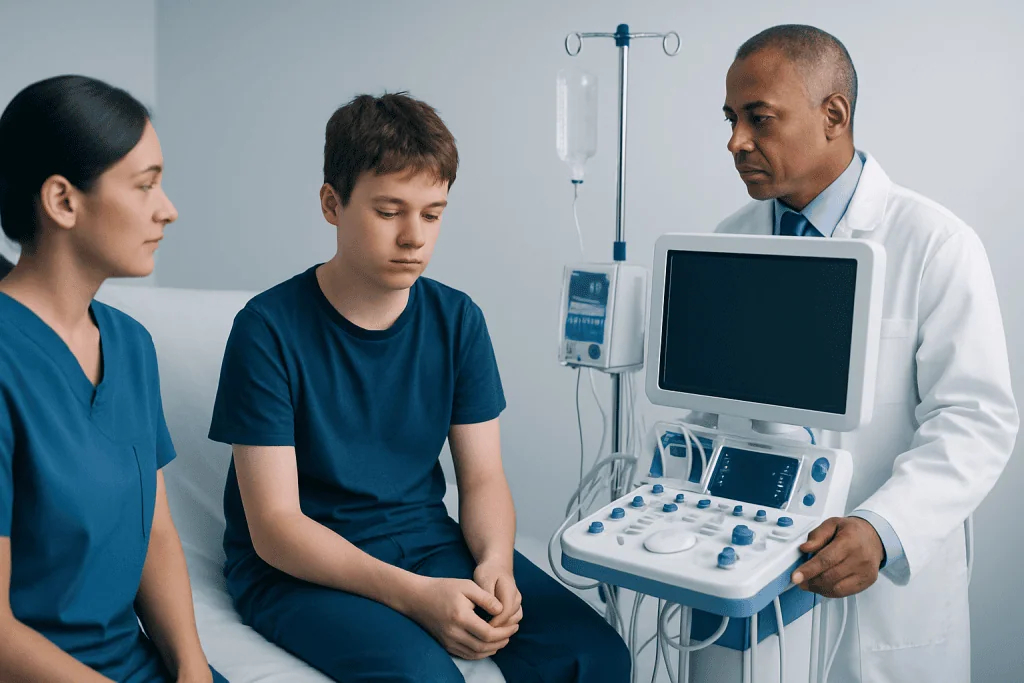
The signs of fragile x syndrome can appear in several areas of development. Many children have delays in speech and language, difficulty with learning, problems with attention, or differences in social communication. Some may be very sensitive to noise, touch, or changes in routine. Others may seem shy, avoid eye contact, or become overwhelmed in busy settings.
Behavioral features can overlap with conditions such as attention-deficit/hyperactivity disorder and autism spectrum disorder. A child may be impulsive, restless, anxious, or prone to repetitive behaviors such as hand flapping. Not every person has all of these features, and the intensity can vary over time. When autism-related features are present, doctors may also consider assessment for autism spectrum disorder.
Physical findings are often mild and may become more noticeable with age. Some people have a long, narrow face, prominent ears, flexible joints, flat feet, or low muscle tone. Boys after puberty may develop enlarged testicles, a common feature of the syndrome. Seizures occur in some people, but not in everyone.
- Developmental delay, especially speech and language delay
- Learning difficulties or intellectual disability
- Attention problems, hyperactivity, or impulsive behavior
- Social anxiety, shyness, or sensory sensitivity
- Autism-related behaviors in some children
- Mild physical features such as flexible joints or prominent ears
Causes, Genetics, and Family Risk

Fragile X syndrome is caused by a mutation in the FMR1 gene. Specifically, there is an expansion of a DNA sequence known as the CGG repeat. When this repeat becomes very large, the gene is effectively switched off, and the body produces little or none of the fragile X messenger ribonucleoprotein, often called FMRP. This protein is important for healthy brain development and nerve signaling.
The condition is inherited in families. A parent can carry a smaller expansion, called a premutation, without having classic fragile X syndrome, yet still pass on an expanded version to a child. This is why a diagnosis in one family member often leads to testing and counseling for relatives. Family history may include unexplained developmental delays, intellectual disability, autism-related traits, infertility, or tremor and balance problems in older adults.
Because the gene is on the X chromosome, the pattern of inheritance is important. Males typically have one X chromosome, so a full mutation often causes more noticeable effects. Females have two X chromosomes, so symptoms may be milder or more variable. Genetic counseling can help families understand carrier status, inheritance, and reproductive options in a clear and supportive way.
How Fragile X Syndrome Is Diagnosed
Doctors often suspect fragile x syndrome when a child has developmental delay, learning difficulties, speech delay, behavioral differences, or a family history that suggests an inherited condition. However, symptoms alone cannot confirm the diagnosis. The most reliable way to diagnose fragile X syndrome is a specific genetic test that examines the FMR1 gene and the size of the CGG repeat expansion.
Evaluation usually begins with a detailed medical and developmental history, physical examination, and discussion of family history. A pediatrician, neurologist, developmental specialist, or clinical geneticist may be involved. Depending on the child’s needs, the team may also assess speech, motor skills, attention, learning, and behavior. In some children, broader developmental evaluation may happen alongside testing for related concerns such as autism or epilepsy.
Once the diagnosis is confirmed, families may be offered testing for parents and other relatives. This can identify premutation carriers and help explain risks in future pregnancies. Genetic counseling is an important part of care because it helps families interpret results and make informed decisions without pressure.
Treatment Options and Ongoing Support
There is no treatment that reverses the underlying genetic change in fragile x syndrome, but many supportive therapies can improve communication, learning, behavior, and independence. Care is individualized and often works best when started early. Treatment usually focuses on the person’s strengths, daily challenges, school needs, and medical concerns rather than following a single standard plan.
Common therapies include speech and language therapy, occupational therapy, physical therapy, behavioral therapy, and special education support. Children with attention, anxiety, sleep problems, or mood-related symptoms may also benefit from medical management when appropriate. A pediatric neurologist or developmental specialist may coordinate care, and some families may also be referred for genetic testing and counseling to understand family implications.
In some cases, clinicians may recommend psychological or neurodevelopmental assessment to better define learning style, communication needs, and classroom accommodations. When behavior or social communication is a major concern, child and adolescent psychiatry or developmental-behavioral care may be helpful. If seizures, muscle tone issues, or more complex neurological symptoms are present, specialist input such as pediatric neurology care can support diagnosis and symptom management.
Treatment plans should be reviewed regularly because needs can change with age. Support in early childhood may focus on language and motor milestones, while school-age care may emphasize learning, attention, and social development. In adolescence and adulthood, planning often shifts toward independence, emotional well-being, and family support.
Daily Living, Education, and Family Self-Care
Families often play a central role in helping a child with fragile x syndrome thrive. Consistent routines, simple instructions, visual supports, and a calm environment can make daily life easier. Many children respond well to structured schedules and gradual transitions between activities. Sensory sensitivities may also improve when noise, crowding, or unexpected changes are reduced.
Educational planning is important. Children may benefit from an individualized learning approach, speech support at school, behavior plans, and regular communication between parents and teachers. Building on strengths, such as memory for routines or visual learning, can support progress. Social skills practice and gentle encouragement can also help a child participate more comfortably with peers.
Parents and caregivers may need support too. Learning about the condition, joining support networks, and meeting with genetics professionals can make the diagnosis less overwhelming. Because fragile x syndrome can affect more than one family member across generations, open discussion and appropriate testing may help relatives better understand their own health and reproductive planning.
When to Seek Medical Care
A child should be evaluated by a doctor if there are delays in speech, motor skills, learning, or social development, especially if these delays are persistent or are getting more noticeable with age. Medical review is also important if a child has seizures, significant anxiety, severe attention problems, frequent behavioral outbursts, or features that suggest autism spectrum disorder. Early assessment does not label a child negatively; it helps identify the right support sooner.
Families should also speak with a healthcare professional if there is a known family history of fragile x syndrome, intellectual disability of unclear cause, autism-related traits, or a previously identified FMR1 premutation. Genetic counseling can help clarify whether testing is appropriate for a child, parent, or other relatives. If a diagnosis is confirmed, coordinated follow-up with developmental and medical specialists can guide therapy over time.
For families seeking multidisciplinary evaluation, Acibadem International’s specialists in genetics, pediatrics, neurology, and child development work in JCI-accredited hospitals to diagnose and manage fragile x syndrome in international patients. The most helpful next step is usually a consultation with a qualified doctor who can review symptoms, family history, and testing options in detail.
Frequently asked questions
What is fragile x syndrome?
Fragile X syndrome is an inherited genetic condition caused by a change in the FMR1 gene on the X chromosome. It can affect learning, speech, behavior, attention, and social development, with symptoms ranging from mild to more significant.
Is fragile x syndrome the same as autism?
No. Fragile X syndrome is a specific genetic condition, while autism is a broader neurodevelopmental diagnosis. Some people with fragile X syndrome also have autism-related features or meet criteria for autism spectrum disorder, but the two are not identical.
Can girls have fragile x syndrome?
Yes, girls can have fragile X syndrome. Their symptoms are often milder or more variable than in boys because females usually have a second X chromosome, but girls can still have learning, emotional, or social challenges that deserve evaluation and support.
How is fragile x syndrome diagnosed?
Diagnosis is confirmed with genetic testing that looks at the FMR1 gene and the size of the CGG repeat expansion. Doctors may suspect the condition based on developmental delay, behavior, or family history, but testing is needed for confirmation.
Is there a cure for fragile x syndrome?
There is currently no cure that corrects the underlying genetic change. Treatment focuses on supportive therapies such as speech therapy, occupational therapy, educational interventions, behavioral support, and medical care for related symptoms.
Should family members be tested after one person is diagnosed?
Often, yes. Because fragile X syndrome and FMR1 premutations can run in families, genetic counseling and possible testing may be recommended for parents and other relatives. This can help clarify health implications and future pregnancy risks.
References
- Centers for Disease Control and Prevention
- National Institute of Child Health and Human Development
- MedlinePlus Genetics
- American Academy of Pediatrics
- National Organization for Rare Disorders
This article is for general information only and is not a substitute for professional medical advice. Please consult a qualified doctor about your individual situation.
Explore treatments in Turkey — costs, top hospitals & a free quote
JCI-accredited · board-certified surgeons · reply within 24h
Add us as a Preferred Source to see more of our trusted health content across Google Search, AI Overviews and Discover.