Frog Pose: A Complete Medical Overview

Frog pose is a deep stretch for the inner thighs, groin, and hips. Good technique, props, and gradual progression can reduce the risk of strain.
Key Takeaways
- Frog pose is a deep stretch for the inner thighs, groin, and hips.
- Good technique, props, and gradual progression can reduce the risk of strain.
- Pain in the knee, groin, hip, or lower back is a sign to stop and reassess.
- People with joint instability, recent injury, or chronic pain should seek professional guidance.
- A modified version is often safer and more sustainable than forcing a deeper position.
Frog pose is a yoga-based hip and groin stretch that may help improve flexibility and body awareness when practiced with proper alignment and gradual progression. Because it places significant stress on the inner thighs, knees, hips, and lower back, it is best approached carefully, especially by people with pain, joint problems, or recent injuries.
Overview: What Frog Pose Is and Why It Matters
Frog pose is a floor-based yoga stretch that places the hips in wide abduction with the knees bent and the inner thighs lengthening. In many yoga traditions it is known as Mandukasana or a related variation, though names and exact technique can differ between teachers. The pose is commonly used to target the groin, hip adductors, pelvic region, and sometimes the lower back.
From a medical and movement perspective, frog pose is best understood as an intense mobility exercise rather than a routine resting position. It may support flexibility, body awareness, and tolerance to stretching when introduced gradually. However, because it places load on several joints and soft tissues at once, it can also aggravate symptoms in people with limited mobility, poor alignment, hypermobility, or pre-existing musculoskeletal conditions.
This broader view is important because online descriptions often focus only on the stretch sensation or expected benefits. In practice, a safe frog pose depends on individual anatomy, current fitness, prior injury history, and whether the movement is done with control. For some people, a gentler alternative will provide the same goals with less strain.
How Frog Pose Affects the Body
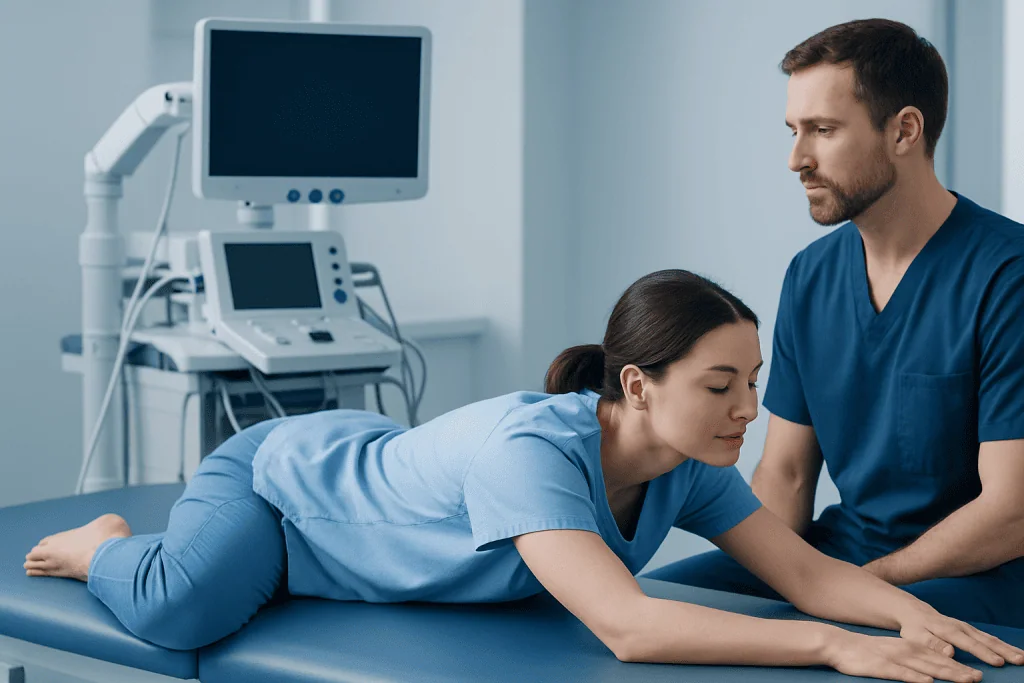
Frog pose primarily lengthens the adductor muscles along the inner thigh, including tissues that help stabilize the hip and pelvis during walking, running, and directional changes. It also changes the position of the hip joint, which may create a strong opening sensation in the groin and front of the pelvis. Depending on posture, some people also feel stretching in the lower abdominal area or compression in the lower back.
The knees are another key consideration. In frog pose, the knees are bent and the lower legs are often rotated outward. If the hips cannot comfortably open enough, force may shift into the knees, especially along the inner joint line or around the kneecap. People with knee pain or previous ligament or meniscus problems may notice discomfort quickly.
The lower back can also become involved if the pelvis tips too far forward or if the abdominal muscles are not gently engaged. In people with limited hip mobility, the body may compensate by arching through the lumbar spine. This may worsen symptoms in those prone to lower back pain or stiffness after exercise.
For these reasons, frog pose is not simply about getting lower to the floor. A medically safer goal is balanced mobility: opening the hips while keeping the knees supported, the pelvis controlled, and the stretch sensation moderate rather than sharp.
Potential Benefits of Frog Pose

When performed with care, frog pose may help increase flexibility in the hips and inner thighs. This can be useful for people whose movement habits involve prolonged sitting, repetitive sports patterns, or reduced lower-body mobility. Improved hip range of motion may also support comfort during activities such as squatting, kneeling, and certain forms of exercise.
Some people find that slow, supported stretching encourages relaxation and greater awareness of muscle tension. In this sense, frog pose may be part of a broader mind-body practice that includes breathing, posture control, and recovery. It may also be used by therapists or trainers in a modified form to explore hip mobility deficits.
Still, flexibility gains are not guaranteed and should not be forced. People often benefit more from a combination of gentle stretching and strengthening than from deep passive stretches alone. If hip tightness is linked to injury, muscle imbalance, or pain syndromes, a structured evaluation may be more helpful than repeatedly pushing into the same pose. In some cases, programs such as physical therapy and rehabilitation can address both mobility and stability in a safer, more individualized way.
Risks, Contraindications, and Common Mistakes
The main risks of frog pose are overstretching and poor load distribution. Warning signs include sharp groin pain, pinching at the front of the hip, inner knee pain, numbness, or pain that lingers after practice. A strong stretch can be expected, but pain is not a sign of progress. Forcing the knees farther apart or dropping the pelvis too quickly increases the chance of strain.
People with recent groin pulls, hip impingement, unstable joints, significant arthritis, knee injuries, pelvic pain, or low back disorders should use caution. Pregnancy, especially when flexibility is already increased, may also require modifications and guidance. Those with generalized hypermobility can appear very flexible while still lacking joint control, which may increase irritation after deep stretching.
Common technique errors include letting the lower back collapse, placing the knees too wide too soon, pushing through pain, and staying in the pose too long. Another mistake is practicing on a hard surface without padding under the knees and ankles. Using blankets, bolsters, or yoga blocks can reduce pressure and help the body stay aligned.
If symptoms repeatedly occur during flexibility work, it may be useful to evaluate whether an underlying problem is present, such as hip pain related to joint or tendon irritation. In some situations, medical assessment and imaging may be appropriate before continuing deep stretching.
How to Practice Frog Pose More Safely
A careful setup can make frog pose more tolerable and more effective. It is usually best to begin on a padded mat with extra support under the knees. From an all-fours position, the knees are slowly moved apart only as far as comfortable, with the ankles in a neutral or gently outward position based on comfort. The pelvis stays relatively level, and the body weight is supported through the forearms or hands rather than sinking heavily.
Breathing should remain steady. If the person cannot breathe comfortably or feels the need to brace against pain, the stretch is too intense. A mild to moderate pull through the inner thighs may be acceptable, but any sharp, catching, or joint-specific pain means the position should be reduced or stopped. Short holds are often better tolerated than prolonged holds, particularly for beginners.
Modifications are often the safest option. These can include keeping the knees closer together, placing a bolster under the pelvis or chest, or doing a gentler hip-opening exercise such as a wide-knee child’s pose variation. Strengthening the hips and core alongside mobility work can improve control and reduce compensation patterns.
For people recovering from injury or persistent pain, guided care may be helpful. Depending on the source of symptoms, clinicians may recommend assessment by orthopedics or a rehabilitation professional to determine whether deep hip-opening postures are appropriate.
Diagnosis and Evaluation When Frog Pose Causes Pain
Frog pose itself is not a medical condition, but discomfort during the pose can point to a movement limitation, soft-tissue strain, or an underlying joint problem. A clinician will usually begin by asking where the pain is felt, whether it started suddenly or gradually, and which activities trigger it. Groin pain may suggest adductor strain or hip joint irritation, while inner knee pain can reflect stress on supporting structures around the knee.
The physical examination may include checking hip range of motion, strength, joint stability, gait, spine posture, and tenderness in the muscles or tendons. The goal is to determine whether the issue is a temporary overload from stretching or a condition that needs targeted treatment. If pain is persistent, severe, or associated with locking, instability, or weakness, imaging may be recommended.
Depending on symptoms, doctors may use X-rays, ultrasound, or MRI to evaluate bones, cartilage, ligaments, tendons, or soft tissues. Imaging is not needed for every case, but it can be useful when pain does not improve, when there is concern for a structural problem, or when return to sport or exercise is being planned.
Treatment, Recovery, and Prevention
If frog pose causes pain, the first step is usually to stop the aggravating movement and allow irritated tissues to settle. Recovery may involve temporary activity modification, gentle mobility in a pain-free range, and gradual return to stretching only after symptoms improve. Ice or heat may help some people, but the most effective approach depends on the cause of discomfort and should be individualized.
Treatment often focuses on restoring balanced function rather than simply stretching more. This may include strengthening the gluteal muscles, core, and hip stabilizers; improving pelvic control; and correcting movement habits that place excess stress on the hips or knees. Manual therapy, supervised exercise, or a structured rehabilitation plan may be recommended when symptoms are ongoing.
Prevention centers on pacing and technique. A proper warm-up, progressive range of motion, supportive props, and avoiding competitive stretching can lower the chance of injury. It also helps to alternate flexibility work with strength training and recovery days rather than repeating deep stretching daily without guidance.
If evaluation or treatment is needed, Acibadem International’s multidisciplinary specialists and JCI-accredited hospitals care for international patients with musculoskeletal concerns using coordinated assessment, imaging, and rehabilitation planning.
When to Seek Medical Care
Medical advice is appropriate if frog pose causes sharp pain, swelling, a popping sensation, joint instability, numbness, or an inability to bear weight normally afterward. Care is also important when pain keeps returning, interferes with exercise or daily activities, or does not improve after a short period of rest and self-care.
Prompt evaluation is especially important for people with a recent sports injury, significant knee or hip swelling, night pain, fever, or symptoms after a fall. These features may suggest a problem beyond simple overstretching. A qualified doctor or rehabilitation specialist can help identify the cause and guide a safer return to movement.
Frequently asked questions
What is frog pose used for?
Frog pose is mainly used to stretch the inner thighs, groin, and hips. Some people include it in yoga or mobility routines to work on flexibility and body awareness. It should be approached gradually because it is a deep stretch.
Is frog pose safe for beginners?
It can be safe for some beginners if they use a modified version, supportive props, and stop well before pain. However, it is not the best starting stretch for everyone because it can place significant stress on the hips and knees. A gentler hip-opening exercise may be more suitable at first.
Why does frog pose hurt my knees?
Knee discomfort may happen when the hips do not open enough and the stress shifts into the knee joint or surrounding soft tissues. Hard flooring, poor alignment, or forcing the knees too wide can also contribute. Persistent or sharp knee pain should be assessed by a medical professional.
Can frog pose cause injury?
Yes, it can contribute to strains or joint irritation if it is forced, held too long, or practiced despite pain. The groin, hips, knees, and lower back are the most common areas affected. Using proper technique and a gradual approach lowers the risk.
Who should avoid frog pose?
People with recent groin, hip, knee, or lower back injuries should be cautious or avoid the pose unless a clinician or qualified instructor approves it. It may also be unsuitable for those with joint instability, significant arthritis, or painful hypermobility. When in doubt, professional guidance is the safest approach.
How long should someone hold frog pose?
There is no single ideal duration for everyone. Short, comfortable holds with steady breathing are generally safer than staying in a deep stretch for a long time. The pose should be reduced or stopped if pain, pinching, or numbness appears.
This article is for general information only and is not a substitute for professional medical advice. Please consult a qualified doctor about your individual situation.
Joint and spine care in Turkey — expert assessment & treatment
JCI-accredited · board-certified surgeons · reply within 24h
Add us as a Preferred Source to see more of our trusted health content across Google Search, AI Overviews and Discover.

More from the Health Library

Rosy Cheeks: A Complete Medical Overview

Splits — Explained by Medical Evidence, Not Myths

Child Life Specialist: An Evidence-Based Guide for Patients

Macrosomia: An Evidence-Based Guide for Patients

Hypertrophic — Explained by Medical Evidence, Not Myths