Fue hair transplant in Turkey: Hospitals, Safety & What to Expect

FUE is a minimally invasive hair restoration procedure that transfers individual follicular units without removing a strip of scalp. A medical assessment is essential to confirm the cause of hair loss, evaluate donor hair, and determine whether transplantation is appropriate.
Key Takeaways
- FUE is a minimally invasive hair restoration procedure that transfers individual follicular units without removing a strip of scalp.
- A medical assessment is essential to confirm the cause of hair loss, evaluate donor hair, and determine whether transplantation is appropriate.
- The procedure is usually performed under local anesthesia, with recovery involving temporary scabbing, redness, and shedding of transplanted hairs.
- New growth commonly starts several months after surgery, while final density and appearance may take up to 12 to 18 months to develop.
- Choosing a licensed hospital with qualified physicians, clear infection-control practices, and arranged follow-up is central to safe care abroad.
FUE hair transplant in Turkey involves moving healthy hair follicles from a donor area, usually the back of the scalp, to areas of thinning or baldness. Safety and natural-looking outcomes depend on a careful medical assessment, an experienced clinical team, regulated hospital standards, and realistic expectations about recovery and results.
Overview: What Is FUE Hair Transplant in Turkey?
FUE, or follicular unit extraction, is a surgical technique used to restore hair in areas affected by thinning or baldness. Individual naturally occurring groups of hairs, called follicular units, are removed from a donor area and placed into tiny openings in the recipient area. The donor area is most often the back and sides of the scalp, where hair tends to be more resistant to pattern hair loss.
People considering a FUE hair transplant in Turkey should focus on clinical quality rather than location alone. A safe treatment journey includes a diagnosis of the hair-loss cause, an in-person assessment where possible, a surgeon-led treatment plan, sterile operating conditions, documented consent, and accessible aftercare. Turkey has hospitals that serve international patients, but standards can vary between providers.
FUE can help suitable people with stable hair loss and an adequate donor supply. It does not stop the underlying process of androgenetic alopecia, also known as male- or female-pattern hair loss, and it cannot create unlimited hair density. A long-term plan may include medical treatment, monitoring, and, for some patients, a future additional procedure.
How FUE Works and Who May Be a Candidate
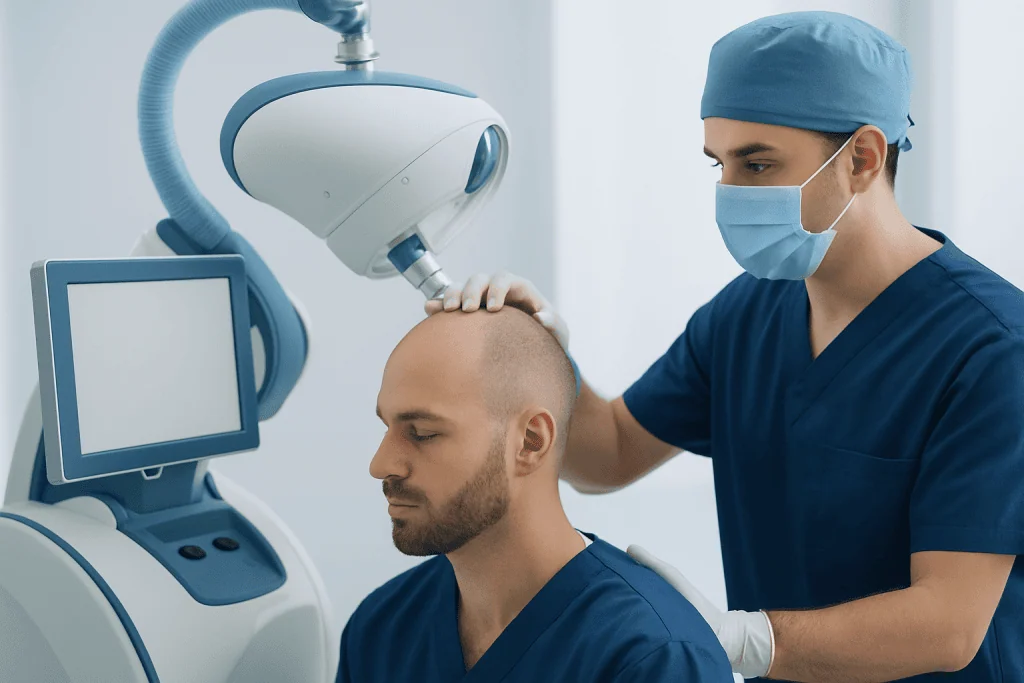
During FUE, a clinician uses a small punch instrument to remove follicular units one at a time from the donor scalp. The team then sorts and preserves the grafts before placing them into carefully planned recipient sites. The angle, direction, and distribution of these sites influence how natural the hairline and overall growth pattern may look.
Suitable candidates commonly have a well-established pattern of hair loss, enough donor hair, and healthy scalp skin. The best approach differs from person to person according to age, family history, rate of hair loss, hair texture, scalp contrast, medical history, and goals. A conservative hairline design can help preserve donor hair and account for possible future hair loss.
Hair transplantation may be postponed or may not be advised when hair loss is sudden, rapidly progressing, caused by untreated scalp disease, or related to a medical condition that needs investigation. Conditions such as anemia, thyroid disorders, nutritional deficiency, inflammatory scalp conditions, and some medications can contribute to shedding. A clinician may recommend blood tests, dermatology review, or treatment of the underlying cause before surgery.
People with diabetes, bleeding disorders, immune conditions, active infections, poor wound healing, or those taking medicines that affect bleeding should discuss these factors openly with the treating doctor. Smoking can also affect wound healing, so patients are usually advised to follow individualized guidance on stopping or reducing tobacco use before and after surgery.
What Happens Before, During, and After the Procedure

Before surgery, the medical team reviews the patient’s health history, medications, allergies, prior hair treatments, and expectations. The scalp and donor area are examined, photographs may be taken for planning, and the expected graft range and hairline design are discussed. Patients should receive clear instructions about medicines, alcohol, smoking, hair products, travel, and the timing of washing after the procedure.
On the day of treatment, the donor and recipient areas are usually trimmed or shaved to allow accurate graft extraction and placement. Local anesthesia is used to numb the scalp. The clinician extracts follicular units, creates recipient sites, and places the grafts. The procedure can take several hours, depending on the treatment plan and number of grafts, and some patients may require more than one session.
After the procedure, patients usually return to their accommodation with written aftercare instructions. They may be given guidance on sleeping with the head elevated, protecting grafts from rubbing or pressure, washing the scalp gently, and avoiding strenuous activity for a period advised by the medical team. Any prescribed medicines should be taken only as directed.
For international patients, travel planning should allow time for an initial clinical review and early postoperative assessment before flying home. Accommodation and transport arrangements may be helpful, but they do not replace medical supervision. It is important to know how postoperative questions will be handled after return home and to arrange local medical care if needed.
Recovery Timeline and Expected Results
In the first few days, mild swelling, tenderness, redness, and tiny scabs around the grafts are common. The donor area may also feel sore or tight. Scabs typically loosen over the following one to two weeks with the washing routine recommended by the clinic. Patients should avoid scratching, picking, or rubbing the treated scalp because this can disturb healing grafts.
Transplanted hairs often shed within the first several weeks. This expected phase, sometimes called shock shedding, does not necessarily mean the follicles have failed. The implanted follicles remain beneath the skin and later enter a new growth cycle. Existing, non-transplanted hair can also temporarily shed after surgery, particularly in areas already affected by thinning.
Early new growth may become noticeable after several months, but it is often fine and uneven at first. Hair usually continues to mature in thickness, length, and coverage over time. Meaningful assessment generally requires patience, and the full cosmetic result may take 12 to 18 months, especially in the crown area.
Recovery instructions vary based on the individual procedure and health needs. Sun exposure, swimming, contact sports, helmets, hair styling products, and exercise may need to be limited temporarily. Patients should follow the specific recommendations of their treating clinician rather than relying on general online timelines.
Benefits, Limitations, and Possible Risks
A potential benefit of FUE is that it uses a person’s own hair and leaves many small, dot-like donor scars rather than a linear scar. It can be useful for people who prefer shorter hairstyles or who are not suited to strip-harvesting methods. When graft placement is carefully planned, FUE may improve frontal hairline framing, fill selected areas of thinning, or restore coverage after hair loss.
However, FUE has limits. Donor hair is finite, and a transplant cannot reliably reproduce the density of an unaffected scalp. Results depend on graft survival, hair characteristics, ongoing hair loss, scalp health, and adherence to aftercare. Some people may benefit more from non-surgical treatments, while others may need a combined approach.
Possible complications include infection, bleeding, prolonged swelling, pain, numbness, folliculitis, visible scarring, poor graft growth, uneven density, unnatural hairline placement, and temporary or persistent shock loss. Rarely, an allergic reaction to medication or anesthesia can occur. Risks may be higher when procedures are performed without appropriate clinical screening, sterility, or surgeon oversight.
Patients should ask who will perform each part of the procedure, what credentials and licensing apply, how complications are managed, and what follow-up is included. A trustworthy provider should explain limitations, avoid promising a guaranteed outcome, and give patients enough time to make an informed decision. For a broader overview of the technique and care pathway, see FUE hair transplant treatment.
Choosing a Hospital and Planning Care in Turkey
When selecting a hospital for FUE hair transplantation, patients can ask whether the facility is licensed and whether the procedure is performed in an appropriate clinical setting. International accreditation can provide an additional indicator of systems for patient safety and quality; for example, Joint Commission International accreditation assesses healthcare organizations against recognized standards. Accreditation does not replace a personal discussion about the specific surgeon, team, and treatment plan.
Patients should confirm that a qualified physician is responsible for assessment, surgical planning, and clinical oversight. They should also ask whether the staff performing extraction and implantation are trained and supervised according to local regulations. Clear records of medical history, consent, procedure details, and postoperative instructions are particularly important for people travelling from another country.
Travel plans should include enough flexibility for pre-treatment review, the procedure, early follow-up, and rest. It is sensible to avoid making important work or sightseeing commitments immediately after surgery. Before returning home, patients should have a written plan for washing, medication, activity restrictions, expected changes, warning symptoms, and ways to contact the clinical team.
Acibadem International’s multidisciplinary specialists and JCI-accredited hospitals provide assessment and treatment planning for international patients considering hair restoration. A consultation can help clarify whether transplantation is appropriate and whether non-surgical management should be considered first.
When to Seek Medical Care
Medical review is recommended before a hair transplant when hair loss is sudden, patchy, painful, associated with itching or scaling, or accompanied by changes elsewhere in the body. These features can suggest a condition other than common pattern hair loss and may require targeted treatment. People experiencing emotional distress related to hair loss can also benefit from supportive discussion with a healthcare professional.
After FUE, patients should contact their treating team promptly if they develop increasing pain, spreading redness, fever, pus-like discharge, significant bleeding, worsening swelling, or signs of an allergic reaction such as facial swelling or breathing difficulty. Urgent local medical attention is appropriate for severe symptoms or if the treating team cannot be reached.
Follow-up is also important if healing does not progress as expected, if donor-area symptoms persist, or if there are concerns about graft growth over the months after treatment. A clinician can assess scalp health, discuss ongoing hair-loss treatment, and help distinguish normal recovery changes from a problem that needs care.
Frequently asked questions
Is FUE hair transplant in Turkey safe?
FUE hair transplantation can be safe when it is performed after appropriate medical assessment in a licensed, well-regulated hospital or clinic by qualified professionals. Patients should verify who is responsible for surgery, how infection prevention and emergencies are managed, and what follow-up support is available. Travel destination alone does not determine safety.
Does an FUE hair transplant leave scars?
FUE leaves many very small extraction scars in the donor area rather than one linear scar. These usually become less noticeable as they heal, but scarring varies with skin type, healing tendency, extraction technique, and how closely the donor area is trimmed. A clinician can explain the likely appearance for an individual patient.
How long does recovery take after FUE?
Initial healing generally takes around one to two weeks, when scabs and visible redness gradually settle. Transplanted hairs may shed during the first weeks, and new growth often begins after several months. The appearance continues to improve over time, with final maturation often taking 12 to 18 months.
Will the transplanted hair fall out?
It is common for the visible transplanted hair shafts to shed shortly after surgery. This is usually part of the normal growth cycle, while the implanted follicles remain in the scalp. New hair growth develops gradually, although individual results and growth timing vary.
Can women have an FUE hair transplant?
Some women are suitable candidates, especially when they have stable, localized thinning and adequate donor density. Because diffuse hair loss is more common in women, a careful diagnosis is particularly important before considering surgery. Treatment may first focus on identifying and managing hormonal, nutritional, medical, or inflammatory causes of shedding.
Do patients need medication after a hair transplant?
Some patients may be advised to use medical treatments to manage ongoing pattern hair loss and help preserve non-transplanted hair. The most appropriate option depends on sex, medical history, pregnancy plans, other medicines, and the cause of hair loss. Medication decisions should be made with a qualified doctor.
References
- American Academy of Dermatology Association
- International Society of Hair Restoration Surgery
- National Health Service
- Mayo Clinic
- Joint Commission International
This article is for general information only and is not a substitute for professional medical advice. Please consult a qualified doctor about your individual situation.
FUE Hair Transplant in Turkey — costs, top hospitals & a free quote
JCI-accredited · board-certified surgeons · reply within 24h
Add us as a Preferred Source to see more of our trusted health content across Google Search, AI Overviews and Discover.

Hair Transplant
Modern FUE and DHI hair restoration with natural, lasting results.