Gastritis vs Gastroenteritis: Key Differences and How Doctors Tell Them Apart

Gastritis mainly affects the stomach lining; gastroenteritis usually affects both the stomach and intestines. Diarrhea is much more typical of gastroenteritis than gastritis.
Key Takeaways
- Gastritis mainly affects the stomach lining; gastroenteritis usually affects both the stomach and intestines.
- Diarrhea is much more typical of gastroenteritis than gastritis.
- Doctors tell them apart by asking about symptoms, timing, exposures, medicines, and dehydration signs.
- Gastritis may be linked to irritants such as NSAIDs, alcohol, or H. pylori; gastroenteritis is often caused by viruses, bacteria, or contaminated food.
- Treatment differs: gastritis often focuses on reducing stomach irritation and acid, while gastroenteritis care centers on fluids, rest, and treating the underlying infection when needed.
- Medical review is important if symptoms are severe, persistent, or include blood, black stools, or dehydration.
Gastritis and gastroenteritis can both cause stomach discomfort, nausea, and vomiting, but they are not the same condition. Gastritis is inflammation of the stomach lining, while gastroenteritis is usually a short-term infection that affects the stomach and intestines and more often causes diarrhea.
Overview: a side-by-side look at gastritis vs gastroenteritis
When comparing gastritis vs gastroenteritis, the quickest distinction is this: gastritis is inflammation of the stomach lining, while gastroenteritis is usually an infection or irritation affecting the stomach and intestines. Because both can cause nausea, vomiting, cramps, and loss of appetite, they are often confused at first.
A useful clue is the pattern of symptoms. Gastritis more often causes upper abdominal burning, gnawing pain, bloating, or discomfort linked to meals or irritants such as pain relievers and alcohol. Gastroenteritis more often causes sudden vomiting, loose stools, abdominal cramping, and sometimes fever after exposure to a contagious illness or contaminated food.
The comparison below highlights the differences doctors look for early in an assessment:
- Main area affected: Gastritis affects the stomach lining; gastroenteritis affects the stomach and intestines.
- Typical cause: Gastritis may be related to medicines, alcohol, stress, bile reflux, or Helicobacter pylori; gastroenteritis is commonly caused by viruses, bacteria, or parasites.
- Most common symptoms: Gastritis often causes upper stomach pain, indigestion, nausea, and fullness; gastroenteritis often causes diarrhea, vomiting, cramps, and dehydration.
- Fever: Less typical in gastritis; more common in infectious gastroenteritis.
- Duration: Gastritis may be short-term or chronic; gastroenteritis is often sudden and self-limited over a few days, though some cases last longer.
- Treatment focus: Gastritis care aims to reduce irritation and treat the cause; gastroenteritis care emphasizes fluids, rest, and infection management when appropriate.
How symptoms usually differ in daily life

Although there is overlap, symptom quality often helps separate these conditions. People with gastritis commonly describe burning or aching in the upper abdomen, nausea, early fullness after eating, belching, bloating, or indigestion. Symptoms may come on gradually or flare after alcohol, spicy foods, smoking, stress, or frequent use of anti-inflammatory pain medicines.
People with gastroenteritis often feel ill more suddenly. Vomiting, watery diarrhea, cramping, and fatigue are common, and fever may occur depending on the cause. Several family members or coworkers may become sick around the same time if the illness is infectious.
Diarrhea is one of the most practical clues. It can occur with some other digestive conditions, but it is not a hallmark of simple gastritis. If diarrhea is prominent, especially with vomiting and recent food exposure or contact with someone who has a “stomach bug,” gastroenteritis becomes more likely.
That said, symptoms alone do not always give a complete answer. Severe gastritis can sometimes lead to vomiting or black stools if there is bleeding, and some forms of gastroenteritis can cause mainly nausea and abdominal pain early on. Doctors therefore combine symptom details with a history, exam, and sometimes tests.
How a clinician tells them apart
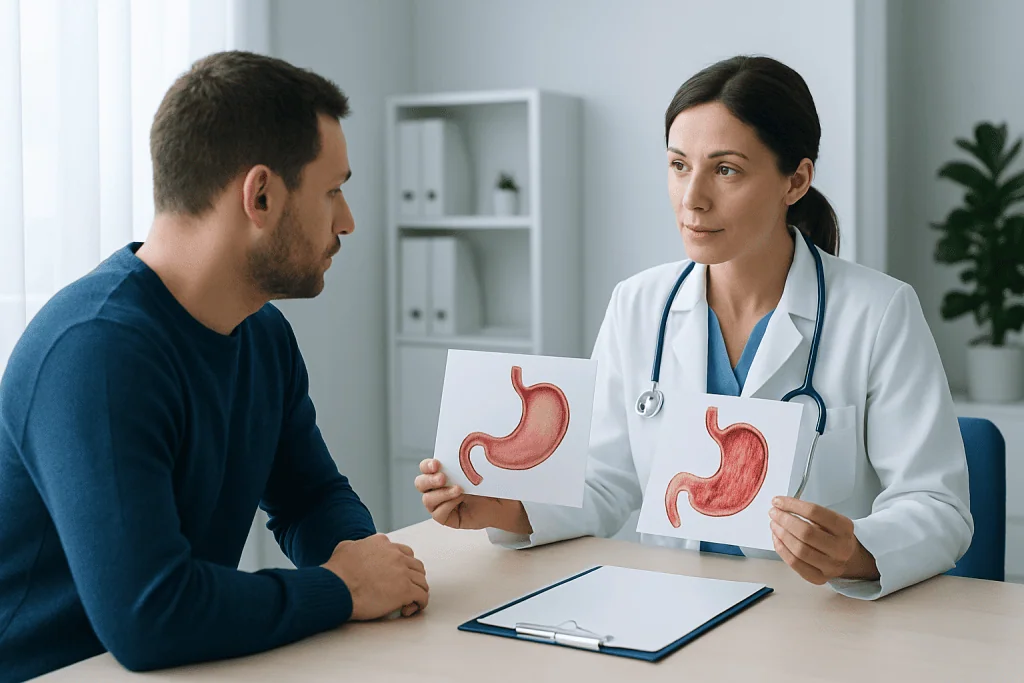
Doctors begin by asking focused questions rather than relying on one symptom. They usually ask where the pain is felt, when it started, whether diarrhea is present, whether there is fever, and whether symptoms followed restaurant food, travel, untreated water, sick contacts, alcohol intake, or use of medicines such as ibuprofen, naproxen, aspirin, or steroids.
The physical examination looks for signs that point in one direction or another. Tenderness high in the abdomen may fit gastritis, while diffuse cramps and signs of fluid loss may fit gastroenteritis. A clinician also checks for dehydration, such as dry mouth, dizziness, fast heart rate, low urine output, or lethargy.
Testing is not always necessary. If symptoms are mild and short-lived, doctors may recommend supportive care first. But they may order blood tests, stool tests, or imaging when symptoms are severe, prolonged, or unusual. For persistent upper abdominal symptoms, testing for H. pylori may be appropriate, and some patients may need an endoscopy to look directly at the stomach lining. In patients with recurrent inflammation of the stomach, evaluation for gastritis may help guide treatment.
Clinicians also consider look-alike conditions. Food poisoning, peptic ulcer disease, gallbladder disease, pancreatitis, reflux, inflammatory bowel disease, appendicitis, and viral illnesses can mimic either condition. If pain is severe, localized, or accompanied by blood in the stool or vomit, doctors broaden the evaluation quickly.
Causes and risk factors for each condition
Gastritis has many possible causes. Common triggers include nonsteroidal anti-inflammatory drugs, alcohol, smoking, severe physical stress from illness or surgery, and infection with H. pylori. Some people develop chronic gastritis related to autoimmune disease or long-term irritation of the stomach lining. If symptoms suggest a stomach ulcer or related irritation, a doctor may also evaluate for peptic ulcer disease.
Gastroenteritis is most often infectious. Viruses are a frequent cause, especially in children and during community outbreaks. Bacteria and parasites may be involved after undercooked food, contaminated water, poor food handling, or travel. Some cases are caused by foodborne toxins that trigger vomiting and diarrhea soon after eating.
Risk factors also differ. Gastritis becomes more likely in people who use pain relievers often, drink heavily, smoke, or have a history of ulcers, reflux, or long-standing digestive symptoms. Gastroenteritis becomes more likely with recent sick contacts, daycare or school exposure, crowded settings, travel, or meals associated with food poisoning.
In practice, doctors look at the whole pattern rather than one risk factor alone. For example, a person with upper abdominal burning after several days of NSAID use is different from a person with sudden vomiting and diarrhea after a shared meal. This context is often what makes the diagnosis clearer.
What to do for gastritis and for gastroenteritis
Because the causes are different, treatment is different too. For gastritis, care often includes avoiding triggers and allowing the stomach lining to recover. A doctor may recommend medications that reduce stomach acid or protect the stomach lining, and treatment for H. pylori if testing is positive. People with ongoing symptoms may need specialist evaluation through gastroenterology care or, in selected cases, endoscopy to confirm the cause.
For gastroenteritis, the first priority is hydration. Small, frequent sips of water or oral rehydration solutions are often better tolerated than large drinks at once. Rest, gradual return to bland foods, and temporary avoidance of alcohol can help. Antibiotics are not routine and are only used in specific bacterial or parasitic infections when a doctor thinks they are appropriate.
Many people wonder whether anti-nausea or anti-diarrheal medicines are needed. These can sometimes help, but they are not right for everyone, especially when there is fever, blood in the stool, or concern for certain infections. A clinician can advise on the safest option based on age, medical history, and symptoms.
If upper digestive symptoms do not improve, doctors may look for related conditions that overlap with gastritis-like discomfort, such as gastroesophageal reflux disease. For international patients who need evaluation, Acibadem International’s multidisciplinary specialists and JCI-accredited hospitals diagnose and treat digestive conditions using individualized assessment.
Self-care, prevention, and recovery tips
At home, practical steps can reduce discomfort and support recovery. For suspected gastritis, it may help to avoid alcohol, smoking, heavy meals, highly spicy foods, and frequent use of over-the-counter pain relievers unless a doctor has advised them. Eating smaller meals and not lying down immediately after eating may also ease symptoms.
For gastroenteritis, hydration matters most. Oral rehydration solutions can be especially useful for children, older adults, and anyone who has been vomiting or having frequent diarrhea. Once vomiting settles, simple foods such as toast, rice, bananas, soup, or crackers may be easier to tolerate than fatty or heavily seasoned meals.
Prevention also differs by condition. Gastritis prevention may include careful use of NSAIDs, limiting alcohol, and treating H. pylori when present. Gastroenteritis prevention relies more on handwashing, safe food preparation, clean water, and avoiding close contact with others while contagious.
Recovery time varies. Viral gastroenteritis often improves over a few days, while gastritis may continue unless the trigger is identified and addressed. Symptoms that keep coming back, interfere with eating, or cause weight loss deserve medical review rather than repeated self-treatment.
When to seek medical care
Medical care is important if symptoms are severe, persistent, or worrying. A person should seek prompt evaluation if there is vomiting that prevents keeping fluids down, signs of dehydration, fainting, severe abdominal pain, high fever, black stools, blood in the stool, or vomiting blood. These symptoms may signal bleeding, a more serious infection, or another condition that needs urgent attention.
It is also sensible to contact a doctor if upper abdominal pain or indigestion lasts more than a few days, if symptoms keep returning, or if there is unexplained weight loss, anemia, or difficulty swallowing. Young children, older adults, pregnant people, and those with weakened immune systems may need earlier assessment because dehydration and complications can develop more quickly.
Doctors may recommend tailored testing or referral when symptoms do not fit a simple short-term illness. In some cases, diagnostic support such as digestive check-up evaluation can help clarify the cause and guide next steps. Early assessment is especially helpful when repeated episodes disrupt daily life.
Frequently asked questions
Is gastritis the same as a stomach bug?
No. Gastritis is inflammation of the stomach lining, while a “stomach bug” usually refers to infectious gastroenteritis. A stomach bug commonly causes diarrhea and may spread between people, which is not typical of gastritis.
Can gastritis cause diarrhea?
It can happen, but diarrhea is not one of the classic symptoms of gastritis. If diarrhea is a major feature, especially with vomiting or fever, doctors often consider gastroenteritis or another intestinal condition more strongly.
How long does gastroenteritis usually last?
Many cases of viral gastroenteritis improve within a few days, though some symptoms can last longer. If diarrhea or vomiting is severe, persists, or leads to dehydration, a doctor should assess the situation.
How do doctors confirm gastritis?
Doctors often start with symptom history and examination. They may test for H. pylori, review medication use, and in some cases recommend endoscopy to look directly at the stomach lining and rule out ulcers or other causes.
Should someone take antibiotics for gastroenteritis?
Not usually. Many cases are caused by viruses, and antibiotics do not help viral infections. A doctor may prescribe antibiotics only when there is evidence of a specific bacterial or parasitic cause and treatment is considered beneficial.
What foods are easier to eat while recovering?
Simple, easy-to-digest foods are often better tolerated during recovery, such as toast, rice, bananas, applesauce, soup, or crackers. It can also help to avoid alcohol, very fatty foods, and heavily spiced meals until symptoms settle.
References
- National Institute of Diabetes and Digestive and Kidney Diseases
- American College of Gastroenterology
- Centers for Disease Control and Prevention
- Mayo Clinic
- World Health Organization
This article is for general information only and is not a substitute for professional medical advice. Please consult a qualified doctor about your individual situation.
Gastroenteritis in Turkey — costs, top hospitals & a free quote
JCI-accredited · board-certified surgeons · reply within 24h
Add us as a Preferred Source to see more of our trusted health content across Google Search, AI Overviews and Discover.
Check your numbers in seconds
BMI, calories, due date, blood pressure and 30+ more clinical calculators — free, instant, doctor-reviewed ranges.

Gastroenterology
Diagnosis and treatment of the digestive system and liver, with advanced endoscopy.
46 specialists in this unit