Gender Test at Home: An Evidence-Based Guide for Patients

A gender test at home is designed to predict fetal sex, not to assess the health of a pregnancy. Accuracy varies widely and depends on timing, sample collection, and the quality of the test.
Key Takeaways
- A gender test at home is designed to predict fetal sex, not to assess the health of a pregnancy.
- Accuracy varies widely and depends on timing, sample collection, and the quality of the test.
- Medical options such as ultrasound and laboratory-based prenatal testing are more reliable.
- Unexpected symptoms in pregnancy should not be explained by home test results and should be reviewed by a doctor.
- At-home results can be emotionally meaningful, but they should be treated as informational rather than definitive.
A gender test at home may offer an early prediction about a baby’s sex, but it cannot diagnose health conditions and is not as reliable as medical testing. Patients can use these kits with realistic expectations, careful timing, and follow-up with a qualified healthcare professional.
Overview: what a gender test at home can and cannot do
A gender test at home is a consumer test intended to predict whether a developing baby is male or female. In most cases, it uses either a blood sample from the pregnant person or a urine sample, depending on the product. These tests are popular because they can be done privately and may provide an answer earlier than a routine mid-pregnancy ultrasound.
The most important point for patients is that a home gender test is not the same as a medical prenatal test. It does not evaluate fetal growth, anatomy, or general pregnancy health. Even when a kit reports a result confidently, that result should be understood as a prediction rather than a diagnosis.
Patients also benefit from knowing that the language around this topic can be confusing. Many kits are marketed as a “gender test,” but biologically they are generally attempting to predict fetal sex based on chromosomes or other markers. In everyday use, many people still search for “gender test at home,” so healthcare information often uses that phrase while explaining the medical limits clearly.
How at-home gender tests work
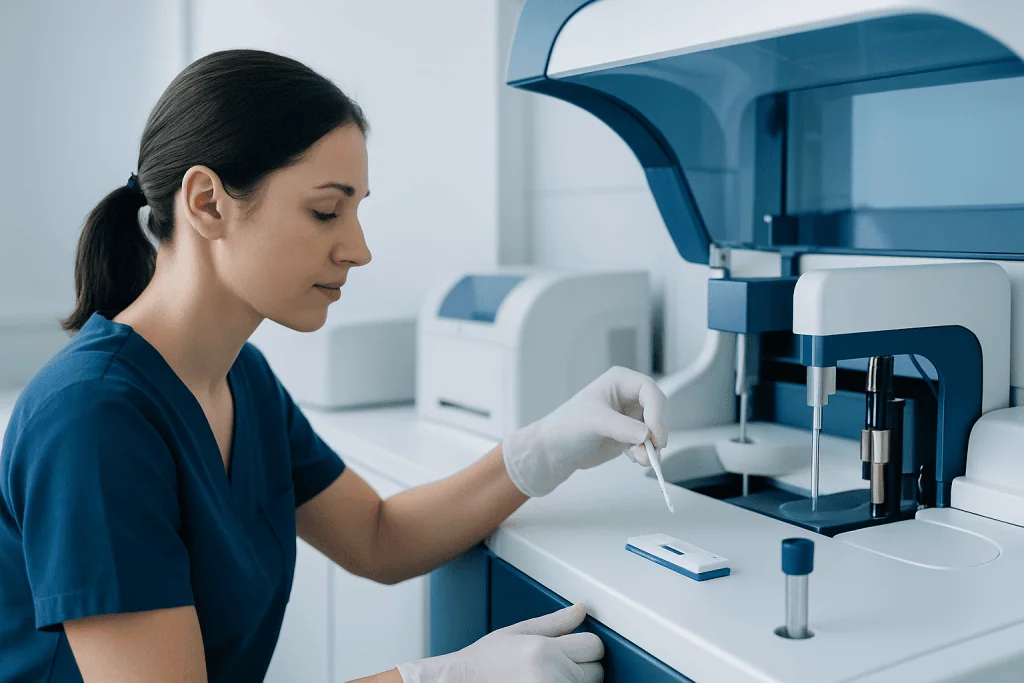
At-home kits do not all work in the same way. Some blood-based products are designed to look for fragments of fetal DNA circulating in the pregnant person’s blood. If Y-chromosome material is detected, the test may predict a male fetus; if it is not detected, the test may predict a female fetus. This approach is conceptually similar to parts of laboratory prenatal DNA testing, but home collection and processing can affect reliability.
Urine-based kits work differently. They may analyze chemical changes in urine and compare them with an internal formula. These products are generally less clinically grounded than DNA-based approaches, because urine chemistry is affected by hydration, diet, supplements, and normal pregnancy changes that are not specific to fetal sex.
Home test instructions usually specify a minimum gestational age, often in early pregnancy. This timing matters because the amount of fetal DNA in blood increases as pregnancy progresses. Testing too early can make a result less dependable. In addition, contamination during blood collection can interfere with a result, especially if strict handling instructions are not followed.
- Blood-based kits usually aim to detect fetal DNA markers.
- Urine-based kits use indirect chemical patterns and are generally less reliable.
- Testing too early can reduce accuracy.
- Careful sample collection is essential for the best possible result.
How accurate are home results?

The accuracy of a gender test at home depends on several factors: the type of test, the gestational age, sample quality, and whether the analysis is performed under controlled laboratory conditions. Blood-based tests may be more accurate than urine-based kits, particularly later in the first trimester, but consumers should still be cautious about marketing claims. Accuracy statements on packaging may not reflect every real-world situation.
False results can happen in either direction. A false male result may occur if a sample is contaminated with external male DNA during collection or handling. A false female result may occur if the test is taken too early, when there is not enough fetal DNA to detect. For this reason, patients should avoid making important plans or emotional assumptions based only on a home result.
Medical confirmation remains the standard. Ultrasound later in pregnancy can often identify fetal sex visually, while certain laboratory tests done in clinical care may provide even earlier and more dependable information. Patients who want the clearest answer should discuss options with their obstetrician or midwife rather than relying on a kit alone.
It can also help to place home testing in context. Unlike screening and diagnostic tests that may be recommended during prenatal care, home gender kits are elective and usually nonessential. They may be meaningful for curiosity or family planning conversations, but they should not replace scheduled prenatal appointments or medically advised tests.
What can affect the result
Several practical issues can influence a result. The first is timing. Testing before the kit’s recommended gestational age can increase the chance of an incorrect or inconclusive answer. Even a high-quality test performs poorly when there is too little fetal material present to analyze reliably.
The second issue is contamination. Blood-based kits are particularly sensitive to trace DNA contamination. If the collection area is not clean, if collection materials are touched improperly, or if another person assists without following hygiene steps, the sample may be affected. Patients should read the instructions closely and avoid shortcuts.
Another factor is pregnancy type and medical context. Twin pregnancies, vanishing twin situations, assisted reproduction, or recent blood transfusion may complicate interpretation for some tests. In these situations, home kits may not perform as expected, and medically supervised testing is often a better choice. Patients undergoing IVF treatment may especially benefit from asking their fertility or obstetric team which type of testing is appropriate.
Finally, product quality varies. Not all kits are reviewed to the same standard, and customer-facing claims may be broader than what healthcare professionals would consider evidence-based. Choosing a test does not guarantee a meaningful result, so it is wise to think of the kit as a consumer product rather than a medical decision-making tool.
Medical tests that can confirm fetal sex
When patients want a more reliable answer, medical testing is the better option. Ultrasound is the most familiar method. During a routine anatomy scan in the second trimester, a trained clinician may be able to identify fetal sex based on imaging, while also checking growth and major anatomy. This makes ultrasound more useful than a home gender test because it adds important information about the pregnancy itself.
Another option is noninvasive prenatal testing, commonly called NIPT. This blood test is performed in a medical setting and analyzes fetal DNA circulating in the pregnant person’s blood. Its main purpose is usually to screen for certain chromosomal conditions, but it may also identify fetal sex with high accuracy. Patients who want to understand prenatal genetic screening may discuss laboratory testing during pregnancy follow-up visits.
In some pregnancies, diagnostic procedures such as chorionic villus sampling or amniocentesis may reveal fetal chromosomes. These procedures are not performed simply to learn fetal sex; they are used when there is a medical reason to investigate genetic conditions more closely. If there are concerns about fetal development, a specialist may also recommend a detailed obstetric ultrasound or other prenatal assessment.
These medical options are very different from home kits because they are interpreted in clinical context. A doctor or midwife can explain what the result means, how confident it is, and whether any next steps are needed. That guidance is especially valuable when a patient has had prior pregnancy complications or is already being monitored for conditions such as high-risk pregnancy.
Emotional, ethical, and practical considerations
For many families, learning fetal sex is exciting and emotionally significant. A home test can feel convenient and personal, especially for those who are waiting between prenatal visits. At the same time, it helps to approach the experience with flexibility. Because home results can be wrong, patients may wish to share the news carefully until it is medically confirmed.
There are also practical privacy considerations. Some products require samples to be mailed to a laboratory, which means personal health information and biological samples are being handled outside a clinic. Patients may want to review the company’s instructions, privacy statements, and sample requirements before purchasing a kit.
From a medical perspective, it is important not to let a home result distract from prenatal health needs. Feeling reassured or disappointed by a result is understandable, but symptoms such as pain, bleeding, reduced fetal movement later in pregnancy, or severe nausea should always be evaluated on their own merits. A home sex prediction does not say anything about miscarriage risk, fetal well-being, or maternal health.
Near the end of pregnancy planning, some patients also find that talking with a clinician helps separate curiosity from healthcare decisions. If a result is unexpected or causes stress, a prenatal care team can provide balanced information. Acibadem International’s multidisciplinary specialists and JCI-accredited hospitals diagnose and support pregnancy-related care for international patients when further evaluation is needed.
When to seek medical care
A home gender test result by itself is usually not a reason for urgent medical attention. However, pregnant patients should contact a healthcare professional promptly if they have vaginal bleeding, severe abdominal pain, fever, fainting, signs of dehydration, or persistent vomiting. In later pregnancy, reduced fetal movement, fluid leakage, or contractions should also be reviewed without delay.
Medical advice is also important if a home result conflicts with a prior medical test, if the pregnancy involves twins, or if there is a history of genetic conditions that may require formal counseling. Patients with fertility treatment, recurrent pregnancy loss, or a previously complicated pregnancy should rely on their medical team for testing guidance rather than consumer kits.
If a patient is using home testing because they have limited access to prenatal care, arranging a proper pregnancy assessment is especially important. Routine prenatal visits, blood tests, and ultrasound evaluations remain the foundation of safe pregnancy monitoring. A home kit can never replace this care.
Frequently asked questions
Can a gender test at home really tell if the baby is a boy or girl?
It may provide a prediction, but it does not offer the same level of reliability as medical testing. Blood-based kits tend to be more dependable than urine-based products, especially when used at the recommended stage of pregnancy. Confirmation with ultrasound or clinician-directed testing is still the safest approach.
When is the best time to take a home gender test?
Patients should follow the timing listed by the specific product, because testing too early can increase the chance of an incorrect result. In general, earlier testing is more likely to be limited by low amounts of fetal DNA. If certainty matters, waiting for medical confirmation is often better.
Why might a home gender test be wrong?
Incorrect results can happen because of early testing, poor sample collection, contamination, or product limitations. Twin pregnancy and other special pregnancy circumstances may also affect accuracy. That is why home results should be treated as provisional rather than final.
Is a home gender test the same as prenatal genetic testing?
No. Prenatal genetic tests ordered by a clinician are performed for medical reasons and are interpreted in the context of pregnancy care. A home gender test is a consumer product designed mainly to predict fetal sex and does not assess overall fetal health.
Can a urine-based gender test predict fetal sex accurately?
Urine-based kits are generally considered less reliable than blood-based DNA methods. Urine chemistry can change for many reasons that have nothing to do with fetal sex. Patients should be cautious about relying on these tests for a definite answer.
Should a home result change prenatal care decisions?
No. Prenatal appointments, screening, and ultrasound should continue as recommended regardless of a home test result. If symptoms arise or there are concerns about the pregnancy, a qualified doctor or midwife should guide the next steps.
This article is for general information only and is not a substitute for professional medical advice. Please consult a qualified doctor about your individual situation.
Explore treatments in Turkey — costs, top hospitals & a free quote
JCI-accredited · board-certified surgeons · reply within 24h
Add us as a Preferred Source to see more of our trusted health content across Google Search, AI Overviews and Discover.

More from the Health Library

Adrenaline Rush — Explained by Medical Evidence, Not Myths

Cloves: A Complete Medical Overview

Night Sweats: An Evidence-Based Guide for Patients

Yoga for Stress Management: What Patients Need to Know

Paraplegic: A Complete Medical Guide for Patients