Gluteus Maximus: An Evidence-Based Guide for Patients

The gluteus maximus is the main muscle used for hip extension, standing up, climbing, and powerful movement. Pain in this area is often caused by muscle strain, overuse, poor mechanics, or irritation of nearby tissues.
Key Takeaways
- The gluteus maximus is the main muscle used for hip extension, standing up, climbing, and powerful movement.
- Pain in this area is often caused by muscle strain, overuse, poor mechanics, or irritation of nearby tissues.
- Evaluation may include a physical exam and, when needed, imaging to rule out tendon, spine, or hip problems.
- Most cases improve with rest, activity changes, targeted exercise, and physical therapy.
- Persistent pain, weakness, swelling, numbness, or trouble walking should be assessed by a qualified doctor.
The gluteus maximus is the largest muscle in the buttock and plays a central role in hip movement, posture, and lower-body power. When it becomes strained, irritated, or weak, it may cause buttock pain, difficulty with stairs or rising from a chair, and changes in walking or exercise tolerance.
Overview: what the gluteus maximus does
The gluteus maximus is the largest of the three gluteal muscles and forms much of the shape of the buttock. Its main job is to extend the hip, which means moving the thigh backward or helping the body rise from a bent position to an upright one. It is especially active during standing up from a chair, climbing stairs, running, jumping, and walking uphill.
This muscle also helps stabilize the pelvis and supports efficient lower-body movement. Although people often think of it only as a “power” muscle, it also works with the core, hamstrings, and smaller hip muscles to keep balance and control. When the gluteus maximus is irritated or weak, the body may compensate in ways that place extra stress on the lower back, hips, knees, or hamstrings.
Patients may search for information on the gluteus maximus because of pain deep in the buttock, soreness after exercise, or weakness during daily tasks. In many cases, symptoms are related to a strain, overuse, or poor movement mechanics. However, not all buttock pain comes from the muscle itself, so a careful assessment is important when symptoms do not improve.
Symptoms and how gluteus maximus problems may feel
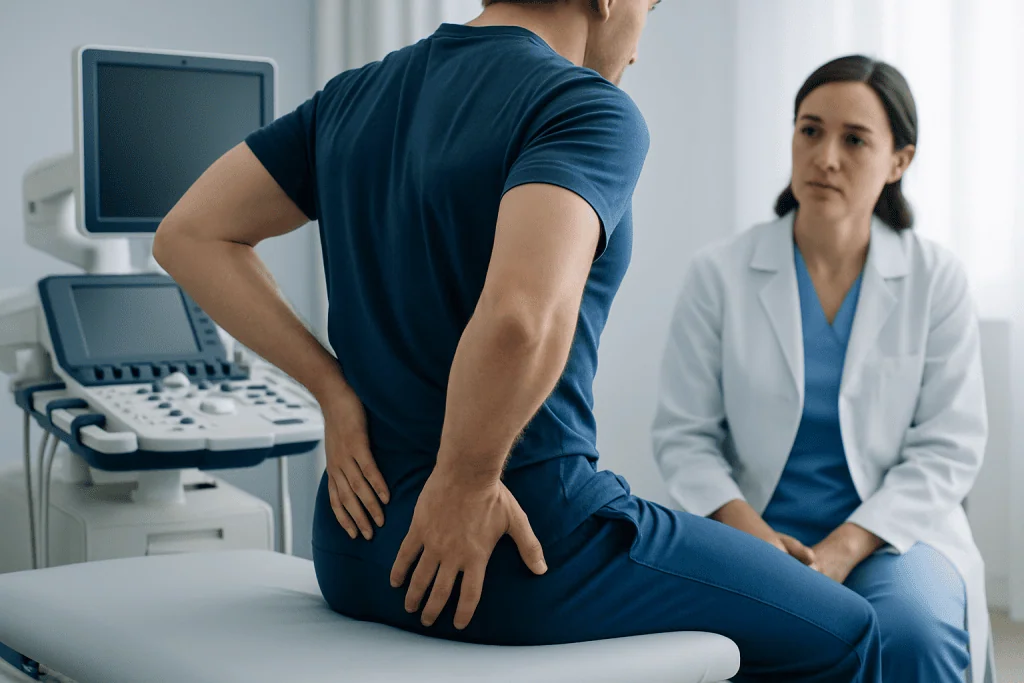
Gluteus maximus symptoms can vary depending on whether the issue is a mild strain, overload from training, irritation near the tendon, or referred pain from another area. A person may notice aching, tenderness, tightness, or a pulling sensation in the buttock. Some feel discomfort mainly during activity, while others notice it after sitting for a long time or when getting up from a seated position.
Pain linked to the muscle often becomes more noticeable with movements that demand strong hip extension. These can include climbing stairs, sprinting, lunging, squatting, or walking uphill. There may also be local stiffness, reduced power, or difficulty fully extending the hip. In a more significant strain, bruising, swelling, or a sudden sharp pain can occur after forceful activity.
Symptoms that suggest a different or additional cause include numbness, tingling, pain radiating below the knee, groin pain, fever, or unexplained swelling. Buttock pain can overlap with conditions involving the lower back, sacroiliac joint, hamstrings, or sciatic nerve. For example, some cases may resemble sciatica or be confused with a herniated disc, especially if leg symptoms are present.
- Localized buttock pain or tenderness
- Pain when standing from sitting
- Discomfort with stairs, hills, or running
- Weakness during squats, lunges, or jumping
- Stiffness after rest or prolonged sitting
Common causes and risk factors

A gluteus maximus problem is often caused by a muscle strain or overload. This can happen after sudden acceleration, sprinting, jumping, heavy lifting, or an abrupt increase in exercise intensity. People who return to sport too quickly after time away are more likely to overload the muscle, particularly if warm-up, flexibility, or strength has not been rebuilt gradually.
Risk also rises when movement patterns place too much demand on one area. Weakness in the core or hip stabilizers, limited hip mobility, poor squat or running mechanics, and prolonged sitting can all contribute. In some people, the muscle becomes underactive over time, so nearby tissues compensate. That may lead to soreness, fatigue, or a feeling that the buttock muscles are “not firing” well during exercise.
Age, previous injury, and certain training habits matter as well. A history of hamstring, back, or hip problems may change the way the gluteus maximus works. Athletes in sports that require explosive starts or repeated sprinting may be at higher risk. In non-athletes, repetitive stair climbing, physically demanding work, or a sudden increase in walking and fitness routines can also trigger symptoms.
How doctors evaluate gluteus maximus pain
Diagnosis usually starts with a medical history and physical examination. A doctor will ask when the pain started, what movements make it worse, whether there was a specific injury, and whether there are symptoms such as weakness, numbness, or back pain. They may observe walking, sitting to standing, and other functional movements to see how the hip and pelvis work together.
During the exam, the clinician may press on the buttock to locate tenderness, assess hip range of motion, and test strength against resistance. They may also examine the lower back, sacroiliac region, and hamstrings because pain in one area can be referred from another. This helps distinguish a true gluteal muscle problem from spine-related irritation or joint-based causes.
Imaging is not always necessary for a mild, straightforward strain. However, ultrasound or MRI may be helpful if pain is severe, symptoms are prolonged, or a tendon tear is suspected. X-rays may be used if bone or joint causes need to be excluded. If symptoms overlap with back-related causes, the doctor may recommend a fuller assessment of the spine; in selected cases, MRI imaging can help clarify the diagnosis.
Treatment options and recovery
Most gluteus maximus injuries and overuse problems improve with conservative treatment. Early care often includes relative rest, avoiding movements that sharply increase pain, and using simple comfort measures such as ice or heat depending on what feels best. Short-term use of over-the-counter pain relief may be considered if appropriate for the individual, but it is best discussed with a healthcare professional, especially for people with stomach, kidney, heart, or bleeding concerns.
As pain begins to settle, guided rehabilitation becomes the most important part of recovery. Treatment usually focuses on restoring hip mobility, improving gluteal activation, and rebuilding strength in a gradual, controlled way. Exercises may begin with gentle bridges, isometric contractions, and movement retraining, then progress to squats, step-ups, and sport-specific drills. Structured physical therapy and rehabilitation can be especially useful when symptoms recur or affect daily function.
If the pain is not coming from the gluteus maximus itself, the treatment plan may change. For example, management of lower back or nerve-related conditions differs from treatment for a local muscle strain. In some patients, specialists may evaluate whether symptoms are connected to lumbar disc herniation or another musculoskeletal problem. Near the end of the care pathway, patients who need coordinated assessment can be seen by orthopedic, rehabilitation, and imaging specialists; Acibadem International’s multidisciplinary teams in JCI-accredited hospitals diagnose and treat musculoskeletal conditions for international patients.
Self-care, exercise habits, and prevention
Preventing gluteus maximus pain often comes down to gradual loading and good movement habits. Sudden increases in running volume, hills, weight training, or high-intensity classes are common triggers. A steady progression gives the muscle time to adapt and reduces the chance of overload.
Warm-up matters, especially before sprinting, jumping, or heavy lower-body exercise. A useful warm-up often includes light aerobic activity, dynamic hip movements, and a few glute-focused activation exercises. Attention to technique during squats, deadlifts, lunges, and running can also reduce unnecessary strain. For people who sit for long periods, standing breaks and regular mobility work may help prevent stiffness and reduced muscle activation.
General preventive steps include balanced strengthening of the hips, core, and legs, along with recovery between demanding sessions. Sleep, nutrition, and hydration also support tissue recovery. People with repeated symptoms may benefit from an individualized exercise plan through orthopedic rehabilitation, particularly if there is a history of back, hip, or sports-related injuries.
- Increase training volume gradually
- Use a dynamic warm-up before exercise
- Strengthen glutes, core, and hamstrings together
- Take movement breaks during long periods of sitting
- Seek guidance if pain keeps returning
When to seek medical care
Many mild cases improve within days to weeks with relative rest and a gradual return to activity. Medical evaluation is a good idea if the pain is severe, follows a sudden injury, or does not begin to improve with sensible self-care. Care is also important if there is marked weakness, trouble walking, visible swelling, or bruising after exercise or a fall.
A doctor should assess symptoms that suggest a cause beyond the gluteus maximus itself. These include pain that shoots down the leg, numbness, tingling, fever, unexplained weight loss, loss of bowel or bladder control, or significant low back pain. These features do not always indicate a serious problem, but they do need prompt professional review.
Early evaluation can help identify whether the problem is a simple muscle strain, a tendon issue, a hip disorder, or referred pain from the spine. The right diagnosis can prevent unnecessary rest, reduce the risk of recurring symptoms, and support a safer return to work, exercise, and daily activities.
Frequently asked questions
What is the gluteus maximus?
The gluteus maximus is the largest muscle in the buttock. It helps extend the hip, supports posture, and provides power for activities such as standing up, climbing stairs, running, and jumping.
Why does my gluteus maximus hurt?
Pain in the gluteus maximus area is often caused by a muscle strain, overuse, poor exercise mechanics, or prolonged sitting. Sometimes the pain comes from nearby structures such as the lower back, hip, or sciatic nerve rather than the muscle itself.
How can someone tell if it is a gluteus maximus strain?
A strain often causes localized buttock pain, tenderness, and discomfort during activities that push the leg backward or require strong hip extension. There may be a pulling sensation, weakness, or pain after sprinting, lifting, or climbing stairs. A doctor or physical therapist can help confirm the cause.
How long does a gluteus maximus injury take to heal?
Recovery depends on the severity of the problem. Mild strains may improve within a few weeks, while more significant injuries or persistent overload problems can take longer and may need supervised rehabilitation.
Is walking good for gluteus maximus pain?
Gentle walking is often reasonable if it does not increase pain. However, hills, fast walking, or long distances may aggravate symptoms in some people, so activity usually needs to be adjusted to comfort and recovery.
When should someone worry about buttock pain?
Medical advice is important if buttock pain is severe, follows a significant injury, or comes with weakness, swelling, bruising, numbness, tingling, or pain down the leg. Prompt care is also needed for bowel or bladder changes, fever, or unexplained weight loss.
References
- American Academy of Orthopaedic Surgeons
- National Institute of Arthritis and Musculoskeletal and Skin Diseases
- MedlinePlus
- National Health Service
- Cleveland Clinic
This article is for general information only and is not a substitute for professional medical advice. Please consult a qualified doctor about your individual situation.
Joint and spine care in Turkey — expert assessment & treatment
JCI-accredited · board-certified surgeons · reply within 24h
Add us as a Preferred Source to see more of our trusted health content across Google Search, AI Overviews and Discover.

More from the Health Library

Transfeminine — Explained by Medical Evidence, Not Myths

Senna Laxative: What Patients Need to Know

Ezetimibe — Explained by Medical Evidence, Not Myths

Metastasized: An Evidence-Based Guide for Patients

Montgomery Tubercles: What Patients Need to Know