

Best Exercises for Legs: The Foundation Moves, Ranked by Evidence
Key Takeaways
- Squats train the quadriceps, glutes, hamstrings, and trunk in one movement, which is why evidence ranks them as the single most complete leg exercise.
- The three-pattern core of any leg program is squat, hip hinge, and lunge, together they cover every major lower-body muscle from multiple angles.
- Muscle grows across a wide repetition range, roughly 6 to 30 per set, as long as sets end within a few reps of genuine fatigue.
- Spot reduction has been tested and debunked: leg exercises strengthen legs but cannot selectively burn fat from them.
- Single-leg moves like lunges and step-ups train the balance and side-to-side symmetry that two-legged lifts hide, and lower-body strength is a key modifiable factor in fall risk.
- Soreness that peaks 24 to 72 hours after training is normal adaptation; one-sided calf swelling with warmth is not, and needs urgent medical evaluation.
Quick Answer
The most effective leg exercises are compound movements that work several joints at once: squats, hip hinges such as deadlifts, lunges, step-ups, and hip thrusts, with calf raises as a finishing move. Research consistently shows these recruit the most lower-body muscle per repetition. Training legs two to three times weekly, gradually adding weight or repetitions, builds strength at any age. Good form matters more than any single exercise choice.
Watch someone rise from a low sofa without using their hands. That small, unglamorous act, hips loading, knees tracking, feet pressing into the floor, is a squat, and it quietly predicts how independently a person will move for decades. Leg strength shows up everywhere: climbing subway stairs two at a time, catching yourself on ice, carrying a toddler who has decided walking is beneath them.
The internet, meanwhile, offers roughly ten thousand leg exercises and very little honesty about which ones matter. Most lists treat a barbell squat and an inner-thigh machine as equals. They are not.
So here is the ranking, built on what exercise science actually shows: a handful of foundation movements do most of the work, a second tier fills real gaps, and everything else is seasoning. You need fewer exercises than you think, done more consistently than most people manage.
What Is the #1 Leg Exercise?
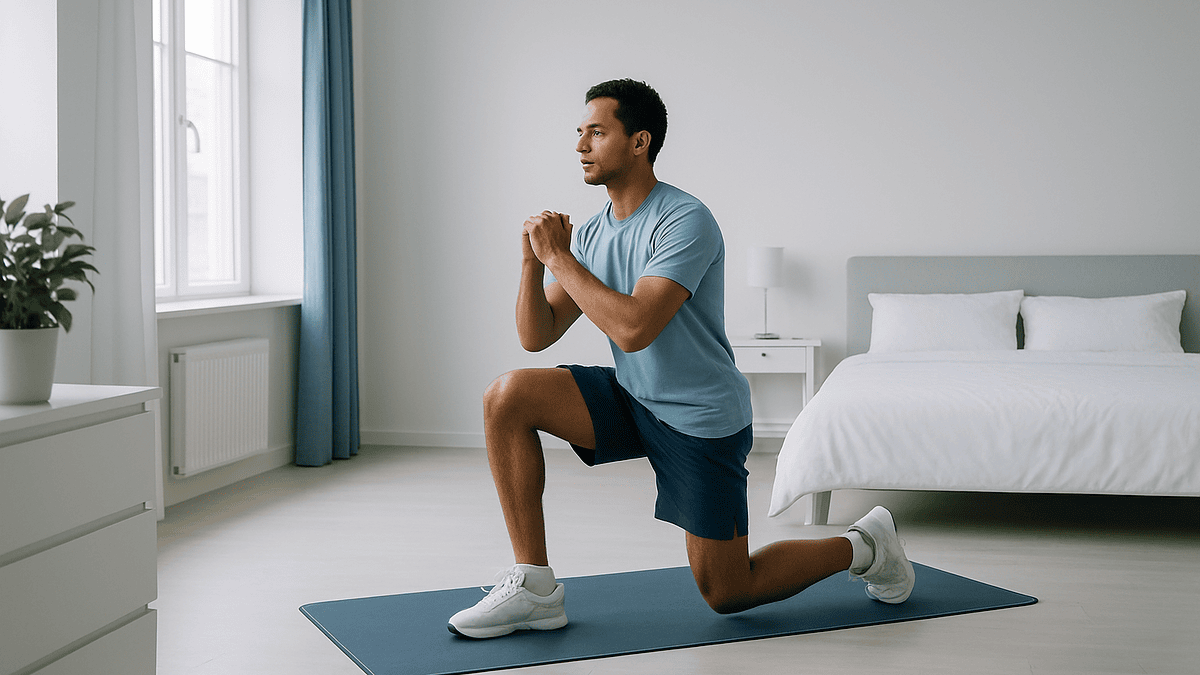
If you could keep only one, keep the squat. Mayo Clinic includes it among its core strength movements for a simple reason: no other single exercise trains the quadriceps, glutes, hamstrings, adductors, and calves, plus the trunk muscles stabilizing everything above them, in one motion. Electromyography studies, which measure electrical activity in working muscle, routinely show squats producing high activation across the entire lower body simultaneously, something isolation moves like leg extensions cannot match.
The squat also wins on transfer. Sitting down, standing up, lifting a laundry basket, getting off the floor: these are squats in street clothes. Strength built in the pattern shows up directly in daily life, which is why physical therapists and geriatric researchers use sit-to-stand ability as a marker of functional independence.
One clarification the fitness industry rarely offers: “squat” does not mean “heavy barbell squat.” A bodyweight squat to a chair, a goblet squat holding a single weight at the chest, and a loaded back squat are the same movement at different intensities. The pattern is the exercise; the load is just the dial. A 70-year-old practicing chair squats and a 25-year-old under a barbell are doing the same essential work.
Is the squat mandatory? No. People with certain knee, hip, or back conditions may do better with variations or substitutes, and a hip hinge or step-up can cover much of the same ground. But as a default first pick, the evidence points one direction.
What Are the 3 Best Leg Exercises?
Squat, hip hinge, lunge. If your entire lower-body program consisted of those three patterns, progressed gradually over years, you would out-train the vast majority of gym-goers rotating through a dozen machines.
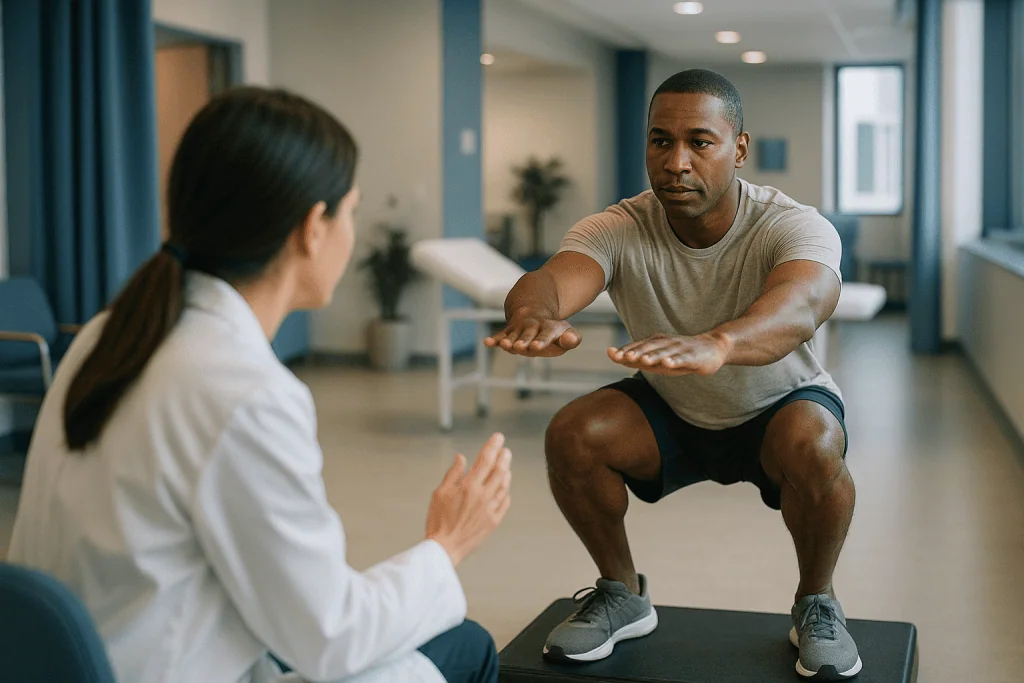
The logic is coverage. The squat is knee-dominant: quadriceps lead, glutes assist. The hinge: a deadlift, Romanian deadlift, or even a well-executed glute bridge, flips that emphasis, loading the hamstrings and glutes while the knees stay relatively quiet. The lunge adds the missing ingredient: single-leg demand, forcing each side to stabilize and produce force independently.
Between them, these three patterns hit every major lower-body muscle from multiple angles:
- Squatquadriceps, glutes, adductors, trunk
- Hingehamstrings, glutes, spinal erectors, grip
- Lungeeverything above, plus balance, hip stability, and left-right symmetry
Notice what is absent: no machine appears in the top three. Machines have legitimate uses, more on that later, but they stabilize the weight for you, and that stabilizing work is part of what makes free movements so productive. Research comparing free-weight and machine training generally finds similar muscle growth when effort is matched, but free-weight patterns carry over better to balance and real-world tasks, which is precisely what most people say they train legs for.
Every exercise discussed in the rest of this article is either one of these three patterns in disguise or a targeted supplement to them. That framing makes program design dramatically simpler.
Why Squats Earn the Top Spot
Mechanically, the squat is a triple-extension exercise: the ankle, knee, and hip all bend and then straighten under load. That coordination is exactly what running, jumping, and climbing stairs demand, which explains why squat strength correlates with sprint speed and jump height in athletic research, and with stair-climbing ability and fall resistance in older adults.
The muscle recruitment is genuinely broad. Deeper squats, performed with control, increase glute involvement; the quadriceps work hard throughout the range; the adductors along the inner thigh contribute more than most people realize. Even the calves fire to stabilize the ankle.
A few evidence-based notes on the persistent myths:
- “Knees past toes” is not the crime it was made out to be. Forward knee travel is normal and often necessary, especially for taller lifters. What matters is that the knees track roughly in line with the toes rather than collapsing inward, and that load increases gradually.
- Depth should match your mobility, not a rulebook. A squat to a chair is a fine starting depth. Range can expand as hips and ankles allow.
- Squats do not automatically hurt knees. Progressive strength training is a mainstay of exercise programs for knee osteoarthritis precisely because stronger muscles reduce joint stress.
Variations let almost anyone squat something: box squats for confidence, goblet squats for teaching posture, split-stance versions for those whose backs dislike bilateral loading. Start where you are. The pattern scales in both directions, down to a supported chair stand, up to loads exceeding bodyweight.
The Hip Hinge: The Move Most People Skip
Here is an opinionated claim the evidence supports: the hinge is the most neglected pattern in recreational fitness, and skipping it is why so many gym-trained legs are strong in front and weak in back.
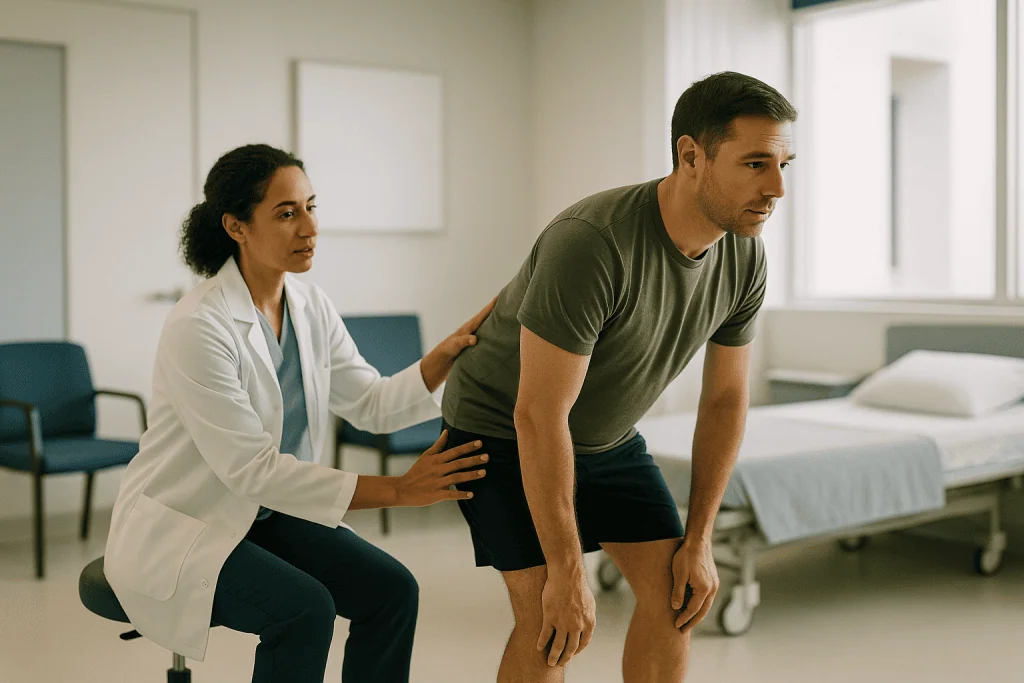
A hinge means bending primarily at the hips while the knees stay softly bent, imagine closing a car door with your backside. Deadlifts, Romanian deadlifts, kettlebell-style swings, and good-mornings all live here. The muscles doing the work are the posterior chain: hamstrings, glutes, and the erector muscles running along the spine.
Why it matters so much:
- Hamstrings lengthen under load during a hinge, and training muscles through that lengthened position is associated with robust strength and size gains in the research literature, plus better resilience against hamstring strains, one of the most common sports injuries.
- Lifting from the floor is a life skill. Groceries, luggage, children, a stuck garage door: the hinge is how you pick heavy things up without asking your lower back to do a job your hips should own.
- It balances all that knee-dominant work. Quads-only training builds the front of the leg while leaving the back undertrained, a pattern linked with knee discomfort in some athletes.
The learning curve is real; hinging is less intuitive than squatting. Start with a dowel or broomstick held along your spine, push the hips back until you feel the hamstrings stretch, and stand tall. Add weight only when the stick stays in contact with your head, upper back, and tailbone throughout. Ten patient minutes of practice beats years of avoidance.
Lunges and Split Squats: Where Balance Meets Strength
Two-legged exercises can hide a secret: one leg quietly doing 60 percent of the work while the other coasts. Single-leg training exposes and corrects that imbalance, which matters because most of life happens one leg at a time. Walking, running, and climbing stairs are all sequences of single-leg moments.
The lunge family is large. A split squat keeps both feet planted and simply bends the knees: the gentlest entry point. A reverse lunge steps backward, which many people find kinder to the knees than stepping forward. Walking lunges add momentum and coordination. Rear-foot-elevated split squats, with the back foot on a bench, concentrate nearly all the load on the front leg and have become a favorite in strength research for producing squat-like muscle activation with less weight on the spine.
What single-leg work delivers that bilateral lifts cannot:
- Balance training built in. The small stabilizing muscles around the hip and ankle work overtime, and hip stability is linked with lower rates of knee pain in runners and jumpers.
- Symmetry. Meaningful left-right strength gaps are common and correctable; lunges make the weaker side do its own homework.
- Less total load for the same leg stimulususeful for anyone whose back protests heavy barbells.
Form cues are refreshingly simple: keep the front heel heavy, let the back knee drop straight down rather than lurching forward, and keep the torso tall. If wobbling dominates, hold a wall or chair. Balance improves faster than most people expect, often within two to three weeks of consistent practice.
Step-Ups: The Most Underrated Leg Exercise
No exercise gets less respect relative to its usefulness. A step-up, placing one foot on a sturdy step and driving your body up until the leg is straight, is essentially a stair climb with intent, and stairs are one of the most common places aging bodies first feel weak.
The NHS includes step-based exercises in its recommended strength routines, and for good reason. The move trains quadriceps and glutes through the exact range and coordination that stair-climbing demands, it requires nothing but a step, and its difficulty adjusts instantly: a lower step is easier, a higher step or a pair of dumbbells is harder.
The evidence angle worth knowing: lower-body strength and power are among the strongest modifiable predictors of fall risk in older adults, and falls are the leading cause of injury-related death in Americans over 65, according to the CDC. Step-ups train precisely the single-leg pushing strength that catching a stumble requires. That is not a niche benefit: it is arguably the most important one strength training offers past midlife.
Two technique points separate a productive step-up from a wasted one. First, push through the top foot rather than bouncing off the bottom leg; the working leg should do the lifting, not the trailing calf. Second, control the way down, lowering slowly is where much of the muscle-building stimulus lives, since muscles produce force while lengthening during descent.
Start with a step around 6 to 8 inches high. A standard stair works. Progress by raising the surface or adding held weight, not by rushing repetitions.
Glute Bridges and Hip Thrusts: Training the Body’s Biggest Muscle
The gluteus maximus is, by volume, the largest muscle in the human body, and modern life trains it to do almost nothing. Hours of sitting keep it lengthened and quiet, which is one reason bridges and hip thrusts have earned a firm place in both rehabilitation clinics and strength programs.
The movement is straightforward: lying on your back with knees bent, or shoulders elevated on a bench for the hip-thrust version, you drive the hips upward until the body forms a straight line from knees to shoulders, squeezing the glutes at the top. Load can come from bodyweight, a single-leg version, or a weight resting across the hips.
What the evidence shows, stated honestly: EMG studies consistently find hip thrusts produce very high glute activation, often higher at peak contraction than squats. Whether that translates to more glute growth than squats is genuinely unsettled; recent comparative trials have found similar hypertrophy between the two when effort is matched. The practical takeaway is not that one replaces the other, but that they complement each other: squats load the glutes in a stretched position near the bottom, hip thrusts load them hardest at full contraction near the top.
Bridges also earn their place as an entry point. For someone new to training, recovering from injury under professional guidance, or unable to squat comfortably, a floor bridge builds hip strength with minimal knee and back stress. Physical therapists reach for it constantly for exactly that reason.
One cue fixes most bridge mistakes: finish the movement with the glutes, not by arching the lower back. Ribs down, hips up, squeeze for a full second.
Do Calf Raises Actually Matter?
More than their reputation suggests. Calves get dismissed as a vanity muscle, but the two muscles back there, the gastrocnemius and the deeper soleus, do serious mechanical work. Every step of walking, every stair, every jump routes force through them, and the soleus in particular is sometimes called the body’s “second heart” because its contractions help pump blood from the lower legs back toward the torso.
The strength case: calf raises train the ankle’s push-off power, which contributes to walking speed, itself a well-studied marker of overall health in older adults. Runners have an additional stake, since calf and Achilles tendon loading capacity relates to some of the most common running complaints.
Two variations cover the territory:
- Straight-knee calf raises (standing) emphasize the gastrocnemius, the visible upper calf muscle that crosses the knee.
- Bent-knee calf raises (seated, or standing with knees softly bent) shift work to the soleus, which handles a surprising share of endurance activity.
Calves respond best to full range of motion: a deep stretch at the bottom, letting the heels drop below a step edge, and a full rise onto the ball of the foot, performed slowly. The bouncy, half-inch pulses common in gyms mostly train the tendon’s spring, not the muscle.
An honest caveat: calf size is strongly influenced by genetics, more so than most muscle groups, and no exercise changes that inheritance. Train them for function and gradual strength, and let appearance be a side effect rather than the goal.
Machines vs. Free Weights: Is the Leg Press Enough?
The leg press is not a scam, and the barbell squat is not sacred. The research comparing them is more even-handed than gym culture admits: when sets are taken close to fatigue with matched effort, machine-based and free-weight training produce broadly similar muscle growth. Muscles respond to tension; they do not check what device produced it.
Where the two genuinely differ is everything around the muscle:
- Stability and balance. A machine holds the weight’s path for you. Free-weight squats and lunges force your hips, trunk, and ankles to control the load, skills that machines simply never train, and skills that matter for fall prevention and sport.
- Carryover. Getting off the floor and picking up a suitcase resemble squats and hinges. Nothing in daily life resembles a leg press.
- Accessibility. This cuts the other way. Machines let beginners, people with balance limitations, and those returning from injury load their legs safely and confidently. That is a real advantage, not a consolation prize.
Isolation machines, leg extensions and leg curls, deserve a fair verdict too. As the foundation of a program, they are inefficient, training one muscle at one joint. As a supplement, they are useful: leg curls give the hamstrings direct work that many hinge-shy lifters lack, and extensions allow precise quad loading in rehabilitation settings.
A sensible hierarchy: build the program on squat, hinge, and lunge patterns; use machines to fill gaps, manage limitations, or add volume when you are already tired from the compound work. If a machine is the only way you will train legs at all, use it without apology: the worst leg exercise is the one that never happens.
How Can I Tone My Legs Fast? An Honest Answer
“Toned” is not a special state a muscle enters. What people mean by the word is two things happening at once: muscle that has grown enough to have visible shape, and a layer of body fat thin enough to reveal it. Understanding that changes the whole strategy.
The muscle half comes from exactly the exercises ranked above, squats, hinges, lunges, done with enough challenge to matter. Here the fitness industry has misled a generation, particularly women, with the promise that high repetitions with tiny weights create “tone” while heavier work creates “bulk.” The evidence says otherwise on both counts. Meaningful resistance builds firm, defined muscle; and dramatic bulk is extraordinarily hard to achieve, requiring years of dedicated, high-volume training and eating. Nobody accidentally develops bodybuilder legs.
The fat half cannot be targeted. Spot reduction, burning fat from a specific area by exercising it, has been tested repeatedly and does not hold up; the body draws on fat stores systemically, in a pattern set largely by genetics and hormones. Leg exercises strengthen legs; they do not selectively slim them. Overall energy balance, supported by the CDC’s baseline of 150 minutes of moderate weekly activity plus two strength sessions, is what shifts body composition.
Now the “fast” part, honestly: strength improves within two to three weeks (largely neurological at first), visible muscle changes typically take six to twelve weeks of consistent training, and body-composition change follows nutrition habits over months. Anyone promising transformed legs in ten days is selling something. The realistic promise is better: noticeably stronger by next month, visibly different by season’s end, and durable for decades.
How to Build a Leg Workout That Works
Program design is where most people overcomplicate things. The evidence-backed skeleton is short: pick one exercise from each foundational pattern, train legs two to three times per week, and make the work slightly harder over time, more weight, more repetitions, or better range of motion. That last principle, progressive overload, is the entire engine of strength training; everything else is detail.
Here is the framework with entry points and progressions:
| Pattern | Main muscles | Start here | Progress to |
|---|---|---|---|
| Squat | Quads, glutes | Chair squat, 2×8 | Goblet or barbell squat |
| Hinge | Hamstrings, glutes | Glute bridge, 2×10 | Romanian deadlift |
| Single-leg | Full leg, balance | Split squat holding support | Reverse lunge with weights |
| Step | Quads, glutes | Low step-up, 2×8/side | Higher step, added weight |
| Calf | Gastrocnemius, soleus | Standing raises, 2×12 | Single-leg raises off a step |
Sets and reps matter less than gym lore insists. Research shows muscle grows across a wide repetition range, roughly 6 to 30 per set, provided sets end within a few reps of genuine fatigue. Two to four sets per exercise is plenty for most people. Beginners can run the full table twice weekly; anyone short on time can pick three rows and still cover the essentials.
Rest deserves respect. Muscles adapt between sessions, not during them, so leave at least 48 hours before training the same muscles hard again. Legs feeling heavy and weak three days running is a signal to reduce volume, not to push through.
No Equipment? Bodyweight Leg Training That Still Builds Muscle
Your legs cannot read labels. They respond to challenge, and bodyweight can supply plenty of it, research on “effort-matched” training shows that lighter loads taken close to fatigue build muscle comparably to heavier ones. The lower body is actually the easiest region to train equipment-free, because single-leg variations instantly double the load on the working side.
A complete no-equipment progression, easiest to hardest within each pattern:
- Squat pattern: chair-assisted squat → full bodyweight squat → pause squat (3 seconds at the bottom) → single-leg box squat to a bench
- Hinge pattern: glute bridge → single-leg glute bridge → single-leg Romanian deadlift reaching toward the floor
- Single-leg pattern: supported split squat → reverse lunge → rear-foot-elevated split squat with the back foot on a couch → walking lunges
- Calves: two-leg raises → single-leg raises → single-leg raises off a stair edge with a deep bottom stretch
Two tools make bodyweight training keep working once it feels easy. Tempo: lowering for a slow three or four count multiplies time under tension without adding a single pound. And range: a deeper squat or a fuller calf stretch is a genuine progression, not a technicality.
The honest limitation is the ceiling. After months of consistent work, single-leg bodyweight variations may stop feeling hard, and at that point a backpack loaded with books, a pair of dumbbells, or a gym membership becomes worthwhile. But that ceiling is far higher than most people assume: a slow rear-foot-elevated split squat humbles plenty of experienced lifters. Home training is a legitimate long-term plan, not a placeholder.
The Form Mistakes That Sabotage Leg Day
Bad form does two kinds of damage: it shifts work away from the muscles you are trying to train, and it concentrates stress on tissues that never volunteered. A handful of errors account for most of both.
- Knees caving inward. The most consequential mistake in squats, lunges, and step-ups. Inward collapse under load stresses knee structures and usually signals under-recruited glutes. The fix: think “knees track over toes” and, if needed, lighten the load until the pattern holds.
- Rounding the lower back on hinges. A flexed spine under load transfers force from the hips to passive back tissues. Keep a neutral spine: the broomstick drill mentioned earlier is the honest test.
- Shallow, rushed repetitions. Quarter squats and bounced calf raises shrink the range where muscles do their best growing. Slower and deeper with less weight beats fast and shallow with more, and the research on lengthened-position training backs that trade.
- Heels lifting in squats. Usually an ankle-mobility issue. A small heel lift (a sturdy plate under the heels) or regular calf stretching solves it for most people.
- Momentum doing the lifting. Swinging into lunges or bouncing out of the squat bottom borrows from tendons and ligaments what muscles should pay for.
One meta-mistake sits above all of these: adding weight faster than technique matures. Strength gained in the first month is mostly the nervous system learning coordination; loading aggressively during that window builds bad patterns at speed. A useful rule from coaching practice, increase the challenge only when every repetition of the current level looks identical, first to last.
Filming a set on a phone, viewed from the side, catches more errors than a mirror ever will.
When to See a Doctor About Leg Pain
Ordinary training soreness has a signature: it arrives 24 to 72 hours after unfamiliar or hard exercise, lives in the muscle belly on both sides, feels dull and stiff rather than sharp, and fades within a few days. That pattern, delayed-onset muscle soreness, is a normal adaptation response and no cause for alarm.
Other symptoms are different, and some warrant prompt medical attention. Seek emergency care for:
- Sudden swelling, warmth, or aching in one calf, especially with redness, possible signs of a blood clot (deep vein thrombosis), which the CDC identifies as a medical emergency risk because a clot can travel to the lungs.
- Chest pain or breathlessness accompanying leg swellingcall emergency services.
- A pop, immediate severe pain, and inability to bear weight during exercise, possible tendon or ligament injury.
- Extremely painful, swollen, tight muscles with dark urine after unusually intense exercise, rare but serious, and worth immediate evaluation.
Book a routine appointment for symptoms that are less dramatic but persistent: joint pain that lasts beyond two weeks or worsens with each session, sharp pain during a specific movement, numbness or tingling running down a leg, cramping in the calves that reliably appears with walking and eases with rest (which can signal circulation problems), or night pain that disturbs sleep.
A useful rule from sports medicine: muscle soreness that improves as you warm up is usually benign; joint pain that worsens as you train is a message. Anyone with heart disease, diabetes, joint replacements, or long inactivity should discuss a new strength program with a clinician first, not because exercise is dangerous, but because a tailored starting point makes it safer and more effective.
Frequently asked questions
Which leg exercise is most effective?
The squat, by most evidence-based measures. It works the quadriceps, glutes, hamstrings, inner thighs, and trunk simultaneously, and its strength transfers directly to daily tasks like standing from a chair and climbing stairs. Effectiveness depends on progression, though: a squat that never gets more challenging stops producing results. If squatting is uncomfortable, a hip hinge or step-up covers much of the same territory.
What is the #1 leg exercise?
Most exercise scientists and clinicians would name the squat. No other single movement recruits as much lower-body muscle at once or matches real-life movement patterns as closely. That said, “squat” spans everything from a chair-assisted bodyweight version to a loaded barbell lift: the pattern is what matters, and the intensity should match your current ability, not someone else’s gym video.
What are the 3 best leg exercises?
Squats, hip hinges (such as deadlifts or Romanian deadlifts), and lunges. Squats emphasize the quadriceps and glutes, hinges load the hamstrings and glutes, and lunges add single-leg strength and balance. Together those three patterns train every major lower-body muscle, which is why virtually all well-designed leg programs are built around them, with moves like step-ups and calf raises added as supplements.
How can I tone my legs fast?
Honestly, “toning” means building muscle while managing body fat, and neither happens overnight. Train legs two to three times weekly with challenging squats, lunges, and hinges; strength improves within two to three weeks, visible muscle change typically takes six to twelve. No exercise burns fat specifically from the legs, spot reduction has been studied and doesn’t hold up, so overall activity and nutrition drive the leaner half of the equation.
How many times a week should I do leg exercises?
Two to three sessions per week works well for most people. The CDC and WHO recommend strength training all major muscle groups at least twice weekly as a health baseline, and research suggests training a muscle two or more times per week produces slightly better growth than once. Leave at least 48 hours between hard leg sessions so muscles can recover and adapt.
Are squats bad for your knees?
No, performed with reasonable form and gradual progression, squats tend to protect knees rather than harm them, because stronger surrounding muscles reduce joint stress. Progressive strengthening is a standard part of exercise programs for knee osteoarthritis. Letting the knees drift past the toes is normal and not inherently dangerous; knees collapsing inward under load is the pattern worth correcting. Persistent knee pain during squats warrants a professional assessment.
Can I build leg muscle with just bodyweight exercises?
Yes, especially early on. Research shows lighter loads build muscle comparably to heavier ones when sets are taken close to fatigue, and single-leg variations, split squats, single-leg bridges, step-ups, rear-foot-elevated split squats, effectively double the load on the working leg. Slowing the lowering phase and deepening the range extend progress further. Eventually added weight helps, but the bodyweight ceiling is higher than most people expect.
Is the leg press as good as squats?
For pure muscle growth, roughly comparable when effort is matched, muscles respond to tension regardless of the machine. Squats hold clear advantages for balance, trunk strength, and carryover to daily movement, since the leg press stabilizes the load for you. Machines shine for beginners, people with balance limitations, and anyone returning from injury. A sensible approach uses free-weight patterns as the foundation and the leg press as a supplement.
Why are my legs so sore for days after leg day?
That’s delayed-onset muscle soreness, which peaks 24 to 72 hours after unfamiliar or unusually hard exercise and reflects temporary muscle micro-damage followed by repair. Leg muscles are large and often experience long lowering phases, which provoke more soreness. It typically fades within a few days and lessens as your body adapts. Soreness is not required for progress, and sharp, one-sided, or worsening pain is a different signal worth medical attention.
Do I really need to train my calves?
For function, yes, for size, manage expectations. The calf muscles power every step and push-off, and the deeper soleus helps pump blood back toward the heart, which is why ankle strength relates to walking speed and running resilience. Slow, full-range raises (deep stretch at the bottom, full rise at the top) train them best. Calf size, however, is heavily genetic, so train for strength and let appearance follow.
References
- NHS: Strength exercises
- CDC: Adult Activity: An Overview (Physical Activity Guidelines)
- MedlinePlus: Exercise and Physical Fitness
- WHO: Physical activity fact sheet
This article is for general information only and is not a substitute for professional medical advice. Please consult a qualified doctor about your individual situation.

More from the Blog

Resistance Bands vs Weights: What the Research Says About Building Muscle at Home
Resistance bands can build muscle and strength at home, and the best available evidence, a 2019 meta-analysis of randomized trials, found no significant difference…

Full-Body vs Push-Pull-Legs: Choosing a Training Split by How Often You Can Train
Choose a training split by how many days you can reliably lift. With two or three sessions a week, a full body workout lets…

DOMS: Why Muscles Hurt Two Days Later and What Actually Speeds Recovery
DOMS, or delayed onset muscle soreness, is muscle pain that peaks 24–72 hours after unfamiliar or intense exercise, especially movements that lengthen a muscle…
How to Do a Pull-Up: A Progression That Works for Beginners
To do a pull-up, hang from a bar with palms facing away and hands slightly wider than your shoulders, pull your shoulder blades down…
Calisthenics: How Bodyweight Training Builds Strength, and Where It Hits a Ceiling
Calisthenics builds strength by loading muscles with your own body weight and progressing through harder leverage, such as moving from incline push-ups to full…
Romanian Deadlift Form: The Hip Hinge That Protects Your Back When Done Right
A Romanian deadlift is a hip-hinge exercise: you hold a barbell or dumbbells, keep knees slightly bent and back neutral, and push your hips…