Groin Pain Explained: Common Triggers and Red Flags

Groin pain can come from the muscles, hip joint, abdomen, urinary tract, or reproductive organs. A strain is a common cause, especially after sports, heavy lifting, or sudden twisting movements.
Key Takeaways
- Groin pain can come from the muscles, hip joint, abdomen, urinary tract, or reproductive organs.
- A strain is a common cause, especially after sports, heavy lifting, or sudden twisting movements.
- Red flags include severe pain, a groin bulge, fever, nausea, testicular pain, inability to bear weight, or pain after injury.
- Diagnosis often depends on the pattern of pain, physical examination, and sometimes imaging or urine tests.
- Treatment is based on the cause and may include rest, physical therapy, medication, or surgery for selected conditions.
Groin pain is a symptom rather than a diagnosis, and it can begin in muscles, tendons, joints, nerves, the urinary tract, or reproductive organs. Many cases are caused by strains or overuse, but sudden, severe, or persistent groin pain should be assessed to rule out conditions such as hernia, kidney stones, or hip joint problems.
What groin pain usually means
Groin pain refers to discomfort in the area where the lower abdomen meets the upper thigh. It is a common symptom with many possible explanations, ranging from a simple muscle strain to problems involving the hip, urinary tract, or reproductive organs. The location can feel very specific or more diffuse, and the pain may stay local or spread into the thigh, lower abdomen, buttock, or genitals.
In everyday practice, groin pain is often linked to overuse injuries, especially in active people, runners, and those who lift heavy objects. However, the groin is a crossroads for several body systems, so pain in this region is not always caused by the muscles. Hip joint conditions, hernias, swollen lymph nodes, urinary stones, and some gynecologic or testicular conditions can all be felt as groin pain.
A useful way to understand groin pain is to think about when it started, what makes it worse, and whether there are other symptoms. Pain after sprinting, twisting, or kicking often points toward a strain. Pain with a visible bulge may suggest a hernia. Pain that comes in waves with urinary symptoms may relate to the urinary tract. This pattern-based approach helps guide the next step.
Symptoms and how the pain may feel
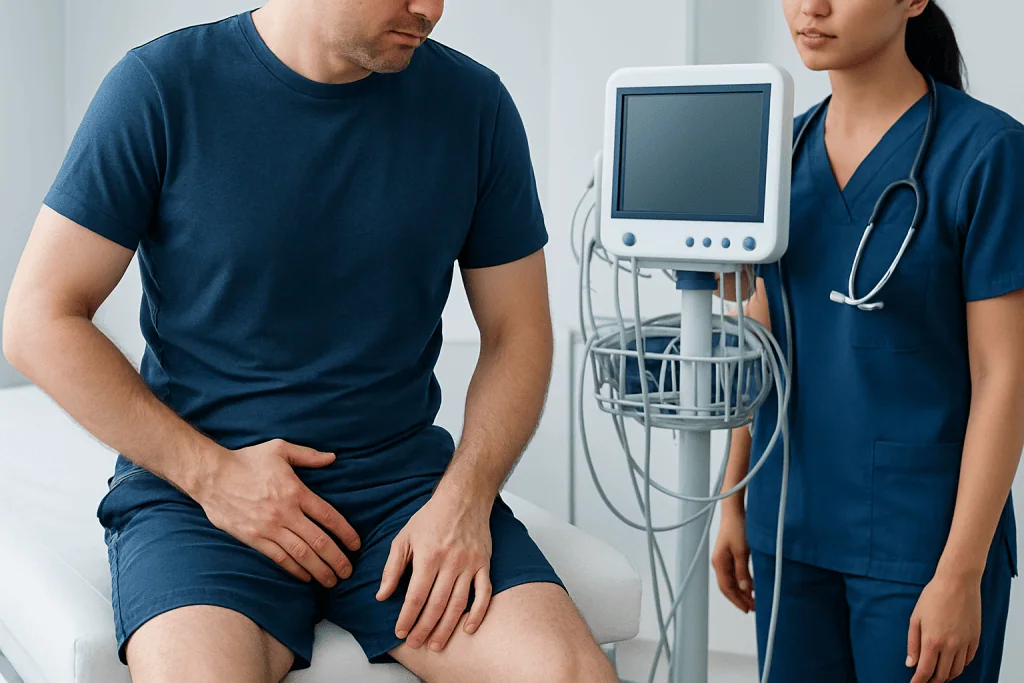
Groin pain can be sharp, dull, aching, burning, throbbing, or cramping. Some people notice it only with movement, such as walking, climbing stairs, crossing the legs, or getting in and out of a car. Others feel pain even at rest. It may begin suddenly after a specific movement or develop gradually over days to weeks.
The exact pattern often gives clues. Muscle or tendon injuries may cause tenderness, stiffness, and pain with stretching or resisted movement. Hip-related pain may be felt deep in the front of the groin and can be accompanied by clicking, reduced range of motion, or limping. Nerve-related pain may burn or travel along the inner thigh.
Associated symptoms matter because they can point beyond the muscles. Examples include:
- A lump or bulge in the groin, especially with coughing or lifting
- Swelling, redness, or warmth
- Fever or feeling generally unwell
- Nausea or vomiting
- Painful urination, blood in urine, or urinary urgency
- Testicular pain or swelling
- Pelvic pain, abnormal vaginal bleeding, or unusual discharge
- Difficulty bearing weight after a fall or sports injury
Because several important structures sit close together in the groin, a clear description of the pain and any additional symptoms can help doctors identify the cause more quickly.
Common causes and risk factors
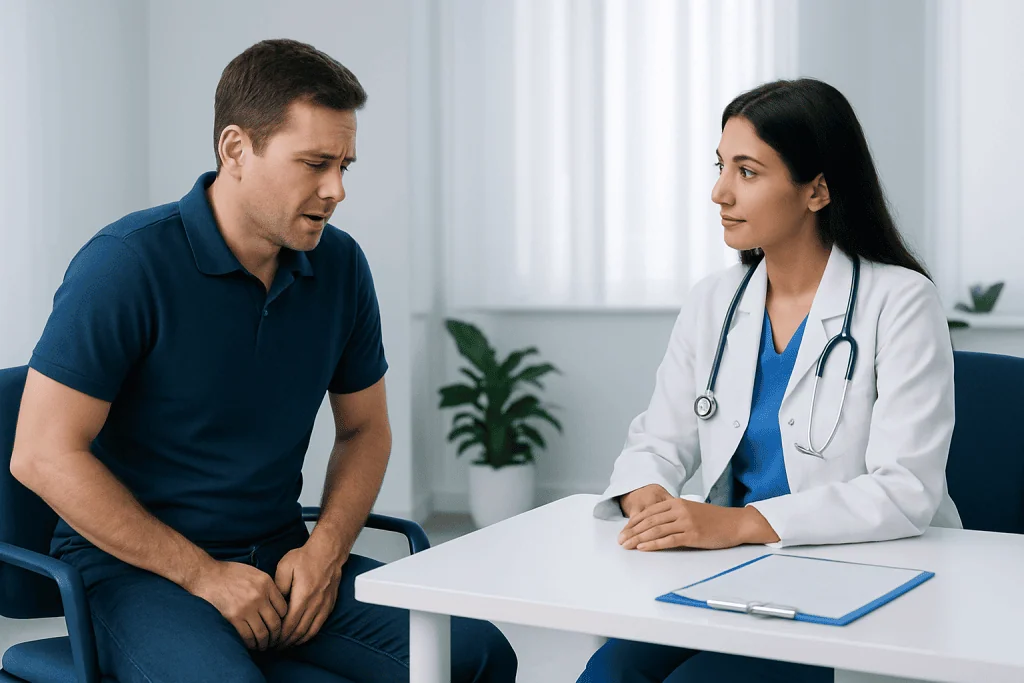
The most common cause of groin pain is a strain of the muscles, tendons, or ligaments around the inner thigh and lower abdomen. This can happen during sports that involve sprinting, rapid direction changes, kicking, skating, or sudden stretching. Repetitive exercise, deconditioning, poor warm-up, and muscle imbalance can increase the risk.
Another frequent cause is a hernia, especially an inguinal hernia, where tissue pushes through a weak area in the abdominal wall. This may cause aching, pressure, or a visible bulge that becomes more noticeable when standing, coughing, or lifting. People who do heavy physical work, have chronic cough, constipation, or previous abdominal wall weakness may be more prone. Inguinal hernia is one of the important structural causes doctors consider when groin discomfort does not settle.
Hip joint conditions can also present as groin pain. These include arthritis, labral injury, hip impingement, and pain caused by inflammation around the joint. In older adults, wear-and-tear changes may be responsible, while in younger active adults, repetitive movement patterns or structural variations can play a role. Sometimes conditions such as hip arthritis are first noticed as deep groin aching rather than obvious hip pain.
Other causes include urinary stones, urinary infection, enlarged lymph nodes, nerve compression, and referred pain from the lower back or abdomen. In men, testicular conditions can radiate into the groin. In women, ovarian cysts, endometriosis, or other pelvic conditions may be involved. A doctor considers age, sex, physical activity, and associated symptoms to narrow down these possibilities safely.
How doctors diagnose groin pain
Diagnosis starts with a careful history. The doctor usually asks when the pain began, whether there was an injury, where exactly it hurts, what activities worsen it, and whether symptoms such as swelling, urinary changes, fever, or testicular or pelvic pain are present. Even small details, such as whether pain occurs when coughing or twisting, can be helpful.
The physical examination may include checking the groin for tenderness, swelling, or a hernia bulge; assessing hip movement; testing muscle strength; and looking for signs of abdominal, pelvic, or testicular causes. The doctor may also observe how the person walks and whether certain movements reproduce the pain.
Tests are not always needed if the cause appears straightforward, such as a mild strain. When symptoms are persistent, severe, or unclear, additional evaluation may include urine tests, blood tests, ultrasound, X-ray, or MRI. Imaging can help identify muscle and tendon injury, joint disease, hernias, or urinary tract problems. If the pain seems related to the hip, hip replacement evaluation may be discussed for advanced joint damage, although surgery is only appropriate in selected cases.
The goal of diagnosis is not only to name the cause, but also to identify whether urgent treatment is needed. Sudden severe pain, inability to bear weight, or signs of trapped hernia or testicular emergency require prompt attention.
Treatment options for groin pain
Treatment depends on the cause. For muscle strain or tendon irritation, initial care often includes relative rest, avoiding painful movements for a short time, and gradually returning to activity. Simple pain relief measures, ice in the first phase after injury, and guided stretching or strengthening may be recommended. Physical therapy is often very helpful because it addresses flexibility, core stability, hip strength, and movement patterns that may have contributed to the problem.
When groin pain is related to the hip joint, treatment may include activity modification, rehabilitation exercises, and medication for symptom control. Persistent joint disease may need specialist orthopedic review. In appropriate cases, procedures such as robotic-assisted hip arthroplasty are part of broader treatment planning for advanced hip damage, but most people with groin pain do not require surgery.
Hernias are managed according to symptoms, size, and risk of complications. Some require planned repair, while urgent surgery is needed if the hernia becomes trapped or the person develops severe pain, vomiting, or a tender non-reducible bulge. Inguinal hernia repair may be recommended when symptoms interfere with daily life or when the hernia is at risk of complications.
If the pain is caused by urinary stones, infection, nerve-related conditions, or gynecologic or testicular disorders, treatment is directed at that underlying issue. This is why self-treating all groin pain as a muscle pull can delay the right care. A clear diagnosis helps ensure treatment is safe and effective.
Self-care and prevention
Many mild cases of groin pain improve with sensible self-care, especially when caused by overuse. Rest does not always mean complete inactivity; it usually means temporarily reducing the movement that triggers pain while keeping general activity at a comfortable level. Returning too quickly to full exercise can make recovery slower.
Helpful prevention strategies focus on conditioning and movement quality. People who exercise regularly may benefit from a gradual warm-up, progressive training, and specific strengthening of the core, hips, and inner thigh muscles. Good technique during sports, lifting, and repetitive work can also reduce strain on the groin region.
General health habits matter too. Staying hydrated may help reduce the risk of some urinary stone problems. Maintaining a healthy body weight, avoiding smoking, managing chronic cough, and preventing constipation can lower strain on the abdominal wall and may reduce hernia risk. Supportive footwear and balanced training loads can also help, particularly for runners and field-sport athletes.
If symptoms do not begin to settle over several days, keep recurring, or interfere with walking, work, or sleep, medical review is sensible. Recurrent pain is often a sign that the original trigger has not been fully addressed.
When to seek medical care
Groin pain should be assessed promptly if it is sudden, severe, or follows a fall, collision, or twisting injury with inability to bear weight. Urgent evaluation is also important when pain comes with a groin bulge that is painful or cannot be pushed back in, nausea or vomiting, fever, scrotal swelling, or sudden testicular pain. These features can signal a condition that should not wait.
Medical assessment is also appropriate for pain that lasts more than a few days without clear improvement, keeps returning, or affects daily activities. People should seek care if they notice urinary symptoms, blood in the urine, unexplained swelling, numbness, or pain that spreads from the back, pelvis, or hip. In women, pelvic symptoms such as unusual bleeding or new lower abdominal pain should also be discussed with a clinician.
Clinicians may involve orthopedics, general surgery, urology, sports medicine, or gynecology depending on the suspected cause. Near the end of the care pathway, some people benefit from coordinated assessment in a multidisciplinary setting. Acibadem International’s multidisciplinary specialists and JCI-accredited hospitals diagnose and treat conditions that can present with groin pain for international patients.
Frequently asked questions
Is groin pain usually a muscle strain?
A muscle strain is one of the most common causes, especially after sports, heavy lifting, or sudden twisting. However, groin pain can also come from a hernia, the hip joint, urinary tract, nerves, or reproductive organs, so persistent or unusual symptoms should be assessed.
How can someone tell if groin pain is from the hip?
Hip-related groin pain often feels deep in the front of the groin and may be worse with walking, turning, or bringing the knee upward. Reduced hip movement, clicking, stiffness, or limping can also suggest the hip as the source, but examination and sometimes imaging are needed to confirm it.
When is groin pain an emergency?
Emergency care is needed for sudden severe groin pain, especially with a painful bulge, vomiting, fever, severe swelling, or inability to bear weight. Sudden testicular pain also needs urgent medical attention because some causes require immediate treatment.
Can groin pain come from kidney stones or urine problems?
Yes. Kidney stones can cause pain that radiates toward the groin, and urinary tract problems may also cause groin discomfort along with burning during urination, blood in the urine, or urgency. These symptoms should be discussed with a doctor rather than treated as a simple muscle pull.
Should someone exercise with groin pain?
It is usually best to avoid movements that trigger or worsen the pain until the cause is clearer. Gentle activity may be reasonable in some mild cases, but continuing intense exercise through pain can aggravate muscle, tendon, or joint problems.
How long does groin pain take to improve?
Recovery time depends on the cause. Mild strains may improve within days to a few weeks, while tendon, joint, or hernia-related pain may last longer and need targeted treatment. If pain is not improving or keeps returning, medical review is appropriate.
This article is for general information only and is not a substitute for professional medical advice. Please consult a qualified doctor about your individual situation.
Joint and spine care in Turkey — expert assessment & treatment
JCI-accredited · board-certified surgeons · reply within 24h
Add us as a Preferred Source to see more of our trusted health content across Google Search, AI Overviews and Discover.

More from the Health Library

Is Pepto Bismol an Antacid? Causes, Explanations, and Next Steps

How to Produce More Sperm? Causes, Explanations, and Next Steps

How to Stop Hair Loss? Here Is What the Evidence Says

Praluent vs Repatha: Key Differences and How Doctors Tell Them Apart

Pain in Stomach When I Pee Explained: Common Triggers and Red Flags