Hair Surgery Turkey: Procedure, Recovery and Results

A hair transplant redistributes existing follicles; it does not create new hair or stop all future hair loss. FUE and FUT are established transplant approaches, and the best option depends on the scalp, donor area and treatment goals.
Key Takeaways
- A hair transplant redistributes existing follicles; it does not create new hair or stop all future hair loss.
- FUE and FUT are established transplant approaches, and the best option depends on the scalp, donor area and treatment goals.
- Turkey’s reputation for hair surgery does not ensure quality at every clinic; medical oversight, hygiene and surgeon experience matter.
- Crusting and temporary shedding are common early stages, while visible growth usually develops gradually over several months.
- There is no single reliable success rate for hair transplants in Turkey; outcomes should be assessed individually and realistically.
Hair surgery in Turkey generally refers to hair transplant surgery, which moves a person’s own hair follicles from a fuller donor area to areas affected by thinning. It may provide long-lasting coverage for suitable candidates, but results depend on the cause of hair loss, donor-hair availability, surgical planning and appropriate aftercare.
Hair Surgery Turkey: An Evidence-Based Overview
Hair surgery Turkey usually describes a hair transplant, in which a clinician relocates a person’s own healthy follicles to areas of thinning. It can provide lasting hair growth when the cause of hair loss is correctly assessed and the donor area is adequate, but it cannot create new follicles or guarantee a particular density. The outcome depends on the individual and the care team, rather than the country alone.
Turkey is a frequent destination for hair restoration, making it especially important to choose care based on clinical standards rather than marketing. A person should know who will make the diagnosis, design the hairline, perform key surgical steps and provide follow-up after travel. Hair transplantation may be appropriate for pattern hair loss and selected cases of hair loss caused by injury or scarring, but it is not the right first treatment for every type of shedding or scalp condition.
Are Turkey Hair Transplants Actually Good?

Turkey hair transplants can be good when they are performed by qualified, appropriately supervised professionals in a safe clinical setting and for a suitable candidate. However, quality is not uniform across all clinics. A natural-looking result requires an accurate diagnosis, careful use of the limited donor supply, appropriate graft handling, artistic hairline planning and reliable postoperative support.
Suitable candidates commonly have stable pattern hair loss, a healthy scalp and enough dense donor hair at the back or sides of the scalp. Men and women may both be candidates, although diffuse thinning, active inflammation, autoimmune hair loss, recent sudden shedding or inadequate donor density may require medical treatment or further investigation first. A consultation should include a scalp examination, medical history, discussion of future hair-loss progression and realistic expectations about coverage.
How Hair Transplant Surgery Works and Who It Suits
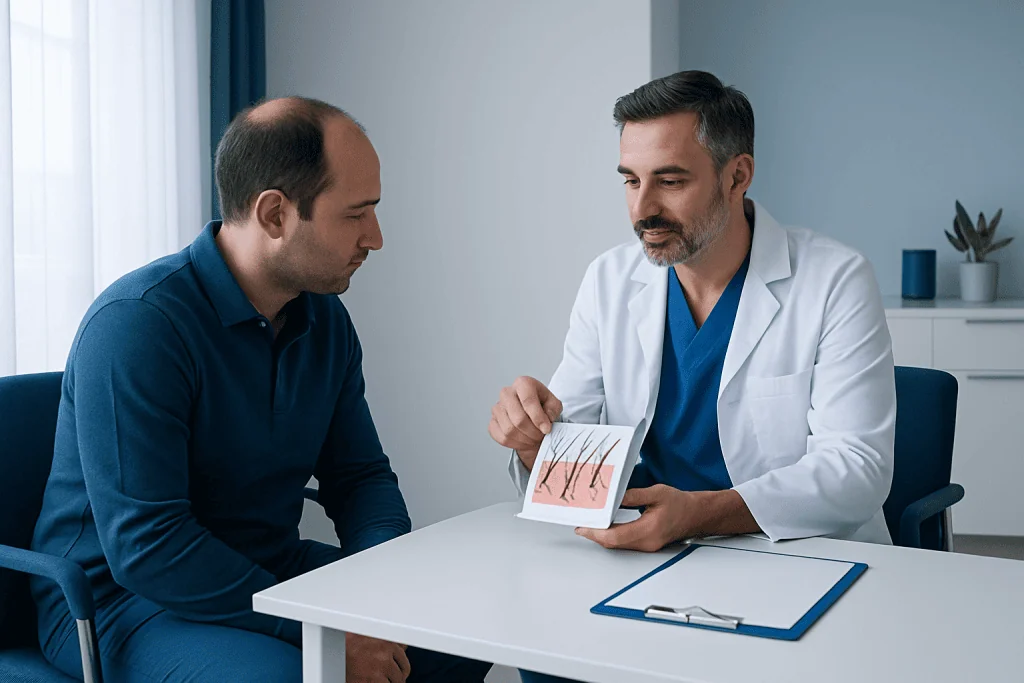
Hair transplants use follicular units, which are naturally occurring groups of one to several hairs. In follicular unit extraction, or FUE, units are removed individually from the donor area through tiny circular openings. In follicular unit transplantation, or FUT, a narrow strip of donor scalp is removed and divided into follicular units; this can leave a linear scar. Terms such as DHI often describe a method of implanting grafts rather than a wholly separate type of transplant.
Planning begins with an assessment of hair-loss pattern, donor reserves, hair texture, facial proportions and the person’s priorities. The clinician then proposes a conservative hairline and estimates what can be achieved without overharvesting the donor area. Blood tests or other medical checks may be advised when the history suggests an underlying health issue, and some people may need more than one session to address a larger area.
During surgery, the scalp is usually numbed with local anaesthetic. Hair follicles are extracted, recipient sites are created to guide the angle and direction of growth, and grafts are placed into the thinning area. Before proceeding, patients should ask which steps will be performed by the doctor, how the procedure is supervised and what written aftercare and follow-up arrangements are available.
What Is the Recovery Process Like After a Hair Transplant in Turkey?
Recovery after a hair transplant in Turkey is similar to recovery elsewhere: the grafts need gentle protection during the early healing period, while visible hair growth takes much longer. Mild tenderness, tightness, swelling, redness and small crusts can occur during the first few days. The surgical team will provide instructions for washing, sleeping, protecting the donor and recipient areas, and using any prescribed medicines.
During the first one to two weeks, crusts generally loosen and shed with careful washing; they should not be picked or scratched. Transplanted hairs commonly shed between about two and eight weeks, which can be unsettling but does not necessarily mean the follicles have failed. New growth often starts from around three to four months, becomes more noticeable over the following months and may continue to mature for 12 months or longer. Exercise, swimming, sun exposure, headwear, smoking and travel plans should be discussed with the treating team because recommendations vary according to the procedure and healing progress.
What Is the Success Rate of Hair Transplants in Turkey?
There is no single scientifically reliable success rate for all hair transplants in Turkey. Clinics may use different definitions of success, such as graft survival, visible density, patient satisfaction or the appearance of photographs at different follow-up times. These measures are not interchangeable, and a national percentage cannot predict an individual’s result.
A favorable outcome is more likely when hair loss is correctly diagnosed, donor hair is sufficient, grafts are handled carefully and the design accounts for future thinning. Benefits may include improved coverage and a natural direction of growth, but a transplant redistributes hair rather than restoring the density of an untouched scalp. Possible risks include bleeding, infection, prolonged redness, folliculitis, numbness, scarring, temporary shock loss, poor graft growth, an unnatural hairline or over-thinning of the donor area. Good planning and appropriate aftercare can reduce risks, but cannot remove them entirely.
What Are the Before and After Results of Hair Transplants in Turkey?
Before and after results should be judged over months rather than days. Immediately after surgery, the recipient area may look red and dotted with tiny scabs, while the donor area may appear closely trimmed or temporarily thinner. A well-planned final result aims for a hairline and density that suit the person’s age, facial features, hair characteristics and expected future hair loss, rather than an unrealistically low or dense hairline.
When reviewing photographs, patients should look for consistent lighting, camera angle, hair length and time since surgery. The most meaningful images usually show mature growth, not only the early post-procedure appearance. Native, non-transplanted hair can continue to thin after surgery, so a dermatologist or hair-restoration clinician may discuss medical options to help preserve it when appropriate. Individual results vary according to donor quality, scalp characteristics, the size of the area treated and adherence to aftercare advice.
Planning Hair Surgery Turkey: Reviews, Cost and Safe Decision-Making
Hair surgery Turkey cost and hair surgery Turkey price can vary substantially according to the procedure type, extent of hair loss, number of treatment sessions, medical supervision, aftercare and travel arrangements. An advertised package should not replace a medical assessment. Before committing, a person should request a clear written plan that identifies the responsible clinician, the proposed technique, what clinical care is included, how complications are managed and what follow-up will be available after returning home.
Online hair surgery Turkey reviews and hair surgery Turkey Reddit discussions may offer useful personal perspectives, but they cannot verify clinical qualifications, sterile practice or whether a result is typical. It is sensible to check professional registration, ask about the clinic’s infection-control processes, review informed-consent materials and avoid pressure to make a rapid decision. At Acibadem International, multidisciplinary specialists in JCI-accredited hospitals diagnose and treat hair loss, including for international patients who require coordinated assessment and care.
When to Seek Medical Care
A medical assessment is important before considering surgery when hair loss is sudden, patchy, accompanied by scalp pain, itching, scaling or scarring, or associated with illness, weight change, hormonal symptoms or a new medicine. These signs can point to causes of hair loss that may need diagnosis and treatment before transplantation is considered.
After a transplant, the patient should contact the surgical team promptly for increasing pain, worsening swelling, spreading redness, fever, persistent bleeding, pus-like drainage or concerns about healing. Urgent local medical care is appropriate for severe allergic symptoms, such as difficulty breathing or swelling of the lips, tongue or face. Keeping written records of the procedure and postoperative instructions is helpful when seeking care away from the treating clinic.
Frequently asked questions
Is FUE better than FUT for a hair transplant?
Neither method is automatically better for every person. FUE avoids a linear donor scar but requires individual graft extraction, while FUT may be useful when a larger number of grafts is needed and a person accepts a linear scar. The best choice depends on donor characteristics, hairstyle preferences, extent of hair loss and surgical advice.
Can women have a hair transplant in Turkey?
Women can be candidates for hair transplantation, but a thorough assessment is especially important because female hair loss may be diffuse or related to an underlying medical cause. A transplant is most suitable when there is a stable donor area and a defined area that can benefit from grafting.
Will transplanted hair fall out after surgery?
The visible transplanted hair shafts often shed during the first weeks after surgery, which is a common part of the process. The follicles usually remain beneath the skin and may begin producing new hair several months later. Ongoing loss of untreated native hair can still occur and should be discussed during follow-up.
Will medication be needed after a hair transplant?
Some people are offered medicines to protect existing hair or support management of pattern hair loss, but these are not suitable for everyone. The decision should be made with a qualified doctor after reviewing medical history, possible side effects and pregnancy plans where relevant. Medication should not be started or stopped solely on the basis of online advice.
How long should an international patient remain in Turkey after a hair transplant?
Travel plans should allow time for the planned procedure, an early postoperative review when advised and clear instruction on graft care before departure. The appropriate length of stay depends on the technique used, the person’s recovery and the clinic’s follow-up protocol. Patients should also confirm how they can obtain help after returning home.
Can a person have a second hair transplant?
A second procedure may be possible when donor reserves remain adequate and the scalp has healed fully. It should be planned cautiously because donor hair is limited and future hair loss may continue. A clinician should reassess the donor area and long-term goals before recommending further surgery.
References
- International Society of Hair Restoration Surgery
- American Academy of Dermatology Association
- National Health Service
- U.S. Food and Drug Administration
This article is for general information only and is not a substitute for professional medical advice. Please consult a qualified doctor about your individual situation.
Hair transplant in Turkey — costs, graft counts & a free assessment
JCI-accredited · board-certified surgeons · reply within 24h
Add us as a Preferred Source to see more of our trusted health content across Google Search, AI Overviews and Discover.