Halo Brace: An Evidence-Based Patient Guide
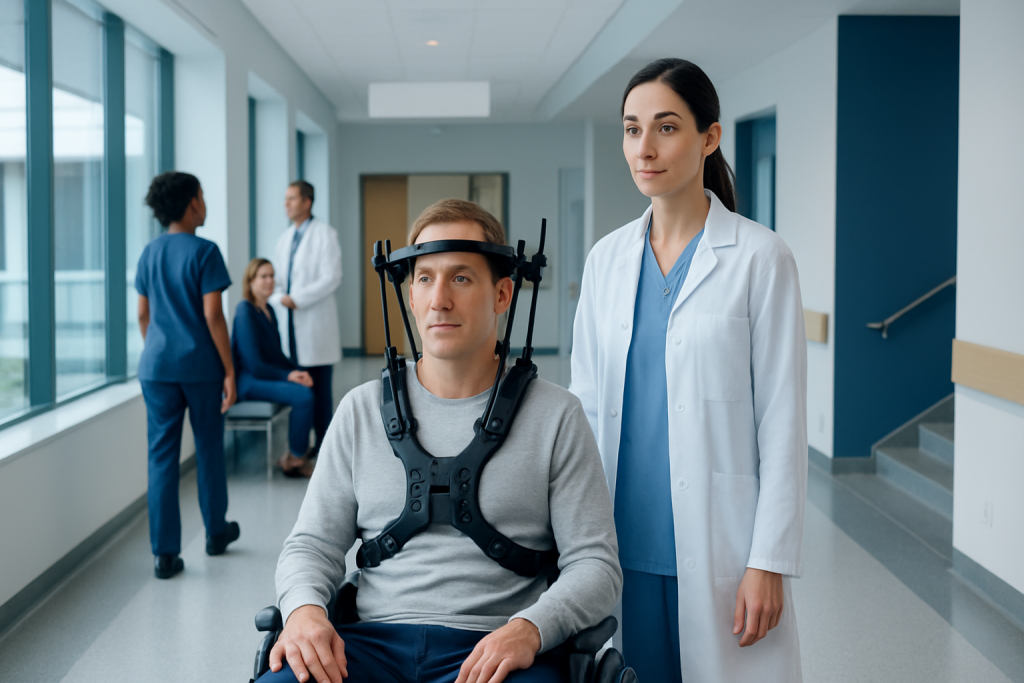
A halo brace uses a ring secured to the skull and a rigid vest to limit movement of the cervical spine. It may be used for some upper-neck fractures, ligament injuries, or as support before or after surgery.
Key Takeaways
- A halo brace uses a ring secured to the skull and a rigid vest to limit movement of the cervical spine.
- It may be used for some upper-neck fractures, ligament injuries, or as support before or after surgery.
- Treatment duration varies, but many people wear a halo brace for several weeks to a few months.
- Pin-site care, vest checks, safe movement, and scheduled imaging are important parts of a halo brace plan of care.
- New weakness, numbness, fever, severe pain, breathing difficulty, or a loose device needs urgent medical assessment.
A halo brace is an external device that holds the head and neck very still to support healing after selected cervical spine injuries, instability, or surgery. It is highly effective for carefully chosen patients but requires close medical follow-up, skin care, and practical adjustments during daily life.
Overview: What Is a Halo Brace?
A halo brace, also called a halo vest, is a rigid external device designed to keep the head and neck from moving. It consists of a lightweight circular metal or carbon-fiber ring around the head, upright support bars, and a molded vest worn around the chest. Small pins secure the ring to the outer layer of the skull, while the vest provides a stable base.
The purpose of a halo brace is to protect the cervical spine, especially the upper neck, while injured bones and supporting ligaments heal. It provides stronger motion control than a soft or rigid neck collar. A specialist may recommend it after a fracture, instability caused by ligament injury, or in selected situations before or after cervical spine surgery.
Halo treatment is individualized. It is not appropriate for every neck injury, and some people are better served by surgery or another type of immobilization. The choice depends on the exact injury, its stability and alignment, bone quality, overall health, age, ability to follow care instructions, and the expected benefits and risks.
How a Halo Brace Works and Who May Be a Candidate
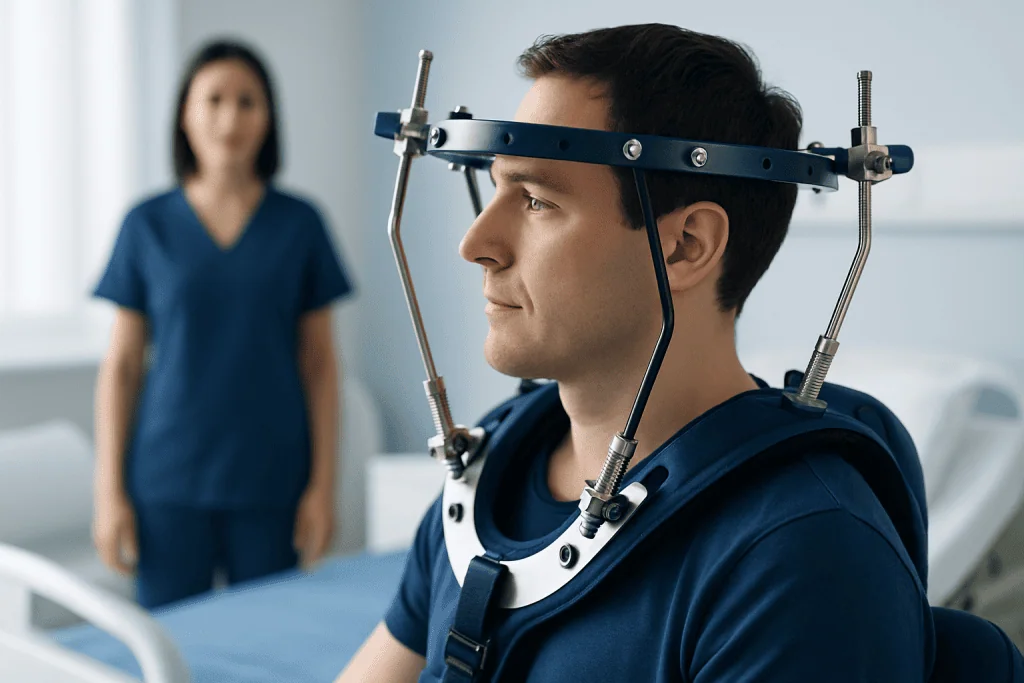
The halo ring connects to the vest through adjustable rods. Once properly fitted, the system acts as an external frame that limits bending, turning, and other movements of the head relative to the chest. This stability can allow bone healing and may help maintain the alignment of the cervical vertebrae.
Potential candidates include people with selected fractures of the upper cervical spine, such as certain C1 or C2 fractures, some ligament-related instabilities, or injuries that remain suitably aligned without immediate surgery. A halo brace can also be considered when surgery carries particular risks or when temporary stabilization is needed while a broader treatment decision is made.
Doctors consider whether the injury is stable enough for external immobilization and whether the person can safely tolerate the device. Severe displacement, spinal cord compression, progressive neurological symptoms, some complex fractures, severe chest or skin problems, and difficulty with balance or self-care may make another treatment approach more suitable. Older adults may have a higher risk of complications, so decisions require especially careful assessment.
Evaluation commonly involves a neurological examination and imaging such as X-rays, CT, or MRI. These tests help the spine team understand the fracture pattern, ligament condition, alignment, and whether nerves or the spinal cord are affected.
Halo Brace Application: What Happens During the Procedure
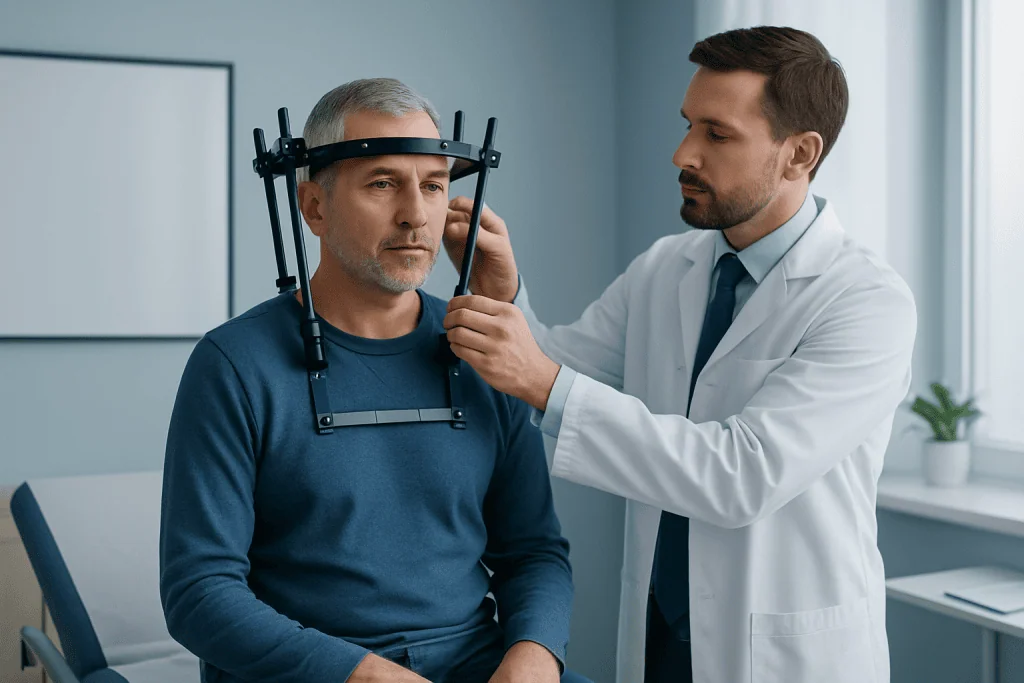
Halo brace application is performed by a trained spine, orthopedic, or neurosurgical team. The exact setting depends on the injury and the person’s condition. In many cases, the care team uses local anesthetic at the pin sites and may provide medication to improve comfort. Imaging may be used to confirm that the neck remains in the intended position throughout fitting.
The clinician positions the halo ring around the head and places pins into safe areas of the skull. The pins are tightened in a controlled, measured way. The ring is then connected to the vest with support bars, and the team checks the person’s posture, breathing, comfort, and ability to swallow. X-rays may be taken after fitting to confirm spinal alignment.
A halo brace procedure is usually followed by teaching for the patient and, when appropriate, family members or caregivers. Instructions cover pin-site hygiene, vest and skin checks, sleeping positions, bathing alternatives, clothing, transfers, and warning signs. The care team should provide individualized written instructions; a generic online halo brace PDF should not replace that plan.
Follow-up appointments are essential. At these visits, clinicians inspect the pin sites and vest, assess neurological symptoms, review skin health, and obtain imaging when needed. Only the treating team should adjust the brace or pins.
Recovery Timeline, Daily Living and Follow-Up
The healing timeline varies according to the injury, age, bone health, alignment, and whether surgery is also required. Many people wear a halo brace for approximately 8 to 12 weeks, although some need a shorter or longer period. The treating clinician uses follow-up examinations and imaging rather than time alone to decide when it is safe to remove the device.
At first, the brace can affect sleep, balance, clothing choices, hygiene, and meals. It may take time to become comfortable with moving the whole body rather than turning the neck. Some people need temporary help with washing, dressing, household tasks, and transportation. A rehabilitation professional can advise on safe transfers, walking, and ways to maintain independence.
Regular skin care is important because the vest can create pressure and trap moisture. The care team may recommend checking accessible skin daily for redness, soreness, blisters, or drainage. Pin sites should be cleaned exactly as instructed. Do not apply creams, powders, or other products beneath the vest unless the clinical team advises it.
When healing is confirmed, the team removes the halo brace and may prescribe a collar for a period of transition. Neck stiffness and muscle weakness are common after immobilization. Carefully planned rehabilitation may help restore movement, strength, posture, and confidence while protecting the recovering spine.
What Are the Risks of Wearing a Halo Brace?
A halo brace can provide important stability, but it has possible complications. Common concerns include pin-site pain, local irritation, infection, loosening of pins, pressure areas under the vest, and difficulty sleeping. Some people experience headaches, discomfort while swallowing, reduced appetite, or challenges with balance and daily activities.
More serious problems are less common but require prompt evaluation. These include worsening neck pain, loss of spinal alignment, nerve-related symptoms such as new weakness or numbness, deep skin injury, significant infection, breathing problems, or difficulty swallowing. Falls can be particularly dangerous because the device changes balance and limits the ability to look down or turn the head.
Risk can be reduced through correct fitting, scheduled checks, careful pin-site and skin care, safe mobility planning, and early reporting of problems. A person should never attempt to tighten, loosen, reposition, or remove any part of the brace at home. The team may adjust treatment if the device is not providing adequate stability or if complications develop.
The expected benefit is rigid cervical stabilization without an internal operation in selected cases. However, the balance between benefits and risks differs from person to person. A spine specialist can explain why a halo brace, surgery, or another form of immobilization is the safest option for the specific injury.
What Activities Should You Avoid With a Halo Brace?
People wearing a halo brace should avoid activities that could cause a fall, jolt the spine, strain the vest, or disturb the pins. This usually includes driving, cycling, contact sports, running, heavy lifting, climbing ladders, using unstable stairs without support, and unsupervised exercise. Alcohol or medications that cause drowsiness may also increase fall risk and should be discussed with the clinical team.
It is important not to bend, twist, or try to turn the neck within the brace. Instead, the person should turn the entire body in small, deliberate movements. Sudden movements, rough travel, and environments with crowded walkways or poor lighting can be difficult. A healthcare professional can advise when travel is appropriate and what support is needed.
Bathing and swimming should not be attempted unless the treating team provides a specific safe method. The vest must usually be kept dry. Loose, front-opening clothing is often easier to put on and remove. Preparing the home by removing loose rugs, securing electrical cords, improving lighting, and keeping frequently used items within reach can make daily activity safer.
What Precautions Should I Take While Wearing a Halo Brace?
Halo brace precautions begin with following the individual care instructions provided at fitting. The person should attend every planned review, keep pin sites and the vest area clean and dry as instructed, and check for changes in pain, redness, swelling, drainage, odor, pressure sores, or looseness. A caregiver may be helpful when areas cannot be inspected easily.
Good nutrition, hydration, and avoiding smoking or nicotine can support bone and skin healing. A clinician may advise on calcium, vitamin D, or management of conditions that affect bone strength, but supplements should not be started solely on general advice. People should also ask how to manage regular medications, particularly medicines that can affect alertness or bleeding risk.
Sleeping may be easier with pillows arranged to support the body rather than the neck, but the exact setup should be approved by the care team. Use assistance when getting in or out of bed if balance is uncertain. Emergency information, including the treating service and the type of device, should be available to family members or caregivers.
A practical halo brace plan of care includes clear instructions for hygiene, mobility, meals, transportation, follow-up imaging, and emergency contact. If there is uncertainty about an activity, it is safer to ask the treating team before proceeding.
When to Seek Medical Care
Contact the treating team promptly for increasing pain at a pin site, redness, swelling, warmth, drainage, fever, a loose-feeling ring or vest, new skin breakdown, or trouble managing daily care. These issues may need adjustment or treatment and should not be handled by changing the device at home.
Seek urgent medical care for new or worsening weakness, numbness, tingling, loss of coordination, severe headache, severe neck pain, fainting, breathing difficulty, chest pain, trouble swallowing, confusion, or any fall or impact involving the brace. These symptoms do not always mean a serious complication, but they require timely assessment.
People with a cervical injury benefit from coordinated care among spine specialists, nurses, rehabilitation professionals, and imaging teams. Acibadem International’s multidisciplinary specialists and JCI-accredited hospitals support diagnosis and treatment for international patients with spine injuries requiring individualized care.
Frequently asked questions
How long do you have to wear a halo brace?
Many people wear a halo brace for about 8 to 12 weeks, but the duration can vary widely. The treating spine specialist bases removal on healing seen on examinations and imaging, not simply on the number of weeks completed. Some injuries require longer stabilization or a transition to a cervical collar.
Is wearing a halo brace painful?
Discomfort is common, especially during the first days after fitting and around the pin sites or vest pressure points. Pain should be monitored and discussed with the care team, as it may signal a need for treatment or adjustment. Severe, rapidly increasing, or new pain needs prompt medical review.
Can a person shower while wearing a halo brace?
The vest and pin sites generally need to remain dry, so ordinary showering is often not possible without a specific care plan. The clinical team may recommend sponge bathing or another adapted method. A person should not remove or alter the brace to bathe unless instructed by the treating team.
Can you sleep normally in a halo brace?
Sleep can be challenging because the device limits position changes and may feel bulky. Many people find it helpful to use pillows to support the body and to follow the team’s advice on safe sleeping positions. Persistent inability to sleep, pain, or breathing difficulty should be reported.
What happens if a halo brace pin becomes loose?
A loose pin may reduce stability and can increase the risk of skin irritation or infection. The person should contact the treating team as soon as possible and should not try to tighten the pin at home. The clinician can assess the device and make any necessary adjustment safely.
Can you travel with a halo brace?
Travel may be possible in some circumstances, but it should be discussed with the treating specialist first. The team can consider the injury’s stability, follow-up needs, transportation method, comfort, and access to medical care at the destination. Driving is generally unsafe because neck movement and field of vision are restricted.
References
- American Academy of Orthopaedic Surgeons
- American Association of Neurological Surgeons
- AO Spine
- National Institute of Neurological Disorders and Stroke
This article is for general information only and is not a substitute for professional medical advice. Please consult a qualified doctor about your individual situation.
Joint and spine care in Turkey — expert assessment & treatment
JCI-accredited · board-certified surgeons · reply within 24h
Add us as a Preferred Source to see more of our trusted health content across Google Search, AI Overviews and Discover.

More from the Health Library



Related Specialists

Dr. Barış Gıakoup
Emergency Service
Prof. Dr. Bülent Evren Erkul
Otorhinolaryngology
Dilara Çitoğlu
Physical Medicine & Rehabilitation
Prof. Dr. Kahraman Öztürk
Orthopedic Surgery & Traumatology