Hearing Damage Treatment: Early Signs, Risk Factors, and How It Is Treated

Hearing changes can be gradual or sudden, and sudden hearing loss needs urgent medical assessment. Wax buildup, ear infections, certain medicines, noise exposure, aging, and injury can all affect hearing.
Key Takeaways
- Hearing changes can be gradual or sudden, and sudden hearing loss needs urgent medical assessment.
- Wax buildup, ear infections, certain medicines, noise exposure, aging, and injury can all affect hearing.
- Treatment depends on the cause and may include earwax removal, infection treatment, hearing aids, implants, or surgery.
- Noise-related hearing damage is often permanent but is largely preventable through consistent hearing protection.
- A hearing test can identify the type and degree of hearing loss and guide an individual treatment plan.
Hearing damage treatment begins with identifying whether the problem involves the outer, middle, or inner ear, or the hearing nerve. Some causes are temporary and treatable, while permanent inner-ear damage can often be managed effectively with hearing technology, rehabilitation, and communication support.
Overview: What Does Hearing Damage Treatment Involve?
Hearing damage treatment depends on what is causing the hearing change. Treatable causes can include earwax blockage, fluid behind the eardrum, ear infection, eardrum injury, or certain middle-ear problems. When damage affects delicate inner-ear sensory cells or the hearing nerve, it is usually permanent, but hearing aids, cochlear implants, assistive devices, and hearing rehabilitation can improve communication and day-to-day quality of life.
Hearing loss may affect one ear or both, develop slowly over years, or happen suddenly. It can make conversation difficult, especially in restaurants or groups, and may lead a person to turn up the television volume, ask others to repeat themselves, or feel unusually tired after listening. Prompt assessment is important because the most suitable treatment differs between conductive hearing loss, sensorineural hearing loss, and mixed hearing loss.
Hearing changes should not be assumed to be a normal part of aging without evaluation. An ear, nose, and throat specialist and audiologist can determine whether there is a reversible problem and help a person understand the available management options.
Early Signs and Everyday Effects
Early hearing damage is not always obvious. A person may first notice that speech sounds unclear rather than simply quiet, particularly when there is background noise. High-pitched sounds are often affected first in noise-related and age-related inner-ear hearing loss, so consonants such as “s,” “f,” “th,” and “t” may be harder to distinguish.
Other possible signs include ringing, buzzing, or hissing in the ears (tinnitus); needing to increase the volume on devices; misunderstanding words; difficulty hearing on the telephone; and relying more on lip-reading. Children may show different signs, such as delayed speech development, inattentiveness, poor response when called, or trouble following instructions.
A blocked sensation, earache, discharge, fever, dizziness, or balance symptoms may point to a specific ear condition. Tinnitus or hearing loss on only one side should also be assessed, especially if it is new or worsening. Symptoms do not always indicate permanent damage, but they provide useful clues for clinical evaluation.
Common Causes and Risk Factors

Hearing loss is commonly grouped by where the problem occurs. Conductive hearing loss occurs when sound cannot travel efficiently through the ear canal or middle ear. Earwax, foreign objects, middle-ear fluid, ear infection, eardrum perforation, and stiffening of the middle-ear bones are possible causes. These conditions may be treatable with medication, a procedure, or surgery, depending on the diagnosis.
Sensorineural hearing loss involves the cochlea in the inner ear or the hearing nerve. Aging is a frequent cause, along with repeated or intense noise exposure, head injury, some infections, inherited factors, and certain medicines that can affect hearing. The cochlea’s sensory hair cells do not currently regenerate in humans, which is why noise-induced damage can be lasting.
Risk may be higher for people who work around machinery, music, firearms, construction equipment, aircraft, or loud vehicles. Recreational exposure also matters: headphones at high volume, clubs, concerts, and motorsports can contribute over time. Smoking, poorly controlled long-term health conditions, and a family history of hearing loss may also play a role for some individuals.
- A single very loud sound can cause immediate injury to the ear.
- Longer exposure to moderately loud sound can also be harmful.
- Some medicines may affect hearing, especially at particular doses or in people with other risk factors; medicines should never be stopped without medical advice.
How Hearing Damage Is Diagnosed
Assessment usually starts with a discussion of symptoms, noise exposure, medical history, medicines, recent infections, and any injury. The clinician examines the ear canal and eardrum using an otoscope. This may identify wax, inflammation, fluid, structural changes, or signs of eardrum damage.
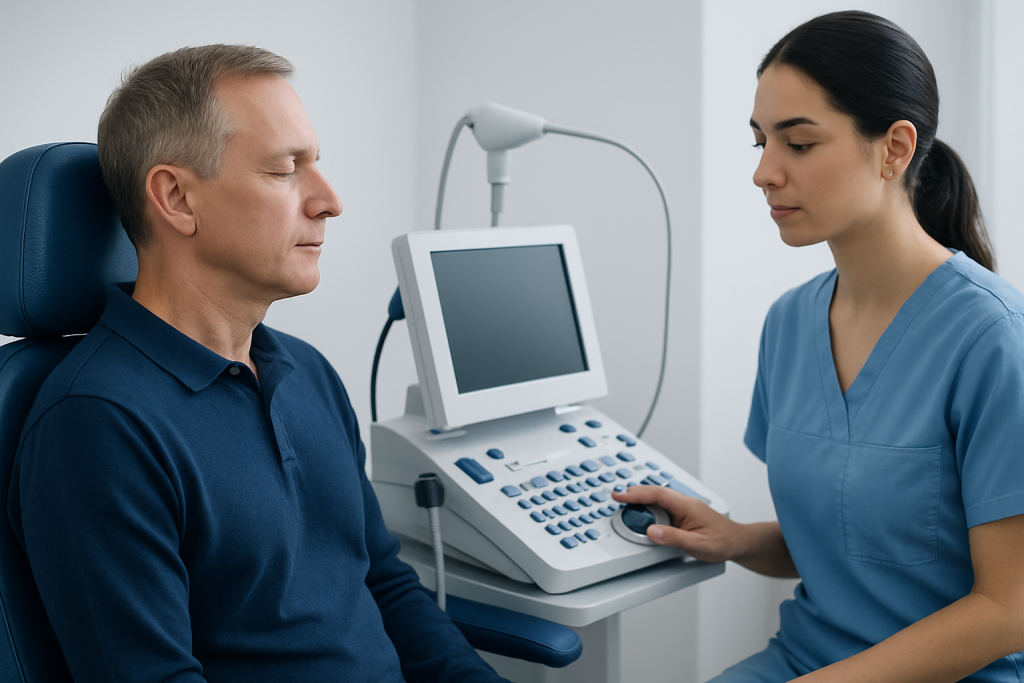
A formal hearing assessment, called audiometry, measures the quietest sounds a person can hear at different frequencies and assesses how clearly they understand speech. Tympanometry may be used to check eardrum movement and middle-ear pressure. These tests help distinguish conductive from sensorineural hearing loss and show whether one or both ears are affected.
Additional tests may be appropriate when hearing loss is sudden, one-sided, associated with dizziness, or unexplained. Depending on the findings, these can include blood tests, balance testing, or imaging. A thorough diagnosis is valuable because it helps clinicians identify conditions that may respond to timely treatment and select appropriate hearing support when loss is permanent.
Hearing Damage Treatment Options
Treatment is tailored to the cause, severity, and impact of hearing loss. If earwax is blocking the canal, a clinician may remove it safely using appropriate methods. Ear infections or inflammation may require observation, pain management, or prescribed treatment. Fluid behind the eardrum can sometimes settle with time, while persistent cases may need specialist review. People should avoid inserting cotton swabs, hairpins, or other objects into the ear, as these can push wax deeper or injure the canal or eardrum.
For sensorineural hearing loss, hearing aids are often the main treatment. Modern devices can be programmed to a person’s hearing test results and listening needs. They do not restore natural hearing, but they can make speech and environmental sounds more accessible. An audiologist can provide fitting, adjustment, education, and follow-up, as adaptation often takes time.
For people with severe hearing loss who receive limited benefit from hearing aids, cochlear implants may be considered after specialist assessment. These devices bypass damaged inner-ear hair cells and stimulate the hearing nerve directly. Some conductive or mixed hearing losses may be helped by middle-ear surgery or bone-conduction hearing systems, depending on anatomy and diagnosis.
Communication strategies are an important part of care. These may include reducing background noise, facing the speaker, choosing good lighting, using captions on videos, and considering telephone or alerting devices. Tinnitus management may include hearing support, sound therapy, counseling approaches, and treatment of related sleep or stress difficulties when needed.
Protecting Hearing and Supporting Daily Life
Prevention is particularly important because many forms of inner-ear damage cannot be reversed. At loud events or in noisy workplaces, well-fitting earplugs or earmuffs can reduce sound exposure. Hearing protection should be selected for the setting and worn consistently; occupational health professionals can help workers identify suitable protection.
For personal listening devices, lowering the volume and taking listening breaks reduces risk. If someone nearby can hear sound leaking from headphones, the level may be too high. Moving farther from speakers at concerts, using ear protection, and giving the ears time to recover after loud sound are practical measures.
People with established hearing loss can remain active by planning communication-friendly environments. Letting family members, colleagues, and healthcare professionals know about hearing needs can help. Face-to-face conversation, clear speech without shouting, and reduced competing noise are often more useful than simply increasing volume.
Regular hearing checks may be helpful for people with ongoing noise exposure, a family history of hearing problems, older adults, and anyone who notices a change. Follow-up is also important after receiving hearing aids or other treatment, as needs can change over time.
When to Seek Medical Care
Medical assessment is recommended for any persistent hearing change, new tinnitus, repeated ear infections, ear discharge, ear pain, or a feeling of blockage that does not resolve. A clinician can check for simple, reversible causes and arrange hearing testing when appropriate. Early evaluation can also help reduce the practical and emotional effects of hearing difficulties.
Sudden hearing loss in one or both ears should be treated as urgent, particularly when it develops over hours or a few days. Urgent evaluation is also needed if hearing loss occurs with severe dizziness, facial weakness, a severe headache, confusion, weakness in an arm or leg, or after a significant head injury. These symptoms may require immediate emergency care.
Individuals who are concerned about a child’s hearing, speech development, or responses to sound should arrange a pediatric evaluation promptly. Acibadem International’s multidisciplinary specialists and JCI-accredited hospitals evaluate ear and hearing conditions for international patients, with care plans based on individual clinical findings.
Frequently asked questions
Can hearing damage be reversed?
Some hearing problems can improve when the cause is treated, such as earwax buildup, infection, fluid in the middle ear, or certain eardrum conditions. Damage to inner-ear sensory cells from aging or noise exposure is usually permanent. However, hearing aids, implants, and rehabilitation can significantly improve hearing function and communication for many people.
What is the first treatment for hearing damage?
The first step is a medical and hearing assessment to identify the cause. A clinician may examine the ears, review symptoms and medicines, and arrange audiometry. Treatment may range from removing wax or treating an infection to fitting hearing technology or referring for specialist procedures.
Can headphones cause permanent hearing damage?
Headphones can contribute to permanent noise-related hearing damage when they are used at high volume or for long periods. Risk is influenced by both loudness and duration of exposure. Lower volume levels, regular breaks, and well-fitting noise-reducing headphones can help reduce the need to turn sound up.
Is ringing in the ears a sign of hearing damage?
Tinnitus, or ringing in the ears, can occur with hearing loss and noise exposure, but it has several possible causes. It may be temporary after loud sound, though persistent or one-sided tinnitus should be assessed. A hearing test can help determine whether hearing changes are present.
How quickly should sudden hearing loss be treated?
Sudden hearing loss should be assessed urgently, ideally on the same day it is noticed. Rapid evaluation is important because some causes may benefit from early treatment. A person should not wait to see whether sudden loss resolves on its own, particularly if it affects one ear.
Will a hearing aid make hearing normal again?
A hearing aid does not cure the underlying cause of permanent hearing loss or recreate completely natural hearing. It amplifies and processes sound according to an individual’s hearing pattern, making speech and everyday sounds easier to hear. Proper fitting, adjustment, and practice are important for the best possible benefit.
References
- World Health Organization
- National Institute on Deafness and Other Communication Disorders
- American Academy of Otolaryngology–Head and Neck Surgery
- Centers for Disease Control and Prevention
- National Health Service
This article is for general information only and is not a substitute for professional medical advice. Please consult a qualified doctor about your individual situation.
Explore treatments in Turkey — costs, top hospitals & a free quote
JCI-accredited · board-certified surgeons · reply within 24h
Add us as a Preferred Source to see more of our trusted health content across Google Search, AI Overviews and Discover.