Hepatic Artery Infusion Pump: Procedure, Recovery and Results

A hepatic artery infusion pump is surgically placed under the skin of the abdomen and connected to the hepatic artery. It is most often considered for selected liver metastases, particularly from colorectal cancer, and is not suitable for every patient.
Key Takeaways
- A hepatic artery infusion pump is surgically placed under the skin of the abdomen and connected to the hepatic artery.
- It is most often considered for selected liver metastases, particularly from colorectal cancer, and is not suitable for every patient.
- Treatment is given through the pump during planned refill visits and is usually combined with close imaging and laboratory monitoring.
- Recovery from pump placement commonly takes several weeks, while liver embolization has a different and often shorter recovery pattern.
- Possible complications include infection, blood clots, catheter or pump problems, and injury to the bile ducts or liver.
- New abdominal pain, fever, wound changes, jaundice or pump-area swelling should be assessed promptly.
A hepatic artery infusion pump is an implanted device that delivers chemotherapy into the artery supplying the liver, concentrating treatment around liver tumors while limiting exposure to the rest of the body. It is a specialized option for selected people with cancer confined mainly to the liver and requires coordinated care from surgical, medical oncology and radiology teams.
Overview: How a Hepatic Artery Infusion Pump Works
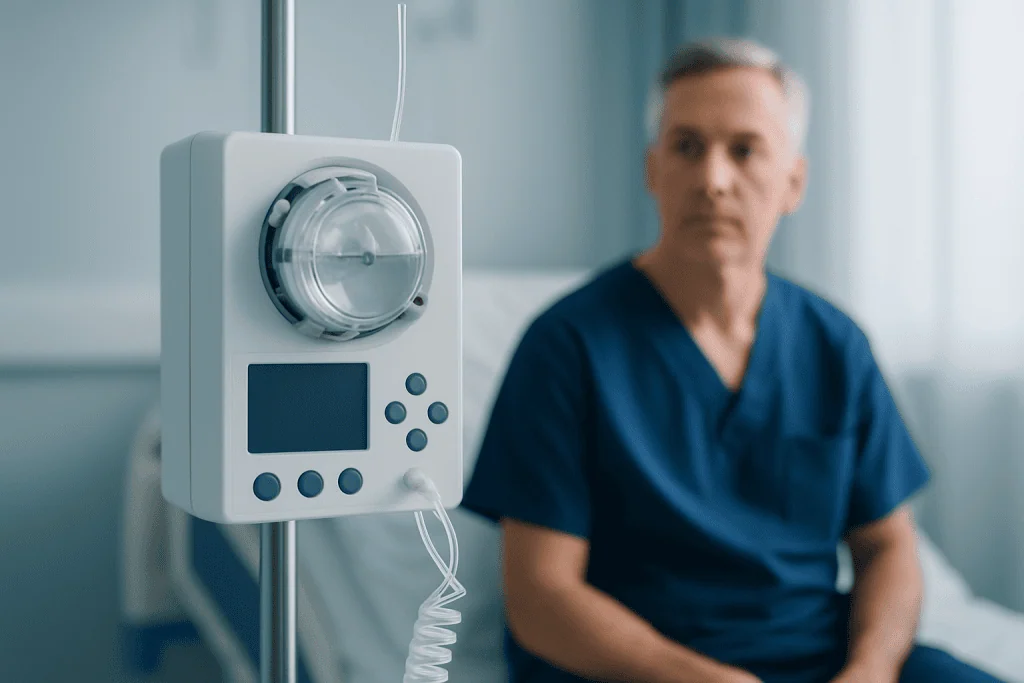
A hepatic artery infusion pump is a small, implanted device used to deliver anti-cancer medicine directly into the hepatic artery, the main artery supplying blood to the liver. The pump is usually placed beneath the skin on one side of the lower abdomen. A thin catheter connects it to the artery, allowing medication to reach liver tumors at a high local concentration.
The approach is based on the fact that many liver tumors receive most of their blood supply from the hepatic artery, whereas much of the normal liver receives blood through the portal vein. Direct arterial delivery may help target tumors in the liver while reducing the amount of medicine circulating throughout the body. It is not the same as standard intravenous chemotherapy, and it is not a cure on its own for every person.
Hepatic artery infusion is generally delivered within a broader treatment plan. Depending on the diagnosis and treatment goals, this may include systemic chemotherapy, surgery to remove liver tumors, ablation, or other liver-directed treatments. The team reviews imaging, liver function, overall health and the distribution of cancer before recommending this specialized option.
Who May Be a Candidate for a Hepatic Artery Infusion Pump?
Hepatic artery infusion pump therapy is most commonly used for carefully selected people with colorectal cancer that has spread to the liver. It may be considered when disease is limited to the liver or when liver tumors are the main immediate threat to health. In some circumstances, it may be used before surgery to try to shrink tumors, after surgery to reduce the risk of recurrence in the liver, or when tumors cannot initially be removed.
Candidacy is individualized. Doctors consider whether the hepatic artery anatomy can safely support catheter placement, how well the liver is functioning, whether there is significant disease outside the liver, prior treatments, and whether the person can attend regular pump refills and monitoring visits. Extensive liver damage, certain vascular problems, uncontrolled infection or poor overall fitness for surgery may make the procedure unsuitable.
A multidisciplinary review is important because treatment decisions for liver tumors can be complex. Patients may also discuss related diagnoses, including colorectal cancer, with an oncology team to understand how local liver treatment fits alongside whole-body therapy.
Hepatic Artery Infusion Pump Placement Steps

The hepatic artery infusion pump procedure is performed in an operating room under general anesthesia. Before surgery, imaging such as CT or MRI scans helps the team map the liver tumors and blood vessels. Some patients also undergo vascular imaging to identify anatomic variations that could affect safe drug delivery.
During the operation, the surgeon exposes a suitable artery, often the gastroduodenal artery, and places the catheter so its tip directs medication into the hepatic artery. Small branches that could allow medication to flow toward the stomach, pancreas or intestine may be closed to protect these organs. The pump is placed in a pocket under the abdominal skin and secured in position.
Before the operation is completed, the team checks that blood flow and catheter position are appropriate. After surgery, a specialized nuclear medicine or angiographic study may be used to confirm that infusion reaches the liver without unintended flow to nearby organs. These hepatic artery infusion pump steps are essential for reducing avoidable complications.
The pump is then filled through the skin using a needle during clinic visits. The exact medicine and schedule vary. A common liver-directed drug is floxuridine, but the oncology team determines the regimen based on the individual diagnosis, liver function and accompanying treatments. For patients exploring liver-directed options, liver cancer treatment may include several approaches selected according to tumor type and stage.
Recovery Timeline and Day-to-Day Care
After pump placement, most people remain in hospital for several days, although the length of stay depends on the operation, pain control, bowel recovery and any additional procedures. In the first days, mild to moderate incision discomfort, tiredness and reduced appetite are common. The care team checks the wound, blood tests and liver function, and supports a gradual return to eating and walking.
At home, light activity is usually encouraged, with gradual increases as comfort returns. Heavy lifting, strenuous abdominal exercise and activities that could strike the pump area are commonly restricted until the surgical team confirms healing. Many people need several weeks to return to usual daily routines, but recovery varies with overall health, the extent of surgery and whether other cancer treatment is being given.
Pump treatment begins only after healing and confirmation of appropriate blood flow. Follow-up includes planned pump refills, blood tests and imaging. It is important not to miss refill appointments, as the pump needs regular management even when it contains a maintenance solution rather than chemotherapy.
Can a person swim with a hepatic pump? Once the incision has fully healed and the surgeon has approved water exposure, swimming is often possible. However, people should avoid swimming while wounds are open, draining or infected, and should protect the abdominal area from direct trauma. Individual instructions may differ according to wound healing, treatment timing and the type of activity.
Benefits, Limits and Hepatic Artery Infusion Pump Complications
The potential benefit of a hepatic artery infusion pump is intensive treatment directed at liver tumors. For selected patients, it may help control liver disease, shrink tumors enough to make surgery possible, or complement surgery and systemic treatment. Results depend greatly on cancer type, how far it has spread, tumor biology, previous treatment and whether complete tumor removal is achievable.
What is the survival rate of hepatic artery infusion? There is no single survival rate that applies to everyone. Published outcomes vary substantially across patient groups, treatment settings and study designs, and hepatic artery infusion is usually one part of combined care rather than a stand-alone treatment. An oncology team can give a more meaningful outlook after reviewing the cancer’s location, treatment response and overall health.
What are the three major problems of infusion pumps? In broad terms, the main categories are mechanical problems, infection and medication-delivery complications. Mechanical concerns can include catheter blockage, leakage, dislodgement or pump malfunction; infection can affect the wound or implanted device; and medication-related problems can include unintended delivery outside the liver or injury to the bile ducts and liver. Blood clots, bleeding, fluid collections, stomach or intestinal irritation, and risks associated with anesthesia can also occur.
Not every symptom means there is a serious problem, but reporting concerns early helps the team assess the pump and protect liver health. Ongoing monitoring is particularly important because some complications may first appear through changes in liver blood tests or imaging rather than symptoms alone.
How Pump Therapy Differs From Liver Embolization
Hepatic artery infusion and liver embolization are both liver-directed treatments, but they work differently. Pump therapy provides repeated medication through an implanted device over time. Embolization is usually a catheter-based procedure in which particles, chemotherapy-containing beads or radioactive material are delivered through blood vessels to reduce blood supply to tumors or deliver local treatment.
How long does it take to recover from liver embolization? Many people go home the same day or after an overnight stay and need about one to two weeks for routine recovery, although fatigue, nausea, reduced appetite, low-grade fever and abdominal discomfort may last longer for some. This is often called post-embolization syndrome. Recovery depends on the type of embolization, liver function, tumor burden and whether complications develop.
Neither approach is automatically better than the other. A liver tumor team may consider chemoembolization or other strategies based on the cancer type, number and size of tumors, liver reserve, blood vessel anatomy and treatment goals. Some patients may receive more than one type of treatment at different points in their care.
When to Seek Medical Care
Patients should contact their treatment team promptly for fever, chills, increasing redness, warmth, drainage or separation of the incision, as these can suggest infection. New or worsening abdominal pain, persistent vomiting, marked swelling around the pump, or an inability to keep fluids down also needs timely assessment.
Urgent medical attention is important for yellowing of the eyes or skin, dark urine, pale stools, severe weakness, fainting, chest pain, shortness of breath, uncontrolled bleeding, or signs of an allergic reaction. These symptoms may have causes unrelated to the pump, but they should not be ignored during cancer treatment.
Patients should keep every scheduled pump-management and oncology visit, even if they feel well. Acibadem International’s multidisciplinary specialists and JCI-accredited hospitals diagnose and treat liver tumors and related conditions for international patients, with treatment plans coordinated across oncology, surgery and imaging services.
Frequently asked questions
Is hepatic artery infusion pump therapy chemotherapy?
Yes. The pump is used to deliver chemotherapy directly into the hepatic artery, which supplies blood to many liver tumors. It may be used alongside standard intravenous chemotherapy, surgery or other liver-directed treatments.
How long does a hepatic artery infusion pump stay in place?
The pump may remain in place for months or years if it is functioning well and ongoing liver-directed treatment or maintenance is needed. The timing depends on the treatment plan, response to therapy and whether complications occur. The oncology and surgical teams review this regularly.
Can a hepatic artery infusion pump be removed?
Yes. Hepatic artery infusion pump removal is possible through surgery when the device is no longer needed, has a significant complication, or cannot be safely used. Removal is not routinely required immediately after treatment ends, as some pumps can remain in place with appropriate follow-up.
Will the pump be visible under the skin?
The pump usually creates a small firm contour beneath the skin of the lower abdomen. Its visibility depends on body shape, the placement site and postoperative swelling. The team can explain the planned location before surgery.
Does pump therapy cause the same side effects as intravenous chemotherapy?
Some side effects can still occur, especially if systemic chemotherapy is also used. However, the pattern may differ because the medication is directed to the liver. Liver test abnormalities, bile duct injury and local delivery issues require regular monitoring.
Can someone travel with a hepatic artery infusion pump?
Travel may be possible after recovery, but it must be planned around pump refill appointments, blood tests and imaging. Patients should discuss travel plans well in advance with their treatment team and carry clear medical information about the implanted device and current treatment.
References
- National Cancer Institute
- American Cancer Society
- National Comprehensive Cancer Network
- Society of Surgical Oncology
- American Society of Clinical Oncology
This article is for general information only and is not a substitute for professional medical advice. Please consult a qualified doctor about your individual situation.
Oncology care in Turkey — second opinion and treatment plan
JCI-accredited · board-certified surgeons · reply within 24h
Add us as a Preferred Source to see more of our trusted health content across Google Search, AI Overviews and Discover.

More from the Health Library



Related Specialists

Dr. Abdullah Etöz
Aesthetic Plastic & Reconstructive Surgery
Dr. Mehmet Kuşku
Pediatrics
Dr. Seval Karakaya Atınçer
Anesthesiology
Dr. Melisa Ulufi
Inpatient Clinic Physicians Clinical Service