

Hiatal Hernia Repair During Gastric Sleeve Surgery

A hiatal hernia occurs when part of the stomach moves upward through the diaphragm, sometimes contributing to acid reflux or regurgitation. During gastric sleeve surgery, the surgeon may repair a hiatal hernia in the same laparoscopic operation if it is present and clinically relevant.
Key Takeaways
- A hiatal hernia occurs when part of the stomach moves upward through the diaphragm, sometimes contributing to acid reflux or regurgitation.
- During gastric sleeve surgery, the surgeon may repair a hiatal hernia in the same laparoscopic operation if it is present and clinically relevant.
- Repair usually involves bringing the stomach back into the abdomen and tightening the diaphragm opening with sutures.
- Because sleeve gastrectomy can worsen reflux in some patients, careful preoperative assessment is important.
- People with severe or long-standing reflux may need a different bariatric plan, such as gastric bypass, depending on specialist evaluation.
Hiatal hernia repair during gastric sleeve surgery is a common combined approach when a hernia is diagnosed before or during weight loss surgery. Repairing the opening in the diaphragm may help reduce reflux symptoms and support safer long-term outcomes for carefully selected patients.
Overview
Hiatal hernia repair during gastric sleeve surgery means correcting a hernia at the diaphragm while performing a sleeve gastrectomy for weight management. A hiatal hernia occurs when the upper part of the stomach slides through the hiatus, the natural opening in the diaphragm where the esophagus passes into the abdomen. Many hiatal hernias are small and cause few symptoms, but some contribute to gastroesophageal reflux disease, often called GERD.
Gastric sleeve surgery, also known as sleeve gastrectomy, removes a large portion of the stomach and reshapes the remaining stomach into a narrow tube. It is one option within bariatric surgery for people living with obesity when lifestyle measures and medical management have not achieved adequate results. Because the sleeve changes stomach pressure and anatomy, surgeons carefully evaluate reflux and hiatal hernia before planning the procedure.
When a hiatal hernia is present, repairing it during gastric sleeve surgery can be practical because the same small laparoscopic incisions are used. The goal is to restore the stomach and esophagus to a more normal position and reduce the chance of reflux-related symptoms after surgery. However, the decision depends on the patient’s anatomy, symptoms, test results, and overall bariatric plan.
Symptoms of Hiatal Hernia and Reflux
Some people with a hiatal hernia have no symptoms and only learn about it during endoscopy, imaging, or bariatric surgery. Others experience symptoms related to reflux, where stomach contents move back toward the esophagus. Reflux can be occasional, but persistent symptoms deserve medical evaluation because they may affect quality of life and influence the choice of weight loss procedure.
Common symptoms can include heartburn, sour or bitter taste in the mouth, regurgitation of food or fluid, burping, bloating, chest discomfort after meals, nausea, or difficulty swallowing. Symptoms may be worse after large meals, when lying down, or when bending forward. People may also report throat irritation, cough, hoarseness, or disturbed sleep related to nighttime reflux.
It is important to note that symptoms do not always match the size of the hernia. A small hernia can be associated with significant reflux, while a larger hernia may cause minimal symptoms. For this reason, bariatric teams often combine symptom review with objective testing when reflux or hiatal hernia is suspected before sleeve gastrectomy.
Causes and Risk Factors
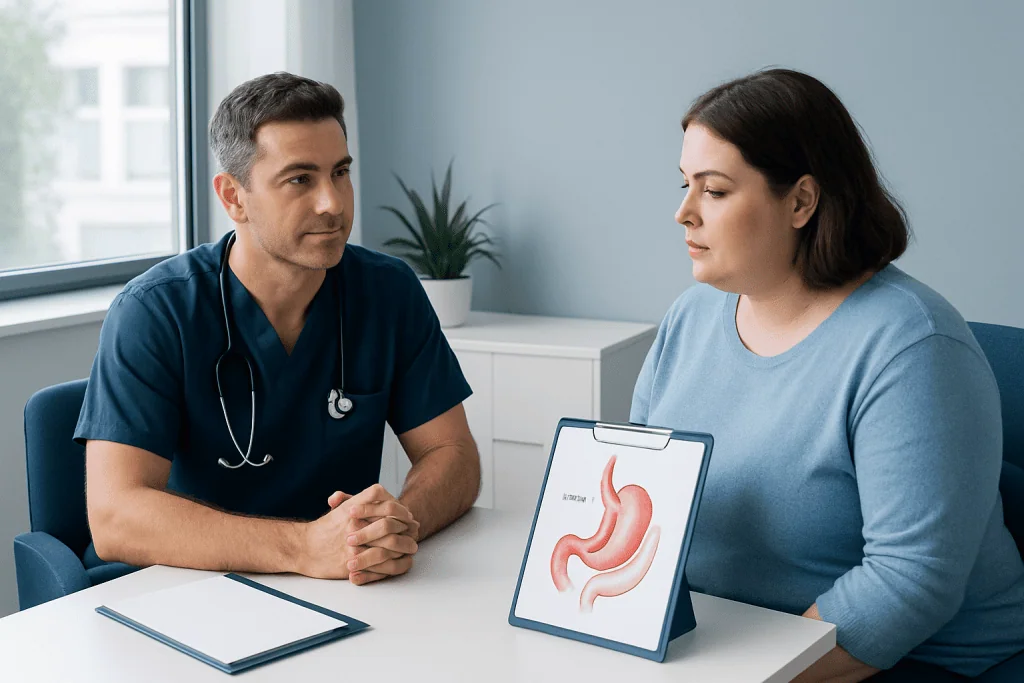
A hiatal hernia develops when the support structures around the hiatus become stretched or weakened, allowing part of the stomach to move upward. Age-related tissue changes, increased abdominal pressure, pregnancy history, chronic coughing, heavy lifting, and genetic factors may contribute. Obesity is also associated with higher pressure inside the abdomen, which can promote both hiatal hernia and reflux.
In the context of bariatric care, the relationship between obesity, reflux, and hiatal hernia is especially important. Excess body weight can increase pressure on the stomach and the lower esophageal sphincter, the valve-like area that helps prevent reflux. Weight loss after surgery may improve reflux for some people, but the sleeve procedure itself can worsen reflux in others because of changes in stomach shape and pressure.
Risk factors that may influence surgical planning include a known history of GERD, esophagitis, Barrett’s esophagus, a large or paraesophageal hernia, previous stomach or esophageal surgery, and symptoms such as difficulty swallowing. Patients should tell their surgeon about all reflux medicines, previous endoscopy results, and any history of aspiration, chronic cough, or unexplained chest symptoms.
Diagnosis Before Gastric Sleeve Surgery
Diagnosis begins with a detailed medical history and physical assessment. The bariatric team asks about heartburn, regurgitation, swallowing problems, previous reflux treatment, eating patterns, and how symptoms affect daily life. Even if a patient’s main goal is weight loss, reflux evaluation is important because it can change the recommended operation.
Upper gastrointestinal endoscopy is commonly used to examine the esophagus, stomach, and first part of the small intestine. It can show inflammation, ulcers, a visible hiatal hernia, or changes related to chronic reflux. In selected cases, additional tests may be recommended, such as a barium swallow X-ray, esophageal manometry to assess swallowing function, or pH monitoring to measure acid exposure.
Sometimes a small hiatal hernia is only identified during surgery. Laparoscopic visualization allows the surgeon to inspect the hiatus and the position of the stomach. If a clinically meaningful hernia is found and repair is appropriate, the surgeon may correct it during the same operation, provided this was discussed as a possibility during informed consent.
How Hiatal Hernia Repair Is Performed During Sleeve Gastrectomy
Most combined procedures are performed laparoscopically, using several small incisions and a camera. The surgeon first exposes the hiatus and gently moves the upper stomach back into the abdomen if it has slipped upward. The esophagus is positioned to allow an adequate length to rest below the diaphragm, which helps restore the normal anatomy of the gastroesophageal junction.
The most common repair is called cruroplasty. In this step, the right and left crura, which are muscle pillars of the diaphragm, are brought closer together with sutures to narrow the enlarged hiatus. Mesh reinforcement may be considered in selected complex or large hernias, but it is not used routinely for every patient and depends on surgeon judgment and individual risk factors.
After the hernia repair, the sleeve gastrectomy is completed by removing the outer curved portion of the stomach and creating a narrow gastric sleeve over a sizing tube. The operation is part of modern gastric laparoscopic surgery, which generally allows smaller incisions than open surgery. The surgical team checks the staple line and the repaired hiatus before completing the procedure.
Repairing a hiatal hernia at the time of sleeve surgery may reduce reflux risk compared with leaving a significant hernia untreated. However, it does not guarantee that reflux will never occur. Patients with severe GERD, significant esophageal inflammation, or certain esophageal motility problems may be advised to consider a different bariatric operation, depending on the full evaluation.
Benefits, Limitations, and Treatment Choices
The main potential benefit of repairing a hiatal hernia during sleeve gastrectomy is addressing two related problems in one anesthetic session. The combined approach may help control reflux symptoms, improve anatomical alignment, and avoid the need for a separate hernia operation later. It may also make the sleeve procedure more appropriate for patients who have a small or moderate hernia and otherwise meet criteria for sleeve gastrectomy.
There are also limitations. Sleeve gastrectomy can still lead to new or persistent reflux in some patients, even when the hiatal hernia is repaired. Hernias can recur, and symptoms may return over time. For people with severe reflux disease, Barrett’s esophagus, a very large hiatal hernia, or poor esophageal function, gastric bypass may sometimes be a more suitable bariatric option because it often provides better reflux control.
Treatment planning is individualized. Options may include medical management of reflux, lifestyle changes, sleeve gastrectomy with hiatal hernia repair, or another weight loss procedure. For people comparing procedures for obesity treatment, the safest choice is the one that balances weight loss goals, reflux control, nutritional considerations, and long-term follow-up needs.
Recovery, Prevention, and Self-care After Surgery
Recovery after combined hiatal hernia repair and sleeve gastrectomy is similar to recovery after sleeve surgery alone for many patients, although the care team may give specific instructions to protect the repair. Patients usually progress through a staged diet, beginning with liquids and gradually advancing to soft foods and then more solid textures as advised. Eating slowly, taking small sips, chewing well, and avoiding overeating are especially important.
Self-care focuses on reducing pressure on the stomach and supporting healing. Patients are often advised to avoid heavy lifting during the early recovery period, walk regularly as recommended, stay hydrated, and take prescribed acid-reducing medication if it is part of the plan. Smoking cessation is important because smoking can impair healing and worsen reflux.
Helpful reflux-reduction habits may include avoiding meals close to bedtime, limiting trigger foods if they cause symptoms, elevating the head of the bed for nighttime reflux, and following the bariatric diet plan closely. Long-term follow-up is essential after sleeve gastrectomy to monitor weight loss, nutrition, reflux symptoms, and vitamin or mineral needs.
When to See a Doctor
Patients considering sleeve gastrectomy should see a qualified bariatric surgeon if they have heartburn, regurgitation, difficulty swallowing, chronic cough, hoarseness, or a known hiatal hernia. These symptoms do not automatically rule out sleeve surgery, but they should be evaluated before the final procedure choice is made. A careful assessment helps the team decide whether hernia repair is needed and whether sleeve gastrectomy is the best option.
After surgery, patients should contact their care team if reflux symptoms are persistent, worsening, or interfering with eating and sleep. They should also seek prompt medical advice for ongoing vomiting, inability to keep fluids down, progressive swallowing difficulty, fever, severe abdominal pain, black stools, or chest symptoms. These problems are not always related to the hernia repair, but they require professional evaluation.
For international patients, Acibadem International’s multidisciplinary specialists and JCI-accredited hospitals diagnose and treat bariatric and digestive conditions, including hiatal hernia and sleeve gastrectomy planning. A personalized review of symptoms, test results, and previous treatments can help determine the most appropriate and safe approach.
Frequently asked questions
Can a hiatal hernia be repaired during gastric sleeve surgery?
Yes, a hiatal hernia can often be repaired during the same laparoscopic operation as gastric sleeve surgery. The surgeon brings the stomach back into the abdomen and tightens the diaphragm opening with sutures. Whether this is appropriate depends on the size of the hernia, reflux history, and overall surgical plan.
Does hiatal hernia repair prevent reflux after sleeve gastrectomy?
Repairing a hiatal hernia may reduce the risk of reflux or improve existing symptoms in selected patients. However, it cannot guarantee that reflux will not occur after sleeve surgery. Some people may still need medication, lifestyle changes, or further evaluation if symptoms persist.
Is gastric sleeve surgery safe for people with GERD?
Some people with mild or well-controlled reflux may still be candidates for sleeve gastrectomy, especially if a hiatal hernia is repaired. People with severe GERD, Barrett’s esophagus, or major esophageal inflammation may need a different approach. A bariatric surgeon and gastroenterologist can help choose the safest option.
Will repairing the hernia make recovery longer?
For many patients, recovery is similar to standard sleeve gastrectomy recovery, although instructions may be tailored to protect the repair. Patients typically follow a staged diet, avoid heavy lifting for a period of time, and attend follow-up appointments. Individual recovery varies based on health status and the complexity of the hernia.
Can a hiatal hernia come back after repair?
Yes, recurrence is possible after any hiatal hernia repair, although many repairs remain stable. Factors such as tissue quality, hernia size, weight changes, chronic coughing, and increased abdominal pressure can influence recurrence risk. Long-term follow-up helps detect and manage symptoms early.
What tests are needed before sleeve surgery if reflux is present?
Many patients have an upper endoscopy before bariatric surgery to check for esophagitis, hiatal hernia, or other stomach conditions. Depending on symptoms, doctors may also recommend a barium swallow, esophageal manometry, or pH monitoring. These tests help determine whether sleeve surgery, sleeve with hernia repair, or another procedure is most appropriate.
References
- American Society for Metabolic and Bariatric Surgery
- Society of American Gastrointestinal and Endoscopic Surgeons
- American College of Gastroenterology
- National Institute of Diabetes and Digestive and Kidney Diseases
- International Federation for the Surgery of Obesity and Metabolic Disorders
This article is for general information only and is not a substitute for professional medical advice. Please consult a qualified doctor about your individual situation.
Gastric Sleeve Surgery in Turkey — costs, top hospitals & a free quote
JCI-accredited · board-certified surgeons · reply within 24h

Related Treatments
Related Conditions
More from the Health Library



Related Specialists

Prof. Dr. Tayfun Karahasanoğlu
General Surgery
Prof. Dr. Güralp Onur Ceyhan
General Surgery
Prof. Dr. Volkan Özben
General Surgery
Assoc. Prof. Dr. Halil Kara
General Surgery