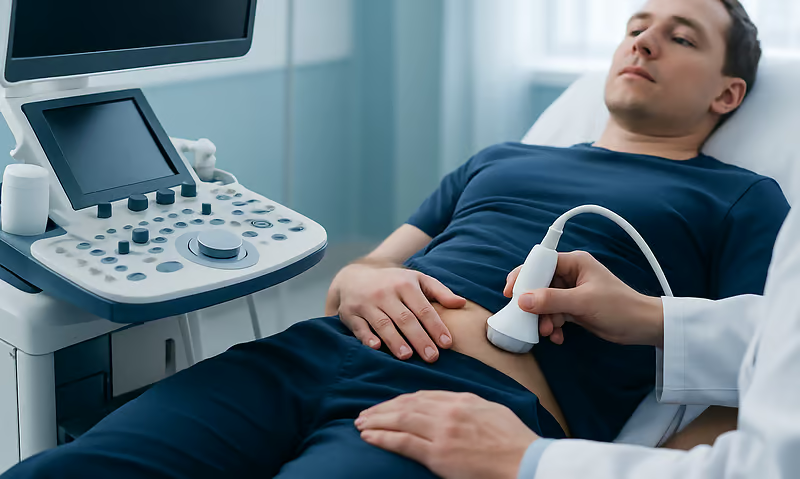
How Can You Get Rid of Body Acne? Causes, Explanations, and Next Steps
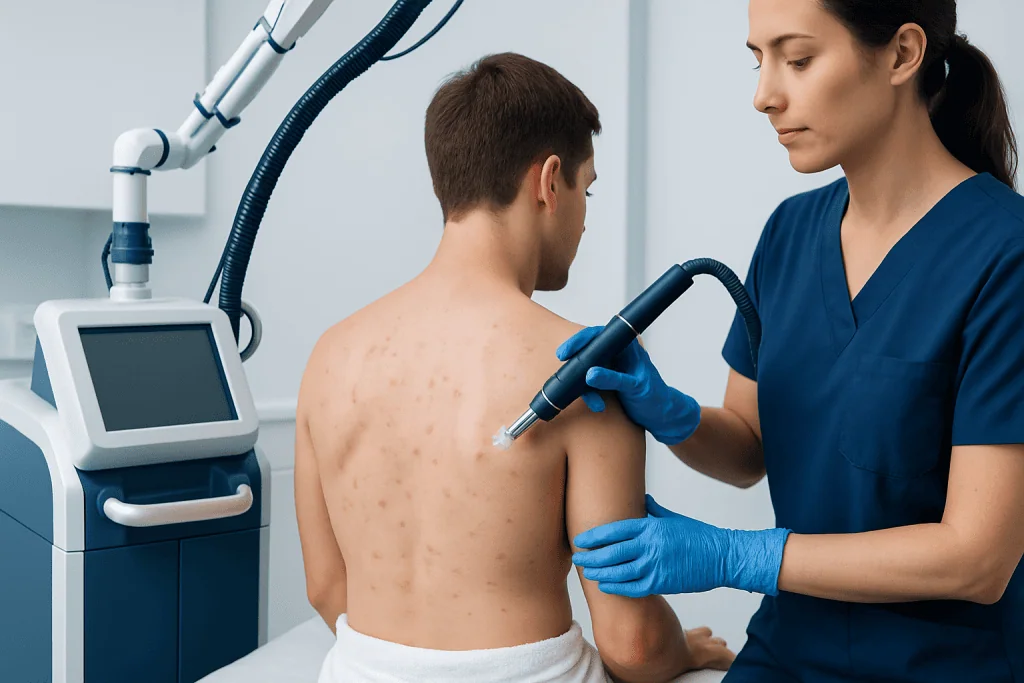
Body acne develops when pores become blocked by oil, dead skin cells and sometimes bacteria, leading to pimples on the back, chest, shoulders or buttocks. Sweat, friction, tight clothing, oily products and some medicines can worsen breakouts, but acne is not caused by poor hygiene.
Key Takeaways
- Body acne develops when pores become blocked by oil, dead skin cells and sometimes bacteria, leading to pimples on the back, chest, shoulders or buttocks.
- Sweat, friction, tight clothing, oily products and some medicines can worsen breakouts, but acne is not caused by poor hygiene.
- A gentle routine with an acne-active wash, showering after sweating and avoiding picking can improve mild body acne gradually.
- Treatment usually needs several weeks of consistent use before clearer skin is noticeable.
- Medical review is important for painful nodules, scarring, sudden severe acne, signs of infection or acne that does not improve with self-care.
Body acne is common and is often manageable with consistent skin care, breathable clothing and appropriate over-the-counter acne treatments. Persistent, painful or scarring breakouts should be assessed by a dermatologist, who can confirm the cause and recommend targeted care.
Overview: How Can You Get Rid of Body Acne?
Body acne is very common and is usually harmless, although it can be uncomfortable, itchy or frustrating. For many people, the answer to how can you get rid of body acne is a consistent combination of gentle cleansing, reducing sweat and friction on the skin, and using an acne treatment containing an evidence-based active ingredient. Improvement is gradual rather than immediate, and a routine often needs to be followed for several weeks before its full benefit is clear.
Breakouts may occur on the back, chest, shoulders, upper arms, neck or buttocks. They can appear as whiteheads, blackheads, small red bumps or pus-filled spots. Deeper, tender lumps are more likely to leave scars and deserve earlier medical attention.
Most body acne does not signal a serious underlying health problem. However, a person should seek medical advice sooner if spots are very painful, widespread, rapidly worsening, leaving scars or accompanied by fever, marked redness or drainage. A clinician can determine whether the rash is acne or another condition that needs different treatment.
During an assessment, a doctor or dermatologist usually examines the skin and asks about the timing of symptoms, skin and hair products, sports equipment, clothing, medicines, menstrual or hormonal changes, and family history. Tests are not routinely needed, but they may be considered when symptoms suggest a hormonal condition, infection or another skin disorder.
What Body Acne Looks Like—and What It May Not Be
Acne begins in hair follicles, which are tiny openings in the skin connected to oil glands. When oil and dead skin cells collect in a follicle, they can form a blocked pore. Blackheads and whiteheads are non-inflamed blocked pores, while red papules, pustules and deeper nodules are inflamed forms of acne.
Back acne is sometimes called “bacne,” but it is the same process as acne elsewhere. The back and chest have many oil glands, and these areas are often exposed to sweat, pressure and rubbing from clothing, backpacks or sports gear. Acne on the buttocks may also be folliculitis, an inflammation of hair follicles that can look similar but may have different triggers and treatment needs.
Not every acne-like eruption is acne. Folliculitis may cause clusters of similar-looking itchy or tender bumps. Heat rash tends to develop after overheating and sweating. Contact dermatitis can occur after exposure to an irritating detergent, fragrance or fabric. A fungal follicle infection may cause very itchy, uniform bumps, especially on the chest and back.
Because these conditions can overlap in appearance, it is sensible not to assume that every bump requires stronger acne products. If a rash is itchy, sudden, unusually painful, spreading or unresponsive to a reasonable acne routine, professional evaluation can help avoid unnecessary irritation and identify the most suitable approach.
Why Body Acne Develops

Acne is not caused by being unclean. It develops through a combination of increased oil production, blocked follicles, inflammation and changes in the skin microbiome. Hormonal shifts can increase oil production, which is why acne often begins during puberty and may flare around menstrual periods, during pregnancy or with certain hormonal conditions.
Friction and pressure can aggravate acne in areas covered by tight clothing, bras, helmets, shoulder straps or athletic equipment. This pattern is sometimes called acne mechanica. Sweat itself does not cause acne, but staying in damp clothing or allowing sweat, oil and product residue to remain on the skin can contribute to clogged follicles and irritation.
Heavy or oily body lotions, sunscreens, hair products and laundry additives may worsen breakouts in some people. Choosing products labeled non-comedogenic, meaning less likely to clog pores, can be helpful. Hair conditioner and styling products can also run onto the back or chest during showering, so rinsing the skin well afterward may reduce residue.
Some medicines can trigger or worsen acne-like eruptions. Examples include corticosteroids, testosterone or anabolic steroids, lithium and certain anti-seizure medicines. A person should not stop prescribed medicine without medical advice. Instead, they can discuss the skin changes with the clinician who prescribed it, as alternatives or supportive acne treatment may be possible.
A Practical Routine for Mild Body Acne
A simple routine is often easier to maintain than using many products at once. Showering after exercise or heavy sweating, changing out of damp workout clothing promptly and washing the affected skin gently can help. Scrubbing with brushes, rough loofahs or abrasive exfoliants may worsen inflammation, so a soft washcloth or clean hands are usually better choices.
An over-the-counter wash containing benzoyl peroxide can reduce acne-related bacteria and inflammation, while salicylic acid can help unclog pores. Either may be useful for mild body acne, but it is best to introduce one product at a time and use it as directed on the label. Benzoyl peroxide can bleach towels, clothing and bedding, and both ingredients may cause dryness or stinging, particularly at first.
For persistent clogged pores, a topical retinoid such as adapalene may be considered where available without prescription. Retinoids help prevent new blocked follicles but can cause dryness and increased sensitivity during the first weeks. They are generally avoided during pregnancy unless a qualified clinician specifically advises otherwise.
After washing, applying a light, fragrance-free, non-comedogenic moisturizer can support the skin barrier and make acne treatments easier to tolerate. Picking, squeezing or scratching spots should be avoided because it increases inflammation, infection risk and the chance of discoloration or scarring. Consistency matters: changing products every few days can make it difficult to know what is helping.
Lifestyle Adjustments That May Help
Clothing and equipment choices can make a meaningful difference. Loose, breathable fabrics may reduce heat and rubbing, especially during exercise. Washing sports bras, shirts, bedding and towels regularly helps remove sweat, oil and product residue. Helmets, pads and backpack straps should be cleaned when possible, and friction on active breakouts should be minimized.
It can be useful to wash the body after rinsing conditioner from the hair, particularly for people whose breakouts are concentrated on the shoulders and upper back. Choosing oil-free or non-comedogenic sunscreen and body products may also reduce the chance of pore blockage. A patch test or gradual introduction is sensible for anyone with sensitive skin.
Diet does not explain all acne, and restrictive diets are not routinely necessary. Some individuals notice that certain foods appear to coincide with flares, but it is more helpful to look for consistent personal patterns than to eliminate broad food groups. A balanced eating pattern, adequate sleep and stress-management practices support general health, though they are not stand-alone cures for acne.
Sun exposure is not an acne treatment. Although a tan can temporarily make spots less noticeable, ultraviolet exposure can irritate skin, worsen dark marks after acne and increase skin cancer risk. Daily broad-spectrum sun protection on exposed areas remains important, preferably with a product that is suitable for acne-prone skin.
Medical Treatments and Diagnostic Steps
A dermatologist may recommend prescription treatment when acne is moderate to severe, causes pain or scars, affects wellbeing, or has not improved after consistent self-care. Options may include prescription-strength topical retinoids, topical antimicrobials used alongside benzoyl peroxide, oral antibiotics for limited periods, hormonal therapies for appropriate patients, or oral isotretinoin for severe or treatment-resistant acne. The best option depends on the type and severity of acne, medical history and pregnancy plans.
Oral antibiotics are not usually used alone or indefinitely because limiting antimicrobial resistance is important. When prescribed, they are commonly combined with topical treatment and reviewed regularly. Isotretinoin is highly effective for selected cases but requires close specialist monitoring because it can cause significant side effects and can seriously harm a developing fetus.
At the appointment, the clinician will look for blackheads, which support an acne diagnosis, and assess the location, degree of inflammation and any scars or dark marks. They may ask whether lesions itch, whether they began after a new medicine or product, and whether there are signs of excess androgen activity, such as irregular periods or increased facial hair.
Blood tests or other investigations are only considered when the history or examination points to another cause, such as a hormonal disorder. If the diagnosis is uncertain, a dermatologist may assess for folliculitis, contact dermatitis or other inflammatory skin conditions. Acibadem International’s multidisciplinary specialists and JCI-accredited hospitals can assess persistent skin concerns and coordinate care for international patients.
When to Seek Medical Care
Medical care is advisable when body acne includes deep, painful nodules or cyst-like lumps, is spreading quickly, is causing scars, or has not improved after about two to three months of steady, appropriate non-prescription treatment. Earlier assessment can reduce the likelihood of lasting scars and may provide relief sooner.
A person should arrange prompt medical review if there is fever, rapidly expanding redness, warmth, severe pain, significant swelling or pus drainage, as these may indicate an infection rather than uncomplicated acne. Urgent care may be needed if there are symptoms of a severe allergic reaction, such as facial swelling, breathing difficulty or widespread hives after using a skin product.
It is also worth discussing new or severe acne with a clinician when it starts suddenly in adulthood, follows a new medication, or occurs with irregular periods, scalp hair thinning, increased body hair or unexpected weight changes. These features do not always indicate a hormonal condition, but they can guide appropriate assessment.
Body acne can affect confidence, sleep, sport participation and day-to-day comfort. Seeking help is appropriate if acne is causing distress, avoidance of activities or low mood. Effective treatment plans are available, and care can be adjusted over time as the skin responds.
Frequently asked questions
How long does it take for body acne to clear?
Mild body acne may begin to improve after several weeks of consistent treatment, but clearer skin often takes two to three months. Acne treatments work by preventing new spots as well as treating existing ones, so regular use is important. A dermatologist can help if there is no meaningful improvement after a consistent trial.
Should body acne be scrubbed or exfoliated every day?
No. Aggressive scrubbing and frequent abrasive exfoliation can irritate the skin and make inflammation worse. Gentle washing is usually preferable, and a salicylic acid wash may provide chemical exfoliation without harsh physical scrubbing.
Can sweat cause body acne?
Sweat does not directly cause acne, but it can combine with oil, friction and tight clothing to aggravate breakouts. Showering after exercise and changing out of sweaty clothing promptly can help reduce this effect. Clean, breathable workout clothing is also useful.
What is the best body wash for body acne?
A wash containing benzoyl peroxide or salicylic acid may help many people with mild body acne. Benzoyl peroxide is often useful for inflamed pimples, while salicylic acid helps unclog pores. The best choice depends on skin sensitivity and the type of breakouts, so it is sensible to start with one active product rather than several.
Why do I get acne on my back but not my face?
The back has many oil glands and is often exposed to sweat, pressure and rubbing from clothing, sports equipment or backpacks. Hair and body products that run onto the back can also contribute. A clinician can check whether the bumps are acne or a similar condition, such as folliculitis.
Can body acne leave scars?
Yes, especially deep, inflamed or repeatedly picked spots can leave raised, indented or discolored marks. Early treatment of painful nodules and avoiding squeezing can lower the risk. A dermatologist can recommend acne treatment and discuss options for persistent scars after active acne is controlled.
References
- American Academy of Dermatology
- National Institute of Arthritis and Musculoskeletal and Skin Diseases
- National Health Service
- Mayo Clinic
- American Academy of Family Physicians
This article is for general information only and is not a substitute for professional medical advice. Please consult a qualified doctor about your individual situation.
Acne in Turkey — costs, top hospitals & a free quote
JCI-accredited · board-certified surgeons · reply within 24h
Add us as a Preferred Source to see more of our trusted health content across Google Search, AI Overviews and Discover.