How Much Radiation Is Dangerous: How It Works, Results and What to Expect

Radiation risk depends on dose, dose rate, radiation type, and the part of the body exposed. Most people receive low levels of natural background radiation throughout life without developing radiation sickness.
Key Takeaways
- Radiation risk depends on dose, dose rate, radiation type, and the part of the body exposed.
- Most people receive low levels of natural background radiation throughout life without developing radiation sickness.
- Acute radiation sickness is associated with high whole-body doses delivered over a short period, usually in major accidents or radiation emergencies.
- Medical imaging and radiotherapy use radiation differently and are carefully planned to balance benefit and risk.
- A suspected high-dose exposure, contamination event, or new symptoms after an incident needs urgent medical assessment.
How much radiation is dangerous depends on the type of radiation, the total dose, how quickly it is received, and whether the exposure affects the whole body or a small area. Everyday background radiation and medically appropriate imaging are usually low-risk, while large doses received over a short time can injure tissue and may cause acute radiation syndrome.
Overview: how much radiation is dangerous?
How much radiation is dangerous cannot be answered with one universal number. The health effect depends on the kind of radiation involved, the amount absorbed, how rapidly it was received, whether exposure was to the whole body or one area, and a person’s age and health. Low-level exposure from natural sources is part of ordinary life, whereas a high dose delivered quickly can damage cells and organs.
Radiation is commonly measured in units such as millisieverts (mSv), which help estimate potential health effects from ionizing radiation. A person’s risk is not determined by a single reading alone: clinicians and radiation safety specialists also consider the source, duration, distance from the source, shielding, and possible contamination of skin, clothing, food, or water.
It is helpful to distinguish exposure from contamination. Exposure means radiation passes through or reaches the body; it does not necessarily make a person radioactive. Contamination means radioactive material is on the skin, clothing, or inside the body, and it requires specific safety and decontamination measures.
How radiation works in the body
Ionizing radiation has enough energy to remove electrons from atoms. When it passes through living tissue, it can directly damage DNA or create reactive molecules that injure cells. The body can repair much of this damage, especially after small exposures, but repair becomes less effective as dose rises or exposure occurs rapidly.
Some tissues are more sensitive because their cells divide frequently. These include bone marrow, the digestive tract, reproductive organs, and a developing fetus. Effects may be deterministic, meaning they occur above a threshold dose and become more severe with greater exposure, or stochastic, meaning the chance of an effect such as cancer may increase with dose without a clear threshold for an individual.
Non-ionizing radiation, such as visible light, radio waves, and most everyday electromagnetic signals, works differently from ionizing radiation. Its risks are generally related to heating or tissue effects at sufficiently high energy levels rather than DNA damage in the same way as X-rays or gamma rays.
How much radiation is actually dangerous?
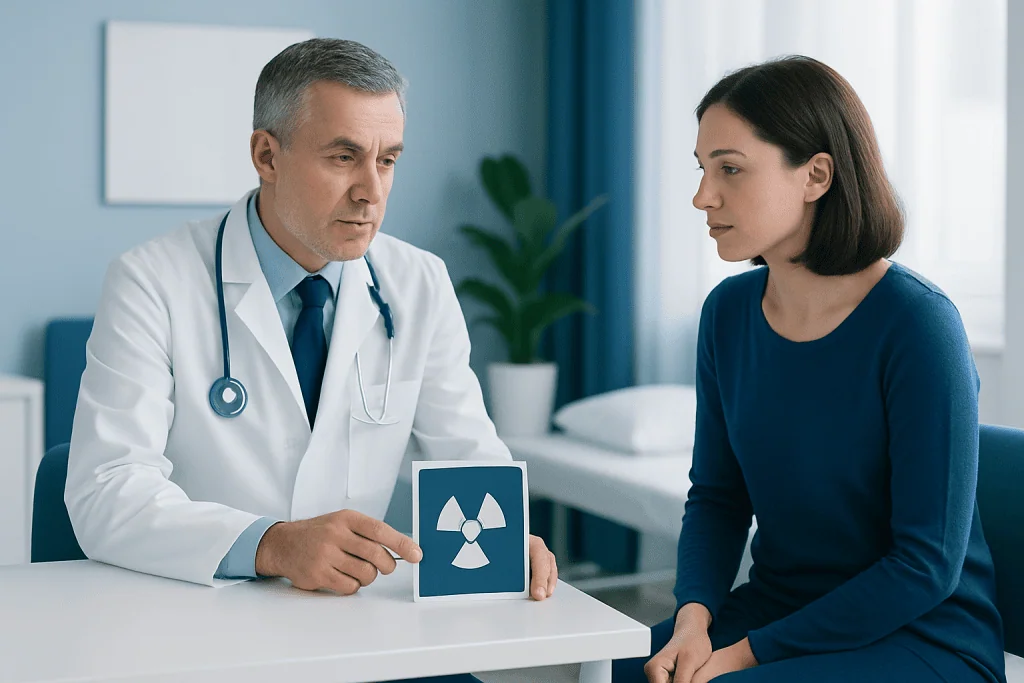
For most people, routine environmental exposure is low and does not cause immediate illness. Natural background radiation varies by location, altitude, home construction, and radon levels. Medical tests also add exposure, but imaging is ordered when the expected diagnostic benefit is greater than the potential risk, and teams use the lowest practical dose.
Acute health effects become a concern after a high whole-body dose received in a short time. Whole-body exposures around 1,000 mSv (1 sievert) over a brief period may cause symptoms such as nausea, vomiting, fatigue, or temporary changes in blood cell counts. Higher doses can cause more serious injury and require urgent specialist care. These levels are far above those from ordinary daily life or a standard diagnostic X-ray.
For long-term risk, there is no single level that can predict what will happen to one individual. The likelihood of radiation-related cancer may rise with cumulative ionizing radiation dose, but the added risk from a single low-dose examination is generally small. A clinician can help determine whether a scan is necessary and whether another test, such as ultrasound or MRI, could answer the same question.
What is the 7/10 rule for radiation?
The “7/10 rule” is a practical radiation safety rule used around a point source of radiation. It states that if the distance from the source is doubled, the dose rate falls to about one-quarter because radiation intensity follows the inverse-square law. Increasing distance is therefore one of the most effective ways to reduce exposure when a source cannot be removed immediately.
The rule should not be interpreted as a medical threshold or a statement that a person is safe for seven minutes but unsafe for ten. It is a simplified training concept, and real exposure depends on source strength, radiation type, shielding, time near the source, and whether radioactive material has contaminated a person or the environment.
Radiation protection is often summarized as time, distance, and shielding. Spending less time near a source, moving farther away, and using appropriate shielding can reduce exposure. During a public radiation emergency, people should follow instructions from public health and emergency authorities rather than relying on general rules alone.
At what point is radiation dangerous?
Radiation may become dangerous at different points depending on the outcome considered. Skin injury can occur after a high local dose, while acute radiation syndrome requires substantial whole-body or near-whole-body exposure over a short period. Long-term cancer risk is assessed differently and depends on cumulative exposure, age at exposure, sex, and the organs involved.
Radiation delivered intentionally for cancer treatment is a special case. Radiation therapy uses carefully calculated, targeted doses to damage cancer cells while limiting injury to nearby healthy tissue. It is planned by a radiation oncology team, often using imaging, computer-based dose calculations, and repeated treatment sessions to improve precision.
A person may be considered for radiotherapy when it is expected to treat, control, or relieve symptoms from cancer, sometimes alongside surgery, systemic treatment, or both. The plan is individualized according to cancer type, location, stage, prior treatment, and overall health. Side effects depend largely on the treated area and are monitored throughout care.
How radiation treatment works, what to expect, and recovery
Before radiotherapy, the team reviews medical history, imaging, and pathology results. A planning appointment may include a simulation scan and positioning supports to help the patient remain in the same position at each visit. The radiation oncologist and medical physicist then develop a treatment plan that aims to cover the target while protecting nearby organs as much as possible.
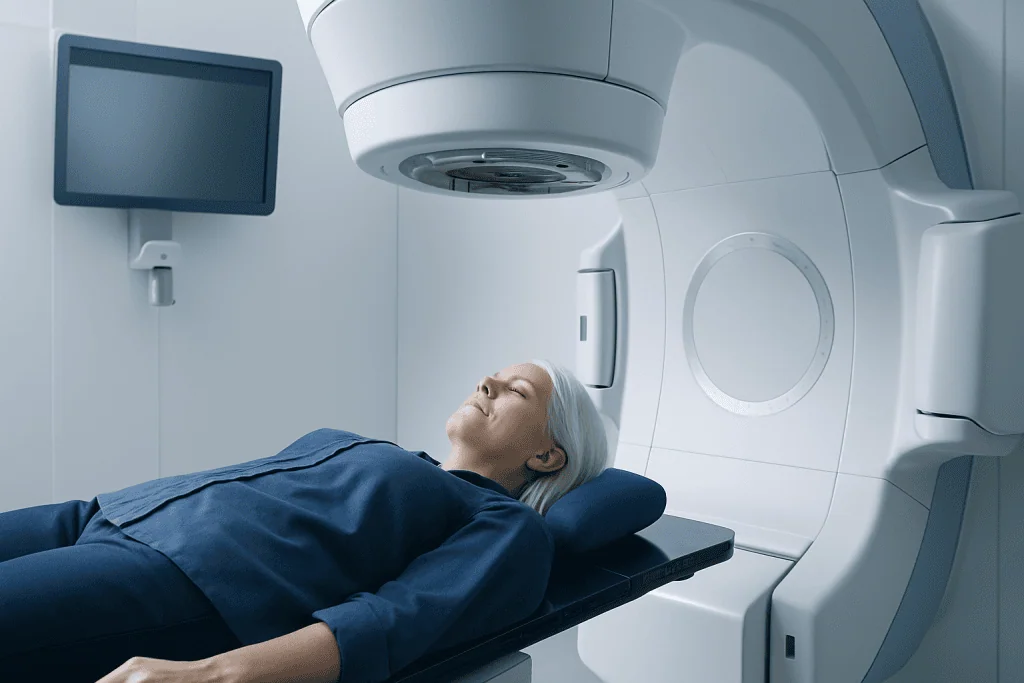
During external-beam treatment, the patient lies still on a treatment table while a machine moves around the body and directs radiation from outside the body. The procedure itself is painless, and the patient is not radioactive afterward. Treatment may be given once or several times depending on the care plan; internal radiation treatments have different precautions, which the clinical team explains in advance.
Recovery varies by the body area treated and the total treatment course. Tiredness, skin changes in the treatment field, and site-specific effects can develop gradually and may continue for a short period after treatment ends. Follow-up appointments assess recovery, manage symptoms, and monitor the treatment response. Acibadem International’s multidisciplinary specialists and JCI-accredited hospitals provide diagnosis and treatment planning for international patients when appropriate.
How long can you live with radiation exposure?
Most people who have had low-level radiation exposure can expect to live normally. Natural background exposure, air travel, and appropriately used diagnostic imaging do not cause acute radiation sickness. A past exposure does not by itself determine life expectancy; its significance depends on the dose, timing, source, and whether any organ injury occurred.
After a serious radiation event, outlook varies widely. People with lower doses may recover fully with observation and supportive care, while very high whole-body doses can cause life-threatening damage to bone marrow, the digestive system, and other organs. Early expert assessment is important because symptoms alone cannot reliably determine the absorbed dose.
Long-term follow-up may be advised after substantial exposure. It can include review of medical history, monitoring for organ-specific concerns, and age-appropriate cancer screening. Healthcare professionals avoid unnecessary radiation but do not usually recommend additional testing solely because a person is worried about a minor or routine exposure.
When to seek medical care
Urgent medical advice is appropriate after a known or suspected high-dose exposure, an industrial or laboratory incident, a radiological emergency, or possible radioactive contamination. People should follow official emergency instructions, move away from the source if safe, remove contaminated outer clothing when directed, and avoid spreading material to others. Emergency teams can provide decontamination and dose assessment.
Medical assessment is also important for vomiting, severe weakness, burns or redness after a known radiation incident, or symptoms that occur after an event involving a radiation source. These symptoms have many possible causes, but they should not be ignored when there is a credible exposure history.
For questions about a planned scan or past medical imaging, a doctor can explain why the test is recommended and how it compares with alternatives. Pregnant people or those who may be pregnant should tell the imaging team before an examination, particularly if the abdomen or pelvis may be exposed. This allows the team to select the safest appropriate approach.
Frequently asked questions
Can a single X-ray cause radiation sickness?
A standard diagnostic X-ray does not deliver the high whole-body dose needed to cause acute radiation sickness. Imaging teams use established safety practices and tailor examinations to the clinical question. A person with concerns about cumulative imaging can discuss their records and alternatives with their doctor.
Is CT radiation dangerous?
A CT scan generally uses more ionizing radiation than a plain X-ray, but it can provide important information that changes diagnosis or treatment. The risk from one medically justified scan is usually small, while the benefit may be significant. Clinicians consider other options when they can provide the needed information.
Are people radioactive after radiation therapy?
After external-beam radiation therapy, patients are not radioactive and can generally be around other people normally. Some internal radiation treatments may involve temporary precautions, depending on the radioactive source and treatment method. The treating team provides personalized instructions when precautions are needed.
Can radiation exposure be removed from the body?
Radiation exposure itself cannot be washed away once it has occurred, but radioactive contamination on the skin or clothing can often be removed through appropriate decontamination. Removing outer clothing and washing gently with soap and water may be advised in an emergency. People should follow instructions from emergency authorities and healthcare professionals.
Does living near a radiation source always cause illness?
Not necessarily. Health risk depends on the actual measured dose, duration of exposure, source control measures, and environmental monitoring. Regulatory agencies set limits intended to protect workers and the public. Anyone concerned about a local source should seek information from relevant public health or radiation safety authorities.
Should someone avoid medical imaging because of radiation concerns?
Medical imaging should not be avoided when it is needed for diagnosis or treatment planning. The healthcare team weighs expected benefits against potential risks and uses the lowest suitable radiation dose. Patients can ask why the examination is needed and whether a non-radiation option is appropriate.
References
- World Health Organization
- International Atomic Energy Agency
- United States Centers for Disease Control and Prevention
- International Commission on Radiological Protection
- National Cancer Institute
This article is for general information only and is not a substitute for professional medical advice. Please consult a qualified doctor about your individual situation.
Explore treatments in Turkey — costs, top hospitals & a free quote
JCI-accredited · board-certified surgeons · reply within 24h
Add us as a Preferred Source to see more of our trusted health content across Google Search, AI Overviews and Discover.