How Neuromuscular Diseases Are Diagnosed: Blood Tests, Genetics, Imaging, and More

Diagnosis begins with symptoms, family history, and a focused neurological examination. Blood tests can look for muscle injury, inflammation, autoimmune markers, and metabolic causes.
Key Takeaways
- Diagnosis begins with symptoms, family history, and a focused neurological examination.
- Blood tests can look for muscle injury, inflammation, autoimmune markers, and metabolic causes.
- Genetic testing helps confirm inherited neuromuscular conditions and may reduce the need for invasive tests.
- EMG, nerve conduction studies, and imaging help show whether the problem is in muscle, nerve, or the neuromuscular junction.
- Some people need a muscle or nerve biopsy when the cause remains unclear after other tests.
- An accurate diagnosis often involves a multidisciplinary team and may take time.
Neuromuscular disease diagnosis usually combines a detailed medical history, neurological examination, laboratory tests, electrical studies, imaging, and sometimes genetic testing or biopsy. Because these conditions can affect muscles, nerves, or the connection between them, diagnosis is often a step-by-step process designed to identify the exact cause and guide treatment.
Overview: Why Diagnosing Neuromuscular Diseases Can Be Complex
Neuromuscular diseases are a broad group of conditions that affect muscles, peripheral nerves, motor neurons, or the neuromuscular junction, which is the connection between nerve and muscle. Because these structures work together to create movement, symptoms can overlap. Weakness, fatigue, cramps, numbness, muscle wasting, or problems with walking may appear similar at first, even when the underlying causes are quite different.
For this reason, neuromuscular disease diagnosis is rarely based on a single test. Doctors usually combine a careful symptom review with examination findings and targeted investigations. The goal is not only to confirm that a neuromuscular disorder is present, but also to determine which type it is, how active it is, and whether there may be treatable causes.
Some neuromuscular diseases are inherited, while others are autoimmune, inflammatory, metabolic, infectious, toxic, or degenerative. Conditions such as muscular dystrophies, peripheral neuropathies, myasthenia gravis, inflammatory myopathies, and motor neuron diseases may each require a slightly different diagnostic pathway. This stepwise approach helps avoid unnecessary testing and supports more personalized care.
Symptoms and Medical History: The First Clues
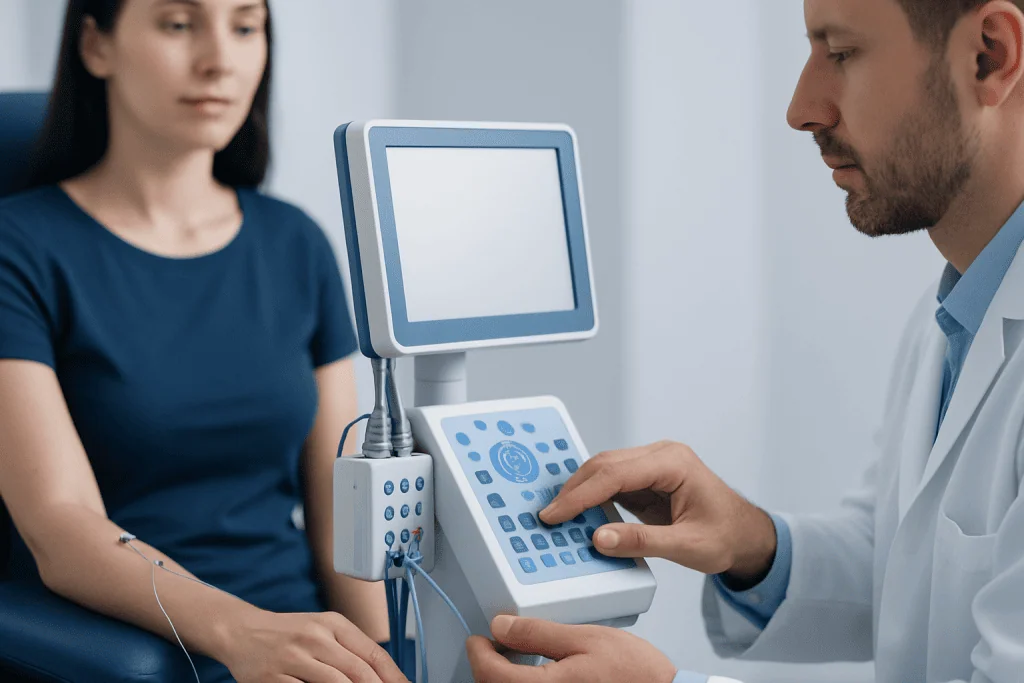
The diagnostic process often starts with a detailed discussion of symptoms. Doctors may ask when weakness began, whether it is getting worse, and which muscles are affected first. For example, weakness in the hips and shoulders may suggest a muscle disorder, while numbness or burning pain in the hands and feet may point more toward a nerve problem.
Associated symptoms can provide important clues. Drooping eyelids, double vision, difficulty swallowing, shortness of breath, muscle twitching, loss of balance, or exercise intolerance can all help narrow the possibilities. Doctors also ask about medications, alcohol use, infections, autoimmune diseases, thyroid problems, diabetes, and exposure to toxins, since these can contribute to neuromuscular symptoms.
Family history is especially important. A history of relatives with muscle weakness, walking problems, early falls, nerve disease, or unexplained disability may suggest a genetic condition. During the physical and neurological examination, the doctor assesses muscle strength, reflexes, sensation, coordination, muscle bulk, tone, and gait. This examination helps determine whether the likely source of symptoms is muscle, nerve, or the communication between the two.
Blood Tests and Other Laboratory Studies

Blood tests are often one of the first investigation steps in neuromuscular disease diagnosis. These tests do not diagnose every condition on their own, but they can show patterns that point in the right direction. One commonly checked marker is creatine kinase, or CK, an enzyme that may rise when muscle fibers are damaged. Elevated CK can be seen in muscular dystrophies, inflammatory muscle disease, and some toxic or metabolic muscle disorders.
Doctors may also order tests for thyroid function, vitamin deficiencies, blood sugar problems, liver and kidney function, inflammatory markers, and electrolytes. Depending on the person’s symptoms, additional blood work may look for autoimmune antibodies, markers of infection, or evidence of metabolic disease. For suspected disorders of the neuromuscular junction, antibody tests may help evaluate conditions such as myasthenia gravis.
In some cases, urine tests or specialized metabolic studies are useful, especially when episodes of exercise-related muscle breakdown, severe cramps, or childhood-onset weakness are present. Laboratory studies are most helpful when they are interpreted together with examination findings and more specific tests, rather than in isolation.
Genetic Testing: Finding Inherited Causes
Genetic testing has become an important part of diagnosing many neuromuscular conditions. If a doctor suspects an inherited disorder based on symptoms, age of onset, examination findings, or family history, testing may help identify the exact gene involved. This can confirm diagnoses such as certain muscular dystrophies, hereditary neuropathies, spinal muscular atrophy, or inherited metabolic muscle diseases.
Modern testing may involve a single-gene test, a panel of genes linked to a group of disorders, or broader approaches such as exome sequencing in selected situations. A confirmed genetic diagnosis can help patients and families better understand the condition, expected course, inheritance pattern, and whether other relatives may benefit from counseling or testing.
Genetic results are not always simple. Sometimes testing finds a variant of uncertain significance, meaning a genetic change is detected but its role is not yet fully understood. In these situations, doctors may combine the genetic result with examination findings, blood tests, imaging, or biopsy results before making a final diagnosis. Genetic counseling can help explain what the findings do and do not mean.
EMG, Nerve Conduction Studies, and Other Neurophysiology Tests
Electrodiagnostic testing is often central to neuromuscular disease diagnosis. Nerve conduction studies measure how well electrical signals travel through peripheral nerves, while electromyography, or EMG, evaluates the electrical activity of muscles. Together, these tests can help distinguish between nerve disorders, muscle disorders, motor neuron conditions, and problems at the neuromuscular junction.
For example, nerve conduction studies may show signs of peripheral neuropathy, such as slowed conduction or reduced response amplitudes. EMG may reveal patterns suggesting a primary muscle disease or denervation, which can happen when muscles lose input from damaged nerves. Repetitive nerve stimulation or single-fiber EMG may be used when a junction disorder is suspected, especially in patients with fluctuating weakness or eye and swallowing symptoms.
These tests do not always provide a final diagnosis by themselves, but they are very useful in narrowing the possibilities and deciding what should happen next. In many centers, electrodiagnostic findings help determine whether a patient may need imaging, genetic testing, or procedures such as a muscle biopsy.
Imaging and Biopsy: Looking More Closely at Muscle and Nerve
Imaging studies can provide valuable structural information. Magnetic resonance imaging, or MRI, of muscles may show patterns of inflammation, fatty replacement, swelling, or selective muscle involvement that support a particular diagnosis. This can be especially helpful in suspected inflammatory myopathies, muscular dystrophies, or chronic muscle disease, and may guide where to biopsy if tissue sampling is needed.
Ultrasound is also increasingly used in neuromuscular evaluation. It can show muscle thickness, texture changes, and sometimes nerve enlargement. While it does not replace other tests, it can be a useful, noninvasive tool when combined with clinical examination and electrodiagnostic studies. In some cases, doctors may also request MRI imaging or other targeted scans to evaluate the brain, spine, or peripheral nerves if symptoms suggest a broader neurological cause.
A biopsy is usually considered when the diagnosis remains uncertain after blood tests, EMG, imaging, and genetics, or when tissue analysis is needed to confirm inflammation, vasculitis, mitochondrial disease, or other specific pathology. A nerve biopsy is less common than in the past but may still be useful in carefully selected cases. The sample is examined under a microscope and may undergo additional staining or molecular testing to identify the underlying disease process.
How the Results Come Together to Guide Treatment
After testing is completed, the doctor combines all findings to reach the most accurate diagnosis possible. This may show that the problem is primarily in the muscle, the nerve, the motor neuron, or the neuromuscular junction. It also helps determine whether the condition is inherited, autoimmune, inflammatory, metabolic, toxic, or degenerative.
Accurate diagnosis matters because treatment varies widely between disorders. Some conditions may respond to immunotherapy, physical rehabilitation, nutritional support, respiratory care, or treatment of an underlying medical problem. Others require long-term monitoring and supportive care to maintain mobility, comfort, swallowing, or breathing. A specific diagnosis may also help identify related conditions, such as heart or lung involvement in some muscle disorders.
In many cases, care is coordinated by a multidisciplinary team that may include neurology, physical medicine and rehabilitation, genetics, pulmonology, cardiology, speech and swallowing specialists, and physical or occupational therapy. Near the end of the diagnostic journey, patients may benefit from discussing whether they need further evaluation for related conditions such as muscular dystrophy or other neuromuscular syndromes. Acibadem International’s multidisciplinary specialists and JCI-accredited hospitals diagnose and treat neuromuscular diseases for international patients when specialist assessment is needed.
When to See a Doctor and What Patients Can Do
A person should seek medical evaluation if they develop persistent or worsening muscle weakness, repeated falls, unexplained muscle wasting, numbness, severe muscle cramps, or difficulty with speech, swallowing, or breathing. Symptoms that interfere with walking, daily activities, or hand function also deserve prompt attention. While many causes are not emergencies, earlier assessment can lead to earlier treatment and better planning.
Before an appointment, it can help to write down when symptoms started, what makes them better or worse, and whether there is any family history of similar problems. Bringing a full medication list is important, since some drugs can affect muscles or nerves. Patients may also find it useful to note whether symptoms are constant or fluctuate during the day.
Self-care during evaluation focuses on safety and general health rather than self-diagnosis. Helpful measures may include avoiding overexertion, preventing falls, staying well nourished, and following the doctor’s advice about activity levels. If breathing problems, choking, or rapidly worsening weakness occur, urgent medical care is important.
Frequently asked questions
What is the first test for neuromuscular disease?
There is usually no single first test that fits everyone. Diagnosis often starts with a medical history and neurological examination, followed by blood tests such as creatine kinase and other targeted laboratory studies. The next tests depend on whether the symptoms suggest a muscle, nerve, or neuromuscular junction problem.
Can blood tests diagnose neuromuscular diseases on their own?
Blood tests can provide important clues, but they usually cannot confirm the full diagnosis by themselves. They may show muscle injury, inflammation, autoimmune markers, or metabolic abnormalities. Doctors typically interpret them together with examination findings, EMG, imaging, and sometimes genetic testing.
When is genetic testing recommended?
Genetic testing is often recommended when symptoms, age at onset, or family history suggest an inherited neuromuscular disorder. It may also be used when other tests point toward a known genetic condition. The type of test depends on the suspected diagnosis and may range from a single gene test to a broader gene panel.
Is EMG painful?
EMG and nerve conduction studies can be uncomfortable, but many people tolerate them well. The test involves small electrical impulses and, for EMG, a thin needle placed in selected muscles. The discomfort is usually temporary, and the information gained can be very valuable for diagnosis.
Why might someone need a muscle biopsy?
A muscle biopsy may be needed when less invasive tests do not fully explain the symptoms or when tissue analysis is needed to confirm a specific disease process. It can help identify inflammation, muscular dystrophy patterns, mitochondrial disease, or other changes in muscle structure. In some cases, modern genetic testing reduces the need for biopsy.
How long does it take to diagnose a neuromuscular disease?
The timeline varies depending on the condition and the tests required. Some diagnoses are made relatively quickly, while others take longer because symptoms overlap with many disorders and genetic results may need time. A step-by-step process helps improve accuracy and avoid unnecessary procedures.
References
- National Institute of Neurological Disorders and Stroke
- Muscular Dystrophy Association
- American Association of Neuromuscular & Electrodiagnostic Medicine
- National Organization for Rare Disorders
- Mayo Clinic
This article is for general information only and is not a substitute for professional medical advice. Please consult a qualified doctor about your individual situation.
Neuromuscular Diseases in Turkey — costs, top hospitals & a free quote
JCI-accredited · board-certified surgeons · reply within 24h
Add us as a Preferred Source to see more of our trusted health content across Google Search, AI Overviews and Discover.

Physical Medicine & Rehabilitation
Restoring movement and function after injury, surgery or neurological conditions.
152 specialists in this unit