How to Get Rid of a Hickey? Here Is What the Evidence Says

A hickey is a superficial bruise caused by suction or pressure that breaks tiny blood vessels under the skin. Most hickeys improve without treatment and fade within several days to about two weeks.
Key Takeaways
- A hickey is a superficial bruise caused by suction or pressure that breaks tiny blood vessels under the skin.
- Most hickeys improve without treatment and fade within several days to about two weeks.
- Cold packs during the first 24 to 48 hours may help reduce swelling; after that, warmth may improve comfort.
- There is no strong evidence that rubbing, coins, toothpaste, or aggressive massage removes a hickey faster.
- Medical care is important if there is severe neck pain, marked swelling, difficulty swallowing or breathing, or symptoms such as weakness, vision changes, or severe headache.
For most people, the answer to how to get rid of a hickey is simple: time does most of the healing, while early cold compresses and gentle skin care may help limit swelling and discoloration. A hickey is usually a minor bruise, but severe pain, rapidly expanding swelling, trouble breathing, or neurological symptoms need prompt medical attention.
Overview: what a hickey is and what usually helps
If someone wants to know how to get rid of a hickey, the most evidence-based answer is that most hickeys are harmless bruises that heal on their own. A cold compress in the first day or two, followed by gentle care and patience, may help it look and feel better while the body reabsorbs the trapped blood under the skin.
A hickey forms when suction or pressure breaks very small blood vessels called capillaries. Blood leaks into the surrounding tissue, creating a red, purple, or blue mark. In this way, a hickey is similar to any other superficial bruise, including a bruise that appears after a minor bump.
Most people do not need medical treatment. However, a hickey on the neck should not be dismissed if it is accompanied by severe pain, rapidly increasing swelling, fainting, trouble breathing, trouble swallowing, or neurological symptoms such as weakness, numbness, facial droop, severe headache, or changes in vision. These are uncommon, but they deserve prompt medical review.
Because the concern is often cosmetic as well as physical, the safest approach is to focus on methods supported by basic bruise care. Gentle, non-irritating measures are more helpful than intense rubbing or unproven home remedies that can further irritate the skin.
Symptoms and how long a hickey lasts
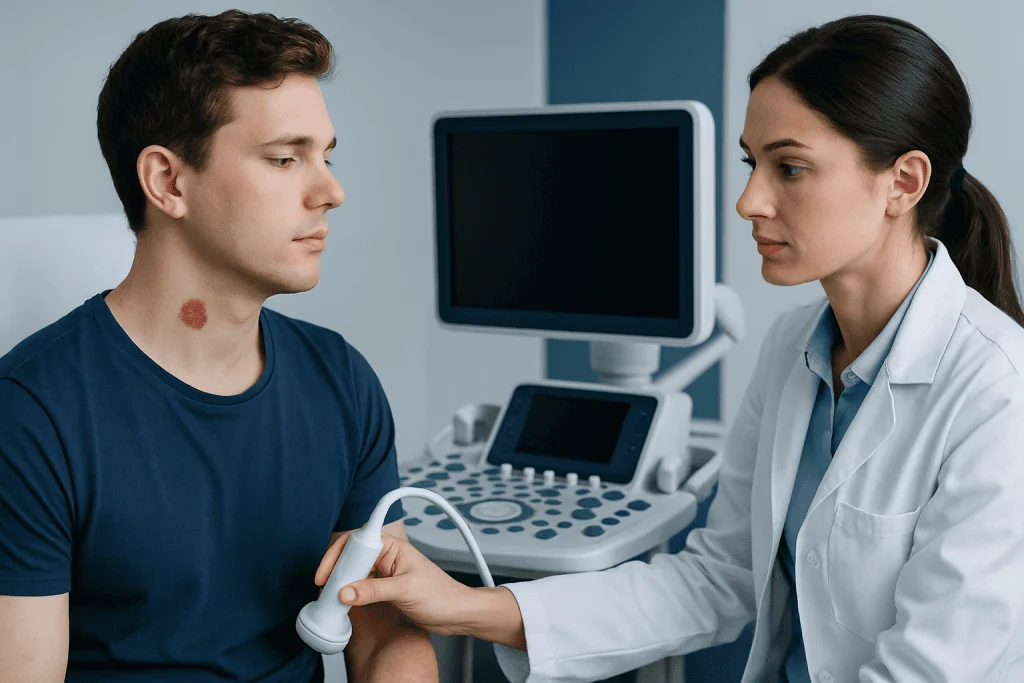
A hickey usually appears as a small patch of discoloration, often on the neck, chest, shoulder, or upper arm. It may start out red or purplish and then change shades over time, sometimes becoming blue, brown, green, or yellow as the bruise heals. Mild tenderness is common, but many people have little or no pain.
Healing time varies based on skin tone, the size of the bruise, a person’s age, and how easily they bruise. In general, a hickey may last from a few days to around two weeks. Larger or deeper bruises may take a little longer to fade completely.
Symptoms that suggest a simple, uncomplicated hickey include stable or improving color changes, mild soreness, and no other concerning symptoms. It should gradually become less noticeable rather than more painful or more swollen.
If a mark is very painful, unusually large, associated with broken skin, or not improving after about two weeks, a clinician may consider whether it is a more significant soft tissue injury or another skin condition. In some cases, marks that seem like bruises may overlap with skin rashes or other causes of discoloration, so persistent uncertainty is a good reason to seek advice.
What actually helps a hickey fade

The best-supported care for a fresh hickey is the same first aid used for many minor bruises. During the first 24 to 48 hours, a cold pack wrapped in a cloth can be applied for short periods to help reduce swelling and limit bleeding under the skin. The cold pack should not be placed directly on bare skin, and it should be used gently rather than pressed hard into the area.
After the first day or two, some people find a warm compress soothing. Gentle warmth may increase comfort and support normal circulation as the bruise resolves. This does not erase the hickey immediately, but it may help the area feel less tender while natural healing continues.
Simple skin care also matters. Keeping the area clean, avoiding friction from tight collars or scarves, and not repeatedly touching or rubbing the bruise can prevent added irritation. If the skin is sensitive or dry, a bland moisturizer may help protect the surface, but it will not directly remove the bruise.
Over-the-counter pain relief may be appropriate for discomfort for some people, depending on their medical history and what a clinician or pharmacist advises. When there is significant pain, worsening symptoms, or uncertainty about what is safe to take, professional guidance is sensible. If the bruise is part of a broader soft-tissue injury, doctors may use options similar to physical therapy and rehabilitation advice for comfort and recovery, though this is rarely needed for a simple hickey.
Remedies with weak or no evidence
Many home remedies are promoted online, but there is little good evidence that they remove a hickey faster than time and standard bruise care. Common examples include rubbing the area with a coin or toothbrush, vigorous massage, toothpaste, peppermint oil, or attempts to “break up” the bruise. These methods can irritate the skin, worsen inflammation, or create additional bruising.
Aggressive massage deserves special caution on the neck. The skin and soft tissues there can be sensitive, and strong pressure may increase discomfort. Gentle touch for comfort is different from forceful rubbing, which is unlikely to speed healing and may prolong the mark.
Topical creams sold for bruising may help some people feel they are doing something active, but results are often modest and product quality varies. If a person chooses to use a cream, it is wise to avoid products that sting, strongly perfume the skin, or are applied to broken skin. A patch test on another area may be reasonable for sensitive skin.
Makeup or color-correcting concealer can camouflage a hickey while it heals. This does not treat the bruise, but it can be a practical option for appearance concerns. Applying cosmetics gently and removing them without scrubbing helps avoid extra irritation.
Why hickeys happen and who may bruise more easily
A hickey develops when suction, kissing, or pressure causes capillaries to rupture. The leaked blood becomes visible under the skin until the body gradually clears it away. The neck is a common site because the skin may be thinner and the area is often exposed during close contact.
Some people bruise more easily than others. Factors can include age, naturally delicate skin, sun damage, certain medications that affect bleeding, and medical conditions that influence clotting or blood vessels. People who notice frequent unexplained bruises in other body areas should not assume every mark is a simple hickey.
If bruising seems unusually easy or recurrent, a doctor may want to rule out a bleeding tendency or another underlying issue. Depending on the overall picture, clinicians may consider conditions related to bruising and blood vessel fragility, and occasionally they may recommend a medical check-up to assess general health and medications.
Rarely, neck suction or trauma can be associated with more serious injury to deeper tissues or blood vessels. These events are not typical, but they explain why new neurological symptoms, severe neck pain, or swelling should be taken seriously rather than managed only at home.
When to seek medical care
Most hickeys do not require a doctor. Medical assessment is appropriate if the area becomes very painful, the swelling is significant or rapidly worsening, the skin is broken and appears infected, or the bruise does not start to improve within about two weeks.
Urgent care is important if the person has trouble breathing, trouble swallowing, severe neck pain, fainting, chest pain, or a rapidly enlarging mark. Neurological symptoms such as severe headache, confusion, facial weakness, numbness, dizziness, vision changes, or difficulty speaking should be treated as emergency warning signs.
People taking blood thinners, those with a known bleeding disorder, and anyone with frequent unexplained bruising may need earlier medical advice even if the mark seems minor. Children, older adults, and people with fragile skin may also benefit from a lower threshold for evaluation.
If there is concern about injury to the neck or blood vessels, hospital-based assessment may involve specialists in emergency medicine, neurology, or vascular care. In selected situations, doctors may recommend MRI or other imaging to look for deeper tissue or vessel problems, although this is not needed for a routine hickey.
How doctors evaluate a concerning hickey
When a patient seeks medical care for a hickey or neck bruise, the doctor usually starts with a focused history. They ask when the mark appeared, how it happened, whether there was forceful suction or trauma, what symptoms have developed, and whether the person takes medicines that affect bleeding. They also ask about easy bruising, prior bleeding problems, and any associated headache, weakness, or trouble swallowing.
The physical examination looks at the size, color, tenderness, swelling, and exact location of the mark. The clinician checks for broken skin, signs of infection, neck stiffness, and any symptoms affecting the airway. A neurological examination may be done if there is headache, dizziness, numbness, weakness, or visual symptoms.
Most uncomplicated hickeys do not need tests. If the history suggests another cause or a higher-risk injury, blood tests may be used to assess clotting and platelet levels, and imaging may be considered to evaluate deeper structures. The goal is not to over-test but to identify uncommon situations that need prompt treatment.
Near the end of the care pathway, some patients may want coordinated follow-up, especially if there is an underlying bruising tendency or a more complex neck injury. Acibadem International’s multidisciplinary specialists in JCI-accredited hospitals diagnose and treat patients with bruise-related concerns and associated conditions, including international patients, when more detailed assessment is needed.
Self-care, prevention, and practical tips
Once a hickey has formed, self-care should be gentle. Helpful steps include cool compresses early on, light warmth later if soothing, avoiding friction, and giving the skin time to heal. Adequate rest, hydration, and a balanced diet support general tissue recovery, even though they do not make a bruise disappear overnight.
Prevention is mainly about avoiding intense suction or prolonged pressure on delicate areas such as the neck. If a person knows they bruise easily, choosing lower-pressure contact and avoiding prolonged suction may reduce the chance of visible marks. People taking blood thinners or with bleeding disorders should be especially cautious.
If appearance is the main concern, camouflage can be the most practical short-term solution. Clothing, scarves that do not rub, and gentle makeup techniques may help while the bruise fades naturally. Scrubbing, repeated checking, or trying multiple irritant remedies often makes the area look worse rather than better.
It is also worth remembering that a hickey should fit the story and heal predictably. If a mark appears without a clear cause, recurs often, or is accompanied by unexplained bruises elsewhere, medical advice is appropriate. In that case, the issue may be less about how to get rid of a hickey and more about understanding why bruising is happening at all.
Frequently asked questions
How do you get rid of a hickey fast?
There is no proven way to remove a hickey immediately. The safest approach is a cold compress during the first 24 to 48 hours, then gentle care and time while the bruise fades naturally.
How long does a hickey usually last?
Most hickeys improve over several days and clear within about one to two weeks. Larger or deeper bruises can take a bit longer, especially in people who bruise easily.
Does toothpaste, a whisk, or a coin help a hickey go away?
These popular remedies do not have strong medical evidence behind them. In fact, vigorous rubbing or irritating products can make the skin more inflamed and may worsen the bruise.
Should a hickey be iced or heated?
Cold is generally more useful in the first 24 to 48 hours because it may reduce swelling and limit bleeding under the skin. After that, gentle warmth may be more comfortable, but neither method makes the bruise vanish quickly.
When is a hickey serious?
A hickey is usually minor, but it needs urgent medical attention if there is severe neck pain, trouble swallowing or breathing, fainting, rapidly increasing swelling, or neurological symptoms such as weakness, numbness, severe headache, or vision changes. These signs are uncommon but should not be ignored.
Can a hickey leave a permanent mark?
A typical hickey does not leave a permanent mark and heals like a minor bruise. Persistent discoloration, scarring, or repeated bruising in the same area should be evaluated by a doctor.
This article is for general information only and is not a substitute for professional medical advice. Please consult a qualified doctor about your individual situation.
Explore treatments in Turkey — costs, top hospitals & a free quote
JCI-accredited · board-certified surgeons · reply within 24h
Add us as a Preferred Source to see more of our trusted health content across Google Search, AI Overviews and Discover.

More from the Health Library

How to Make Your Period End Faster? Causes, Explanations, and Next Steps

How to Make Natural Sunscreen? Here Is What the Evidence Says
What Is Taurine? Here Is What the Evidence Says

Diazepam vs Clonazepam: Key Differences and How Doctors Tell Them Apart

How to Floss With Braces and Clean Under Wires