

How to Get Rid of Acid Reflux? A Doctor-Reviewed Answer

Acid reflux often improves with smaller meals, avoiding trigger foods, and not lying down soon after eating. Frequent reflux may be a sign of GERD and should be assessed by a doctor.
Key Takeaways
- Acid reflux often improves with smaller meals, avoiding trigger foods, and not lying down soon after eating.
- Frequent reflux may be a sign of GERD and should be assessed by a doctor.
- Doctors may diagnose reflux from symptoms alone or use tests such as endoscopy or pH monitoring when needed.
- Medicines can reduce acid and help the esophagus heal, but persistent symptoms need proper evaluation.
- Urgent care is needed for chest pain, black stools, vomiting blood, or difficulty swallowing.
Most episodes of acid reflux are uncomfortable but not dangerous, and many improve with changes in eating habits, body position, weight management, and short-term medicines. Medical review is important if symptoms happen often, disturb sleep, cause trouble swallowing, or come with chest pain, vomiting, bleeding, or unexplained weight loss.
How to get rid of acid reflux
For many people, the best way to get rid of acid reflux is to reduce the pressure on the stomach and lower the chance of acid moving upward into the esophagus. This often means eating smaller meals, avoiding personal trigger foods, staying upright for at least two to three hours after eating, and using a doctor- or pharmacist-recommended medicine when symptoms are bothersome. Many episodes are harmless and settle with these steps.
What matters most is knowing when reflux is occasional and when it needs medical attention. Symptoms that happen regularly, wake a person at night, or interfere with eating are more likely to need evaluation for gastroesophageal reflux disease (GERD). A doctor can then confirm whether reflux is the cause and rule out other problems that can feel similar, including ulcers, swallowing disorders, gallbladder disease, or even some heart conditions.
If symptoms are new, severe, or accompanied by warning signs such as trouble swallowing, vomiting, bleeding, black stools, unexplained weight loss, or chest pain, medical care should not be delayed. The aim is not only relief, but also protection of the esophagus and identification of any underlying condition.
What acid reflux feels like

Acid reflux happens when stomach contents move backward into the esophagus, the tube that carries food from the mouth to the stomach. The esophagus does not have the same protective lining as the stomach, so even a small amount of acid can cause irritation and the familiar burning feeling called heartburn.
Common symptoms include a burning sensation in the chest after meals, a sour or bitter taste in the mouth, regurgitation of food or liquid, bloating, burping, and nausea. Some people notice symptoms more when bending over, exercising after a meal, or lying flat. Reflux can also cause throat clearing, hoarseness, chronic cough, a feeling of a lump in the throat, or worsening asthma-like symptoms.
Occasional reflux is common. But if symptoms occur two or more times a week, need frequent medicine, or keep returning, doctors may consider GERD rather than isolated reflux. Persistent reflux can sometimes irritate the esophagus enough to cause inflammation, narrowing, or changes in the lining over time.
Why acid reflux happens
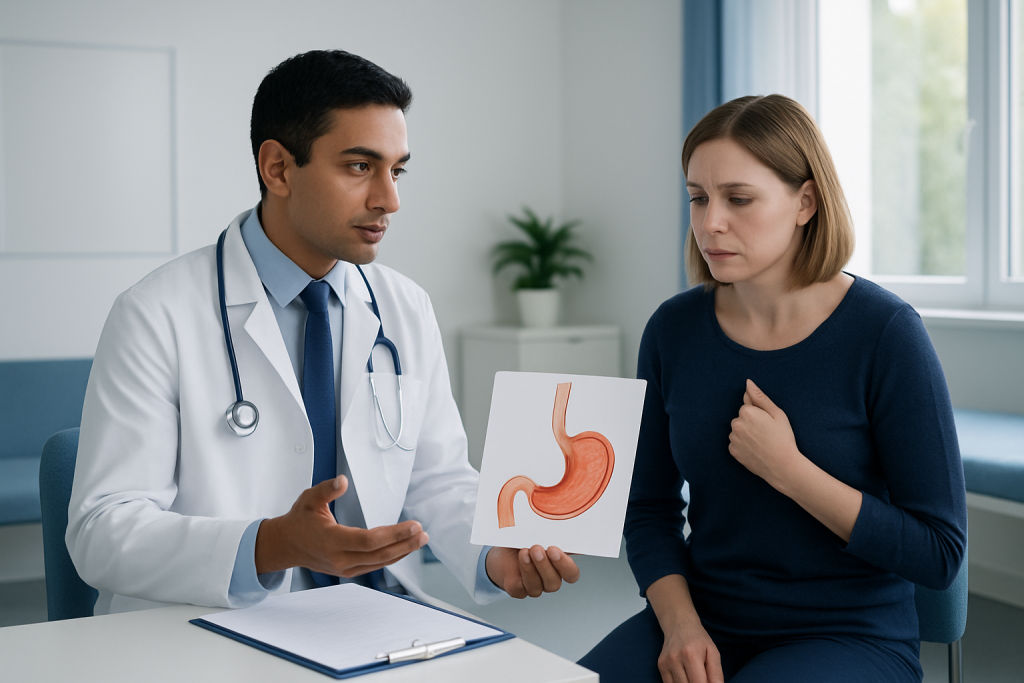
Reflux usually develops when the lower esophageal sphincter, a ring of muscle between the esophagus and stomach, relaxes at the wrong time or becomes weak. This allows acid to move upward. A full stomach, delayed stomach emptying, increased pressure in the abdomen, or a hiatal hernia can make this more likely.
Common triggers vary from person to person, but often include large meals, fatty or fried foods, spicy foods, chocolate, peppermint, caffeine, alcohol, and carbonated drinks. Smoking can worsen reflux, and symptoms are also more common during pregnancy and in people carrying extra abdominal weight.
Some medicines may contribute as well, including certain pain relievers, blood pressure medicines, and drugs that relax smooth muscle. Reflux-like discomfort may also overlap with other digestive problems such as gastritis or stomach ulcer disease, which is one reason persistent symptoms deserve a proper diagnosis instead of repeated self-treatment alone.
Practical steps that often bring relief
Daily habits can make a meaningful difference. Smaller, more frequent meals can reduce stomach pressure, and eating slowly may help limit overeating. Many people improve when they avoid lying down after meals and finish dinner earlier in the evening. Raising the head of the bed by about 6 to 8 inches may help nighttime symptoms more than simply using extra pillows, which can bend the body rather than keep the esophagus above the stomach.
Keeping a symptom diary can help identify personal triggers. Not everyone reacts to the same foods, so a targeted approach is often more helpful than a very restrictive diet. If a person notices repeated symptoms after coffee, tomato-based meals, fried foods, late-night snacks, or alcohol, reducing those items may help.
Weight management can also reduce reflux, especially when symptoms are linked to abdominal pressure. Other helpful habits include wearing looser clothing around the waist, stopping smoking if applicable, and avoiding strenuous activity immediately after meals. For some people, these steps are enough to control symptoms without long-term medication.
- Eat smaller meals and avoid overeating.
- Wait at least two to three hours before lying down after eating.
- Limit personal trigger foods and drinks.
- Elevate the head of the bed for nighttime reflux.
- Support a healthy weight if advised by a doctor.
Medicines that may help acid reflux
When lifestyle steps are not enough, medicines can help reduce symptoms and allow the esophagus to heal. Antacids may provide quick, short-term relief by neutralizing stomach acid. Alginates may form a barrier that helps reduce regurgitation after meals. These options can be useful for occasional symptoms, but they do not treat every cause of upper digestive discomfort.
For more frequent reflux, doctors often consider H2 blockers or proton pump inhibitors (PPIs), which reduce acid production more effectively. These medicines can be very helpful when symptoms are regular or when there is evidence of inflammation in the esophagus. They work best when taken as directed, and treatment length depends on symptom pattern and the doctor’s assessment.
Persistent self-treatment is not the same as diagnosis. If symptoms continue despite over-the-counter medicine, or return as soon as medicine is stopped, a doctor may need to check for GERD or another condition. In some patients with long-standing or complicated reflux, specialist evaluation and procedures may be discussed, including endoscopy to examine the esophagus and stomach.
How doctors diagnose ongoing reflux
Doctors usually begin with a careful history. They ask what the symptoms feel like, how often they happen, whether they are linked to meals or position, and what treatments have or have not helped. They also look for warning signs such as difficulty swallowing, anemia, vomiting, weight loss, bleeding, or symptoms that could suggest a heart or lung problem rather than reflux.
In many people with typical heartburn and regurgitation, diagnosis may start with symptoms and response to treatment. If symptoms are persistent, atypical, or concerning, further testing may be recommended. This may include upper endoscopy, which allows direct examination of the esophagus, stomach, and first part of the small intestine. Where appropriate, doctors may also use biopsy, esophageal pH monitoring, or motility testing.
These tests help answer important questions: Is acid truly the problem? Has reflux injured the esophagus? Could another disorder be present? In specialist centers, additional evaluation may be combined with gastroenterology care to tailor treatment and avoid unnecessary medicines.
When reflux needs more than tablets and lifestyle changes
Most people do not need a procedure, but some do. This may apply if reflux is severe, keeps coming back despite appropriate medicine, causes complications, or is linked to a structural issue such as a significant hiatal hernia. In these cases, a gastroenterologist or surgeon may discuss procedural or surgical options after proper testing.
Treatment choices depend on the diagnosis, symptom burden, anatomy, and general health of the patient. Some people may benefit from interventions designed to strengthen the barrier between the stomach and esophagus or to repair a hiatal hernia. For selected patients, GERD treatment may include a structured medical plan, endoscopic approaches, or surgery when clearly indicated.
Near the end of the care journey, patients often want reassurance that persistent reflux can be managed safely and systematically. Acibadem International’s multidisciplinary specialists in JCI-accredited hospitals diagnose and treat reflux-related conditions for international patients, with plans based on symptoms, testing, and individual needs rather than a one-size-fits-all approach.
When to seek medical care
A medical review is sensible if acid reflux is happening often, interrupts sleep, limits normal eating, or requires frequent over-the-counter medicine. A doctor should also evaluate symptoms that begin after midlife, change suddenly, or do not improve with practical self-care.
Urgent medical attention is needed for chest pain, especially if it spreads to the arm, back, neck, or jaw, or happens with shortness of breath, sweating, or dizziness. Immediate care is also important for vomiting blood, black or tarry stools, severe or persistent vomiting, dehydration, or a sensation that food is getting stuck when swallowing.
These warning signs do not always mean a serious condition, but they should not be ignored. Early assessment can identify complications, rule out other causes, and guide safe treatment before symptoms become more difficult to manage.
Frequently asked questions
What is the fastest way to calm acid reflux?
The quickest relief often comes from stopping the trigger, sitting upright, and using a suitable over-the-counter antacid or alginate if a pharmacist or doctor says it is appropriate. Fast relief is helpful for occasional symptoms, but repeated episodes need a plan to prevent them from returning.
Can acid reflux go away on its own?
Yes, occasional acid reflux often settles on its own, especially after a heavy meal or a known trigger. If it keeps coming back, happens at night, or needs frequent medicine, it should be assessed because it may be GERD.
What foods should be avoided with acid reflux?
There is no single list that affects everyone the same way, but common triggers include fatty foods, fried foods, spicy meals, chocolate, mint, caffeine, alcohol, and fizzy drinks. A food and symptom diary can help identify personal triggers more accurately than avoiding many foods unnecessarily.
Is milk good for acid reflux?
Milk may soothe symptoms briefly for some people, but it does not treat the underlying problem. In some cases, especially with full-fat dairy, it may later worsen reflux by increasing stomach fullness or triggering symptoms.
How do doctors know if reflux is GERD?
Doctors start with a symptom history, including how often symptoms happen and whether they improve with treatment. If symptoms are frequent, unusual, or associated with warning signs, tests such as endoscopy or pH monitoring may be used to confirm GERD and look for complications.
Can stress cause acid reflux?
Stress does not usually create acid reflux by itself, but it can make symptoms feel worse and may influence eating habits, sleep, and digestion. Managing stress can be helpful as part of an overall reflux plan, alongside diet, meal timing, and medical advice.
References
- National Institute of Diabetes and Digestive and Kidney Diseases
- American College of Gastroenterology
- National Health Service
- Mayo Clinic
- World Gastroenterology Organisation
This article is for general information only and is not a substitute for professional medical advice. Please consult a qualified doctor about your individual situation.
Medical weight-loss options in Turkey — costs & eligibility
JCI-accredited · board-certified surgeons · reply within 24h
Add us as a Preferred Source to see more of our trusted health content across Google Search, AI Overviews and Discover.
Check your numbers in seconds
BMI, calories, due date, blood pressure and 30+ more clinical calculators — free, instant, doctor-reviewed ranges.

More from the Health Library



Related Specialists

Fzt. Ezgi İrem Eryaşar
Treatment of Respiratory
Dr. Burcu Durmak İşman
Radiation Oncology
Prof. Dr. Ömer Bayır
Otorhinolaryngology
Fzt. İkra Tigis
Physical Medicine & Rehabilitation