How to Massage Ear Wax Out? Causes, Explanations, and Next Steps

Earwax normally protects and cleans the ear canal, so routine removal is usually unnecessary. Massaging the outside of the ear may help wax move toward the opening but cannot safely remove a deep blockage.
Key Takeaways
- Earwax normally protects and cleans the ear canal, so routine removal is usually unnecessary.
- Massaging the outside of the ear may help wax move toward the opening but cannot safely remove a deep blockage.
- Cotton swabs, hairpins, ear candles, and other inserted objects can push wax deeper or injure the ear.
- Hearing loss, pain, drainage, dizziness, fever, or sudden symptoms require prompt medical assessment.
- People with ear tubes, a perforated eardrum, prior ear surgery, or diabetes should ask a clinician before using ear drops or irrigation.
Most earwax is harmless and clears naturally, but it cannot usually be massaged out of the ear canal. Gentle massage around the outside of the ear may occasionally help loosen wax near the opening, while safe softening methods and medical care are better options for troublesome blockage.
Can Ear Wax Be Massaged Out?
For most people, earwax is normal, harmless, and does not need to be removed. The ear canal is designed to move old wax gradually outward as the jaw moves during talking and chewing. Once it reaches the outer ear, it usually dries and falls away or can be gently wiped from the visible outer area.
When asking how to massage ear wax out, it is important to know that massage cannot pull wax from deep inside the ear canal. Gentle movement of the jaw or light massage around the outer ear may help wax that is already close to the opening shift naturally. It should not involve placing fingers, tools, or cotton swabs into the ear canal.
If an ear feels blocked, a person may gently massage the area just in front of the ear while opening and closing the mouth or chewing. This may relieve a temporary pressure sensation, especially after wax-softening drops have been used appropriately. It is not a substitute for professional treatment if there is pain, reduced hearing, discharge, or persistent blockage.
Why Earwax Builds Up
Earwax, also called cerumen, is made by glands in the outer ear canal. It combines with shed skin cells and tiny hairs to trap dust, debris, and microorganisms. Its slightly acidic properties help protect the delicate skin of the ear canal, making wax an important part of normal ear health.
Wax can become impacted when it accumulates faster than the ear can move it outward. This can happen when a person naturally produces more wax, has narrow or curved ear canals, or has dry, hard wax. Aging can also make earwax drier and less likely to clear on its own.
Using cotton swabs or inserting other objects is a common cause of blockage. Although a swab may remove a little wax from the entrance, it often pushes the rest farther inward, where it becomes tightly packed. Hearing aids, earbuds, earplugs, and in-ear headphones can also reduce the ear’s usual self-cleaning process by blocking the canal or pressing wax deeper.
Wax blockage is not usually dangerous, but similar symptoms can have other causes. For example, ear infections, fluid behind the eardrum, skin conditions, or problems affecting the hearing system may also cause fullness or muffled hearing. A proper examination helps distinguish these possibilities.
Symptoms That May Suggest a Wax Blockage

Earwax buildup may cause a plugged or full sensation in one or both ears. Hearing may seem muffled, as though sounds are distant or underwater. Symptoms can become more noticeable after bathing or swimming because water can make wax swell within the canal.
Some people experience itching, mild discomfort, ringing in the ear, cough, or a feeling that their own voice sounds unusually loud. A hearing aid may produce feedback or whistle when wax blocks the canal. These symptoms can be frustrating, but they often improve once clinically significant wax is removed safely.
Severe ear pain, bleeding, pus-like fluid, fever, spinning dizziness, marked swelling, or sudden hearing loss should not be assumed to be earwax. These signs may indicate another ear condition and need medical review. Sudden hearing changes, in particular, should be assessed urgently because timely treatment can matter.
A person should also arrange an examination rather than self-treating if symptoms occur after an ear injury, after inserting an object into the ear, or following a recent ear operation. Children who are pulling at the ear, unusually irritable, or not responding to sounds may also need assessment, as symptoms can be harder for them to describe.
A Safe Way to Try Gentle External Massage
If there is no ear pain, drainage, eardrum perforation, ear tube, previous ear surgery, or known ear disease, gentle external massage can be tried as a comfort measure. The person can place clean fingertips on the skin in front of the ear, over the jaw joint, and make small circular movements. Opening and closing the mouth slowly may encourage normal jaw movement without putting anything into the ear canal.
Another simple approach is to gently pull the outer ear backward and upward in adults while moving the jaw. This may straighten the outer part of the canal slightly and can help loosen wax that is already at the entrance. In young children, the outer ear is generally pulled gently backward and downward, but parents should avoid attempting removal from inside the canal.
External massage should stop if it causes pain, dizziness, nausea, or worsening pressure. It should never be combined with probing the ear using a finger, swab, tweezers, hairpin, or any other object. These methods can cause scratches, infection, bleeding, eardrum injury, or a deeper wax impaction.
Massage is most useful as a low-risk supportive step, not as a reliable treatment for a blocked ear. If symptoms remain after a short period or interfere with hearing, sleep, communication, or hearing-aid use, a clinician can check whether wax is actually the cause.
Safer Options for Softening and Removing Earwax
For uncomplicated wax buildup, wax-softening ear drops may be an option. Products may contain mineral oil, saline, glycerin, or other cerumen-softening ingredients. These drops can soften dry wax so that the ear’s normal clearing process is more effective, or so that a clinician can remove the wax more easily.
Instructions on the product label should be followed carefully. Ear drops should not be used without clinical advice by people who have ear pain, active drainage, a known or suspected hole in the eardrum, ear tubes, a history of ear surgery, or a current ear infection. People with diabetes or weakened immune systems should also seek professional guidance because infections of the ear canal can be more serious in these situations.
Some adults may be advised by a healthcare professional to use gentle irrigation with body-temperature water after wax has been softened. However, home irrigation is not appropriate for everyone and may cause dizziness, pain, infection, or eardrum injury when done incorrectly. It is safest to have suitability confirmed by a clinician first.
Ear candles are not a safe or effective earwax treatment. They can cause burns, leave candle wax inside the ear, or result in injury. Vacuum devices sold for home use and sharp instruments are also best avoided. When wax is firmly impacted, removal by a trained professional is the safest approach.
How Doctors Check and Treat Earwax
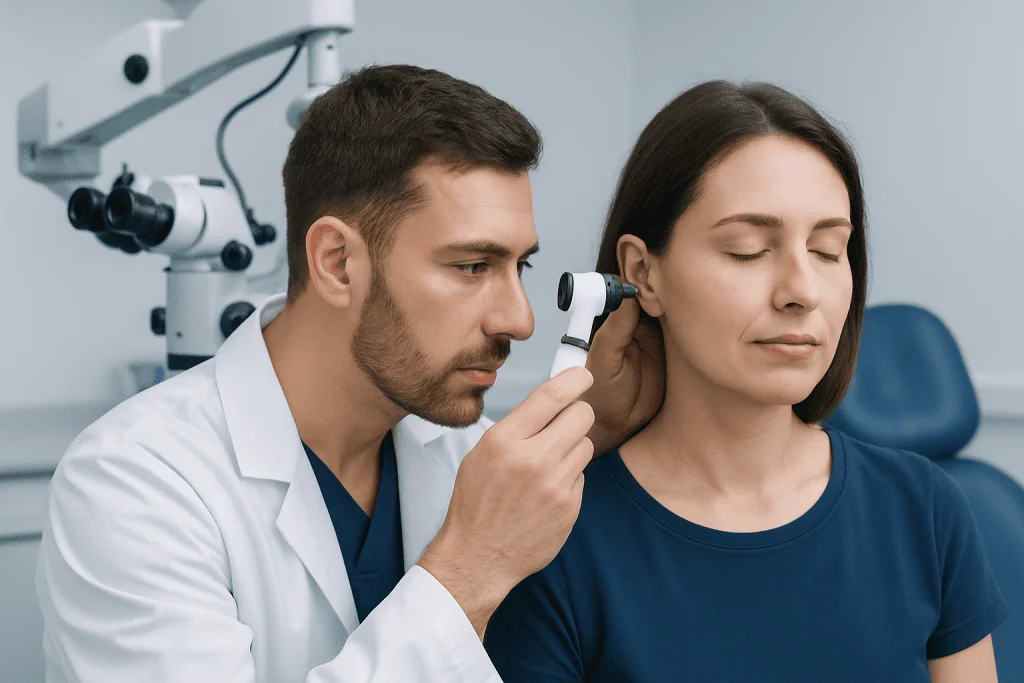
A doctor, ear specialist, or trained healthcare professional usually begins by asking about symptoms, hearing changes, prior ear problems, and any previous surgery. They look into the ear with an otoscope, a lighted viewing instrument that allows them to see whether wax is blocking the canal and to assess the eardrum when visible.
If wax is responsible, treatment may involve softening drops, controlled irrigation, suction, or careful manual removal using specialized instruments. The best method depends on the consistency and location of the wax, the shape of the ear canal, and the person’s medical history. These procedures are generally brief when performed by an experienced clinician.
If the ear canal is clear or symptoms continue after wax removal, the clinician may look for other explanations. Depending on the symptoms, this may include a hearing test, evaluation for infection or fluid, or referral to an ear, nose, and throat specialist. This step is important because muffled hearing is not always caused by cerumen.
Acibadem International’s multidisciplinary specialists and JCI-accredited hospitals can assess ear symptoms and provide appropriate treatment for international patients. An evaluation can help identify whether symptoms are due to wax buildup or another condition requiring a different approach.
When to Seek Medical Care
Medical care is recommended when a blocked feeling or hearing reduction persists despite avoiding ear-canal cleaning, or when recurrent wax buildup affects daily activities. A clinician should also assess repeated wax problems in people who wear hearing aids, have narrow canals, or have a history of ear disease. Regular hearing-aid checks can help identify wax before it becomes troublesome.
Prompt assessment is needed for significant ear pain, bleeding, discharge, fever, swelling around the ear, dizziness, severe headache, or symptoms after a blow to the head. Sudden or rapidly worsening hearing loss should be treated as urgent, even if wax seems like a possible explanation. It should not be managed only with massage or over-the-counter drops.
Parents and caregivers should seek advice if a child has persistent ear discomfort, new hearing concerns, unexplained irritability, drainage, or has placed something in the ear. Attempting to remove a suspected foreign object at home can push it deeper. A healthcare professional can remove it safely and check for injury.
To reduce future buildup, people can let their ears self-clean and simply wash the outer ear during normal bathing. Drying the outside gently with a towel is enough. Avoid inserting cotton swabs and other objects into the canal, even when the ear feels itchy or full.
Frequently asked questions
How do you massage ear wax out at home?
Massage cannot reliably remove wax from deep inside the ear canal. A person may gently massage the skin in front of the ear while moving the jaw, which may help wax near the opening shift naturally. Nothing should be inserted into the ear canal.
Can chewing gum help move earwax?
Chewing gum moves the jaw, which is part of the ear's normal self-cleaning process. It may help wax that is already close to the outer ear move outward over time, but it will not resolve a firmly impacted wax blockage. Persistent symptoms should be checked by a clinician.
Why does my ear feel more blocked after a shower?
Water can be absorbed by earwax, causing it to expand and block more of the ear canal. This can make hearing temporarily more muffled and increase the feeling of pressure. It is best to avoid inserting a swab or other object to try to dry the canal.
Are cotton swabs safe for earwax removal?
Cotton swabs should not be placed inside the ear canal. They commonly push wax deeper, irritate the canal skin, and can occasionally injure the eardrum. They may be used only to wipe wax from the visible outer ear.
Can I use ear drops if I have a perforated eardrum?
A person with a known or possible eardrum perforation should not use earwax drops unless a clinician specifically recommends them. The same caution applies to people with ear tubes, prior ear surgery, pain, or drainage. Professional assessment is the safer option.
How quickly should hearing return after wax removal?
If wax was the only cause of reduced hearing, hearing often improves soon after the blockage is removed. Some people may notice gradual improvement as remaining water or softened wax clears. If hearing remains reduced, medical review is important to look for another cause.
References
- American Academy of Otolaryngology–Head and Neck Surgery Foundation
- National Institute on Deafness and Other Communication Disorders
- Centers for Disease Control and Prevention
- Mayo Clinic
This article is for general information only and is not a substitute for professional medical advice. Please consult a qualified doctor about your individual situation.
Explore treatments in Turkey — costs, top hospitals & a free quote
JCI-accredited · board-certified surgeons · reply within 24h
Add us as a Preferred Source to see more of our trusted health content across Google Search, AI Overviews and Discover.