How to Put on Surgical Gloves: Procedure, Recovery and Results

Surgical gloves are sterile barriers used to reduce the transfer of microorganisms during invasive care. Hand hygiene is required before gloving; gloves do not replace proper hand cleaning.
Key Takeaways
- Surgical gloves are sterile barriers used to reduce the transfer of microorganisms during invasive care.
- Hand hygiene is required before gloving; gloves do not replace proper hand cleaning.
- Open gloving is commonly used after surgical hand antisepsis, while closed gloving is usually performed after putting on a sterile gown.
- The sterile outer surface should only touch sterile items, while the inside cuff may be handled during application.
- Gloves should be changed if they tear, become visibly contaminated, lose integrity, or according to the surgical team's protocol.
Putting on surgical gloves requires careful hand hygiene and a sterile technique that avoids contaminating the outside of the gloves. This guide explains open and closed gloving, when gloves are changed, and why trained clinical supervision is essential in operating rooms.
Overview: How to Put on Surgical Gloves
How to put on surgical gloves safely involves performing surgical hand antisepsis, opening the sterile glove package correctly, and touching only the glove areas permitted by sterile technique. The aim is to create a barrier between the clinician’s hands and the surgical field while preventing contamination of the gloves before a procedure begins.
Surgical gloving is a clinical skill taught through supervised practice. Although patients may be interested in how operating-room teams work, sterile gloves should not be used as a substitute for medical assessment, wound care instructions, or routine hand hygiene at home. The exact method used may vary according to the procedure, the hospital’s infection-prevention policy, and whether a sterile gown is worn.
Two standard methods are used in surgical settings: open gloving and closed gloving. Open gloving is generally used when hands are bare after surgical hand preparation. Closed gloving is usually used after a sterile gown has been put on, keeping the hands inside the gown cuffs while the gloves are applied.
Why Surgical Gloves Matter in Clinical Care

Surgical gloves are single-use medical devices designed to provide a sterile barrier during operations and other invasive procedures. They help reduce the movement of microorganisms between healthcare professionals, patients, instruments, and the operative field. Their protective value depends on correct selection, hand hygiene, safe application, and prompt replacement when needed.
Gloves do not make hands sterile and do not remove the need for careful surgical hand antisepsis. Small holes or unnoticed damage can occur, especially during longer or technically demanding operations. For this reason, operating teams use several infection-control measures together, including sterile drapes, instruments, gowns, skin preparation, and established operating-room practices.
Some people have sensitivity or allergy to natural rubber latex. Healthcare teams can use suitable non-latex alternatives, such as nitrile or neoprene surgical gloves, when clinically appropriate. Patients should tell their healthcare team about previous reactions to latex, adhesives, antiseptics, medicines, or gloves before surgery.
How to Put on Surgical Gloves Properly?
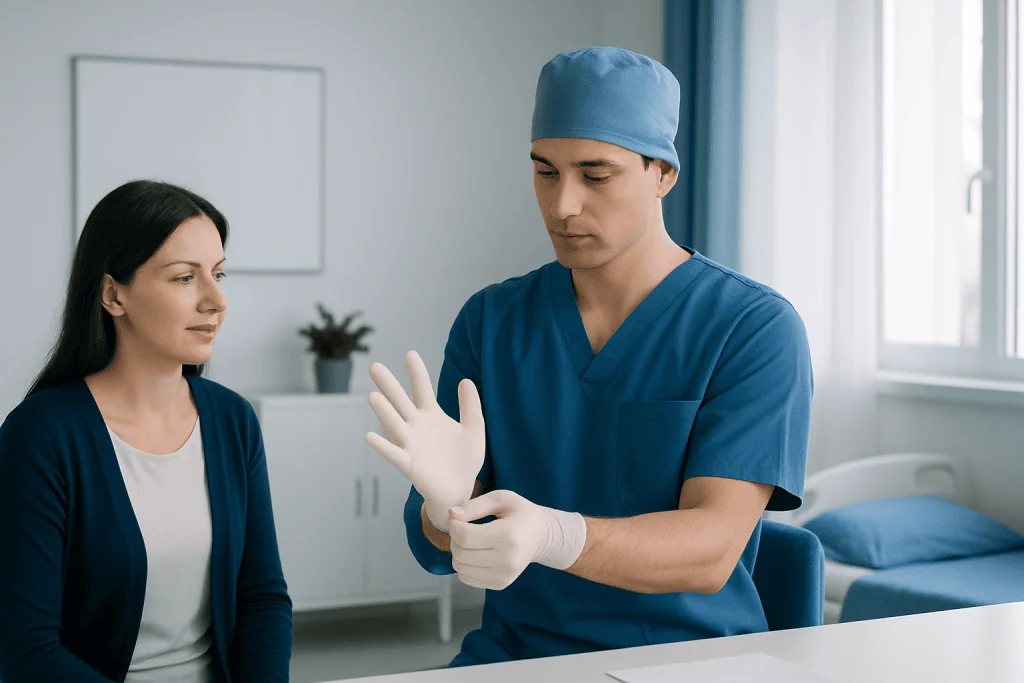
Proper surgical gloving begins with correct preparation. The clinician removes jewelry where required by policy, ensures nails are short and clean, performs surgical hand antisepsis, and keeps hands above elbows while allowing them to dry as instructed. Gloves are selected in the correct size and checked for package damage or expiry information before the sterile package is opened.
For open gloving, the outside of the first glove cuff is touched only with the opposite clean, ungloved hand. The first glove is slid on without touching its sterile outer surface with bare skin. The gloved hand can then slide beneath the cuff of the second glove, touching only the sterile outside-facing surface as the second glove is applied. The cuffs are adjusted carefully without contacting non-sterile surfaces.
Once both gloves are in place, the clinician keeps hands within the sterile field and avoids touching the face, clothing, equipment outside the sterile field, or any item of uncertain cleanliness. If contamination is suspected, the glove should be changed using the appropriate technique. In clinical practice, competence is assessed through training and observation rather than by reading instructions alone.
- Use a new, intact sterile pair for each procedure.
- Keep the gloved hands visible and above waist level where sterile technique requires this.
- Avoid pulling gloves over wet hands, as this can make application difficult and may affect glove integrity.
- Do not use a glove that is torn, poorly fitting, discolored, or from a damaged package.
How to Put on Gloves Step by Step?
The following describes the broad sequence for open surgical gloving. First, surgical hand antisepsis is completed according to the local protocol. The hands are dried using a sterile method, and the clinician approaches the sterile glove package without leaning over it or allowing clothing to touch the field.
Second, the outer wrapper is opened without touching the inner sterile surface. The inner package is opened, exposing the gloves with their cuffs positioned for application. The dominant or non-dominant glove may be applied first according to the clinician’s training and the package layout.
Third, the clinician pinches only the folded cuff of the first glove with the ungloved hand and inserts the opposite hand. With the now-gloved hand, the clinician slides fingers under the folded cuff of the second glove, lifts it, and inserts the remaining hand. Finally, glove fingers and cuffs are adjusted using sterile-to-sterile contact only. If the glove contacts an unsterile object or the procedure cannot be completed without doubt about sterility, a new pair is used.
These steps are intended for trained healthcare personnel. A person preparing for surgery does not need to learn surgical gloving; the operating team will follow established sterile practices. Patients can support safe care by following preoperative bathing, fasting, medication, and arrival instructions provided by their clinical team.
How Do Surgeons Put on Their Gloves?
Surgeons commonly use closed gloving after putting on a sterile gown. In this technique, the hands remain inside the gown sleeves while each glove is positioned over the cuff. The glove is then pulled over the sleeve and hand without exposing bare skin outside the gown cuff. This method helps lower the chance that bare hands will touch the glove exterior during gowning.
Some procedures require double gloving, meaning two pairs of gloves are worn. Double gloving may provide an added barrier if the outer glove is punctured, particularly in operations where contact with sharp instruments, bone, or blood is more likely. Colored indicator glove systems may also help make a puncture easier to notice.
Gloving takes place as one part of a larger safety process. Before an operation, the team confirms patient identity, planned procedure, allergies, relevant imaging or test results, equipment needs, and other safety information. Care for surgical conditions may also involve related services such as general surgery care, anesthesia assessment, pathology, rehabilitation, or wound follow-up, depending on the procedure.
Benefits, Limits and Risks of Surgical Gloves
The main benefit of surgical gloves is barrier protection. When used along with hand hygiene and standard sterile procedures, they help reduce exposure to blood and body fluids and support infection prevention in invasive care. Properly fitting gloves also allow clinicians to handle instruments and tissues with appropriate control.
However, gloves have limits. They can tear, puncture, or become contaminated without the wearer immediately noticing. Wearing gloves can also create a false sense of security if hand hygiene, sterile field awareness, or safe removal practices are overlooked. Gloves are therefore one protective layer rather than a complete infection-prevention solution.
Potential concerns include skin irritation, contact dermatitis, sweating, pressure-related discomfort, and allergic reactions in sensitive individuals. Healthcare workers with persistent hand rashes, itching, cracking, or symptoms after glove use should seek assessment from occupational health or a qualified clinician. Product selection, skin-care measures, and non-latex alternatives may help depending on the cause.
How Often Should Surgical Gloves Be Changed During Surgery?
Surgical gloves should be changed immediately if they are visibly soiled, torn, punctured, contaminated, or suspected to have lost their barrier function. They are also changed between patients and between sterile and non-sterile tasks. The safest timing depends on the operation, the materials handled, the duration of surgery, and the infection-control protocol used by the hospital.
Many operating teams use planned glove changes during lengthy procedures or at key stages of an operation, particularly when the risk of glove perforation is higher. Examples may include after handling contaminated tissue, after a change in surgical phase, or before placing an implant. The circulating nurse and sterile team work together to maintain the sterile field while gloves are changed.
There is no single interval suitable for every operation. Decisions should follow local clinical guidance and the surgical team’s judgment. Patients do not need to request a specific glove-change schedule, but they may ask their surgeon about infection-prevention practices as part of informed discussions before surgery.
Recovery, Self-Care and When to Seek Medical Care
There is no patient recovery period associated with surgical glove application itself. Recovery relates to the underlying operation or treatment. After surgery, patients should follow their surgeon’s wound-care plan, take prescribed medicines exactly as directed, attend follow-up appointments, and ask before returning to exercise, work, driving, or other usual activities.
Patients should contact their surgical team promptly if a wound becomes increasingly red, swollen, painful, warm, or produces drainage; if a fever develops; or if they have concerns about wound separation, bleeding, or worsening symptoms. Urgent medical assessment is important for severe bleeding, trouble breathing, chest pain, fainting, sudden confusion, or other serious symptoms.
Acibadem International’s multidisciplinary specialists and JCI-accredited hospitals support international patients undergoing evaluation, surgery, and follow-up care. The appropriate pathway depends on the diagnosis, procedure, overall health, and individual recovery needs.
Frequently asked questions
Can surgical gloves be used without washing hands first?
No. Gloves do not replace hand hygiene. Healthcare professionals perform appropriate hand hygiene or surgical hand antisepsis before putting on gloves and after removing them, because hands may become contaminated during glove use or removal.
What is the difference between sterile and non-sterile gloves?
Sterile gloves are packaged and processed to be free of viable microorganisms at the time of use, provided the package remains intact. They are used for surgical and other sterile procedures. Non-sterile examination gloves are used for many routine clinical tasks but are not suitable for maintaining a sterile surgical field.
Why are surgical gloves sometimes double layered?
Double gloving provides an additional barrier if the outer glove is damaged during surgery. It may be especially useful in procedures with a greater likelihood of exposure to sharp instruments or body fluids. The surgical team decides when it is appropriate based on the procedure and local policy.
What should happen if a surgical glove tears?
A torn or suspected punctured glove should be changed as soon as it is safe to do so using sterile technique. The team may also assess whether the sterile field, instruments, or wound could have been affected and take any additional steps required by clinical protocol.
Can a patient wear surgical gloves to care for a wound at home?
Most home wound care does not require surgical gloves unless a clinician specifically advises it. Clean hands and following the wound-care instructions are usually most important. A patient should use the supplies recommended by their healthcare team and ask for guidance if they are unsure.
Can someone be allergic to surgical gloves?
Yes. Reactions may be caused by latex, glove chemicals, or skin irritation from frequent glove use and handwashing. Anyone with a known latex allergy should tell healthcare professionals before treatment, and anyone who develops swelling, hives, wheezing, or breathing difficulty should seek urgent medical care.
References
- World Health Organization
- Centers for Disease Control and Prevention
- Association of periOperative Registered Nurses
- World Health Organization Guidelines on Hand Hygiene in Health Care
- U.S. Food and Drug Administration
This article is for general information only and is not a substitute for professional medical advice. Please consult a qualified doctor about your individual situation.
Explore treatments in Turkey — costs, top hospitals & a free quote
JCI-accredited · board-certified surgeons · reply within 24h
Add us as a Preferred Source to see more of our trusted health content across Google Search, AI Overviews and Discover.

More from the Health Library



Related Specialists

Prof. Dr. Engin Oral (m)
Gynecology & Obstetrics
Dr. Ayşe Göbel
Internal Medicine
Dr. Funda Tekkeşin
Pediatric Hematology
Fzt. Ali Furkan Gürler
Physical Medicine & Rehabilitation