How to Rewarm Breast Milk? A Doctor-Reviewed Answer

Breast milk is best rewarmed gently in warm water or with a bottle warmer. Microwaves and boiling water should be avoided because they can create hot spots and damage some beneficial components.
Key Takeaways
- Breast milk is best rewarmed gently in warm water or with a bottle warmer.
- Microwaves and boiling water should be avoided because they can create hot spots and damage some beneficial components.
- Once warmed, breast milk should be used within 2 hours and should not be repeatedly reheated.
- A baby refusing milk once does not usually mean the milk is unsafe, but sour smell, contamination concerns, or illness symptoms deserve review.
- If a baby has fever, poor feeding, lethargy, dehydration, or persistent vomiting after feeds, medical advice is important.
How to rewarm breast milk safely is a common question, and in most cases it is simple: thaw or warm milk gently, avoid overheating, and use clean handling practices. Problems are uncommon when storage and warming guidance is followed, but signs such as unusual odor, repeated vomiting, fever, or poor feeding in a baby should be discussed with a doctor.
Overview: the safest way to rewarm breast milk
For most families, rewarming breast milk is straightforward and harmless when done carefully. The safest approach is to warm the milk gradually by placing the sealed bottle or milk container in a bowl of warm water or by using a bottle warmer according to its instructions. The milk should feel lukewarm, not hot, before feeding.
Breast milk does not need to be served warm. Many babies will take it at room temperature or cool, which can make feeding easier. If warming is preferred, gentle heat helps avoid hot spots and better preserves some of the milk’s natural properties.
Microwaving and direct boiling are not recommended. Microwaves can heat unevenly, so one part of the bottle may become very hot even when the outside feels cooler. Repeated overheating may also reduce some beneficial components of breast milk.
In most cases, questions about rewarming are about safety rather than illness. If a baby seems well and the milk was stored and warmed properly, there is usually no cause for concern. When warning signs appear, doctors focus on the baby’s symptoms, feeding history, and storage practices to decide whether any medical evaluation is needed.
Step-by-step: how to rewarm breast milk safely
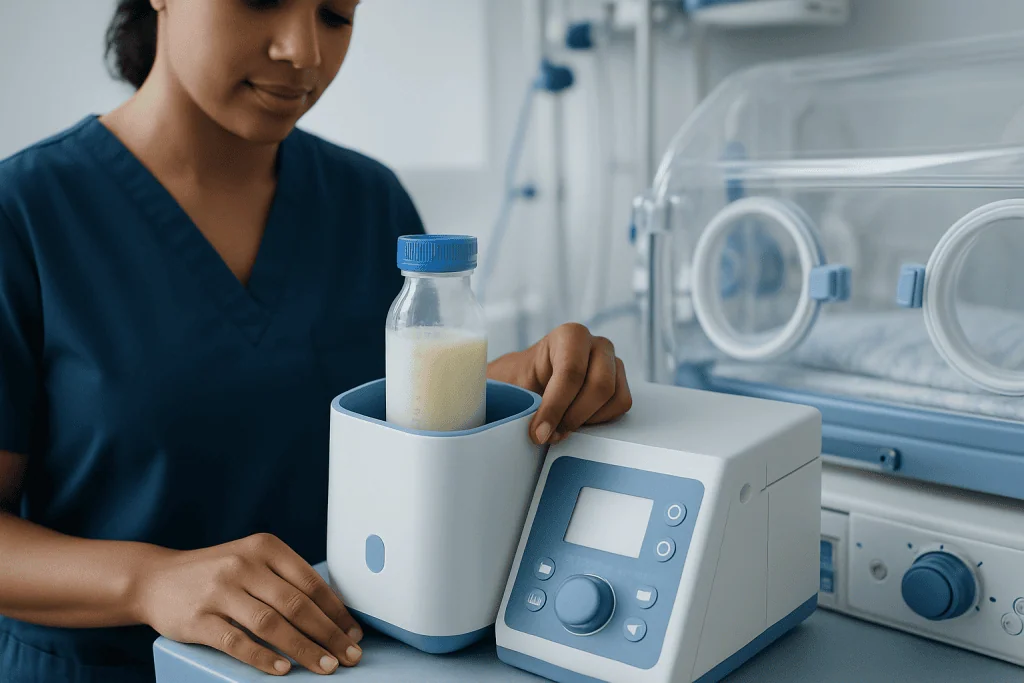
If the milk is frozen, it should first be thawed in the refrigerator or under cool to lukewarm running water. If the milk is refrigerated, it can go directly into a bowl of warm water or a bottle warmer. The container should stay sealed while warming to reduce contamination risk.
A practical method is to place the bottle or storage container in warm, not boiling, water for several minutes. The milk can then be gently swirled to mix the cream that naturally separates. Shaking forcefully is not usually necessary; swirling is enough for most milk.
Before feeding, a caregiver can test a few drops on the inside of the wrist. The milk should feel comfortably lukewarm. It should never feel hot. Once warmed, the milk is ideally fed right away and any leftovers from the feeding should generally be discarded because saliva from the baby’s mouth can introduce bacteria.
- Wash hands before handling milk.
- Use clean bottles, nipples, and storage containers.
- Warm gently in warm water or a bottle warmer.
- Do not microwave or place directly on the stove.
- Use warmed milk within 2 hours.
- Avoid reheating the same milk again and again.
Storage, timing, and common mistakes

Safe rewarming begins with safe storage. Freshly expressed breast milk, refrigerated milk, and frozen milk each have different timing guidance. Families should follow current advice from their pediatrician or trusted public health sources, especially for newborns, premature infants, or babies with medical conditions, who may need stricter handling.
One common mistake is leaving warmed milk out for too long. Another is repeatedly warming, cooling, and warming the same milk. These patterns may increase the chance of bacterial growth. If there is uncertainty about how long milk has been sitting out, it is usually safer to discard it rather than guess.
It is also common for parents to worry when breast milk looks different after storage. Separation into layers is normal, and color may vary from creamy white to slightly yellow, bluish, or tan. A soapy smell can happen in some stored milk because of natural lipase activity and does not always mean the milk is spoiled, especially if a baby accepts it well and storage has been appropriate.
If concerns about feeding, digestion, or infant growth continue, a pediatrician may review the feeding routine and look for other explanations, such as reflux or sensitivity, rather than a problem with warming alone. In some situations, a broader evaluation may be considered, including assessment for food allergy if symptoms suggest it.
When rewarming may be a problem: red flags to watch for
Most babies tolerate properly stored and rewarmed breast milk without any issue. A single episode of fussiness or refusing a bottle is common and often not a sign of spoiled milk. Babies may refuse a feed because they are tired, not very hungry, or prefer a different bottle or nipple flow.
Red flags are more specific. Medical review is more important if a baby has repeated vomiting, diarrhea, fever, unusual sleepiness, poor feeding, fewer wet diapers, signs of dehydration, breathing difficulty, or a clear worsening after feeds. Milk that has an obviously sour or rancid smell after questionable storage should not be used.
Caregivers should also pay attention if there are contamination concerns, such as a bottle being left in an unsafe environment, a power outage affecting stored milk, or unclean pumping equipment. In those situations, the issue is less about warming itself and more about whether the milk remained safe before the feed.
Feeding discomfort can overlap with other conditions. If a baby arches, coughs, seems distressed after feeds, or has poor weight gain, a doctor may also consider reflux or another feeding-related problem rather than assuming rewarmed milk is the cause.
What a doctor would check if concerns arise
If a baby becomes unwell after a feed, doctors usually start with a careful history. They may ask how the milk was expressed, stored, thawed, rewarmed, and how long it stayed at room temperature. They will also ask about the baby’s age, general health, feeding pattern, wet diapers, stool changes, and whether anyone else noticed symptoms.
The examination focuses on the baby, not just the milk. A doctor may look for dehydration, fever, abdominal discomfort, breathing changes, skin rash, weight concerns, or signs of infection. In many cases, this is enough to decide whether the problem is minor or whether further testing is needed.
Tests are not always necessary. If a baby appears well, the main advice may be better storage and warming technique and close observation. If symptoms are more significant, testing may be directed toward possible infection, feeding intolerance, or another digestive issue. For babies with ongoing swallowing or feeding difficulty, a specialist evaluation may occasionally be advised, and some centers may consider tests related to gastroenterology care or feeding assessment.
When feeding concerns are complex, support may involve more than one specialist. Pediatricians, lactation consultants, and nutrition-focused teams can help identify whether the issue is bottle refusal, digestive discomfort, growth concerns, or a handling problem with stored milk.
Practical tips for daily feeding and self-care
Simple routines can make breast milk handling safer and less stressful. Labeling milk with the date of expression, storing smaller portions, and rotating older milk forward can help reduce waste. Planning ahead by thawing frozen milk in the refrigerator can also avoid rushed warming decisions.
Parents often feel pressure to warm every bottle, but many babies accept milk at different temperatures. Finding the baby’s preference may make feeding easier. If a baby refuses warmed milk, trying a calm environment, a paced-bottle technique, or a different nipple shape may help more than changing the temperature.
If pumping and feeding are becoming difficult, professional support can be very helpful. A pediatrician or lactation consultant can review latch history, bottle-feeding method, pumping hygiene, milk supply concerns, and the baby’s growth. Some families may also benefit from specialist input through pediatric care or nutrition support when feeding issues are ongoing.
Near the end of the care pathway, if symptoms remain unexplained or feeding concerns become persistent, multidisciplinary review may be useful. Acibadem International’s multidisciplinary specialists and JCI-accredited hospitals diagnose and treat feeding and pediatric health concerns for international patients.
When to seek medical care
Medical advice should be sought promptly if a baby has fever, repeated vomiting, diarrhea, blood in the stool, marked sleepiness, breathing difficulty, or signs of dehydration such as a dry mouth, no tears when crying, or fewer wet diapers. These symptoms are not typical effects of properly rewarmed breast milk and should not be ignored.
A doctor should also be consulted if the baby repeatedly refuses feeds, is not gaining weight as expected, seems to choke or cough often during feeds, or becomes distressed after nearly every bottle. These patterns may point to a feeding or digestive problem that deserves assessment.
Urgent care is especially important for newborns, premature babies, and infants with chronic medical conditions, because they can become unwell more quickly. If a caregiver is unsure whether milk was stored safely, or if the baby seems unwell for any reason, calling a healthcare professional is a sensible next step.
Most concerns turn out to be manageable with better storage habits, reassurance, and routine follow-up. Still, a qualified doctor is the right person to assess any baby with concerning symptoms or persistent feeding problems.
Frequently asked questions
How to rewarm breast milk without a bottle warmer?
A sealed bottle or storage container can be placed in a bowl or mug of warm water for several minutes. The milk should be gently swirled and tested before feeding so it feels lukewarm, not hot.
Can breast milk be microwaved?
Microwaving is not recommended. It can create hot spots that may burn a baby’s mouth, even if the bottle does not feel very hot from the outside.
How long can warmed breast milk stay out?
Once breast milk has been warmed, it is generally best to use it within 2 hours. If the baby has already fed from the bottle, leftover milk is usually discarded rather than saved for another feeding.
Can breast milk be reheated more than once?
Repeated reheating is not advised. Warming, cooling, and rewarming the same milk can increase the chance of bacterial growth and makes timing harder to track safely.
Does breast milk need to be warmed at all?
No. Breast milk can often be given at room temperature or even cool if the baby accepts it well. Warming is mainly a preference, not a requirement.
How can someone tell if stored breast milk has gone bad?
Milk that has been kept too long or stored unsafely may smell clearly sour or rancid and should not be used. However, changes in color or separation into layers are often normal and do not automatically mean the milk is spoiled.
References
- American Academy of Pediatrics
- Centers for Disease Control and Prevention
- Academy of Breastfeeding Medicine
- World Health Organization
- National Health Service
This article is for general information only and is not a substitute for professional medical advice. Please consult a qualified doctor about your individual situation.
Explore treatments in Turkey — costs, top hospitals & a free quote
JCI-accredited · board-certified surgeons · reply within 24h
Add us as a Preferred Source to see more of our trusted health content across Google Search, AI Overviews and Discover.