How to Rid of Pigmentation? A Doctor-Reviewed Answer

Pigmentation is a broad term for darker or lighter patches of skin caused by changes in melanin, the skin's natural pigment. Daily broad-spectrum sunscreen is the foundation of preventing pigmentation from worsening and supporting treatment results.
Key Takeaways
- Pigmentation is a broad term for darker or lighter patches of skin caused by changes in melanin, the skin's natural pigment.
- Daily broad-spectrum sunscreen is the foundation of preventing pigmentation from worsening and supporting treatment results.
- Acne, inflammation, sun exposure, hormones, medicines and skin injury are common triggers of dark marks.
- Effective treatment depends on identifying the type of pigmentation; improvement is usually gradual rather than immediate.
- A mole or spot that changes in size, shape, color or symptoms should be medically assessed promptly.
Most pigmentation changes are harmless and can often fade with consistent sun protection, gentle skin care and treatment tailored to the underlying cause. However, a new, changing or unusual dark spot should be examined by a qualified clinician before it is treated as ordinary pigmentation.
How to Rid of Pigmentation Safely
To rid the skin of pigmentation, the first step is to identify what type of color change is present. Many dark spots are harmless and related to sun exposure, acne healing, irritation, hormonal changes or past skin injury. They may fade over time, and a careful plan using daily sun protection, non-irritating skin care and, when appropriate, clinician-guided treatment can make them less noticeable.
There is no single treatment that safely removes every form of pigmentation. Products or procedures that help one person may irritate another person’s skin and worsen discoloration, especially in deeper skin tones. A gradual approach is usually safest: protect the skin from ultraviolet and visible light, avoid picking or harsh scrubbing, and seek professional advice if pigmentation is persistent, widespread, distressing or difficult to identify.
Before trying to fade a spot, it is important to consider whether it needs medical review. Most freckles, sun spots and post-acne marks are not dangerous, but a new or changing pigmented lesion should not be self-treated first. Early assessment helps distinguish common hyperpigmentation from conditions that need different care.
What Pigmentation Means and Why It Appears
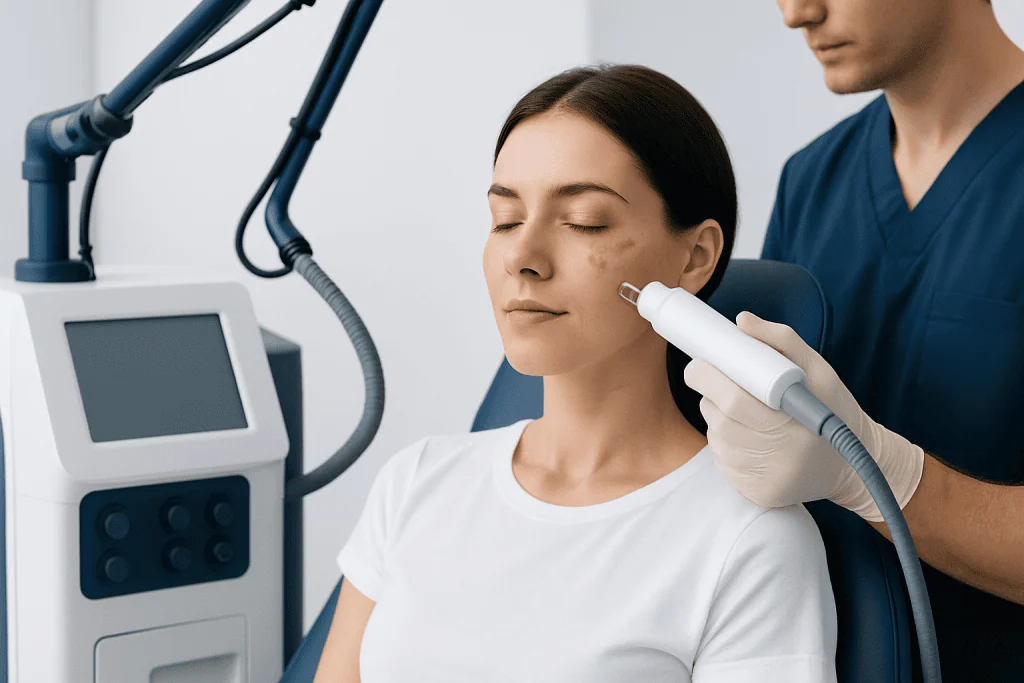
Skin color is influenced by melanin, a pigment produced by specialized cells called melanocytes. Hyperpigmentation occurs when an area produces or retains more melanin than surrounding skin, causing it to look brown, gray-brown, black or sometimes bluish-gray. Hypopigmentation, in contrast, refers to lighter patches and has different causes and treatment considerations.
Common types of dark pigmentation include freckles, solar lentigines (often called age spots or sun spots), post-inflammatory hyperpigmentation and melasma. Post-inflammatory hyperpigmentation can remain after acne, eczema, a cut, a burn, an insect bite or a cosmetic procedure. Melasma usually causes symmetrical brown or gray-brown patches on the cheeks, forehead, upper lip or jawline and may be influenced by sun exposure, hormones and genetic tendency.
Pigmentation can affect all skin tones. It may be more noticeable and may last longer in people with medium to deep skin tones because inflammation can more readily stimulate melanin production. This does not mean that treatment is impossible; it means that choosing gentle, appropriate treatment and minimizing irritation are particularly important.
Pigmentation Warning Signs That Need Medical Review

Although pigmentation is commonly benign, a clinician should assess a spot that is new in adulthood, rapidly changing or unlike other marks on the skin. Particular warning signs include asymmetry, irregular or poorly defined borders, more than one color within a lesion, noticeable enlargement, bleeding, crusting, itch, pain or a sore that does not heal. A dark streak under a nail, especially if it is new or widening, also deserves prompt medical assessment.
Medical advice is also appropriate when pigmentation develops suddenly over large areas, is accompanied by other symptoms, or appears after starting a medicine. Some medications can contribute to skin darkening, and rarely, generalized changes in skin color can be associated with an underlying health condition. A doctor can review the person’s history, medicines and any associated symptoms in context.
It is best not to use bleaching agents, strong acids, unregulated imported creams or home procedures on an unexplained lesion. Some products may contain undisclosed ingredients, including potent steroids or mercury, which can damage skin. Treating a suspicious mole with a lightening product may also delay an accurate diagnosis.
How a Doctor Diagnoses Skin Pigmentation
A dermatologist or other qualified clinician usually begins by asking when the pigmentation appeared, whether it has changed, what symptoms it causes and whether there was acne, injury, rash, pregnancy, hormonal treatment, medication use or substantial sun exposure. They will also ask about family history and previous skin conditions. These details often help identify the likely cause.
The skin examination assesses the color, pattern, borders and distribution of the affected areas. A clinician may use a dermatoscope, a handheld magnifying device with light, to examine individual moles or spots more closely. In selected cases, a Wood’s lamp may help clarify whether pigment is mainly closer to the skin surface or deeper within it, although it does not provide a diagnosis on its own.
If a lesion has concerning features, the doctor may recommend photography for monitoring, a biopsy or referral for specialist assessment. Blood tests are not routinely needed for ordinary dark spots, but may be considered if the overall pattern and a person’s symptoms suggest a medical cause. Establishing the diagnosis first helps avoid treatments that are ineffective or likely to cause irritation.
Evidence-Based Ways to Fade Dark Pigmentation
Consistent photoprotection is the most important part of managing most hyperpigmentation. A broad-spectrum sunscreen with SPF 30 or higher should be applied every day to exposed skin and reapplied as directed when outdoors. A wide-brimmed hat, shade and protective clothing add useful protection. Tinted sunscreens containing iron oxides may be especially helpful for melasma and some forms of post-inflammatory hyperpigmentation because they can also reduce exposure to visible light.
For suitable patients, a clinician may recommend topical ingredients that influence pigment production or skin-cell turnover. Depending on the diagnosis and skin sensitivity, these can include azelaic acid, retinoids, vitamin C, niacinamide, tranexamic acid, hydroquinone for supervised limited courses, or other prescription formulations. Results often take several weeks to months, and regular review can help manage dryness, redness or other irritation.
Procedures such as chemical peels, microneedling, laser treatment or light-based therapy may help selected forms of pigmentation, but they are not automatically the best option. Technique, device choice, skin tone and the specific diagnosis matter greatly. Procedures can trigger post-inflammatory hyperpigmentation if performed too aggressively, so they should be planned by an experienced medical professional and combined with careful sun protection.
For melasma, treatment often focuses on control rather than permanent removal because recurrence is common. If hormonal factors may be relevant, a doctor can discuss them sensitively and consider whether any medication review is needed. People should not stop prescribed hormonal medicines without speaking with their prescribing clinician.
Daily Skin Care and Prevention
A simple, consistent routine can reduce the triggers that make dark marks persist. Gentle cleansing, regular moisturizing and avoiding friction help support the skin barrier. Acne should be treated early and safely rather than squeezed or picked, since inflammation and injury can leave darker marks after active spots settle.
When introducing a new active ingredient, it is sensible to start slowly and use only one new product at a time. Burning, persistent stinging, swelling, scaling or worsening discoloration can signal irritation. In that situation, stopping the suspected product and seeking advice from a clinician is safer than adding more treatments.
Home remedies such as lemon juice, baking soda, toothpaste or abrasive scrubs are not reliable pigmentation treatments and can cause chemical irritation or burns. Skin lightening should not involve products without clear ingredient lists or medical guidance. A treatment plan that is gentle enough to continue consistently is generally more useful than an aggressive routine that inflames the skin.
When to Seek Medical Care
A person should arrange medical review if a dark spot is new, changes over time, looks different from their other moles, or bleeds, crusts, itches or hurts. Assessment is also advisable for a new dark band in a nail, pigmentation affecting the lips or mouth, or widespread skin darkening without an obvious explanation. These signs do not necessarily mean a serious condition, but they warrant a professional examination.
Non-urgent dermatology advice can be helpful when pigmentation remains despite several months of consistent sunscreen and gentle care, when melasma affects confidence or daily life, or when acne or eczema is leaving frequent new marks. A clinician can identify the cause, set realistic expectations and recommend options suited to the individual’s skin type and medical history.
Acibadem International’s multidisciplinary specialists and JCI-accredited hospitals can assess skin pigmentation concerns and discuss appropriate diagnostic and treatment options for international patients. The most suitable approach should always be based on a clinical examination rather than on the appearance of a photograph alone.
Frequently asked questions
Can pigmentation go away completely?
Some pigmentation, especially marks left after acne or a minor injury, can fade substantially over time. Other conditions, such as sun spots or melasma, may persist or return, particularly with ongoing sun exposure. Treatment can often reduce their appearance, but complete and permanent clearance cannot be guaranteed.
What is the fastest way to get rid of pigmentation?
There is no universally safe fast method. Daily broad-spectrum sunscreen and a clinician-recommended treatment based on the cause are usually the most effective approach. Aggressive exfoliation, unregulated bleaching creams and frequent procedures can irritate the skin and make pigmentation worse.
How long does it take for dark spots to fade?
The timeline varies with the cause, depth of pigment, skin tone and treatment consistency. Superficial post-inflammatory marks may improve over several months, while deeper pigmentation can take longer. A dermatologist can help set realistic expectations after examining the skin.
Can sunscreen fade existing pigmentation?
Sunscreen does not directly remove existing pigment, but it helps prevent spots from getting darker and reduces the development of new discoloration. This makes it an essential part of any treatment plan. Without regular sun protection, topical treatments and procedures may provide less reliable results.
Which ingredients can help with hyperpigmentation?
Ingredients commonly used for hyperpigmentation include azelaic acid, retinoids, vitamin C, niacinamide and certain prescription treatments. The best choice depends on the cause of pigmentation, skin sensitivity and other skin conditions. A clinician can advise which options are appropriate and how to introduce them safely.
Should a changing mole be treated with a dark-spot cream?
No. A mole or pigmented lesion that is changing in color, size, shape or symptoms should be assessed by a qualified clinician before any cosmetic treatment is used. Lightening products can obscure changes without addressing the reason for them.
References
- American Academy of Dermatology
- American Academy of Dermatology Association
- National Health Service
- Mayo Clinic
- World Health Organization
This article is for general information only and is not a substitute for professional medical advice. Please consult a qualified doctor about your individual situation.
Explore treatments in Turkey — costs, top hospitals & a free quote
JCI-accredited · board-certified surgeons · reply within 24h
Add us as a Preferred Source to see more of our trusted health content across Google Search, AI Overviews and Discover.