HSV Testing — Explained by Medical Evidence, Not Myths

HSV testing is not one single test; it may involve a swab from a lesion or a blood test for antibodies. A PCR or NAAT swab from a new blister or sore is usually the most accurate way to confirm active HSV infection.
Key Takeaways
- HSV testing is not one single test; it may involve a swab from a lesion or a blood test for antibodies.
- A PCR or NAAT swab from a new blister or sore is usually the most accurate way to confirm active HSV infection.
- Blood tests can help when there are no lesions, but they may miss very recent infection and can be harder to interpret.
- HSV-1 and HSV-2 are different, and test results should be read in the context of symptoms, timing, and medical history.
- A positive herpes test does not always explain every genital or oral symptom, so clinical evaluation still matters.
- People with painful sores, first-time genital symptoms, pregnancy concerns, or recurrent unexplained symptoms should seek medical advice.
HSV testing helps confirm whether a person has herpes simplex virus, but the right test depends on whether sores are present, when exposure happened, and what question needs answering. In most cases, a swab from a fresh sore is the most useful test for active infection, while blood tests can show past exposure but do not always explain current symptoms.
Overview: what HSV testing is and when it is useful
HSV testing refers to tests used to detect herpes simplex virus infection. There are two main types of herpes simplex virus: HSV-1, which often causes oral herpes but can also affect the genital area, and HSV-2, which more commonly causes genital herpes. Testing is used to confirm infection, guide treatment decisions, and help explain symptoms such as blisters, ulcers, burning, or recurrent sores.
The most useful HSV test depends on the situation. If a person has a fresh sore, blister, or ulcer, a clinician may take a sample directly from the lesion. If there are no visible lesions, a blood test may be considered to look for antibodies that suggest past exposure. Each approach answers a different clinical question, so choosing the right test matters as much as the result itself.
HSV testing can also be helpful in situations beyond obvious symptoms. It may be used when a person has a partner with herpes, when genital symptoms keep returning without a clear cause, or when herpes needs to be distinguished from other conditions such as genital warts or certain skin infections. Testing is not always recommended for everyone, however, especially when there are no symptoms and no specific reason to test.
Types of HSV tests and how they differ
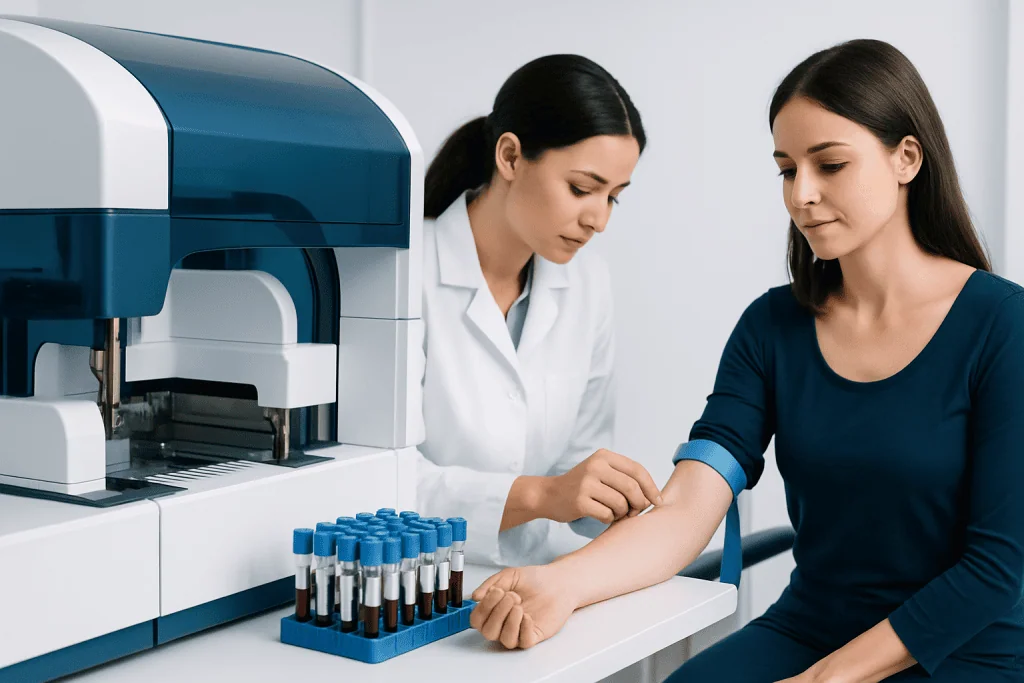
There are two broad categories of HSV testing: direct tests that look for the virus itself, and blood tests that look for the body’s immune response. Direct tests are usually done when visible lesions are present. Blood tests are usually considered when there are no lesions to sample or when a person wants to know whether they have been exposed in the past.
The most commonly preferred direct test is a nucleic acid amplification test, often called PCR. A clinician gently swabs fluid or cells from a fresh lesion and sends the sample to the laboratory. PCR is sensitive and can usually tell whether HSV is present and whether it is HSV-1 or HSV-2. Viral culture is another lesion-based test, but it is generally less sensitive, especially once lesions begin to heal.
Blood testing looks for type-specific antibodies, usually IgG antibodies to HSV-1 or HSV-2. These antibodies take time to develop, so blood testing is less useful very soon after exposure. Blood tests can help answer whether a person has had prior HSV infection, but they do not show exactly when infection happened, where on the body the infection is located, or whether current symptoms are definitely caused by herpes.
- PCR/NAAT swab: best for active sores; can identify HSV type.
- Viral culture: may be used, but is less sensitive than PCR.
- Type-specific IgG blood test: helps detect past exposure to HSV-1 or HSV-2.
- IgM blood test: generally not recommended because it is less reliable and can be misleading.
Timing matters: when to test after symptoms or exposure

Timing has a major effect on HSV test accuracy. For a lesion swab, the ideal time is as early as possible, when a blister, ulcer, or moist lesion is fresh. Once a sore begins to crust or heal, the amount of detectable virus may decrease, which can make false-negative results more likely. This is why people with new symptoms are often advised to seek care promptly rather than waiting for lesions to fade.
Blood tests follow a different timeline. Type-specific HSV antibodies do not appear immediately after infection. If testing is done too early after an exposure, the result may be negative even if infection is present but recent. In some cases, a clinician may recommend repeat testing after an appropriate interval if suspicion remains high.
This difference explains why a negative test does not always rule out herpes. A negative lesion swab can happen if the sore was healing or the sample was taken late. A negative blood test can happen if the body has not yet produced detectable antibodies. Interpreting the timing alongside symptoms, sexual history, and examination findings is an important part of evidence-based herpes diagnosis.
What HSV test results can and cannot tell you
A positive lesion PCR usually means the virus is present in the sampled sore. This is the clearest laboratory confirmation of active herpes at that site. If the result identifies HSV-1 or HSV-2, that information can help with counseling, expectations about recurrence, and treatment planning. In some cases, a clinician may discuss comprehensive STD testing as part of a broader sexual health evaluation, because other infections can cause similar symptoms or occur at the same time.
A positive HSV-2 blood test usually suggests genital exposure at some point, even if a person does not remember symptoms. A positive HSV-1 blood test is more difficult to interpret because many people acquire HSV-1 earlier in life, often from oral exposure, and the test does not show whether the infection is oral or genital. For this reason, blood results need careful interpretation in context.
False positives and false negatives can occur, especially with blood testing in people who have a low chance of infection or who test very soon after exposure. Borderline or low-positive results may need confirmation depending on the test used and the clinical situation. A healthcare professional can explain whether a result likely reflects true infection, prior exposure without current disease, or the need for repeat or confirmatory testing.
It is also important to know what HSV testing cannot do. It cannot predict exactly when outbreaks will happen, how severe they will be, or whether transmission will occur in a specific encounter. Test results provide useful medical information, but they are only one part of diagnosis and care.
Who may need HSV testing and who may not
HSV testing is often most helpful for people who have symptoms that could be herpes. These may include painful blisters, shallow ulcers, tingling followed by sores, genital burning, or recurrent oral lesions. Testing can also be useful when symptoms are atypical and herpes is only one of several possibilities. In such cases, the goal is not simply to label symptoms, but to identify the real cause and guide treatment.
Testing may also be considered for people whose sexual partner has known herpes, for those with recurrent genital symptoms that have never been explained, and for pregnant individuals when herpes status may affect pregnancy or delivery planning. In some cases, clinicians also test for herpes when evaluating sexually transmitted diseases more broadly, especially if ulcers or lesions are present.
Routine HSV screening in people without symptoms is more complex. Blood testing can detect past exposure, but in low-risk settings it may create confusion because positive results do not always explain health concerns and may occasionally be falsely positive. For this reason, testing decisions are best individualized. A clinician can help decide whether the likely benefits of testing outweigh the limitations in a specific person.
Diagnosis, treatment options, and practical next steps
Diagnosing herpes involves more than a lab report. A clinician usually considers the appearance of lesions, the pattern of symptoms, exposure history, and the test type used. When a first episode of genital sores is suspected, prompt evaluation is helpful because early antiviral treatment may reduce symptom severity and duration. Similar approaches may be used for recurrent outbreaks, depending on frequency and impact on daily life.
Treatment for HSV usually involves antiviral medicines prescribed by a doctor. These medicines do not remove the virus from the body, but they can shorten outbreaks, reduce symptom burden, and in some cases lower the chance of transmission. People with frequent recurrences may discuss episodic treatment for outbreaks or suppressive therapy taken regularly. If symptoms overlap with conditions that need procedural evaluation, a doctor may recommend tests or specialist care rather than assuming every sore is herpes.
Practical self-care also matters. Keeping the area clean and dry, avoiding friction on active lesions, and refraining from sexual contact during outbreaks can help. Barrier protection can reduce, but not eliminate, transmission risk. If symptoms are severe, frequent, or hard to diagnose, specialist assessment may be appropriate, and some patients may undergo infectious diseases evaluation or related consultations depending on the clinical picture.
For international patients who need coordinated assessment, Acibadem International’s multidisciplinary specialists at JCI-accredited hospitals diagnose and treat herpes and other sexually transmitted infections using evidence-based approaches tailored to the person’s symptoms and test findings.
Prevention, partner communication, and self-care
Good prevention starts with understanding how HSV spreads. The virus is usually transmitted through skin-to-skin contact with an infected area, including contact during an outbreak and, at times, when no visible symptoms are present. Avoiding sexual contact when sores or warning symptoms are present is one of the most effective ways to reduce spread. Consistent condom or barrier use lowers risk, though it does not provide complete protection because herpes can affect nearby skin not covered by a barrier.
Open, calm communication with partners can support practical decision-making. A confirmed diagnosis can help couples discuss symptom recognition, testing, condom use, and whether suppressive antiviral treatment might be appropriate. For people who receive a new diagnosis, counseling often helps place the result in context and correct common myths, such as the idea that herpes always causes obvious symptoms or that a blood test can pinpoint the exact source or timing of infection.
General self-care can also reduce discomfort and support overall health. Many people benefit from learning their own trigger patterns, seeking early treatment when recurrences start, and avoiding products that irritate the skin. It is also sensible to address other causes of genital or oral symptoms when they are suspected, including irritation, fungal infections, or other viral conditions that may need separate evaluation.
When to seek medical care
Medical care should be sought promptly for a first episode of genital or oral sores, painful urination with genital lesions, rapidly worsening symptoms, severe pain, or fever with new blisters. A person should also seek care if lesions are recurrent but have never been tested, if symptoms do not improve, or if there is uncertainty about whether the cause is herpes at all. Early assessment improves the chances of getting the most informative test, especially a lesion swab.
Urgent medical attention is especially important during pregnancy, in newborns, and in people with weakened immune systems. Eye symptoms such as redness, pain, or vision changes also need prompt evaluation because herpes can affect the eye and should not be managed casually. People with mouth sores plus dehydration, or anyone with significant pain or inability to eat or urinate, should also speak to a clinician without delay.
Follow-up is worthwhile even after testing. A doctor can explain the meaning of results, decide whether confirmatory testing is needed, and discuss treatment, transmission reduction, and partner considerations. This is often more useful than trying to interpret an isolated lab value without medical context.
Frequently asked questions
What is the most accurate HSV testing method?
For a person with a fresh sore, a PCR or other nucleic acid test from the lesion is usually the most accurate HSV testing method. It detects the virus directly and can often identify whether it is HSV-1 or HSV-2. Blood tests are useful in some situations, but they answer a different question and are usually less helpful for diagnosing a current lesion.
How soon after exposure can HSV testing detect infection?
A swab test can detect active infection once a new lesion is present, especially early in the outbreak. Blood tests usually take longer because antibodies need time to develop after infection. If testing is done too soon, a blood test may be negative even when infection is recent.
Can a blood test tell whether herpes is oral or genital?
No, a blood test alone cannot show whether HSV infection is oral or genital. It only shows whether the immune system has made antibodies to HSV-1 or HSV-2. Location is determined by symptoms, examination, and lesion testing when sores are available.
Should everyone be screened for herpes even without symptoms?
Not always. In people without symptoms, herpes blood testing can sometimes be difficult to interpret and may not clearly improve care. Whether testing is useful depends on factors such as partner history, pregnancy considerations, symptoms in the past, and a clinician's judgment.
Can HSV testing be negative even if someone has herpes?
Yes. A lesion test can be negative if the sore is healing, the sample was taken late, or too little virus was present in the swab. A blood test can be negative if testing happens before antibodies have had time to develop.
What is the difference between HSV-1 and HSV-2 on test results?
HSV-1 and HSV-2 are related but distinct herpes simplex viruses. HSV-1 more often causes oral herpes, while HSV-2 more often causes genital herpes, though either type can affect either location. Knowing the type can help guide counseling and expectations, but symptoms and site still matter.
This article is for general information only and is not a substitute for professional medical advice. Please consult a qualified doctor about your individual situation.
Explore treatments in Turkey — costs, top hospitals & a free quote
JCI-accredited · board-certified surgeons · reply within 24h
Add us as a Preferred Source to see more of our trusted health content across Google Search, AI Overviews and Discover.

More from the Health Library

Batana Oil for Hair — Explained by Medical Evidence, Not Myths

Anicteric: What Patients Need to Know

Melatonin and Heart Failure: What Patients Need to Know

Dark Blue Nails — Explained by Medical Evidence, Not Myths

Myoclonic Seizure: What Patients Need to Know