Hyperosmia: An Evidence-Based Guide for Patients

Hyperosmia means a person notices smells more strongly than usual. It can be temporary or related to migraine, pregnancy, allergies, sinus disease, medications, or neurological conditions.
Key Takeaways
- Hyperosmia means a person notices smells more strongly than usual.
- It can be temporary or related to migraine, pregnancy, allergies, sinus disease, medications, or neurological conditions.
- Diagnosis focuses on identifying the underlying cause through medical history, examination, and selected tests.
- Treatment depends on the trigger and may include managing migraine, nasal inflammation, or other medical conditions.
- Medical advice is important if smell changes are sudden, persistent, or occur with headaches, seizures, or other neurological symptoms.
Hyperosmia is an unusually heightened sense of smell that can make everyday odors seem much stronger than expected. It is not a disease itself, but a symptom that may be temporary or linked to conditions such as migraine, pregnancy, sinus problems, medication effects, or neurological disorders.
Overview: What Hyperosmia Means
Hyperosmia is an increased sensitivity to smell. A person with hyperosmia may notice odors that others barely detect, or may experience familiar smells as unusually intense, unpleasant, or overwhelming. In many cases, hyperosmia is temporary and improves when the underlying trigger settles.
Rather than being a disease on its own, hyperosmia is usually treated as a symptom. It can appear with common situations such as pregnancy, migraine, colds, allergies, or sinus irritation. Less often, it may be associated with neurological or hormonal conditions, exposure to certain chemicals, or medication effects.
People experience hyperosmia differently. Some mainly notice stronger food smells, perfumes, smoke, or cleaning products. Others feel nausea, headaches, loss of appetite, or discomfort in crowded public places because everyday odors become difficult to tolerate. This variation is one reason medical assessment focuses on the whole symptom pattern, not smell sensitivity alone.
It is also helpful to distinguish hyperosmia from other smell disorders. Reduced smell is called hyposmia, loss of smell is anosmia, and distorted smell perception is parosmia. A doctor may consider these possibilities because they can overlap, especially after infections or nasal conditions.
Symptoms and How Hyperosmia Feels
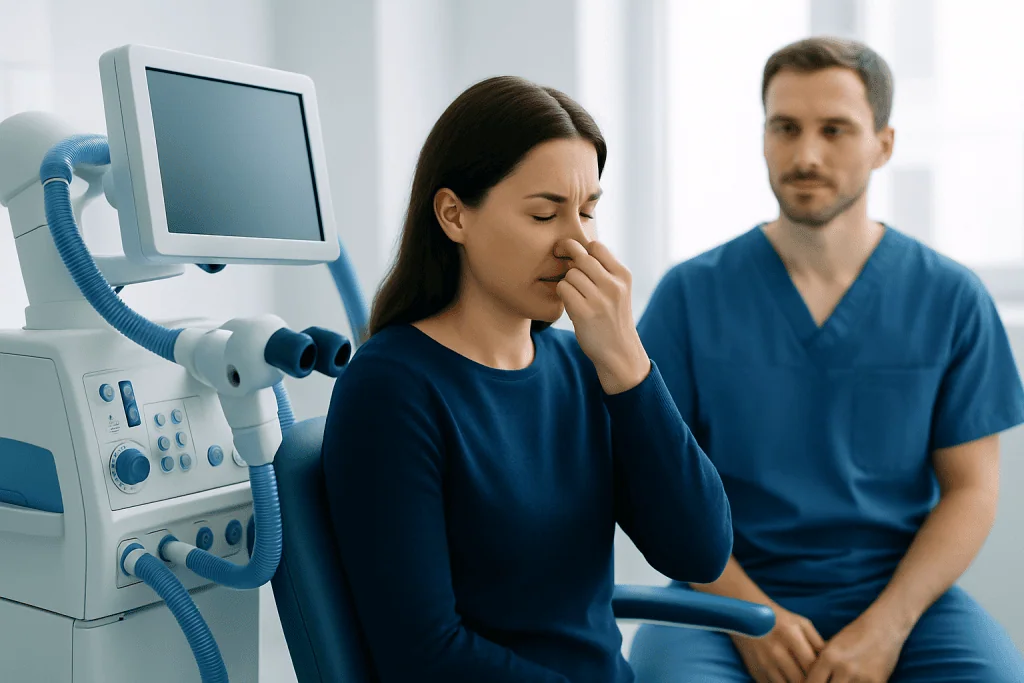
The main feature of hyperosmia is a heightened awareness of odors. Smells that once seemed mild may become sharp, distracting, or hard to ignore. Common triggers include perfumes, cooking odors, cigarette smoke, gasoline, cleaning products, and certain personal care items.
For some people, hyperosmia is not just stronger smell detection but also a physical reaction to odors. They may feel nauseated, develop headaches, lose their appetite, feel dizzy, or become irritated by environments with mixed smells. In people who have migraine, smell sensitivity may occur before, during, or between headache attacks, and may overlap with other sensory sensitivity such as light or sound intolerance.
Symptoms can be constant or intermittent. A person may notice smell sensitivity only during pregnancy, during allergy season, after a viral illness, or around migraine episodes. Tracking when the symptom appears and what makes it worse can help both the patient and clinician recognize patterns.
- Everyday smells seem unusually intense
- Certain odors trigger nausea or queasiness
- Headaches or migraine symptoms worsen around smells
- Food aversions or reduced appetite develop
- Work, travel, or social activities become harder because of odor exposure
Causes and Risk Factors

Hyperosmia can occur for several reasons, and sometimes no clear cause is found. Temporary causes are common. Pregnancy is a well-known example, especially early on, when hormonal changes may make odors seem stronger. Upper respiratory infections, allergies, and sinus inflammation can also alter how smells are detected and processed, even if the main complaint is heightened sensitivity rather than blockage.
Migraine is one of the more recognized medical links. Many people with migraine report increased sensitivity to sensory input, including smells. In these cases, the symptom may improve when migraine is better controlled. Nasal and sinus conditions can also play a role, especially when there is inflammation, pressure, or altered airflow through the nose. Doctors may consider ENT evaluation if symptoms are persistent or accompanied by congestion, facial pain, or recurrent infections.
Medication effects, chemical exposures, and endocrine or metabolic changes may contribute as well. Some people become more aware of odors after significant lifestyle changes, stress, or recovery from illness. In less common situations, smell changes may be seen with neurological conditions affecting how the brain interprets sensory information.
Because smell sensitivity can occasionally occur with more serious causes, clinicians pay attention to red flags. These include a sudden unexplained change, seizures, head injury, new severe headaches, fainting, or other neurological symptoms. Hyperosmia alone does not mean a serious disorder is present, but the context matters.
How Doctors Diagnose Hyperosmia
Diagnosis begins with a detailed medical history. A doctor will ask when the smell sensitivity started, whether it is constant or episodic, and which odors trigger it. They may also ask about migraine, allergies, sinus symptoms, recent infections, pregnancy, medication use, occupational exposures, mental health symptoms, and any history of head injury or neurological problems.
The physical examination may include evaluation of the nose, throat, and sinuses as well as a general neurological assessment. Depending on the history, patients may be referred for an ENT examination to look for inflammation, polyps, or structural causes. If smell changes are thought to be linked to the brain or nervous system, further neurological assessment may be appropriate.
Additional tests are chosen based on the suspected cause rather than ordered routinely for everyone. These may include smell testing, blood tests, allergy assessment, or imaging studies if there are warning signs. In selected cases, doctors may use MRI scanning to evaluate possible neurological causes, or a structured medical check-up when symptoms are part of a broader health picture.
Because hyperosmia is a symptom, the goal of diagnosis is not simply to label the smell sensitivity but to identify what is driving it. This makes the treatment plan more targeted and more likely to help.
Treatment Options and Symptom Relief
There is no single treatment that works for all cases of hyperosmia because care depends on the cause. If the symptom is related to pregnancy, a temporary viral illness, or brief environmental exposure, it may improve on its own. When hyperosmia is linked to migraine, allergies, sinus disease, medication effects, or another health condition, treatment is aimed at that underlying issue.
For people with migraine-related smell sensitivity, doctors may recommend a broader migraine management plan that includes identifying triggers, improving sleep and hydration, and considering medical therapy when appropriate. If nasal inflammation or sinus disease is involved, treating the airway problem may reduce smell discomfort. In selected patients with significant nasal or sinus problems, assessment for ENT treatment or surgery may be part of care.
Practical steps can also make daily life easier while the cause is being addressed. Avoiding known trigger odors, improving indoor ventilation, choosing unscented personal and household products, and eating cool or less aromatic foods may reduce symptoms. Some people find that small routine adjustments are enough to regain comfort during temporary episodes.
If a neurological condition is suspected, treatment may involve a team approach. A person with smell sensitivity plus seizures, blackouts, or focal neurological symptoms may need specialist evaluation and targeted testing such as electroencephalography when clinically indicated. Treatment decisions should always be individualized by a qualified doctor.
Self-Care, Prevention, and Living With Hyperosmia
Not every case of hyperosmia can be prevented, but symptom management often improves quality of life. It helps to keep a simple diary of when smell sensitivity appears, which odors are most difficult, and whether it occurs with headaches, menstrual cycles, illness, or stress. This can reveal patterns that support diagnosis and treatment.
Environmental changes are often useful. Unscented detergents, fragrance-free skin products, and good room ventilation may lower day-to-day exposure. At home, using lids while cooking, asking others to avoid strong perfumes, and storing cleaning products carefully can reduce symptom flares. In workplaces where exposure is harder to control, practical accommodations may be worth discussing.
General wellness habits can also matter, especially if migraine or stress contributes to symptoms. Regular sleep, hydration, balanced meals, and attention to mental well-being may reduce overall sensory sensitivity in some people. Patients should avoid self-medicating with unproven remedies or stopping prescribed medication without medical advice.
If hyperosmia is affecting nutrition, work, or social life, support from a clinician can be helpful even when the cause is not dangerous. Near the end of the diagnostic process, some patients benefit from coordinated input from ENT, neurology, or internal medicine specialists. Acibadem International’s multidisciplinary specialists and JCI-accredited hospitals evaluate and treat patients with complex sensory symptoms, including those traveling internationally for care.
When to Seek Medical Care
Medical evaluation is recommended if hyperosmia is new, persistent, or disruptive. A doctor should also be consulted if smell sensitivity appears alongside frequent headaches, significant nausea, sinus symptoms that do not improve, or unexplained changes in appetite and weight. These patterns do not necessarily point to a serious problem, but they do deserve proper assessment.
More urgent medical attention is important if hyperosmia begins suddenly with neurological symptoms such as seizures, confusion, weakness, numbness, fainting, severe headache, or after a head injury. These symptoms need prompt evaluation because they may reflect a condition beyond smell sensitivity itself.
Patients should also seek advice if they suspect medication side effects or chemical exposure, or if smell changes follow a recent illness and do not gradually improve. Early assessment can help clarify whether reassurance, monitoring, or further testing is needed.
In general, the most helpful approach is to focus on the full symptom picture rather than the smell change in isolation. A qualified clinician can decide whether symptoms are likely to be temporary, linked to a common trigger, or part of a condition that needs treatment.
Frequently asked questions
Is hyperosmia a disease?
Hyperosmia is usually considered a symptom rather than a disease on its own. It describes an increased sensitivity to smell and may happen for many different reasons, including temporary ones.
Can hyperosmia go away on its own?
Yes, in some cases it does. If it is related to pregnancy, a mild infection, or a short-term trigger, it may improve without specific treatment once that trigger resolves.
Is hyperosmia related to migraine?
It can be. Many people with migraine are more sensitive to sensory input, and strong smell sensitivity may occur before, during, or between migraine episodes.
Can anxiety or stress make smells seem stronger?
They can contribute in some people. Stress may heighten awareness of bodily sensations and environmental triggers, including odors, although it is still important to consider medical causes as well.
How is hyperosmia tested?
Testing depends on the clinical situation. A doctor may use history, physical examination, smell testing, and sometimes blood tests or imaging if there are warning signs or concern about an underlying condition.
When should someone worry about hyperosmia?
Medical advice is important if it starts suddenly, lasts a long time, or interferes with eating, work, sleep, or daily activities. Urgent care is needed if it occurs with seizures, confusion, severe headache, or other neurological symptoms.
This article is for general information only and is not a substitute for professional medical advice. Please consult a qualified doctor about your individual situation.
Explore treatments in Turkey — costs, top hospitals & a free quote
JCI-accredited · board-certified surgeons · reply within 24h
Add us as a Preferred Source to see more of our trusted health content across Google Search, AI Overviews and Discover.

More from the Health Library

Female Viagra: What Patients Need to Know

20 Week Ultrasound Pictures: What Patients Need to Know

Coffee and GERD: An Evidence-Based Guide for Patients

Boxer’s Fracture: An Evidence-Based Guide for Patients

Brown Sugar: A Complete Medical Overview