Hyperpigmentation: A Complete Medical Overview

Hyperpigmentation means darker patches of skin caused by excess melanin or pigment deposition. Common forms include sun spots, melasma, and post-inflammatory hyperpigmentation after acne, eczema, or injury.
Key Takeaways
- Hyperpigmentation means darker patches of skin caused by excess melanin or pigment deposition.
- Common forms include sun spots, melasma, and post-inflammatory hyperpigmentation after acne, eczema, or injury.
- Diagnosis is usually clinical, but a dermatologist may use special lighting, dermoscopy, or occasionally a biopsy when the cause is unclear.
- Treatment may include strict sun protection, topical lightening agents, retinoids, chemical peels, or laser-based procedures depending on the type and skin tone.
- A doctor should assess new, changing, irregular, or symptomatic dark patches to rule out skin cancer or other medical conditions.
Hyperpigmentation is a common condition in which patches or spots of skin become darker than the surrounding area because the skin produces or deposits extra pigment. It is often harmless, but the cause matters because treatment depends on whether the darkening is related to sun exposure, inflammation, hormones, medicines, or another skin condition.
Overview: what hyperpigmentation means
Hyperpigmentation is a broad medical term for skin that appears darker than the surrounding area. This happens when the skin makes too much melanin, the natural pigment that gives skin, hair, and eyes their color, or when pigment is deposited in the skin after inflammation or injury. The result may be small spots, larger patches, or widespread discoloration.
In many people, hyperpigmentation is mainly a cosmetic concern rather than a dangerous one. Still, it is not a single diagnosis. It is a visible sign with several possible causes, including ultraviolet light, hormonal changes, acne, eczema, friction, medications, and some medical disorders. Because the causes vary, the best treatment plan also varies.
One useful way to understand hyperpigmentation is to think about its pattern. Some dark marks appear after the skin has healed from irritation or rash. Others develop gradually on sun-exposed areas such as the face and hands. Some occur symmetrically, especially on the cheeks or forehead, which can suggest melasma. Looking at the pattern helps guide both diagnosis and treatment.
How hyperpigmentation looks and feels
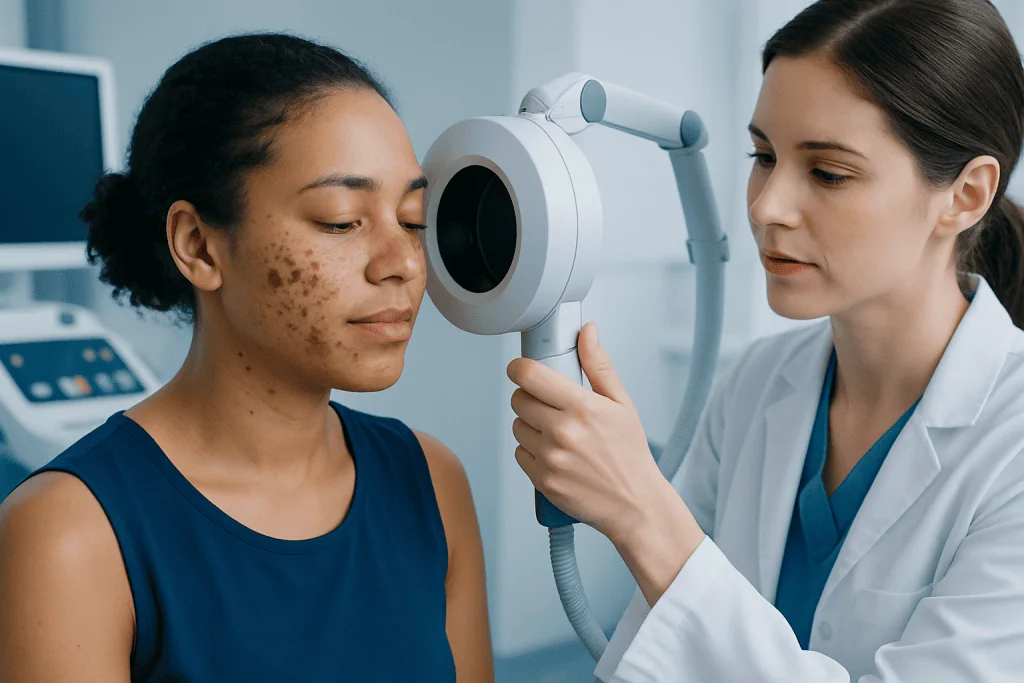
Hyperpigmentation usually appears as tan, brown, gray-brown, or nearly black patches, depending on a person’s natural skin tone and the depth of pigment in the skin. The skin often feels normal. It may be flat and smooth, with no pain or itching, although some people notice mild dryness or sensitivity if there is an underlying skin condition.
The appearance can differ by type. Sun-related spots are often small and well defined. Melasma more often causes larger, patchy areas with soft borders on the cheeks, forehead, upper lip, or jawline. Post-inflammatory hyperpigmentation can occur wherever the skin has been inflamed, such as after acne, insect bites, burns, rashes, or procedures.
Many people are concerned that any dark patch could be serious. Most cases are benign, but certain warning signs deserve attention. A spot that changes quickly, has irregular borders, several colors, bleeding, crusting, or persistent itching should not be assumed to be simple hyperpigmentation. In such cases, clinicians may consider other diagnoses, including skin cancer, and arrange a closer examination.
- Flat dark patches or spots
- Color ranging from light brown to gray-brown or black
- Most common on the face, hands, shoulders, and sites of previous inflammation
- Usually no pain, though the underlying cause may itch or irritate the skin
Common causes and risk factors

Sun exposure is one of the most frequent causes of hyperpigmentation. Ultraviolet light stimulates melanin production, which can lead to freckles, sun spots, and worsening of existing dark patches. Even brief daily exposure can maintain or deepen discoloration, especially on the face. This is why sunscreen is considered a foundation of treatment, not only prevention.
Inflammation is another major cause. When the skin is irritated by acne, eczema, allergic reactions, friction, scratching, or minor injury, it may heal with residual darkening called post-inflammatory hyperpigmentation. This is particularly common in medium to deep skin tones because pigment-producing cells are more reactive after inflammation. The discoloration itself is not an infection, but it can last for months if the trigger continues.
Hormones can also play a role. Melasma is often associated with pregnancy, oral contraceptives, hormone therapy, and sun exposure. Some medications may trigger or worsen darkening, including certain antibiotics, antiseizure medicines, anti-inflammatory medicines, and drugs that increase sensitivity to sunlight. Less often, endocrine or metabolic disorders contribute to generalized or unusual pigmentation patterns. A doctor may ask about medications, pregnancy history, recent rashes, cosmetic products, and family history to narrow the cause.
How doctors diagnose hyperpigmentation
Diagnosis begins with a medical history and skin examination. A dermatologist will usually ask when the discoloration started, whether it followed acne or a rash, if it becomes worse with sun exposure, and whether there are symptoms such as itching, pain, or bleeding. Photos over time can be useful because they show whether a patch is stable or changing.
During the examination, the clinician looks at the color, shape, borders, and distribution of the pigment. Tools such as dermoscopy can help evaluate pigmented lesions in more detail. In some cases, a Wood’s lamp or other light-based examination helps estimate whether pigment sits more superficially or deeper in the skin, which may affect treatment expectations.
If the appearance is atypical or there is concern for another condition, further evaluation may be needed. This can include a skin biopsy, patch testing for contact dermatitis, or blood tests if an underlying hormonal or systemic disorder is suspected. The main goal is to confirm that the darkening is truly benign hyperpigmentation and not another disease that needs different care.
Treatment options and what to expect
Treatment depends on the type of hyperpigmentation, how deep the pigment lies, and the person’s skin tone and sensitivity. The first step is always to control the trigger. For example, acne, eczema, friction, or sun exposure must be managed, or the discoloration is likely to recur. Improvement is usually gradual, not immediate, because pigment fades slowly as the skin renews itself.
Topical treatments are often the starting point. Doctors may recommend ingredients such as azelaic acid, retinoids, vitamin C, niacinamide, cysteamine, kojic acid, or short-term physician-guided use of hydroquinone in selected cases. These can help reduce excess pigment over time, but they must be used carefully because irritation can worsen post-inflammatory hyperpigmentation. People with sensitive skin often benefit from a gentle, simplified routine.
For persistent or more extensive discoloration, in-office procedures may be considered. Depending on skin type and diagnosis, this can include chemical peels, microneedling, or selected energy-based treatments such as laser treatment. These procedures can be helpful, but they are not suitable for every form of pigmentation, and overly aggressive treatment may worsen darkening, especially in darker skin tones. In some people with acne-related marks, treatment also includes controlling active breakouts with a dermatologist-led approach such as acne treatment.
Expectations are important. Hyperpigmentation often improves over weeks to months rather than days, and some forms, especially melasma, tend to relapse with sun exposure or hormonal triggers. A steady plan that combines trigger control, sun protection, and clinician-guided treatment is usually more effective than trying many strong products at once.
Prevention and self-care
Daily sun protection is the most important self-care step for most forms of hyperpigmentation. Broad-spectrum sunscreen, protective clothing, hats, and shade help prevent existing dark patches from deepening. Consistency matters more than occasional intense protection. Many people notice that dark spots return quickly if sunscreen use is stopped.
Gentle skin care also helps. Harsh scrubs, frequent picking, squeezing acne lesions, and using too many active products can irritate the skin and trigger more discoloration. A mild cleanser, non-comedogenic moisturizer, and carefully chosen treatment products often work better than complicated routines. If a product burns or stings repeatedly, it is sensible to stop and seek advice.
Preventing inflammation is another key strategy. Prompt treatment of acne, eczema, insect bites, and rashes can reduce the chance of lasting marks. Friction from tight clothing, repeated rubbing, or shaving irritation can also contribute in some areas. Near the end of care planning, some patients seek specialist support in centers such as Acibadem International, where multidisciplinary specialists in JCI-accredited hospitals evaluate pigmentation disorders and related skin concerns for international patients.
When to seek medical care
Medical assessment is recommended when a dark patch is new, rapidly changing, asymmetrical, irregular in border, or varied in color. The same is true if the area bleeds, crusts, becomes painful, or remains itchy. These features do not always mean something serious, but they should be checked rather than self-treated.
A doctor should also be consulted when hyperpigmentation is widespread, associated with other symptoms, or follows a medication change. People may need professional guidance if over-the-counter products are causing irritation, if discoloration affects confidence or quality of life, or if there is no improvement after several months of careful sun protection and appropriate skin care. Early assessment can prevent ineffective or irritating treatments and help identify the most suitable next step.
Frequently asked questions
Is hyperpigmentation permanent?
Often, no. Many forms fade gradually once the trigger is controlled, especially if the person uses daily sun protection and avoids further skin irritation. However, fading can take months, and some conditions such as melasma can recur.
What is the difference between melasma and post-inflammatory hyperpigmentation?
Melasma usually appears as symmetrical brown or gray-brown patches, often on the cheeks, forehead, or upper lip, and is commonly linked to sun exposure and hormones. Post-inflammatory hyperpigmentation develops after acne, eczema, injury, or another inflammatory skin problem and appears where the skin was previously irritated.
Can hyperpigmentation go away on its own?
Yes, some cases do lighten naturally over time, especially if the cause was temporary and the skin is protected from sun exposure. Even so, untreated triggers such as acne, eczema, or repeated sun exposure can keep the discoloration active or make it worse.
Do over-the-counter products help with hyperpigmentation?
They can help in mild cases, especially products containing ingredients such as azelaic acid, vitamin C, niacinamide, or retinoid alternatives, along with regular sunscreen use. Results are gradual, and products that cause burning or peeling may worsen discoloration, so a cautious approach is best.
Are lasers safe for all skin tones?
Laser and light-based treatments can be effective, but they require careful selection by an experienced dermatologist. In darker skin tones, some devices or aggressive settings may increase the risk of irritation or additional pigmentation, so individualized assessment is important.
When should a dark spot be checked urgently?
A dark spot should be assessed promptly if it is changing quickly, has uneven borders, shows several colors, bleeds, crusts, or is persistently itchy or painful. These signs do not confirm cancer, but they do mean the lesion should not be assumed to be simple hyperpigmentation.
References
- American Academy of Dermatology
- National Health Service
- Mayo Clinic
- DermNet
- National Institute for Health and Care Excellence
This article is for general information only and is not a substitute for professional medical advice. Please consult a qualified doctor about your individual situation.
Hair transplant in Turkey — costs, graft counts & a free assessment
JCI-accredited · board-certified surgeons · reply within 24h
Add us as a Preferred Source to see more of our trusted health content across Google Search, AI Overviews and Discover.