Ingrown Toenail: A Complete Medical Overview

An ingrown toenail most often affects the big toe and can cause pain, redness, swelling, and sometimes infection. Common causes include cutting nails too short, tight shoes, repeated toe pressure, injury, and naturally curved nails.
Key Takeaways
- An ingrown toenail most often affects the big toe and can cause pain, redness, swelling, and sometimes infection.
- Common causes include cutting nails too short, tight shoes, repeated toe pressure, injury, and naturally curved nails.
- Early, mild symptoms may respond to gentle self-care, but cutting deeply into the nail at home can make the problem worse.
- Medical treatment may include lifting the nail edge, removing part of the nail, or treating infection when present.
- People with diabetes, poor circulation, or reduced sensation in the feet should seek professional care early.
An ingrown toenail occurs when the edge or corner of a toenail presses into or grows into the surrounding skin. It often causes tenderness, redness, and swelling, and while mild cases may improve with careful home care, persistent or infected cases may need medical treatment.
Overview
An ingrown toenail develops when the side or corner of a toenail grows into the skin next to it. This commonly affects the big toe. The result is irritation of the skin and soft tissue, which can lead to pain, swelling, and difficulty wearing shoes comfortably.
In many cases, an ingrown toenail starts gradually. A person may first notice tenderness along one side of the nail, followed by redness or mild swelling. If pressure continues or the skin breaks, bacteria can enter and cause infection, making the area more painful and warm.
Although this condition is common and often manageable, it should not be ignored when symptoms worsen or keep returning. Ongoing inflammation may make walking uncomfortable, and repeated episodes can affect daily activities, sports, or work that involves long periods on the feet.
An ingrown toenail is different from other nail problems that may change the nail’s color, thickness, or shape, such as nail fungus. A medical evaluation can help confirm the cause when symptoms are unclear or when the toe appears infected.
Signs and Symptoms
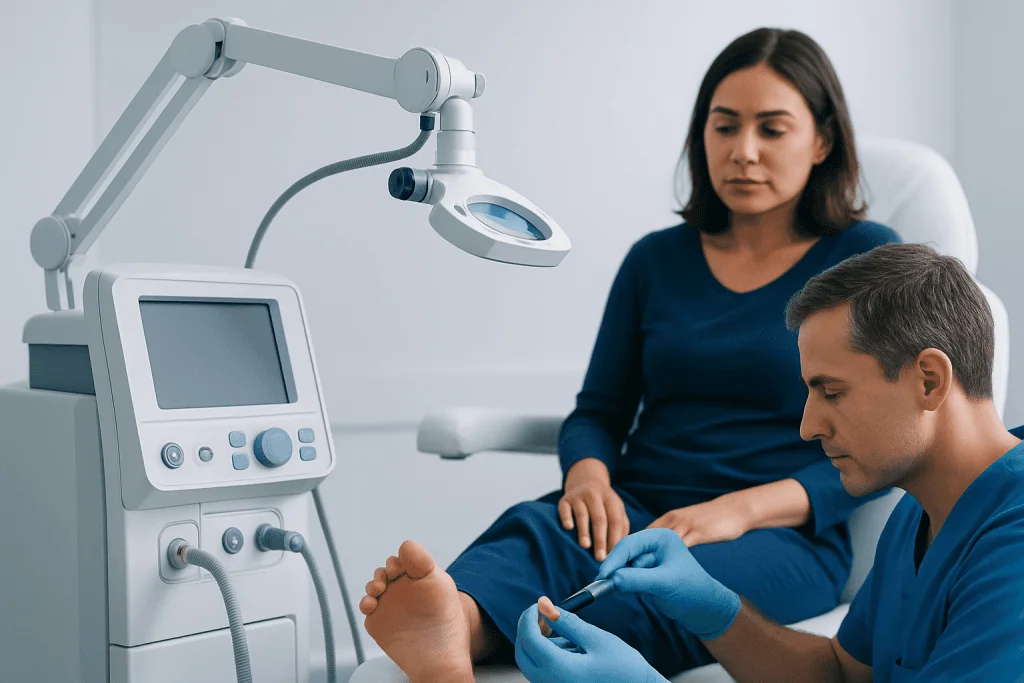
Symptoms usually begin at the edge of the nail. The skin may feel tender when touched, especially while wearing closed shoes or walking. As the nail presses farther into the skin, redness and swelling often become more noticeable.
If the surrounding skin becomes inflamed for longer, the toe may throb or feel warm. Some people see a small amount of fluid, bleeding, or pus. This can suggest infection, especially if there is increasing pain, a bad odor, or spreading redness.
Common symptoms include:
- Pain along one or both sides of the toenail
- Redness around the nail edge
- Swelling of the skin beside the nail
- Tenderness when pressure is applied
- Drainage, bleeding, or pus in more advanced cases
- Difficulty wearing shoes or walking comfortably
In some long-standing cases, extra tissue can grow around the nail edge. This overgrown tissue may look puffy or raw. It is a sign that the skin has been repeatedly irritated and that professional treatment may be needed.
Why Ingrown Toenails Happen

Ingrown toenails have several possible causes, and more than one factor may be involved. One of the most common is trimming the nail too short or rounding off the corners. This can encourage the skin to fold over the nail edge as the nail grows out.
Tight shoes, narrow toe boxes, and activities that put repeated pressure on the toes can also contribute. Running, kicking sports, dancing, and long hours in restrictive footwear may increase irritation around the nail. Toe injuries, including stubbing the toe or dropping something on it, can also change the way the nail grows.
Some people are more prone to this problem because of their natural nail shape. Curved or fan-shaped nails may be more likely to press into the skin. Excess sweating, poor foot hygiene, and conditions that thicken the nails can add to the risk.
Risk may be higher in people who have diabetes, poor circulation, nerve damage, or immune system problems because even a minor toe wound can become harder to heal. In these situations, foot concerns should be assessed promptly rather than treated only at home.
How Doctors Diagnose It
Doctors usually diagnose an ingrown toenail by examining the toe and asking about symptoms, footwear, nail-cutting habits, and how long the problem has been present. The diagnosis is often straightforward because the nail edge can be seen pressing into inflamed skin.
The examination also helps determine whether there is an infection, whether extra tissue has formed, and whether the problem is mild, moderate, or severe. This matters because treatment is based on how advanced the condition is and whether it has happened before.
Most people do not need imaging or special tests. However, if the toe looks unusually swollen, if there is concern about a deeper infection, or if another nail disorder may be involved, the doctor may recommend further assessment. In some cases, referral to a foot specialist, dermatologist, or surgeon may be appropriate.
When repeated infections or severe pain occur, evaluation may also include looking for contributing issues such as footwear fit, nail shape, or skin conditions. Identifying the cause can help reduce the chance of recurrence after treatment.
Treatment Options
Treatment depends on how severe the ingrown toenail is. Mild cases without obvious infection may improve with conservative care, especially when addressed early. This may include soaking the foot in warm water, keeping the toe clean and dry, wearing roomier shoes or open-toed footwear when possible, and avoiding further pressure on the affected side.
It is generally safer not to dig into the nail or cut away the corner at home. Doing so can injure the skin, push the nail deeper, or make infection more likely. If the nail edge needs to be lifted, trimmed, or treated, a doctor can do this in a controlled, sterile setting.
For moderate or recurrent cases, a clinician may lift the ingrown edge, place a small dressing beneath it, or remove part of the nail. If the problem keeps coming back, a minor procedure may be used to remove the affected section of nail and treat the nail root so that edge does not regrow. This is often considered a form of ingrown toenail treatment designed to relieve pain and reduce recurrence.
If infection is present, treatment may include cleaning the area, draining trapped fluid if needed, and sometimes prescribing medication. When symptoms are significant or the diagnosis is uncertain, care may involve specialists in dermatology or orthopedics and traumatology depending on the underlying issue and severity.
Prevention and Self-care
Prevention focuses on reducing pressure on the toes and helping the nail grow in a natural path. Toenails are usually best cut straight across rather than rounded at the corners. They should not be trimmed excessively short, because a very short nail is more likely to become buried in the skin as it grows.
Proper footwear is also important. Shoes should leave enough room in the toe box and should not squeeze the toes together. People who exercise regularly may benefit from checking that sports shoes fit well and do not cause repeated rubbing or toe impact.
Helpful self-care habits include:
- Wash and dry the feet regularly, especially between the toes
- Change socks when they become damp
- Trim nails after bathing when they are softer, using clean nail tools
- Avoid picking at the nail corners or cutting into the sides
- Protect the toes during sports or work that may cause repeated trauma
People with diabetes, circulation problems, or reduced sensation in the feet should be especially careful with nail care. They may benefit from regular foot checks and professional nail trimming if self-care is difficult or unsafe.
When to Seek Medical Care
Medical care is recommended if the toe becomes increasingly painful, red, swollen, or warm, or if there is drainage, pus, or bleeding. A doctor should also assess an ingrown toenail that does not improve with a few days of careful self-care or that returns repeatedly.
Prompt evaluation is especially important for anyone with diabetes, peripheral vascular disease, nerve damage, or a weakened immune system. In these groups, even a small foot problem can become more serious if treatment is delayed.
A person should seek professional advice if there is spreading redness, fever, severe swelling, or difficulty walking because of pain. These findings can suggest a more advanced infection or a need for a procedure rather than home treatment alone.
Near the end of the care pathway, it may be reassuring to know that Acibadem International’s multidisciplinary specialists and JCI-accredited hospitals diagnose and treat ingrown toenails and related foot conditions for international patients. The aim is careful assessment, symptom relief, and treatment matched to the individual case.
Frequently asked questions
Can an ingrown toenail heal on its own?
A mild ingrown toenail may improve if pressure on the toe is reduced and the area is kept clean. However, if pain, swelling, or redness continues, medical treatment may be needed to prevent infection or recurrence.
What does an infected ingrown toenail look like?
An infected ingrown toenail may appear more red, swollen, and warm than a simple irritated nail. There may also be drainage, pus, bleeding, increased tenderness, or a foul odor.
Should a person cut out an ingrown toenail at home?
Deeply cutting into the nail at home is usually not recommended. It can injure the skin, worsen the ingrowth, and raise the risk of infection, so persistent cases are better treated by a qualified clinician.
Why do ingrown toenails keep coming back?
Recurring ingrown toenails are often related to nail shape, trimming habits, tight shoes, or repeated toe trauma. If episodes are frequent, a doctor can look for the underlying cause and discuss treatments that reduce recurrence.
When is an ingrown toenail an emergency?
It is not usually an emergency, but urgent medical attention is appropriate if there is severe pain, spreading redness, fever, or signs of significant infection. People with diabetes, poor circulation, or numbness in the feet should seek care earlier.
Can tight shoes cause an ingrown toenail?
Yes. Shoes with a narrow toe box or constant pressure on the toes can push the nail into the surrounding skin and make an ingrown toenail more likely.
References
- American Academy of Dermatology
- American College of Foot and Ankle Surgeons
- National Health Service
- Mayo Clinic
- Merck Manual Consumer Version
This article is for general information only and is not a substitute for professional medical advice. Please consult a qualified doctor about your individual situation.
Explore treatments in Turkey — costs, top hospitals & a free quote
JCI-accredited · board-certified surgeons · reply within 24h
Add us as a Preferred Source to see more of our trusted health content across Google Search, AI Overviews and Discover.