Injection Tb: How It Works, Results and What to Expect

A TB injection may be a BCG vaccine, a tuberculin skin test, or—in some settings—an injectable medicine used for drug-resistant TB. BCG vaccination can cause a small local sore and later a scar; this is usually expected.
Key Takeaways
- A TB injection may be a BCG vaccine, a tuberculin skin test, or—in some settings—an injectable medicine used for drug-resistant TB.
- BCG vaccination can cause a small local sore and later a scar; this is usually expected.
- A TB skin test is read 48 to 72 hours after placement by measuring firm swelling, not redness.
- TB treatment is usually assessed through symptoms, clinical review and laboratory testing rather than by the injection site.
- A positive TB test does not by itself confirm active TB disease and needs further medical evaluation.
Injection TB commonly describes either the BCG vaccine, which helps protect children against severe forms of tuberculosis, or the tuberculin skin test, which helps identify TB infection. These injections have different purposes, reactions and follow-up steps, so knowing which one was given is important.
Injection TB: what it means and how it works
The phrase “injection TB” can mean different things. Most often, it refers to the Bacille Calmette-Guérin (BCG) vaccine, a vaccine given in many countries to help protect infants and children from severe forms of tuberculosis (TB), particularly TB meningitis and widespread TB disease. It may also describe a tuberculin skin test (TST), sometimes called a TB shot, which is used to check whether a person may have been infected with TB bacteria.
Less commonly, the phrase refers to injectable medicines used as part of treatment for certain forms of drug-resistant TB. These medicines are not routine treatment for most people with TB and are selected only by a specialist after careful testing. TB is an infection caused by Mycobacterium tuberculosis that most often affects the lungs but can involve other parts of the body.
Because the purpose of each injection is different, a clinician will consider a person’s age, vaccination history, symptoms, exposure history and test results. A BCG vaccine cannot diagnose TB, and a TB skin test does not prevent it. People with a positive screening test need further assessment to distinguish inactive TB infection from active TB disease.
BCG vaccine: candidacy, benefits and expected results
BCG is commonly offered in countries where TB is more frequent, usually early in life. It may also be considered for selected children or adults with a high risk of exposure, depending on national public-health guidance. BCG is not routinely used in every country, and vaccine policies vary because the balance of benefits depends on local TB rates and individual risk.
The vaccine contains a weakened form of a bacterium related to the one that causes TB. It stimulates the immune system so that, if exposure occurs later, the risk of some severe childhood forms of TB is reduced. Protection against pulmonary TB in adults is variable, so vaccination does not replace prompt medical evaluation for cough, fever, weight loss or other possible TB symptoms.
BCG is generally avoided in people with significant immune suppression and in some other clinical circumstances, including pregnancy in many settings. Before vaccination, the healthcare professional should review immune conditions, medicines that suppress immunity, previous BCG doses, current illness and any history of severe vaccine reaction. This discussion helps ensure the vaccine is appropriate and safe.
- Benefit: helps protect young children from severe TB complications.
- Limitation: does not guarantee prevention of all TB infection or disease.
- Important consideration: prior BCG vaccination can affect interpretation of some TB skin tests.
What happens during a TB injection procedure?
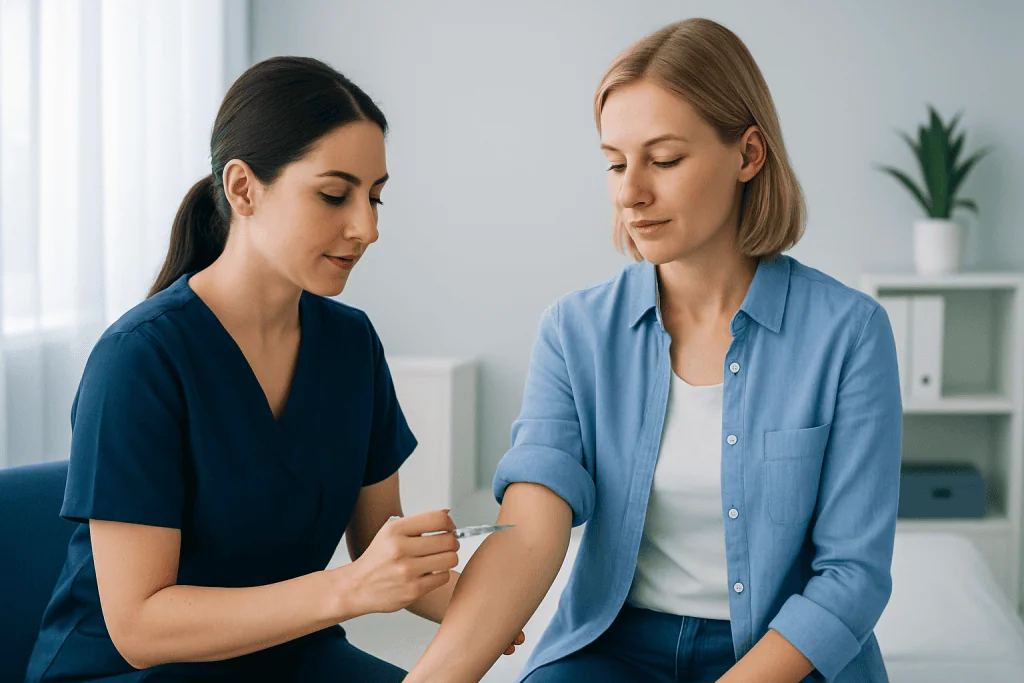
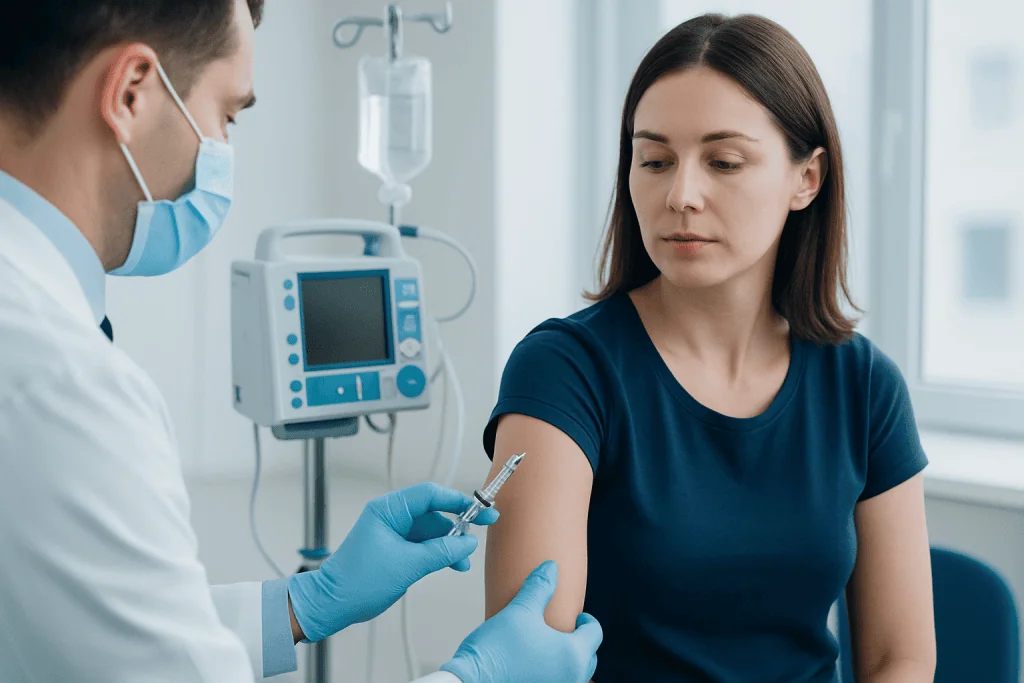
For BCG vaccination, a trained healthcare professional gives a very small injection into the upper layer of skin, usually on the upper arm. The injection is intradermal, meaning it is placed just beneath the outer skin layer rather than deep into muscle. A small raised bump may appear immediately and usually settles soon afterward.
For a tuberculin skin test, a tiny amount of testing fluid is injected just under the skin of the forearm. A pale, raised wheal should form at the site. The person must return 48 to 72 hours later so a trained professional can measure any firm raised area, called induration. The test cannot be accurately interpreted by checking a photograph, measuring redness alone or returning outside the recommended reading window.
If injectable medicine is being considered for drug-resistant TB, the process is more involved. The care team will confirm the diagnosis and drug-susceptibility pattern, review kidney function, hearing and other relevant health factors, and develop an individualized regimen. Modern TB care often aims to use effective all-oral regimens when appropriate, since some injectable drugs can have significant side effects.
What to expect after getting a TB shot?
After a BCG vaccine, it is common for the injection site to become slightly red, tender or raised in the first days or weeks. A small sore or blister may develop later, followed by a scab and eventually a small scar. This healing process can take several weeks and, in some people, a few months. The area should generally be kept clean and dry; it should not be squeezed, picked or covered tightly unless a clinician advises otherwise.
After a tuberculin skin test, most people have little discomfort beyond mild tenderness or itching at the forearm. It is usually fine to bathe and continue normal activities, but rubbing or scratching the site should be avoided. The key next step is returning at the scheduled time for the result to be assessed.
Seek medical advice promptly if there is rapidly increasing redness or swelling, severe pain, pus-like drainage, high fever, a widespread rash, breathing difficulty or signs of an allergic reaction. These reactions are uncommon, but professional assessment is important. Parents and caregivers should also contact a clinician if an infant appears unwell after vaccination.
How do you know if a TB shot is positive?
A BCG vaccine is not described as “positive” or “negative.” A local skin reaction and eventual scar can be expected after BCG, but the presence or absence of a scar does not reliably prove whether the vaccine has worked. A clinician should assess any unusual or persistent reaction rather than relying on appearance alone.
A tuberculin skin test may be reported as positive, negative or sometimes uncertain based on the measured size of firm swelling at the site. The interpretation is not the same for everyone. It depends on factors such as TB exposure, symptoms, immune status, age, country of residence or travel, and whether a person works in a setting with increased exposure risk.
Redness alone does not mean the test is positive. A positive test suggests TB infection may be present, but it cannot determine whether the infection is active. Further evaluation may include a medical history, physical examination, chest imaging and sputum or other laboratory testing. In people who have received BCG, a blood test for TB infection may be preferred because it is less likely to be influenced by prior vaccination.
How do you know if TB treatment is working?
TB treatment is working when the infection is responding clinically and microbiologically to the prescribed medicines. For pulmonary TB, symptoms such as cough, fever, night sweats, tiredness and reduced appetite may begin to improve over time. However, symptom improvement alone does not prove that treatment is complete or that the bacteria have been fully cleared.
Clinicians monitor treatment with scheduled follow-up visits and, when appropriate, repeat sputum tests or cultures. They may also review chest imaging, medication adherence, side effects and results of drug-susceptibility testing. The exact monitoring plan depends on whether TB is active or inactive, where it occurs in the body, and whether the bacteria are resistant to standard medicines.
It is important to take treatment exactly as prescribed and to attend all follow-up appointments, even if a person feels better. Stopping early or missing doses can allow TB to return and may contribute to drug resistance. New or worsening symptoms, medication side effects, or difficulty taking treatment should be discussed with the treating team without delay.
How many years is a TB shot good for?
There is no single number of years that applies to every “TB shot.” BCG vaccination is generally given once rather than as a routine series of boosters. Its protection can vary between people and populations, and it is strongest for preventing certain severe forms of TB in young children. Most public-health programs do not recommend repeated BCG doses simply because time has passed.
A tuberculin skin test is not a vaccine and does not provide protection for any length of time. It reflects the immune response at the time it is read. A person who may have been exposed to TB more recently can still need repeat testing, usually based on public-health or occupational-health recommendations.
If a person has a positive TB test, they may continue to have a positive result in the future, even after successful treatment. Repeating skin tests is therefore often not useful in that situation. A healthcare professional can advise whether symptom review, chest imaging or another form of follow-up is more appropriate.
When to seek medical care
Medical assessment is important for anyone with a positive TB skin or blood test, known exposure to a person with infectious TB, or symptoms that could be related to active disease. Symptoms can include a cough lasting several weeks, chest pain, coughing up blood, fever, night sweats, unexplained weight loss or persistent fatigue. These symptoms can have many causes, but TB should be considered when relevant risk factors are present.
People should also contact a clinician if they have a concerning reaction after BCG vaccination or a TB skin test. Urgent care is appropriate for trouble breathing, swelling of the face or throat, fainting, a severe generalized rash, or a very unwell child. These events are uncommon, but they require prompt evaluation.
TB diagnosis and treatment may involve infectious-disease, respiratory, pediatric, laboratory and radiology specialists. Acibadem International’s multidisciplinary specialists and JCI-accredited hospitals support the diagnosis and treatment of TB-related concerns for international patients. Care should always be individualized after evaluation by a qualified healthcare professional.
Frequently asked questions
Is the TB injection a vaccine or a test?
It can refer to either one. BCG is a vaccine used to help protect against severe forms of TB, while the tuberculin skin test is a screening test for TB infection. A healthcare professional can explain which injection was given and what follow-up is needed.
Can a BCG vaccine cause a positive TB skin test?
Yes. Previous BCG vaccination can sometimes contribute to a positive tuberculin skin test. For this reason, a TB blood test may be preferred for people who have received BCG, particularly when testing for TB infection is needed.
What should a normal BCG vaccine reaction look like?
A small bump, redness, sore or scab can develop at the injection site before healing into a small scar. Mild local changes can take weeks to months to settle. A clinician should assess severe pain, spreading redness, pus-like drainage or a child who appears unwell.
How do you know if TB treatment is working?
Improving symptoms can be encouraging, but follow-up tests and clinical reviews are needed to confirm response. For lung TB, sputum testing may be repeated, and the treatment team will also check for medication side effects and adherence. Treatment should not be stopped early because symptoms improve.
How do you know if a TB shot is positive?
Only a tuberculin skin test can be called positive or negative; the BCG vaccine cannot. A trained professional measures firm swelling at the test site 48 to 72 hours after placement. Redness alone is not used to determine the result.
How many years is a TB shot good for?
BCG is usually a one-time vaccine rather than a vaccine with routine boosters, but its protection varies and does not prevent every form of TB. A TB skin test is not protective and does not have a duration of effectiveness. Follow-up testing depends on exposure risk and medical guidance.
References
- World Health Organization
- Centers for Disease Control and Prevention
- European Centre for Disease Prevention and Control
- American Thoracic Society
- United States Preventive Services Task Force
This article is for general information only and is not a substitute for professional medical advice. Please consult a qualified doctor about your individual situation.
Explore treatments in Turkey — costs, top hospitals & a free quote
JCI-accredited · board-certified surgeons · reply within 24h
Add us as a Preferred Source to see more of our trusted health content across Google Search, AI Overviews and Discover.