Is a Love? A Doctor-Reviewed Answer

Most love bites are harmless superficial bruises that improve within days to two weeks. Cold compresses early and gentle skin care can help reduce discomfort and swelling.
Key Takeaways
- Most love bites are harmless superficial bruises that improve within days to two weeks.
- Cold compresses early and gentle skin care can help reduce discomfort and swelling.
- Medical review is important if there is severe pain, spreading redness, warmth, pus, fever, or a rapidly enlarging mark.
- People who bruise easily or take blood thinners may develop larger or longer-lasting marks.
- A doctor may assess the skin, ask about medications and bleeding history, and rarely order tests if bruising seems unusual.
A love bite, often called a hickey, is usually a minor bruise caused by suction or biting that breaks tiny blood vessels under the skin. Most fade on their own, but severe pain, marked swelling, skin breakdown, or signs of infection should be checked by a doctor.
Overview: what a love bite usually means
A love bite, commonly called a hickey, is usually a small bruise caused by suction or gentle biting on the skin. The pressure can break tiny blood vessels called capillaries, allowing a small amount of blood to collect under the surface. This creates a red, purple, or brown mark that often changes color as it heals.
For most people, this is harmless and temporary. The mark may feel mildly tender at first, but it generally improves without medical treatment. In many cases, the main concern is cosmetic rather than medical.
What matters most is knowing when a simple bruise may need more attention. Red flags include severe pain, significant swelling, broken skin, numbness, trouble swallowing, or symptoms of infection such as warmth, pus, or fever. If those are present, a healthcare professional should assess the area.
What does a love bite look and feel like?
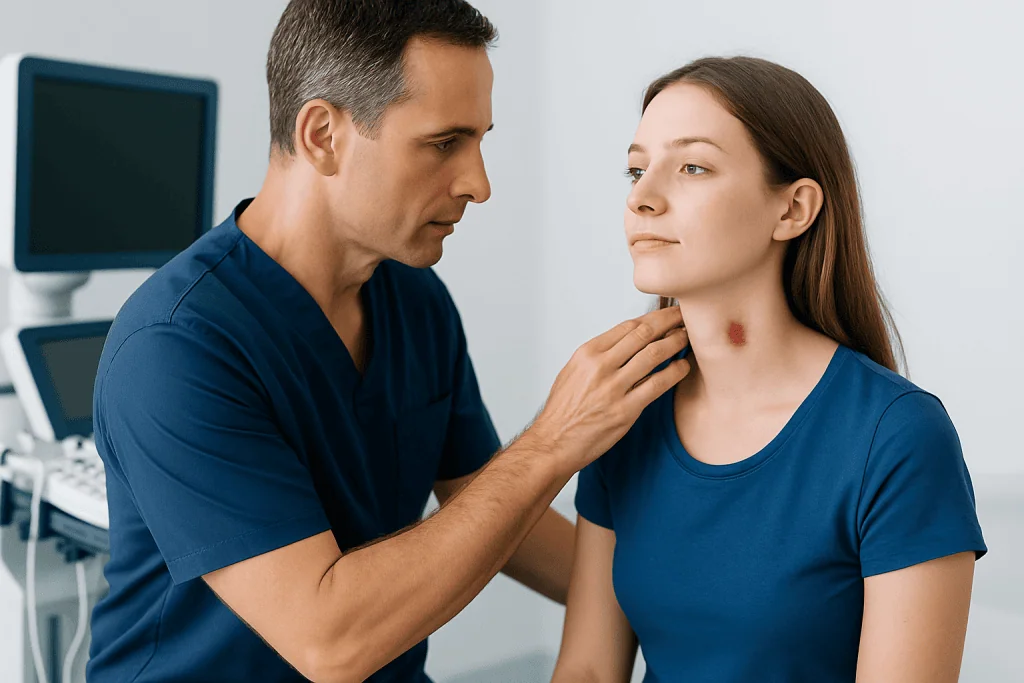
A love bite often starts as a reddish patch and can darken to purple, blue, or brown over the next day or two. As the body reabsorbs the trapped blood, the color may shift to greenish or yellow before fading completely. This color change is a normal part of bruise healing.
The area may be slightly sore or sensitive to touch, especially in the first 24 to 48 hours. Some people notice mild swelling. If the skin has been bitten hard enough to break, there may also be a small abrasion or scab, which needs simple wound care.
A typical hickey should not cause intense pain, major swelling, or widespread skin changes. If a mark is unusually large, keeps expanding, or appears with very little pressure, a doctor may consider whether there is an underlying issue with bruising or clotting.
- Common appearance: round or oval red-purple patch
- Common sensation: mild tenderness or sensitivity
- Typical course: gradual fading over several days to two weeks
Why it happens and who may bruise more easily
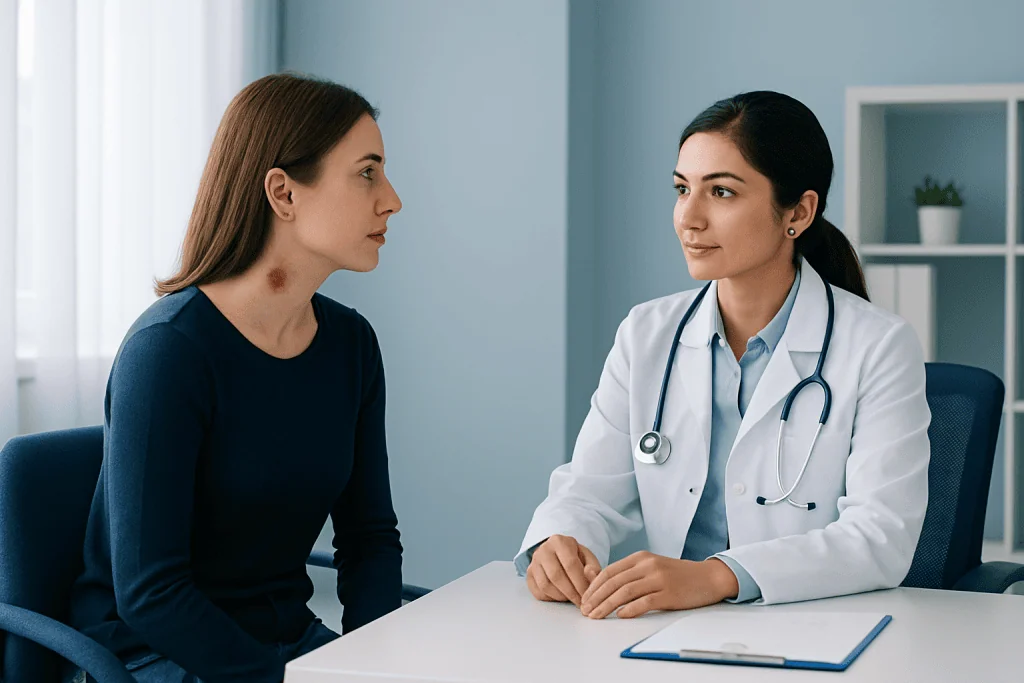
A love bite forms when suction or pressure damages small blood vessels under the skin. The neck is a common site because the skin there is relatively delicate and the blood vessels are close to the surface. Similar marks can occur on the chest, shoulder, or arm.
Some people bruise more easily than others. This can be related to age, naturally sensitive skin, or medications that affect bleeding, such as blood thinners. Aspirin and some anti-inflammatory medicines may also make bruising more noticeable in some individuals. Certain supplements can have a similar effect.
If bruises happen often, seem unusually large, or appear without a clear cause, a clinician may evaluate for other explanations. These can include vitamin deficiencies, bleeding disorders, or skin conditions. In some cases, doctors may also consider whether there is another explanation for repeated bruising, such as vasculitis or a blood-related condition.
How doctors tell a harmless bruise from a problem
Most love bites do not need tests. A doctor usually begins with a simple history and physical examination. They may ask when the mark appeared, whether there was suction or biting, how painful it is, and whether there are symptoms such as fever, drainage, spreading redness, or difficulty moving the neck.
They may also ask about medicines, supplements, bleeding history, and whether similar bruises happen often. During the examination, the clinician checks the size, color, tenderness, warmth, swelling, and whether the skin is intact. They may look for signs of infection or a deeper soft-tissue injury.
Tests are only needed in selected situations. If bruising is unusually frequent or severe, blood tests may be ordered to assess clotting, platelet levels, or general blood health. If there is a lump, persistent swelling, or concern for another skin or soft-tissue problem, the doctor may evaluate for conditions beyond a simple hickey, including swollen lymph nodes or another neck-related cause.
Treatment options and home care
In most cases, treatment is supportive. A cool compress during the first day may help reduce swelling and tenderness. After the first day or two, some people find a warm compress soothing as the bruise heals. The skin should not be rubbed aggressively, because that can worsen irritation.
If there is discomfort, a clinician may advise general pain relief that is appropriate for the individual, especially if they have other medical conditions or take regular medications. If the skin is broken, gentle cleansing and basic wound care are important to lower the risk of infection. A doctor may recommend further evaluation if a wound is deep or not healing well.
Medical treatment depends on the cause of concern. Infection may require assessment and targeted care. A deeper skin injury might be managed differently from a superficial bruise. If a doctor suspects an underlying bleeding or circulation issue, they may refer the person for further testing or specialty care such as hematology evaluation or dermatology care.
Prevention and self-care tips
The simplest prevention is avoiding strong suction, biting, or prolonged pressure on delicate skin. Areas such as the neck bruise more easily, so even brief suction can leave a noticeable mark. People who already know they bruise easily may want to be especially cautious.
Skin care also matters. If the skin becomes irritated, keeping it clean and dry helps support healing. Makeup or clothing friction may further irritate a fresh bruise, so gentle handling is best until the area settles.
Anyone taking blood thinners or who has a known bleeding disorder should be aware that even minor pressure can cause a larger bruise. If bruising patterns change suddenly or become more frequent, it is reasonable to speak with a doctor rather than assuming every mark is a simple love bite.
When to seek medical care
A love bite should be checked promptly if there is severe pain, major swelling, increasing redness, warmth, pus, fever, or broken skin that looks infected. Medical attention is also important if the mark is on the neck and is accompanied by trouble swallowing, shortness of breath, dizziness, weakness, severe headache, or neurologic symptoms. These features are not typical of a simple hickey.
It is also sensible to seek care if the bruise is very large, lasts longer than expected, or keeps appearing with minimal contact. People with blood-thinning medication use, a bleeding disorder, or unexplained bruising elsewhere may need a more careful assessment.
If expert evaluation is needed, Acibadem International’s multidisciplinary specialists in JCI-accredited hospitals assess skin, blood, and soft-tissue concerns for international patients. Depending on the findings, care may involve a medical check-up, targeted imaging, or referral to the appropriate specialist.
Frequently asked questions
Is a love bite dangerous?
Usually, no. A love bite is most often a mild bruise under the skin that fades on its own. It should be assessed if there is severe pain, marked swelling, skin breakdown, or signs of infection.
How long does a love bite last?
Many love bites improve within several days and may take up to about two weeks to fade fully. Healing time depends on skin sensitivity, the size of the bruise, and whether a person bruises easily. Larger marks may last longer.
Can a love bite get infected?
Yes, but this is uncommon and is more likely if the skin is broken. Warning signs include increasing redness, warmth, swelling, pus, or fever. These symptoms should be reviewed by a doctor.
What helps a love bite heal faster?
A cool compress in the first 24 hours may reduce swelling and tenderness. After that, gentle skin care and avoiding further rubbing or pressure can help. It is best not to use harsh home remedies that may irritate the skin.
Why do some people get bigger love bites than others?
People vary in how easily they bruise. Skin thickness, age, medications such as blood thinners, and underlying bleeding tendencies can all affect the size and duration of the mark. If bruises are often large or unexplained, medical advice is sensible.
When should someone worry about a love bite on the neck?
Neck bruises deserve attention if there is severe swelling, trouble swallowing, breathing symptoms, severe headache, dizziness, or weakness. These are not typical features of a simple hickey. Prompt medical assessment is the safest course.
References
- American Academy of Dermatology
- National Health Service
- Mayo Clinic
- Merck Manual Consumer Version
This article is for general information only and is not a substitute for professional medical advice. Please consult a qualified doctor about your individual situation.
Explore treatments in Turkey — costs, top hospitals & a free quote
JCI-accredited · board-certified surgeons · reply within 24h
Add us as a Preferred Source to see more of our trusted health content across Google Search, AI Overviews and Discover.