

Knee replacement in Turkey: Hospitals, Safety & What to Expect

Knee replacement is usually considered for advanced knee arthritis or significant joint damage that continues to limit daily life despite conservative care. Patients should choose a hospital based on orthopedic expertise, infection-prevention systems, anesthesia care, rehabilitation access, and transparent communication—not destination alone.
Key Takeaways
- Knee replacement is usually considered for advanced knee arthritis or significant joint damage that continues to limit daily life despite conservative care.
- Patients should choose a hospital based on orthopedic expertise, infection-prevention systems, anesthesia care, rehabilitation access, and transparent communication—not destination alone.
- Most procedures replace damaged joint surfaces with durable metal and plastic components, using either total or partial knee replacement when appropriate.
- Early movement and structured physiotherapy are central to recovery, while full improvement in strength and function develops gradually over months.
- All surgery carries risks, including infection, blood clots, stiffness, and implant-related problems; individualized assessment helps reduce these risks.
- International patients benefit from a written care plan covering pre-travel testing, hospital stay, accommodation, rehabilitation, records, and follow-up at home.
Knee replacement in Turkey may be considered by people with severe knee pain and reduced mobility when nonsurgical treatments no longer provide enough relief. A safe, well-coordinated experience depends on appropriate candidacy assessment, an experienced orthopedic team, accredited hospital standards, rehabilitation planning, and clear arrangements for travel and follow-up.
Knee Replacement in Turkey: An Overview
Knee replacement in Turkey can be a suitable option for eligible patients who need relief from severe knee pain and loss of mobility, provided care is delivered in an appropriately accredited hospital by an experienced orthopedic team. Before traveling, patients should have a thorough medical assessment, understand the expected recovery period, and make a practical plan for rehabilitation and follow-up after returning home.
Knee replacement, also called knee arthroplasty, is an operation that removes damaged areas of the knee joint and replaces them with artificial components. It is most often performed for advanced osteoarthritis, but may also be recommended after inflammatory arthritis, previous injury, or deformity has caused extensive joint damage.
This article focuses on how international patients can assess safety, prepare for the treatment journey, and understand the procedure and recovery. For a detailed overview of the operation itself, including the types of replacement available, see knee replacement surgery.
How Knee Replacement Works and Who May Benefit
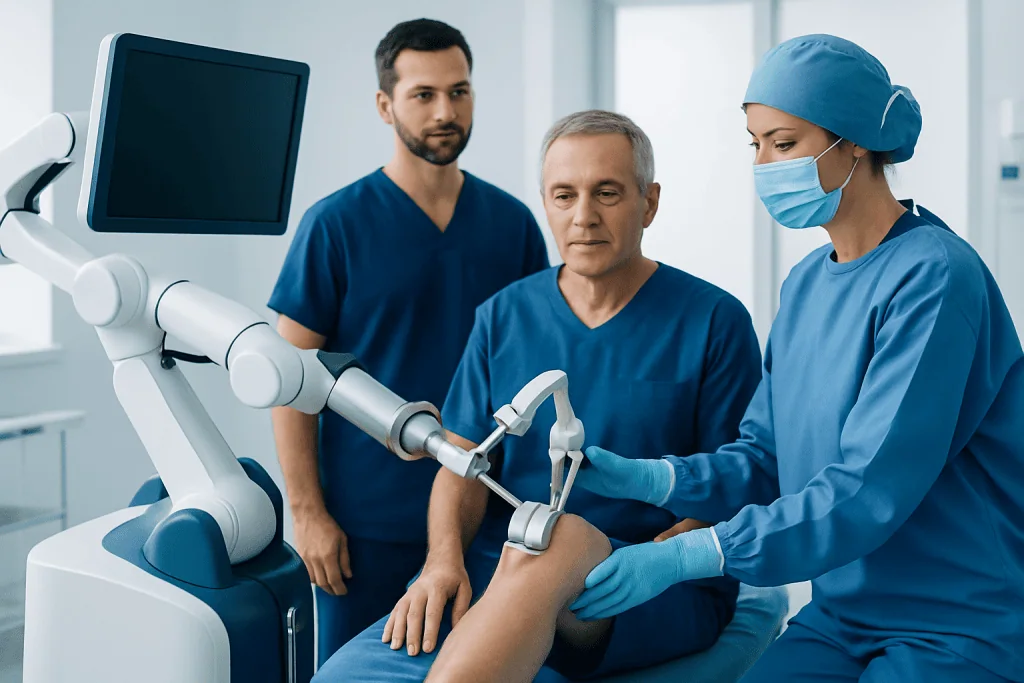
The knee is formed by the thighbone, shinbone, and kneecap. Healthy cartilage covers the ends of these bones and helps the joint move smoothly. When cartilage is severely worn or damaged, bone surfaces may rub together, causing pain, swelling, stiffness, altered alignment, and difficulty walking or climbing stairs.
During replacement surgery, the orthopedic surgeon reshapes the damaged bone and cartilage surfaces and covers them with precisely fitted implant components. These components are commonly made from metal alloys and high-grade plastic. In a total knee replacement, all major joint surfaces are resurfaced. A partial knee replacement may be possible when damage is limited to one part of the knee and the remaining joint structures are healthy.
Candidacy is based on symptoms, examination findings, imaging, overall health, and personal goals. Surgery may be considered when knee pain remains substantial despite treatments such as exercise therapy, weight management where appropriate, walking aids, pain-management strategies, or injections. Age alone does not determine eligibility; the decision should reflect the person’s health, knee condition, functional limitations, and readiness to participate in rehabilitation.
- Persistent pain that affects sleep, walking, work, or personal care
- Marked stiffness or loss of knee movement
- Advanced arthritis or joint damage shown on X-ray or other imaging
- Limited benefit from suitable nonsurgical treatment
- Medical fitness for anesthesia and surgery after individualized assessment
Choosing a Hospital and Planning Care in Turkey

For an international patient, safety begins before the trip. A hospital should be able to explain who will provide orthopedic, anesthesia, nursing, physiotherapy, and infection-prevention care. It should also request relevant medical records and imaging in advance, while making clear that the final surgical decision can only be made after an in-person assessment.
JCI accreditation is one recognized indicator that a hospital has been assessed against international standards for patient safety and quality systems. However, accreditation is only one consideration. Patients may also ask about the orthopedic surgeon’s experience with knee replacement, operating-room infection-control processes, implant documentation, blood-clot prevention, pain management, rehabilitation services, interpreter availability, and emergency arrangements.
The care journey commonly includes a remote preliminary review, travel coordination, consultations and testing after arrival, surgery, inpatient recovery, early physiotherapy, discharge planning, and follow-up. Accommodation should be arranged with recovery needs in mind, including easy access, a safe bathroom setup, support from a companion when needed, and transport for appointments. Patients should allow enough time in Turkey for clinical review and early recovery before long-distance travel is considered.
Acibadem International’s multidisciplinary specialists and JCI-accredited hospitals provide assessment and treatment pathways for international patients requiring knee replacement, with care coordination designed to support the clinical process before and after surgery.
What Happens Before and During the Procedure
Before surgery, the team reviews medical history, medications, allergies, previous operations, and any conditions that can affect healing or anesthesia. This may include heart or lung disease, diabetes, circulation problems, sleep apnea, anemia, or a history of blood clots. Tests commonly include blood work, an electrocardiogram when indicated, imaging of the knee, and anesthesia assessment.
Patients should tell the team about all prescription medicines, nonprescription products, and supplements. Some medicines may need adjustment before surgery, especially those that affect bleeding, blood sugar, or immunity. The surgical team will provide individualized instructions about eating and drinking before the operation and about medicines to take or avoid.
On the day of surgery, anesthesia may be general, regional, or a combination, depending on the patient’s needs and the anesthesiologist’s recommendation. The surgeon makes an incision at the front of the knee, removes the damaged surfaces, prepares the bone, positions the implant components, and checks stability and movement. The operation is performed under sterile conditions, and the incision is then closed and dressed.
Afterward, the patient is monitored in a recovery area before transfer to a hospital room. Pain control, circulation checks, wound care, breathing exercises, and prevention of blood clots begin promptly. In many cases, supervised standing and walking with an assistive device start on the day of surgery or the following day, depending on clinical status.
Benefits, Risks, and Recovery Timeline
The main aim of knee replacement is to reduce pain and improve daily function. Many people are able to walk more comfortably, sleep better, and return to valued activities after recovery. The operation does not create a natural knee, and outcomes vary, but most patients experience meaningful improvement when surgery is appropriately indicated and rehabilitation is followed consistently.
Like all major operations, knee replacement has potential risks. These include infection, bleeding, blood clots in the leg or lungs, wound-healing problems, nerve or blood-vessel injury, stiffness, ongoing pain, instability, and rare reactions related to anesthesia. Over time, an implant can wear, loosen, or require further surgery. The team reduces risk through careful screening, sterile surgical practice, appropriate medication, early mobilization, and individualized follow-up.
Recovery is gradual. Hospital stay varies according to the procedure, overall health, pain control, mobility, and travel plans. During the first days and weeks, swelling, bruising, tiredness, and discomfort are common. Patients usually use a walker or crutches initially and work with a physiotherapist on knee movement, safe transfers, walking, and exercises.
Many people progress in daily activities over several weeks, but strength, balance, endurance, and confidence can continue improving for several months. Regular exercise, attendance at rehabilitation sessions, wound care, and adherence to medical advice are important. Long-distance travel should be discussed with the surgeon, particularly because recent surgery can increase the risk of blood clots and travel may make follow-up more difficult.
Preparing for Travel, Rehabilitation, and Self-Care
Good preparation can make the treatment journey easier. Before travel, patients should share complete medical information, arrange travel insurance where available and appropriate, confirm whether a companion is recommended, and bring comfortable clothing and supportive footwear. They should also ensure that they understand what documents, imaging, prescriptions, and contact details to carry.
After discharge, the priority is safe movement and gradual rehabilitation. The physiotherapy plan usually includes exercises to restore knee bending and straightening, strengthen the thigh and hip muscles, improve balance, and build walking tolerance. The exercises should be performed as instructed; pushing through severe pain or making abrupt changes without clinical guidance is not advised.
At home or in temporary accommodation, patients can reduce fall risk by keeping walkways clear, using recommended mobility aids, choosing stable chairs, and having help available for tasks that are difficult early in recovery. The incision should be kept clean and cared for according to the surgical team’s instructions. Smoking cessation and balanced nutrition can also support healing.
Before leaving Turkey, patients should receive a clear written discharge summary, operative information, medication plan, rehabilitation recommendations, and advice on when to seek urgent help. It is sensible to identify a doctor, orthopedic service, or physiotherapist near home who can assist with ongoing recovery if needed.
When to Seek Medical Care
Anyone with persistent knee pain, swelling, stiffness, or reduced mobility that interferes with everyday activities should arrange a medical evaluation. An orthopedic clinician can determine whether symptoms are related to arthritis, injury, inflammatory disease, or another cause, and discuss suitable nonsurgical and surgical options.
After knee replacement, patients should contact their surgical team promptly if they develop increasing redness, warmth, drainage, or worsening pain around the incision; fever or feeling unwell; new or rapidly increasing swelling; or difficulty using the leg that is not improving as expected. These symptoms do not always indicate a serious complication, but they require timely assessment.
Urgent medical attention is needed for symptoms that may suggest a blood clot or lung problem, such as sudden shortness of breath, chest pain, coughing blood, fainting, or new painful swelling in the calf or thigh. Patients should follow local emergency guidance and should not wait for a routine appointment if these symptoms occur.
Follow-up appointments are important even when recovery appears to be going well. They allow the care team to review wound healing, knee movement, mobility, pain control, and rehabilitation progress, and to address concerns early.
Frequently asked questions
Is knee replacement in Turkey safe?
Knee replacement in Turkey can be safe when it is provided by a qualified orthopedic team in a hospital with robust safety, anesthesia, infection-control, and rehabilitation systems. Patients should review the hospital’s accreditation, clinical team, communication process, and follow-up plan rather than choosing based on destination alone.
How long should an international patient stay in Turkey after knee replacement?
The necessary stay varies according to the type of surgery, general health, recovery progress, and the surgeon’s advice. Patients need time for early hospital recovery, physiotherapy, wound review, and clearance for travel, so they should avoid scheduling a rushed return journey.
Will I need physiotherapy after knee replacement?
Yes. Physiotherapy is a central part of recovery because it helps restore movement, strength, balance, and walking ability. The program is individualized and often continues after the patient returns home.
What type of anesthesia is used for knee replacement?
Knee replacement may be performed with general anesthesia, regional anesthesia, or a combination of approaches. The anesthesiologist recommends the safest option based on the patient’s health, the planned procedure, and pain-management needs.
How soon can I walk after knee replacement surgery?
Many patients begin standing and taking supported steps on the day of surgery or the following day, when clinically appropriate. Walking initially requires assistance and a mobility aid, and progress depends on pain control, strength, balance, and medical recovery.
What are the warning signs of complications after knee replacement?
Increasing wound redness, drainage, fever, worsening swelling, severe pain, or a sudden change in function should be reported to the surgical team. Sudden chest pain, shortness of breath, fainting, or painful leg swelling needs urgent medical evaluation.
References
- World Health Organization
- American Academy of Orthopaedic Surgeons
- National Institute for Health and Care Excellence
- Centers for Disease Control and Prevention
- The Joint Commission International
This article is for general information only and is not a substitute for professional medical advice. Please consult a qualified doctor about your individual situation.
Joint and spine care in Turkey — expert assessment & treatment
JCI-accredited · board-certified surgeons · reply within 24h
Add us as a Preferred Source to see more of our trusted health content across Google Search, AI Overviews and Discover.

More from the Health Library



Related Specialists

Dr. Akın Banaz
Ophthalmology
Assoc. Prof. Dr. Serap Aktaş Yıldırım
Anesthesiology
Prof. Dr. Uğur Öziç
Orthopedic Surgery & Traumatology
Prof. Dr. Çiğdem Ünal Gülmeden
Aesthetic Plastic & Reconstructive Surgery