

Leep Procedure Recovery: A Week-by-Week Timeline

LEEP removes abnormal cervical tissue using a thin wire loop carrying an electrical current. Most people have mild cramping and spotting at first, followed by watery or dark discharge during healing.
Key Takeaways
- LEEP removes abnormal cervical tissue using a thin wire loop carrying an electrical current.
- Most people have mild cramping and spotting at first, followed by watery or dark discharge during healing.
- Avoid vaginal intercourse, tampons, douching, and swimming until the clinician confirms it is safe, often for several weeks.
- A follow-up visit and future cervical screening are important because LEEP treats abnormal cells but does not replace surveillance.
- Heavy bleeding, fever, worsening pelvic pain, or foul-smelling discharge should be assessed promptly.
LEEP procedure recovery commonly takes about 4 to 6 weeks, although many people return to usual non-strenuous activities within a day or two. Light bleeding, cramping, and watery, brown, or dark discharge can occur while the cervix heals; the clinician’s individual aftercare instructions should guide recovery.
LEEP procedure recovery: the expected course
LEEP procedure recovery usually lasts around 4 to 6 weeks. In the first few days, mild lower-abdominal cramping and light bleeding or spotting are common. Over the following weeks, discharge may become watery, brown, pink, or dark as the treated area forms and sheds a healing layer.
Recovery can vary with the amount of tissue removed, the reason for the procedure, menstrual timing, and individual health. Many people feel well enough for everyday activities soon afterward, but the cervix needs longer to heal than the person may feel physically recovered. Following the gynecologist’s restrictions helps lower the chance of bleeding and infection.
LEEP, short for loop electrosurgical excision procedure, is usually performed to remove cervical cells that look abnormal on screening or biopsy. It is a common outpatient procedure and can help diagnose the degree of cell change while also removing the affected area.
How LEEP works, who may need it, and what happens on the day
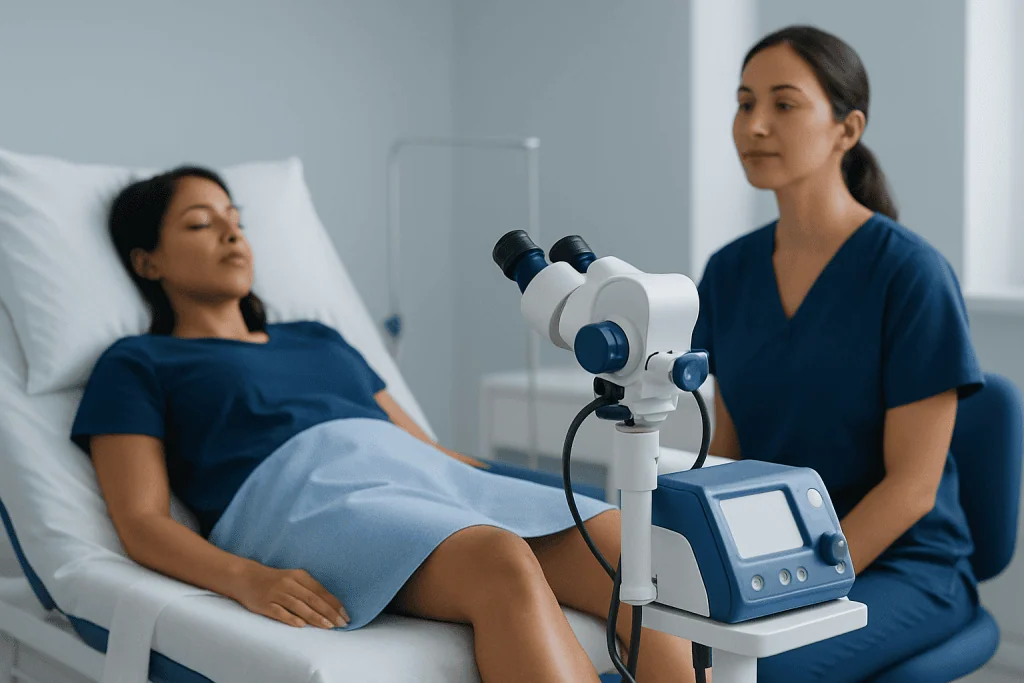
During LEEP, a clinician uses a very thin wire loop with a low-voltage electrical current to remove a small area of abnormal tissue from the cervix. The specimen is sent to a laboratory, where a pathologist examines it. LEEP is often recommended after colposcopy and biopsy identify moderate or severe precancerous cell changes, sometimes called cervical dysplasia or cervical intraepithelial neoplasia.
Not everyone with an abnormal cervical screening result needs LEEP. Mild changes may be monitored because they can resolve without treatment. A gynecologist considers the biopsy result, age, pregnancy status, medical history, fertility plans, and whether the abnormal area can be fully seen during colposcopy before recommending treatment.
The procedure is commonly done in a clinic. The person lies in the same position used for a pelvic examination, and a speculum gently holds the vaginal walls open. Local anesthetic is injected into the cervix; some people notice pressure, brief stinging, or cramping. The loop removes the tissue in a short period, and an agent may be applied to control bleeding. The clinician may recommend colposcopy before or as part of the evaluation process.
Before leaving, the care team explains activity limits, expected discharge, pain-relief options, and follow-up plans. It is helpful to arrange transport home if anxiety, cramping, or local anesthesia makes driving uncomfortable.
A week-by-week LEEP recovery timeline

Days 1 to 3: Mild cramping similar to menstrual cramps, light spotting, and fatigue can occur. A clinician may recommend an over-the-counter pain reliever if it is safe for the individual. Rest, hydration, and gentle movement are usually appropriate, while strenuous exercise and heavy lifting should wait.
Days 4 to 10: Bleeding often becomes lighter or changes into a watery, pink, brown, or dark discharge. Some people notice small dark particles or a coffee-ground-like discharge. This can be part of normal healing as material used to stop bleeding and the healing surface of the cervix shed.
Weeks 2 to 3: A short increase in spotting or bleeding may happen when the healing tissue separates, often about 7 to 14 days after the procedure. It should not be as heavy as a normal or heavy menstrual flow. Energy and comfort generally improve, but internal healing is still underway.
Weeks 4 to 6: Discharge and spotting commonly settle. The clinician may perform a follow-up examination or provide screening instructions based on the laboratory result. Until the care team confirms otherwise, vaginal intercourse, tampons, douching, and activities that may introduce bacteria into the vagina should be avoided.
What to expect 1 week after LEEP?
At 1 week after LEEP, many people have little or no pain but may still have light spotting or watery, brown, pink, yellowish, or dark discharge. Mild cramping can continue intermittently. The appearance of discharge can be surprising, but color alone does not necessarily mean infection.
A small increase in bleeding or discharge can occur near the end of the first week as the cervix heals. Using sanitary pads rather than tampons helps monitor the amount of bleeding and reduces irritation. The person should continue to follow the clinician’s instructions about exercise, sexual activity, baths, swimming, and vaginal products.
Bleeding that soaks a pad in an hour, passing large clots, severe or worsening pain, fever, chills, dizziness, or strong foul odor are not expected recovery symptoms. These signs should prompt contact with a gynecology team or urgent medical assessment, depending on severity.
How do I know my cervix is healed after LEEP?
Symptoms improving is reassuring, but the only reliable way to confirm cervical healing is through the recommended follow-up with a clinician. Spotting and discharge stopping does not always mean the cervix has fully healed, because internal healing continues after external symptoms have resolved.
Many clinicians advise avoiding intercourse, tampons, douching, and swimming for several weeks, often until a follow-up assessment. The exact timeframe differs between individuals and may be longer when a larger area was treated or when healing is slower. A person should ask their clinician when it is safe to resume these activities.
Future cervical screening is also part of confirming successful care. Depending on the pathology findings, follow-up may include HPV testing, a cervical screening test, colposcopy, or a combination of these. Regular surveillance is important because abnormal cervical cells can occasionally recur.
How long should I rest after a LEEP procedure? Can I go to work the day after?
Most people do not need strict bed rest after LEEP. Taking it easy for the rest of the procedure day is sensible, especially after local anesthesia, cramping, or emotional stress. Gentle walking and routine self-care are usually fine if they feel comfortable.
Many people can go to work the day after a LEEP procedure, particularly when work is desk-based and symptoms are mild. However, a day or two away from work may be preferable for physically demanding roles, long commutes, persistent cramps, or significant fatigue. Heavy lifting, vigorous exercise, and high-impact activity should be postponed according to the clinician’s advice.
Rest should be guided by symptoms rather than a fixed schedule. If activity causes increased bleeding, cramping, dizziness, or exhaustion, it is reasonable to stop and recover. The person should seek individualized advice if they are pregnant, take blood-thinning medication, have a bleeding disorder, or have other medical conditions affecting healing.
Benefits, possible risks, and when to seek medical care
The main benefit of LEEP is that it can remove abnormal cervical tissue before it has the opportunity to develop further. It also provides a tissue sample that may clarify the diagnosis and guide future care. For many people, it is completed without general anesthesia and allows a return home the same day.
Complications are uncommon but can include bleeding, infection, narrowing of the cervical opening, or incomplete removal of abnormal cells. LEEP may very slightly affect future pregnancy outcomes, particularly if a larger or repeated excision is needed. People planning pregnancy should discuss this with their gynecologist, who can balance cervical treatment with fertility and obstetric considerations.
When to seek medical care: Contact a clinician promptly for bleeding heavier than a normal period, bleeding that soaks a pad within an hour, large clots, worsening pelvic pain, fever or chills, fainting, or discharge with a strong unpleasant smell. Emergency care is appropriate for severe bleeding, severe weakness, fainting, or symptoms that feel urgent.
Acibadem International’s multidisciplinary specialists and JCI-accredited hospitals support international patients needing evaluation and treatment for cervical abnormalities. Follow-up after LEEP remains essential, and a gynecologist can explain the pathology result, recovery concerns, and the appropriate long-term screening plan.
Frequently asked questions
How painful is recovery after LEEP?
Most people have mild cramping during the first day or several days after LEEP, similar to menstrual cramps. Pain should generally improve rather than worsen. Severe, persistent, or increasing pain should be discussed with a clinician.
Is watery discharge normal after LEEP?
Yes, watery discharge can be a normal part of cervical healing after LEEP. It may be clear, pink, brown, or dark and can last for several weeks. A strong unpleasant smell, fever, or worsening pain should be assessed for possible infection.
When can I exercise after LEEP?
Light activity is often possible soon after the procedure if it does not increase discomfort or bleeding. Vigorous exercise, heavy lifting, and high-impact workouts are commonly avoided for a period advised by the clinician. The recommended timing varies based on the procedure and individual recovery.
When can I have sex after LEEP?
Vaginal sex is usually avoided until the cervix has had time to heal, often for several weeks. Tampons, douching, and other vaginal insertion are generally restricted during the same period. The treating clinician should provide the specific clearance date.
Can my period be different after LEEP?
The next menstrual period may arrive at its usual time or may be somewhat different in flow or timing. Spotting from recovery can also be difficult to distinguish from an early period. Heavy bleeding or bleeding that causes concern should be reported to the clinician.
Will I need another Pap test or HPV test after LEEP?
Yes, follow-up cervical screening is important after LEEP. The timing and type of testing depend on the pathology result and prior screening history. A gynecologist will provide a personalized surveillance plan to check that abnormal cells have not returned.
References
- American College of Obstetricians and Gynecologists
- American Society for Colposcopy and Cervical Pathology
- National Cancer Institute
- World Health Organization
This article is for general information only and is not a substitute for professional medical advice. Please consult a qualified doctor about your individual situation.
Explore treatments in Turkey — costs, top hospitals & a free quote
JCI-accredited · board-certified surgeons · reply within 24h
Add us as a Preferred Source to see more of our trusted health content across Google Search, AI Overviews and Discover.

More from the Health Library



Related Specialists

Dr. Burak Tanır
Gynecology & Obstetrics
Dr. İletişim | 444 55 44
Orthopedic Surgery & Traumatology
Dr. Sedenay Oskeroğlu Kaplan
Radiation Oncology
Dr. Danyal Gümüş
Orthopedic Surgery & Traumatology