

Leukemia rash: Symptoms, Causes, and Treatment — Complete Patient Guide

Leukemia rash most often relates to bleeding under the skin from low platelet counts, causing petechiae or bruising. Some people develop leukemia cutis, a less common rash caused by leukemia cells entering the skin.
Key Takeaways
- Leukemia rash most often relates to bleeding under the skin from low platelet counts, causing petechiae or bruising.
- Some people develop leukemia cutis, a less common rash caused by leukemia cells entering the skin.
- A rash alone is not enough to diagnose leukemia; blood tests and sometimes a skin biopsy are needed.
- Treatment depends on the cause and the type of leukemia, not just the appearance of the rash.
- Prompt medical care is important if a rash comes with fever, weakness, repeated infections, or unexplained bleeding.
Leukemia rash is a skin change that may show up as pinpoint red or purple spots, easy bruising, or less commonly raised lesions caused by leukemia cells in the skin. It does not confirm leukemia on its own, but it should be assessed by a doctor, especially if it appears with fatigue, frequent infections, fever, or unusual bleeding.
Overview: what leukemia rash means
Leukemia rash is a general term for skin changes that can occur in people with leukemia. Most often, these changes are not a classic “rash” in the allergy or eczema sense. Instead, they are small red, purple, or brown spots from bleeding under the skin, larger bruise-like patches, or in some cases bumps, nodules, or plaques caused by leukemia cells affecting the skin.
This distinction matters because the appearance can give clues about the cause. Tiny pinpoint spots, called petechiae, often happen when platelet levels are low, making the body more prone to bleeding. Less commonly, the skin itself may be involved by the blood cancer, a condition called leukemia cutis.
Leukemia rash can affect any age group and may appear before diagnosis, during treatment, or if disease activity changes. Even so, many common rashes are unrelated to leukemia. A doctor usually looks at the rash together with other symptoms, blood counts, medications, and any recent infections before deciding what it means.
How leukemia rash can look and feel
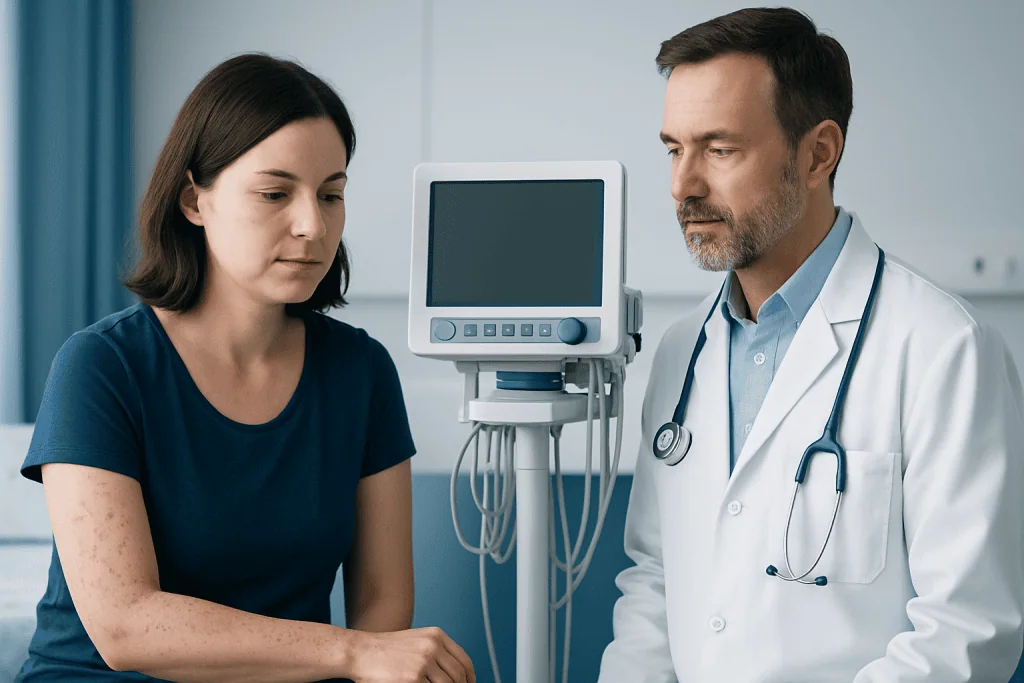
The most common skin finding linked with leukemia is petechiae. These are tiny, flat red or purple spots that do not fade when pressed. They often appear on the legs, ankles, feet, or areas that experience pressure, but they can also show up elsewhere on the body. Some people also notice purpura, which are larger purple patches, or bruises that appear easily or seem larger than expected after minor bumps.
Other people may develop a more typical-looking rash with raised areas, firm bumps, or patches that can be red, purple, brown, or skin-colored. These lesions may be tender, itchy, or painless. If leukemia cells enter the skin, the term used is leukemia cutis, which is less common but clinically important because it usually needs specialist evaluation.
Skin changes can also be related to treatment, reduced immunity, or infections rather than leukemia itself. For example, chemotherapy may increase skin sensitivity, and immune suppression can make fungal, viral, or bacterial rashes more likely. This is one reason a visual check alone cannot determine the cause.
- Petechiae: tiny pinpoint red or purple spots
- Purpura: larger flat purple patches
- Easy bruising or unexplained bruises
- Raised bumps, nodules, or plaques
- Itching, tenderness, or no symptoms at all
Why it happens: causes and risk factors

One of the main reasons leukemia rash develops is thrombocytopenia, meaning a low platelet count. Platelets help blood clot, so when they are reduced, tiny blood vessels can leak and create petechiae or bruising. In leukemia, this may happen because the bone marrow is crowded by abnormal blood cells and cannot make enough healthy platelets.
A second cause is direct skin involvement by leukemia cells. In leukemia cutis, malignant white blood cells migrate into the skin and form visible lesions. This can occur with several types of leukemia, including acute myeloid leukemia more commonly than some others, but only testing can confirm the exact cause. For broader context, leukemia itself refers to cancers of blood-forming tissues such as the bone marrow; readers may find it helpful to learn more about leukemia.
There are also indirect causes. People with leukemia may be more likely to develop infections because of changes in white blood cells and immune function, and these infections can produce rashes. Medicines used during treatment can trigger drug eruptions, dryness, pigmentation changes, or sun sensitivity. Risk is therefore shaped not only by the underlying blood cancer but also by current blood counts, treatment stage, and overall immune health.
Other symptoms that may appear alongside a rash
Leukemia rash is usually not the only clue. Because leukemia affects blood cell production, many people also experience symptoms related to anemia, low platelets, or abnormal white blood cells. These may include unusual tiredness, weakness, shortness of breath on exertion, frequent infections, recurrent fever, swollen gums, bone pain, or enlarged lymph nodes.
Bleeding symptoms are especially relevant when petechiae or bruising are present. A person may notice nosebleeds, bleeding gums, heavier menstrual bleeding, or bleeding that takes longer than usual to stop. If the rash reflects low platelets, these signs help support the diagnosis and may require prompt blood testing.
Some symptoms overlap with other conditions, so they do not automatically mean leukemia. However, a combination of persistent rash plus unexplained bruising, infections, fever, or marked fatigue deserves medical attention. In people already diagnosed with blood cancer, any new rash should also be reported because it may reflect infection, medication effects, or disease activity.
How doctors diagnose leukemia rash
Diagnosis begins with a careful history and skin examination. A doctor will ask when the rash started, whether it is painful or itchy, whether there has been fever or bleeding, and what medicines have recently been used. They also look at the pattern, color, and distribution of lesions to decide whether bleeding under the skin, infection, drug reaction, or leukemia cutis is more likely.
Blood tests are central to the evaluation. A complete blood count can show anemia, abnormal white blood cell levels, and low platelets. A peripheral blood smear may provide further clues by showing immature or abnormal cells. If leukemia is suspected, specialists may recommend bone marrow testing. Patients interested in the diagnostic process can also read about bone marrow biopsy.
When the skin findings are unusual or raised, a skin biopsy may be needed. This helps distinguish leukemia cutis from infection, vasculitis, allergic reactions, and other dermatologic conditions. Additional tests may be ordered based on symptoms, such as cultures, imaging, or other laboratory studies. Because interpretation can be complex, hematology and dermatology specialists may work together.
Treatment options and what improves the rash
Treatment focuses on the underlying cause of the skin change. If petechiae or bruising are due to low platelets, managing the leukemia and stabilizing blood counts is the main priority. In some situations, supportive care such as platelet transfusion may be used if bleeding risk is significant, while the cancer team addresses the primary disease.
If the skin is directly affected by leukemia cells, treatment usually follows the plan for the leukemia itself. Depending on the type and stage, this may involve chemotherapy, targeted medicines, immunotherapy, or other specialist care. Sometimes the skin lesions improve as the blood cancer responds. In selected situations, local treatments may be considered for comfort or control, but systemic treatment is often most important.
When the rash is caused by infection or medication, the approach changes. Doctors may treat bacterial, viral, or fungal infections, or adjust a medicine if a drug reaction is suspected. Supportive skin care can also help: gentle cleansing, fragrance-free moisturizers, avoiding scratching, and protecting fragile skin from injury. For complex blood cancers, some patients may also be evaluated for advanced treatments such as bone marrow transplant.
At experienced centers, care is often multidisciplinary. Acibadem International’s hematology, oncology, dermatology, and pathology specialists in JCI-accredited hospitals diagnose and treat leukemia and related skin findings for international patients.
Self-care, prevention, and reducing skin injury
There is no guaranteed way to prevent leukemia rash because it depends on the underlying disease and its treatment. However, people with low platelets or fragile skin can take practical steps to reduce skin trauma and watch for changes early. Gentle daily habits can make a meaningful difference in comfort and safety.
Helpful measures include using a soft toothbrush, avoiding contact sports or activities with a high risk of falls, trimming nails carefully, and wearing protective clothing if bruising happens easily. Fragrance-free moisturizers may reduce dryness and itching, while sun protection may help if treatment causes sensitivity. New creams or over-the-counter remedies should be checked with a clinician, especially during cancer treatment.
It is also wise to keep a simple record of skin changes, including photographs and the date lesions first appeared. This can help the medical team judge whether a rash is spreading, improving, or changing shape. Anyone receiving treatment for leukemia should report new skin symptoms promptly rather than waiting for a routine visit.
When to seek medical care
Medical care should be sought promptly if a person develops sudden petechiae, widespread bruising, or a new rash together with fever, extreme fatigue, shortness of breath, repeated infections, or any unusual bleeding. These symptoms do not always mean leukemia, but they do need timely medical assessment. Immediate attention is especially important if bleeding does not stop, there is dizziness or fainting, or the person feels acutely unwell.
For someone already diagnosed with leukemia, a new rash should be discussed with the treatment team as soon as possible. It may reflect low platelets, a medication reaction, infection, or progression of disease, and each requires a different response. Quick assessment can help reduce complications and guide the right tests or treatment changes.
If there is uncertainty, it is safer to ask a qualified doctor than to assume a rash is harmless. Early evaluation can clarify whether the problem is dermatologic, hematologic, infectious, or treatment-related, and can provide reassurance when the cause is benign.
Frequently asked questions
What does leukemia rash usually look like?
Leukemia rash often appears as tiny red or purple pinpoint spots called petechiae, or as unexplained bruises and purple patches. Less commonly, it can look like raised bumps or plaques if leukemia cells involve the skin directly. Its appearance can overlap with many other skin conditions, so a doctor usually needs to evaluate it.
Is leukemia rash itchy?
It can be, but not always. Petechiae and bruising often are not itchy, while some treatment-related rashes or skin lesions may itch or feel tender. The presence or absence of itching does not reliably show the cause.
Does a leukemia rash mean someone definitely has leukemia?
No. Many common conditions can cause petechiae, bruising, or rashes, including infections, medications, allergic reactions, and low platelet counts from other causes. Leukemia is only diagnosed after appropriate medical assessment, usually including blood tests and sometimes a bone marrow or skin biopsy.
Can leukemia rash come before a leukemia diagnosis?
Yes, it can sometimes appear before leukemia is diagnosed, especially if platelet levels drop or other blood changes develop. However, it may also occur during treatment or later in the disease course. A new unexplained rash with fatigue, infections, or bleeding should be checked by a doctor.
How is leukemia rash treated?
Treatment depends on what is causing the rash. If it is related to low platelets, doctors focus on managing the blood disorder and reducing bleeding risk; if it is due to skin involvement by leukemia cells, treatment usually follows the leukemia treatment plan. Infection-related or medication-related rashes are managed differently, which is why proper diagnosis is important.
When should someone worry about petechiae or unexplained bruising?
Petechiae or bruising should be assessed promptly if they are new, spreading, or accompanied by fever, weakness, nosebleeds, gum bleeding, or frequent infections. Urgent care is important if there is heavy bleeding, fainting, severe shortness of breath, or the person seems very unwell. Even when the cause is not serious, medical evaluation helps rule out important problems.
References
- American Cancer Society
- National Cancer Institute
- Leukemia & Lymphoma Society
- National Health Service
- World Health Organization
This article is for general information only and is not a substitute for professional medical advice. Please consult a qualified doctor about your individual situation.
Leukemia in Turkey — costs, top hospitals & a free quote
JCI-accredited · board-certified surgeons · reply within 24h
Add us as a Preferred Source to see more of our trusted health content across Google Search, AI Overviews and Discover.

Medical Oncology Department
Medical treatment of cancer with chemotherapy, immunotherapy and targeted therapies under a multidisciplinary tumor board.
60 specialists in this unitMore from the Health Library



Related Specialists

Özlem Üçel Zengin
Treatment of Lymphedema
Prof. Dr. Hakan Ağır
Aesthetic Plastic & Reconstructive Surgery
Dr. Burcu Aydemir Efelerli
Internal Medicine
Prof. Dr. Ayça Özbal Koç
Otorhinolaryngology