Lumbar Spine: What Patients Need to Know
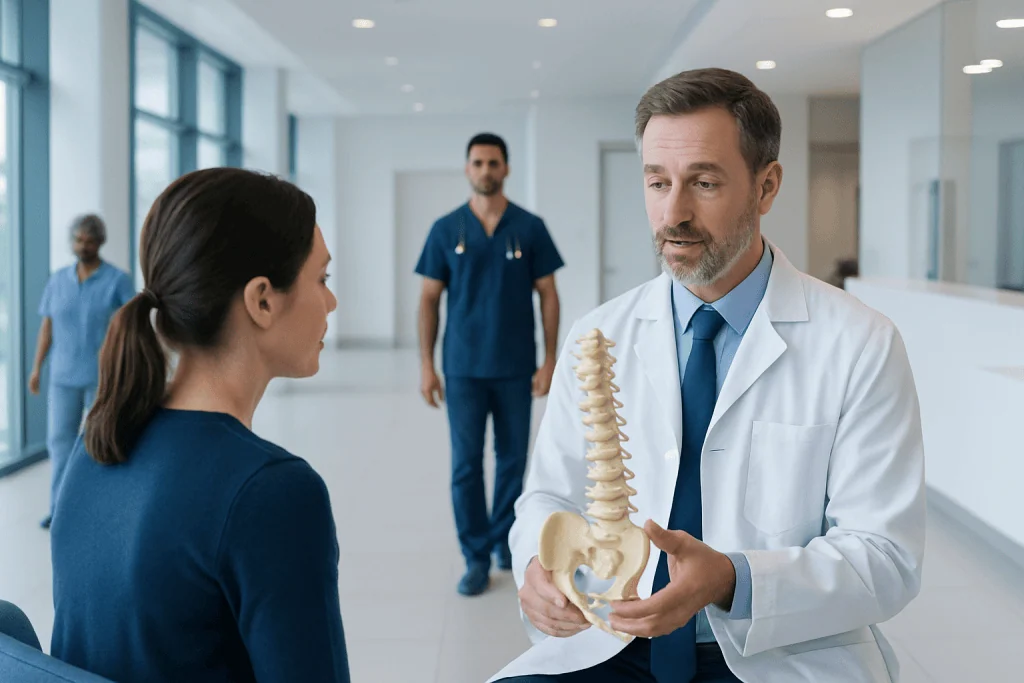
The lumbar spine includes five vertebrae, discs, joints, ligaments, muscles, and nerves in the lower back. Pain in the lumbar spine may come from muscles, discs, joints, nerves, or age-related wear and tear.
Key Takeaways
- The lumbar spine includes five vertebrae, discs, joints, ligaments, muscles, and nerves in the lower back.
- Pain in the lumbar spine may come from muscles, discs, joints, nerves, or age-related wear and tear.
- Symptoms such as leg weakness, numbness, or changes in bladder or bowel control need prompt medical attention.
- Diagnosis often combines a physical exam with imaging tests when symptoms are persistent, severe, or suggest nerve compression.
- Many lumbar spine problems improve with activity modification, exercise, physical therapy, and other non-surgical treatments.
The lumbar spine is the lower part of the backbone that supports body weight, allows bending and twisting, and protects nerves that travel to the legs. When a problem affects this area, symptoms can range from mild stiffness to back pain, leg pain, numbness, or weakness, depending on the structure involved.
Overview: what the lumbar spine does
The lumbar spine is the lower portion of the spine, located between the rib cage and the pelvis. It is made up of five vertebrae, usually labeled L1 through L5, along with cushioning discs, small facet joints, ligaments, muscles, and spinal nerves. Together, these structures provide strength and flexibility for everyday movements such as standing, walking, lifting, sitting, and turning.
For patients, the most important point is that the lumbar spine is both a support structure and a passageway for nerves. It carries much of the body’s weight and absorbs mechanical stress, which is why lower back symptoms are common. At the same time, nerves exiting the lumbar spine help control sensation and movement in the hips, legs, and feet, so a lumbar problem can sometimes cause symptoms beyond the back itself.
Not every episode of lower back pain means there is a serious spinal disease. In many cases, symptoms are related to muscle strain, joint irritation, disc changes, or temporary inflammation. Still, because several different structures can cause similar symptoms, a careful medical assessment is useful when pain is persistent, severe, or associated with neurologic symptoms.
Basic anatomy patients should understand
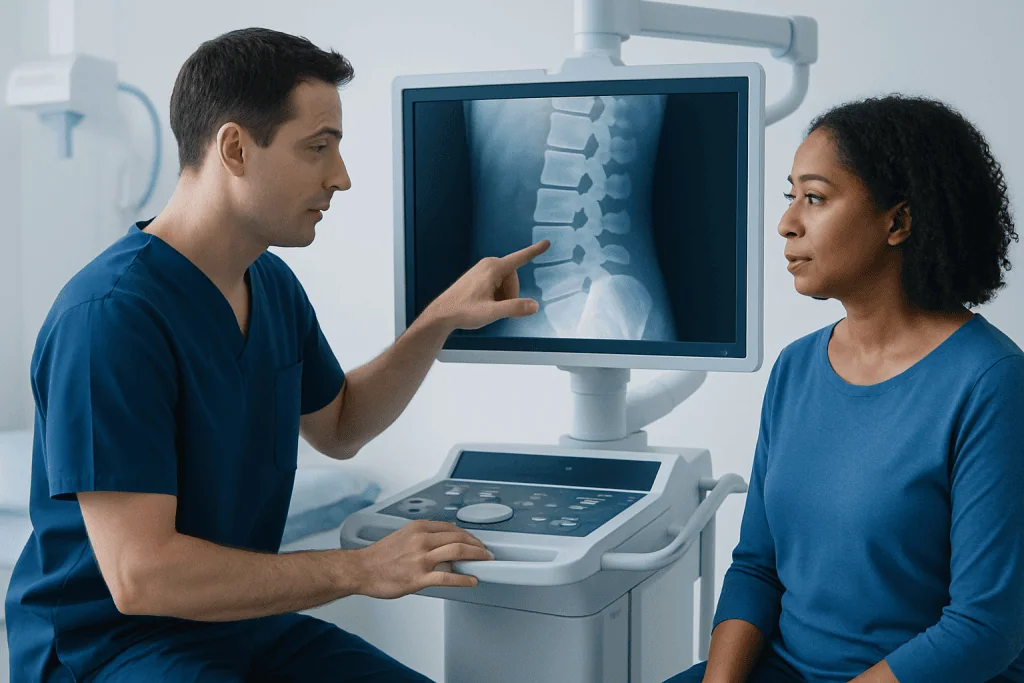
A simple way to understand the lumbar spine is to think of it as a column with built-in shock absorbers and moving joints. The vertebrae are the bony blocks stacked one on top of another. Between most vertebrae are intervertebral discs, which act like cushions and help distribute force. Behind the vertebrae are facet joints that guide motion and help stabilize the spine.
The spinal canal runs through the center of the vertebrae and contains the lower spinal cord and nerve roots. These nerves leave the spine through small openings called foramina and travel into the buttocks and legs. If a disc bulges, a joint enlarges, or surrounding tissues thicken, a nerve may become irritated or compressed and produce pain, tingling, or weakness.
Muscles and ligaments are also essential. They help maintain posture and protect the spine during movement. In many people, discomfort in the lumbar spine is not caused by a major structural injury but by a combination of muscle tension, deconditioning, poor movement patterns, and age-related changes seen on imaging.
- Vertebrae: provide structural support
- Discs: absorb shock between bones
- Facet joints: allow controlled movement
- Nerves: carry signals to and from the legs
- Muscles and ligaments: stabilize the lower back
Symptoms linked to lumbar spine problems
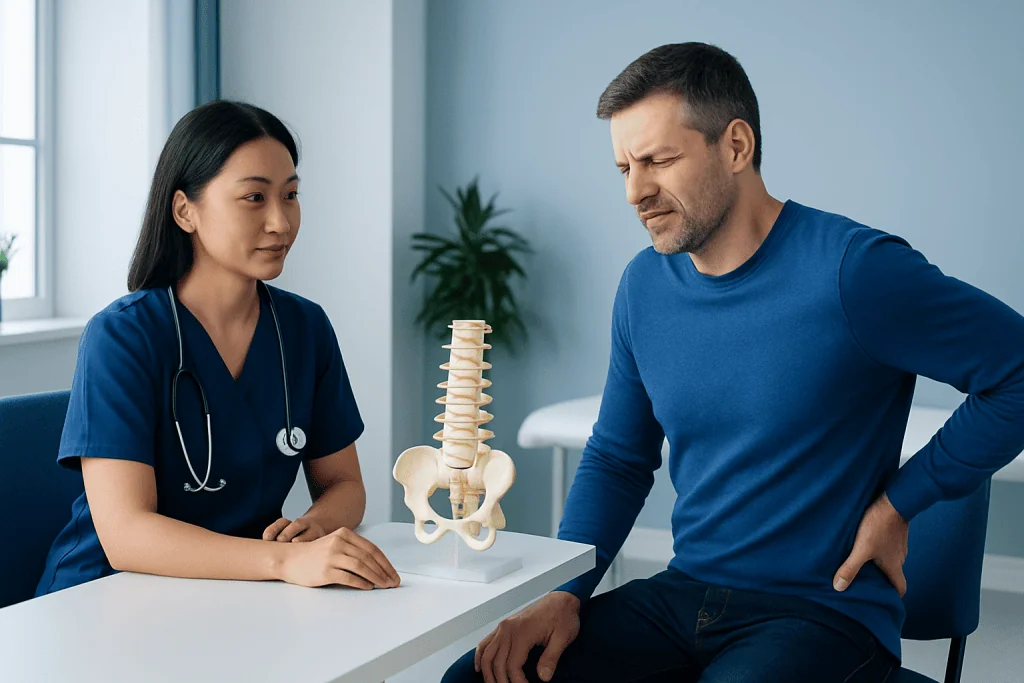
Lumbar spine symptoms vary depending on the tissue involved. Some patients notice a dull ache or stiffness in the lower back, especially after sitting for a long time, lifting, or waking in the morning. Others feel a sharper pain with bending, coughing, twisting, or changing position. Symptoms may be short-lived or may come and go over time.
When a lumbar nerve root is irritated, symptoms can travel into the buttock, thigh, calf, or foot. This pattern is often called sciatica when the pain radiates along the path of the sciatic nerve. Patients may also describe tingling, burning, numbness, or a sense that one leg feels weaker than usual. Depending on the cause, these symptoms may affect one or both sides.
Some symptoms suggest a need for timely medical evaluation rather than watchful waiting. These include major weakness, difficulty walking, pain after a significant fall or accident, fever with back pain, unexplained weight loss, or new bladder or bowel problems. Back pain that disturbs sleep or does not improve with reasonable self-care also deserves assessment.
Common causes and risk factors
The lumbar spine can be affected by both sudden injuries and gradual wear over time. Common causes include muscle or ligament strain, disc degeneration, disc herniation, facet joint arthritis, and narrowing of the spinal canal or nerve openings. A herniated disc may press on a nearby nerve, while age-related changes can contribute to spinal stenosis or chronic lower back pain.
Risk factors do not guarantee that someone will develop a lumbar problem, but they can increase the chance. These include repetitive lifting, prolonged sitting, poor conditioning, obesity, smoking, physically demanding work, and simply getting older. Previous episodes of back pain may also make recurrent symptoms more likely.
In some patients, underlying bone or spinal alignment conditions play a role. Less commonly, infection, inflammatory disease, fracture, or tumors can affect the lumbar spine. Because causes range from straightforward to complex, clinicians look at the pattern of symptoms, exam findings, and overall health before deciding whether more testing is needed.
How doctors diagnose lumbar spine conditions
Diagnosis begins with a medical history and physical examination. A doctor will ask when symptoms began, what makes them better or worse, whether pain radiates into the leg, and whether there is numbness, weakness, fever, trauma, or bladder or bowel symptoms. The examination often includes checking posture, range of motion, reflexes, muscle strength, sensation, and walking.
Imaging is not always necessary for short-term uncomplicated lower back pain. However, it may be recommended when symptoms persist, when nerve compression is suspected, or when there are warning signs. X-rays can show alignment and bone changes. MRI is especially helpful for discs, nerves, and soft tissues, while CT may be used in selected cases.
Additional tests sometimes help clarify the problem. Blood tests may be used if infection or inflammatory disease is a concern. Nerve studies can be helpful when the diagnosis is uncertain or when symptoms suggest significant nerve involvement. If a patient has symptoms suggesting lumbar disc herniation, the goal of testing is to match images with the patient’s actual symptoms and exam findings, since scans alone do not always explain pain.
Treatment options for lumbar spine problems
Treatment depends on the cause, severity, and duration of symptoms. Many patients improve with conservative care, especially in the first several weeks. This may include staying as active as tolerated, avoiding movements that sharply worsen pain, using short-term pain-relieving medicines when appropriate, and beginning a guided rehabilitation plan. In many cases, physical therapy and rehabilitation can help improve mobility, strengthen supporting muscles, and reduce the risk of recurrence.
Other non-surgical measures may include posture training, activity modification, supervised exercise, weight management, and selected injections for persistent nerve-related pain or inflammation. For people with radiating leg pain due to a disc or narrowing around a nerve, doctors may consider targeted treatments after examining the patient and reviewing imaging results. If symptoms are due to more general wear and tear, treatment often focuses on function and symptom control rather than a single structural fix.
Surgery is usually reserved for specific situations, such as severe nerve compression, progressive weakness, spinal instability, or pain that continues despite appropriate non-surgical treatment. Procedures vary by diagnosis and may include spine surgery to relieve pressure on nerves or stabilize the spine. When an operation is considered, the decision is individualized, balancing symptoms, imaging findings, daily function, and the expected benefits and limitations of surgery.
Prevention, self-care, and daily habits
While not every lumbar spine problem can be prevented, healthy habits can reduce strain on the lower back. Regular physical activity helps maintain muscle support, flexibility, and balance. Core and hip strengthening are often helpful because the lumbar spine works closely with the pelvis and surrounding muscles during movement. Good sleep, stress management, and stopping smoking may also support recovery.
Body mechanics matter in everyday life. It often helps to avoid repeated bending and twisting under load, break up long periods of sitting, and keep commonly used items within easy reach. When lifting, patients are usually advised to hold the object close to the body and avoid sudden jerking motions. Ergonomic adjustments at work and home may also lower stress on the back.
For people with repeated symptoms, a structured plan can be more useful than intermittent rest. Gentle walking, guided stretching, and exercises prescribed by a clinician or therapist are often safer than trying intense routines during a flare. In some cases, a specialist may coordinate care that includes rehabilitation and, if needed, pain management as part of a broader strategy to improve function.
When to seek medical care
Medical care is appropriate if lower back pain is severe, lasts more than a few weeks, or keeps returning. A patient should also seek assessment if pain spreads into the leg, especially when it is accompanied by numbness, tingling, or weakness. These features can suggest nerve involvement and may change the treatment plan.
Urgent medical attention is important for red-flag symptoms. These include sudden or worsening leg weakness, loss of bladder or bowel control, numbness around the groin or inner thighs, fever with back pain, or pain after major trauma. These symptoms do not always mean an emergency, but they should not be ignored.
For international patients who need evaluation or treatment, Acibadem International’s multidisciplinary specialists and JCI-accredited hospitals assess lumbar spine conditions using a coordinated approach. The most appropriate pathway may involve rehabilitation, pain specialists, neurology, orthopedics, or neurosurgery depending on the patient’s diagnosis and symptoms.
Frequently asked questions
What is the lumbar spine?
The lumbar spine is the lower part of the backbone, made up of five vertebrae, discs, joints, muscles, ligaments, and nerves. It supports body weight, helps the body bend and twist, and protects nerves that travel to the legs.
Can lumbar spine problems cause leg pain?
Yes. If a nerve in the lower back becomes irritated or compressed, pain may travel into the buttock, thigh, calf, or foot. Some people also notice tingling, numbness, or weakness along with the pain.
Does lower back pain always mean a slipped disc?
No. Lower back pain can come from muscles, ligaments, facet joints, discs, or general wear and tear. A disc problem is only one possible cause, which is why medical history and examination are important.
When is imaging needed for the lumbar spine?
Imaging is often considered when pain is persistent, severe, follows trauma, or is associated with numbness, weakness, or other concerning symptoms. MRI is commonly used when doctors need detailed information about discs, nerves, and soft tissues.
Can lumbar spine pain improve without surgery?
Yes. Many lumbar spine conditions improve with non-surgical care such as activity modification, exercise, physical therapy, and appropriate pain relief. Surgery is usually reserved for selected cases, especially when there is significant nerve compression or symptoms do not improve with conservative treatment.
What are warning signs that need urgent medical attention?
Urgent assessment is needed for new bladder or bowel control problems, numbness around the groin area, major leg weakness, fever with back pain, or pain after a major injury. These symptoms may point to a more serious spinal problem and should be evaluated promptly.
References
- National Institute of Arthritis and Musculoskeletal and Skin Diseases
- National Institute of Neurological Disorders and Stroke
- American Academy of Orthopaedic Surgeons
- North American Spine Society
- World Health Organization
This article is for general information only and is not a substitute for professional medical advice. Please consult a qualified doctor about your individual situation.
Joint and spine care in Turkey — expert assessment & treatment
JCI-accredited · board-certified surgeons · reply within 24h
Add us as a Preferred Source to see more of our trusted health content across Google Search, AI Overviews and Discover.

More from the Health Library


Related Specialists

Prof. Dr. Mustafa Herdem
Orthopedic Surgery & Traumatology
Dr. Demet Matben
Pediatrics
Prof. Dr. Altay Bedük
Neurosurgery
Prof. Dr. Esra Nur Ademoğlu Dilekçi
Endocrinology