Mactel Treatment: How It Works, Results and What to Expect

MacTel usually refers to macular telangiectasia type 2, a progressive condition affecting the central retina in both eyes. Vision changes often develop gradually, but the rate of progression varies substantially between individuals.
Key Takeaways
- MacTel usually refers to macular telangiectasia type 2, a progressive condition affecting the central retina in both eyes.
- Vision changes often develop gradually, but the rate of progression varies substantially between individuals.
- Anti-VEGF eye injections may help when MacTel causes abnormal new blood vessels and leakage.
- Regular retinal imaging helps clinicians identify changes, complications and appropriate treatment timing.
- Clinical trials and ongoing MacTel research are exploring treatments designed to protect retinal cells.
- New distortion, a blind spot or a sudden reduction in central vision should be assessed promptly by an eye specialist.
MacTel treatment is individualized because there is currently no routine treatment that reverses the underlying retinal changes of macular telangiectasia type 2. Retina specialists monitor the condition closely, treat complications such as abnormal blood vessel growth, and may discuss research studies or clinical trials when appropriate.
MacTel treatment: what it does and what to expect
MacTel treatment aims to preserve useful vision, identify complications early and manage symptoms caused by macular telangiectasia type 2 (MacTel). At present, there is no standard therapy that reliably restores retinal tissue already affected by the condition. However, careful monitoring and targeted treatment can be valuable, especially if abnormal blood vessels develop beneath or within the retina.
MacTel affects the macula, the small central part of the retina used for reading, recognizing faces and seeing fine detail. It commonly affects both eyes, although symptoms and severity may differ between eyes. A retina specialist creates a plan based on visual symptoms, eye examination findings and retinal imaging rather than treating every person in the same way.
For many people, the first step is observation with scheduled eye examinations. If complications occur, treatment may be recommended to limit further damage. Researchers are also studying ways to slow the loss of cells that support central vision, so a discussion about a MacTel trial may be appropriate for selected patients.
How MacTel affects vision
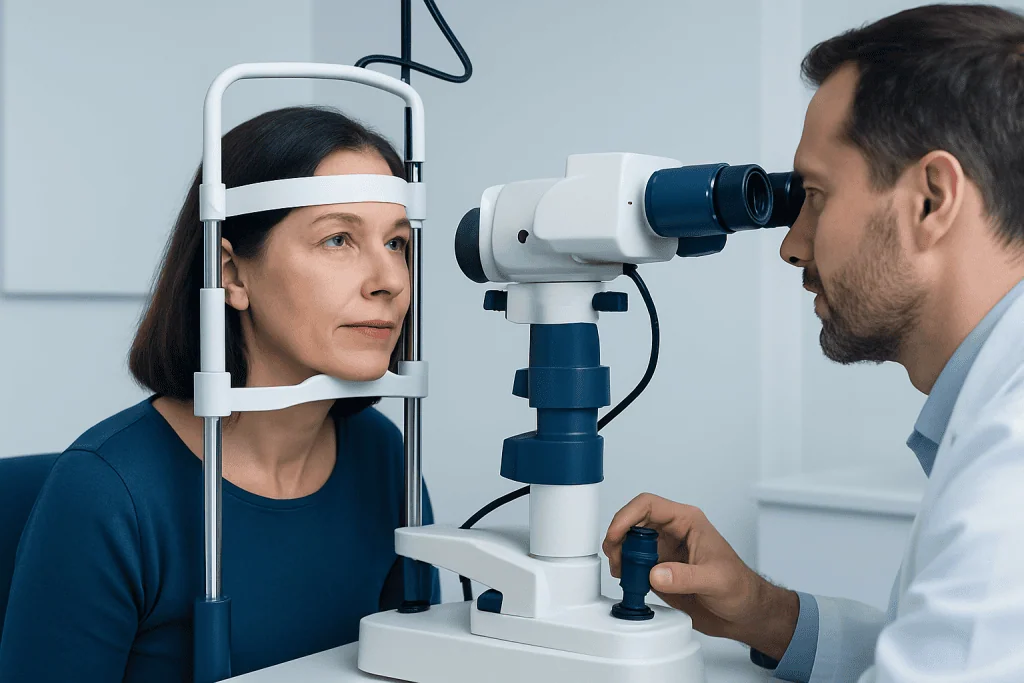
MacTel is a condition involving changes in the small blood vessels and supporting cells of the macula. Despite its name, it is not simply a blood-vessel disorder. Research indicates that degeneration of retinal support cells, including Müller cells, has an important role. Over time, these changes can affect the photoreceptors that detect light and enable detailed central vision.
Early MacTel may cause little or no noticeable change. As it develops, a person may experience blurred central vision, difficulty reading despite updated glasses, reduced contrast sensitivity, distortion of straight lines, missing letters while reading or a gray area near the center of vision. Side vision is usually retained because MacTel mainly involves the macula.
A less common but important complication is the formation of abnormal new blood vessels, sometimes called proliferative MacTel or macular neovascularization. These vessels can leak or bleed and may cause a more noticeable or rapid decline in vision. Prompt assessment helps determine whether treatment is needed.
- Central blur or a small missing area in vision
- Words appearing broken, crowded or difficult to follow
- Wavy lines, especially when looking at door frames or text
- Difficulty recognizing faces or seeing in low contrast
- A sudden new distortion or drop in central vision, which can suggest a complication
How fast does MacTel progress?

MacTel usually progresses slowly over years, but there is no single timeline that applies to everyone. Some people remain relatively stable for a long period, while others develop gradually increasing difficulty with reading and other detailed visual tasks. Symptoms in one eye do not always predict the exact course in the other eye.
Progression can be assessed more accurately with regular testing than by symptoms alone. Optical coherence tomography (OCT) provides detailed cross-sectional images of the retina and can show structural changes over time. Fundus photography, fluorescein angiography and OCT angiography may also help the specialist evaluate blood vessels and identify neovascular complications.
Changes caused by abnormal new blood vessels can be faster than the typical gradual course of non-proliferative MacTel. This is why people with MacTel should report newly distorted vision, a new central spot or a sudden decrease in reading vision rather than waiting for their next routine appointment.
Is MacTel a rare disease?
Yes. Macular telangiectasia type 2 is considered a rare retinal disease. Because early symptoms can be subtle and its retinal appearance may overlap with other macular conditions, diagnosis can sometimes be delayed until specialized imaging is performed.
MacTel is distinct from the very uncommon type 1 macular telangiectasia, which has a different pattern and may be managed differently. In everyday clinical use, the term “MacTel” most often means type 2. A retina specialist can confirm the type based on the pattern of retinal findings and imaging results.
Although MacTel is uncommon, it is actively studied through international research networks. This work has improved understanding of its biology and supports the development of potential disease-modifying approaches. A person’s ophthalmologist can explain whether research participation is available and appropriate in their setting.
At what age does MacTel appear?
MacTel type 2 most often becomes apparent in middle adulthood, commonly from the fourth decade of life onward. Many people are diagnosed in their 40s, 50s or 60s, although the first retinal changes may be present before symptoms become noticeable.
The condition affects women and men. Its exact cause is not fully understood. It is generally not considered a straightforward inherited disorder, but family patterns have been observed in some cases, suggesting that genetic factors may contribute alongside other biological and environmental influences.
MacTel is sometimes seen in people who have metabolic conditions such as diabetes, but this does not mean diabetes causes MacTel or that all people with diabetes will develop it. It is important to distinguish MacTel from diabetic retinopathy, which is a separate retinal condition with different mechanisms and treatment decisions.
Is MacTel the same as macular degeneration?
No. MacTel and age-related macular degeneration (AMD) are different conditions, although both can affect central vision and may cause distortion or difficulty reading. MacTel involves characteristic changes in the retinal blood vessels and supporting cells around the center of the macula. AMD is associated with aging changes in the macula, including drusen and, in some cases, abnormal blood vessels.
The distinction matters because the examination findings, expected course and management differ. A retina specialist uses dilated examination and imaging to tell these conditions apart. In some cases, a person may have more than one retinal condition, which makes an individualized assessment especially important.
People who have been told they have macular disease should avoid assuming the diagnosis based on symptoms alone. Modern retinal imaging can clarify the cause of central vision changes and guide discussions about the most suitable follow-up or intervention.
Mactel treatment options, candidacy and the care process
For non-proliferative MacTel without treatable complications, planned observation is often the appropriate approach. Follow-up visits may include a visual acuity test, an Amsler grid or similar assessment of distortion, and OCT imaging. The purpose is to document the retina over time and detect changes that could affect management.
When MacTel causes macular neovascularization, anti-VEGF medicine delivered by an injection into the eye may be recommended. These medicines reduce signaling that promotes abnormal blood vessel growth and leakage. They do not cure the underlying MacTel, but they can help control this complication and protect vision. The need for injections and the follow-up schedule depend on the individual retinal response.
The treatment process begins with a dilated eye examination and imaging. If an injection is indicated, the eye is numbed with anesthetic drops, cleaned carefully and treated in a short outpatient procedure. Most people notice mild irritation, tearing or a foreign-body sensation afterward; vision can be temporarily blurred. The eye team provides individualized aftercare instructions and arranges repeat assessment, often using OCT to evaluate the response.
Potential benefits of treating neovascular MacTel include reducing leakage and limiting further vision loss from abnormal vessels. Risks of eye injections are uncommon but include discomfort, temporary floaters, raised eye pressure, inflammation, bleeding and infection. Severe pain, worsening redness, marked light sensitivity or a significant decrease in vision after an injection requires urgent eye assessment.
MacTel research, clinical trials and living with the condition
MacTel research is focused on understanding retinal cell loss and developing therapies that may slow disease progression. Clinical trials may investigate medicines, implants, imaging methods or other approaches. Eligibility for a MacTel clinical trial depends on factors such as disease stage, retinal imaging, general health, previous treatments and study availability.
Research participation is voluntary. Before joining, prospective participants should receive clear information about the study purpose, visits, possible benefits, uncertainties, alternatives and potential risks. A trial is not guaranteed to improve vision, but it can provide access to carefully monitored investigational care while contributing to scientific knowledge.
There is no proven lifestyle measure that stops MacTel. Nonetheless, general eye and vascular health remain important: avoiding smoking, managing diabetes or blood pressure when present, attending scheduled examinations and using appropriate lighting or magnification for reading can support daily function. Low-vision rehabilitation services may help people adapt with magnifiers, electronic reading aids and practical strategies for home and work.
Acibadem International’s multidisciplinary specialists and JCI-accredited hospitals can assess retinal conditions such as MacTel and coordinate care for international patients, including retina imaging, follow-up planning and evaluation of treatment options.
When to seek medical care
A person should arrange an eye examination if central vision becomes blurred, words appear distorted, straight lines look wavy or reading becomes unexpectedly difficult. These symptoms may have several causes, and early assessment by an ophthalmologist or retina specialist helps establish an accurate diagnosis.
Urgent assessment is advisable for a sudden new blind spot, a rapid decline in central vision, new marked distortion, flashes with many new floaters, or a curtain-like shadow in vision. These symptoms do not always indicate MacTel progression, but they should not be ignored because some eye conditions require prompt treatment.
People already diagnosed with MacTel should keep planned follow-up appointments even when their vision seems unchanged. Regular imaging can reveal subtle progression or a treatable complication before it causes a major change in day-to-day vision.
Frequently asked questions
What is the main goal of MacTel treatment?
The main goal of MacTel treatment is to preserve vision where possible, monitor retinal changes and treat complications such as abnormal new blood vessel growth. Current routine care cannot reverse all underlying retinal damage. Follow-up is tailored to symptoms and retinal imaging findings.
Can MacTel be cured?
There is currently no established cure for macular telangiectasia type 2. Some people need observation only, while others require treatment for complications that may threaten central vision. Ongoing research is evaluating possible treatments that could slow disease-related retinal changes.
Do anti-VEGF injections treat all forms of MacTel?
No. Anti-VEGF injections are mainly used when MacTel is complicated by abnormal new blood vessels and leakage. They are not routinely used for non-proliferative MacTel because they do not address the primary degenerative process. A retina specialist determines whether imaging shows a treatable neovascular complication.
Will MacTel lead to complete blindness?
MacTel primarily affects central vision rather than peripheral vision, so complete blindness is not typical. However, central visual function can decline and may affect reading, driving eligibility, recognizing faces and detailed work. The individual outlook depends on the stage of disease and whether complications develop.
How is MacTel diagnosed?
MacTel is diagnosed through a dilated eye examination and detailed retinal imaging. OCT is especially helpful for seeing structural macular changes, while angiography or OCT angiography may assess retinal blood vessels. These tests also help distinguish MacTel from macular degeneration, diabetic retinopathy and other macular disorders.
Should someone with MacTel use an Amsler grid at home?
An Amsler grid may help some people notice new distortion or changes in central vision between appointments. It does not replace scheduled retinal examinations or imaging. Any new wavy lines, missing areas or noticeable difference between the eyes should be reported to an eye care professional.
References
- National Eye Institute
- American Academy of Ophthalmology
- Macular Telangiectasia Project
- Orphanet
- National Organization for Rare Disorders
This article is for general information only and is not a substitute for professional medical advice. Please consult a qualified doctor about your individual situation.
Explore treatments in Turkey — costs, top hospitals & a free quote
JCI-accredited · board-certified surgeons · reply within 24h
Add us as a Preferred Source to see more of our trusted health content across Google Search, AI Overviews and Discover.