Magnetoencephalography Cost: What Patients Really Pay
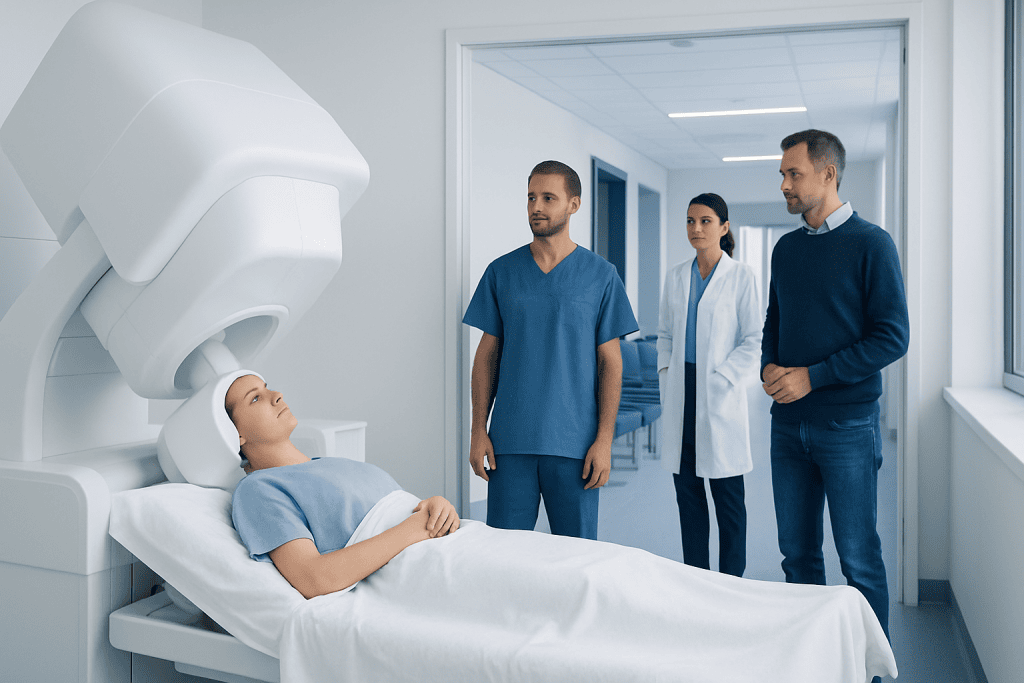
MEG measures the brain's magnetic signals and is most often used in complex epilepsy assessment and selected brain-mapping plans. A personalized, itemized estimate is more useful than a single advertised MEG price because protocols and included services differ.
Key Takeaways
- MEG measures the brain's magnetic signals and is most often used in complex epilepsy assessment and selected brain-mapping plans.
- A personalized, itemized estimate is more useful than a single advertised MEG price because protocols and included services differ.
- MEG is painless, does not use radiation, and usually requires no recovery time.
- EEG and MEG provide different information; their prices and clinical roles should not be compared as if they are interchangeable.
- Insurance coverage and prior authorization vary, particularly when MEG is requested for specialized pre-surgical planning.
Magnetoencephalography price cannot be stated as one standard amount because MEG is a highly specialized test offered in relatively few centers. The final estimate may include clinical assessment, the recording session, data analysis, reporting, and sometimes additional imaging used to interpret the results.
Magnetoencephalography Price: What Is Included?
The magnetoencephalography price depends on where the test is performed, why it is needed, how long the recording lasts, and whether advanced analysis is required. MEG is not a routine test available in every imaging department. It requires a purpose-built magnetically shielded room, highly sensitive equipment, and specialist interpretation, so patients are usually referred to dedicated neurophysiology or epilepsy centers.
When asking for an estimate, patients can request an itemized explanation of what is included. Relevant items may include the neurology consultation, preparation and positioning, the MEG recording, functional tasks or stimulation used during the scan, analysis of the recordings, a specialist report, and review alongside MRI, EEG, or other tests. If a scan is part of a broader epilepsy or neurosurgical assessment, the overall care plan may involve separate charges for those services.
For insured patients, it is sensible to ask the insurer whether MEG is covered for the specific clinical indication and whether preauthorization is required. Patients paying directly can ask whether the quoted amount covers the complete report and follow-up discussion, rather than the recording alone. A medical team can help explain why MEG is recommended and whether other investigations are also necessary.
How MEG Works and Why It Is Specialized
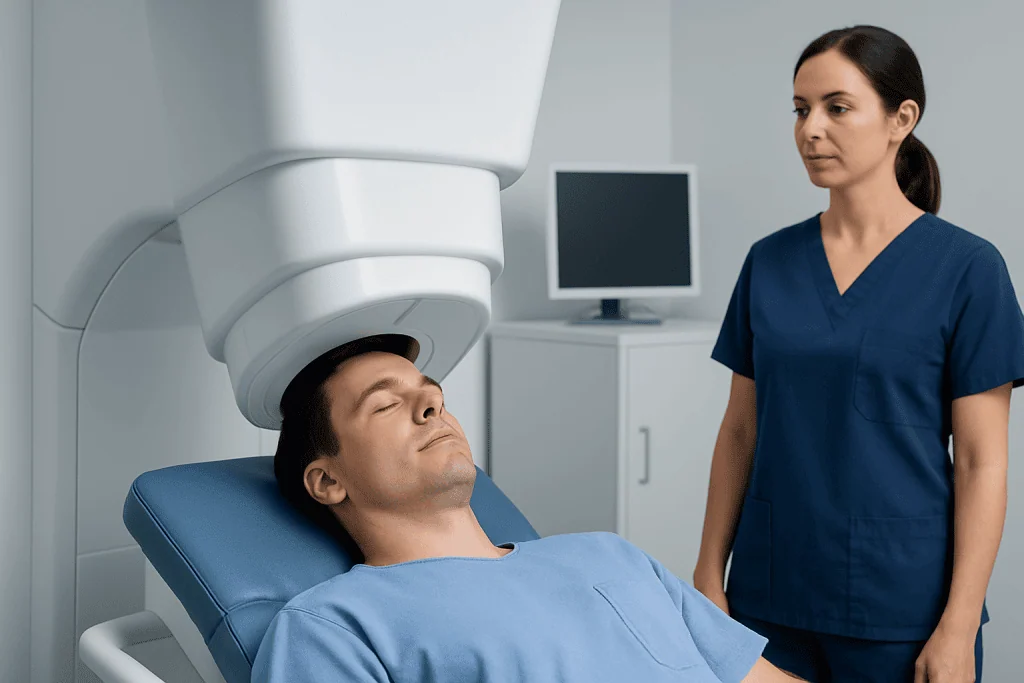
Magnetoencephalography, commonly called MEG, records the tiny magnetic fields produced by electrical activity in the brain. A helmet-shaped array of extremely sensitive sensors sits close to, but does not touch, the scalp. Unlike MRI, MEG does not create images of anatomy by itself. Instead, its recordings are combined with brain imaging, often MRI, to estimate where particular brain signals arise.
MEG has very high temporal resolution, meaning it can track brain activity over milliseconds. This can be useful when clinicians need to understand the timing and location of abnormal electrical activity, especially in people with seizures that remain difficult to control. It may also help map brain functions such as language or movement before selected brain procedures.
The equipment must detect exceptionally weak signals while limiting interference from the environment. The need for specialized sensors, shielding, technical staff, and expert clinical analysis helps explain why MEG is offered less widely than EEG. It also means that a price estimate should be interpreted in the context of the complete clinical service, not simply the time spent in the scanner room.
Who May Be a Candidate for MEG?

MEG is usually considered when a neurologist needs additional information that standard tests have not fully provided. A common reason is evaluation of focal epilepsy, particularly when seizures continue despite appropriate treatment and surgery is being considered. In this setting, MEG may contribute to locating a possible seizure focus and planning further testing.
It can also be used for functional brain mapping before certain neurosurgical procedures. For example, mapping may help identify areas associated with language, sensation, or movement so that clinicians can plan treatment while seeking to protect important functions. MEG is one part of a wider assessment and does not, on its own, determine whether surgery is appropriate.
Suitability depends on the clinical question and the person’s ability to remain reasonably still during recording. The team will review medical history, symptoms, prior EEG findings, MRI results, implanted devices, and any metal-containing items. People being assessed for recurrent unexplained episodes, possible seizures, or complex epilepsy may also need evaluation for epilepsy through a comprehensive neurology service.
What Happens During a MEG Procedure?
Before the appointment, the center may give instructions about hair products, jewelry, cosmetics, or other items that can affect recordings. Patients should bring relevant MRI images, EEG reports, medication lists, and details about previous neurological assessments if requested. They should not stop antiseizure medication or any other prescribed medicine unless their clinician specifically advises this.
At the appointment, staff review the procedure and ask about medical history. Small positioning markers may be placed on the scalp, and the patient is seated or reclined with the head positioned inside the sensor helmet. The recording is quiet and noninvasive. Depending on the purpose of the test, the patient may rest, respond to sounds or images, move a hand or finger, or complete simple language tasks.
The active recording time and total visit duration vary according to the protocol. Some studies require additional source analysis or comparison with MRI after the appointment. The results are interpreted by appropriately trained specialists and are normally discussed with the referring clinician, who places them in context with symptoms, examination findings, EEG, MRI, and other investigations.
Benefits, Risks, and Recovery Timeline
The main benefit of MEG is that it can provide detailed information about the timing and likely source of certain brain signals without radiation or surgical access. In carefully selected patients, it may add useful information to epilepsy evaluation or functional mapping. It is particularly valuable as a complementary test when a clinical team needs more precise localization than routine studies have provided.
MEG is generally painless and does not expose the patient to ionizing radiation. It does not usually involve injections, sedation, or a recovery period. Most people can return to normal activities immediately after the appointment, including work, school, driving, and taking prescribed medicines, unless they have been given separate instructions for another test performed the same day.
The main practical challenge is remaining still enough for clear recordings. Some people find the testing environment unfamiliar, and children or people with movement difficulties may need additional preparation. The test also has limitations: a normal MEG does not rule out epilepsy, and an abnormal result must be interpreted carefully. Clinical decisions should be made by a multidisciplinary team, not from a MEG result alone.
How Much Does a 1 Hour EEG Cost?
A one-hour EEG does not have a universal price. Cost can vary with the country, hospital or outpatient setting, whether the test includes sleep deprivation or activation procedures, the complexity of interpretation, and the patient’s insurance arrangement. Charges may also differ depending on whether the quoted figure includes the physician’s report and follow-up consultation.
EEG is usually less technically resource-intensive than MEG and is more widely available. During EEG, small electrodes placed on the scalp record electrical activity. It is often an important first-line investigation for suspected seizures, episodes of altered awareness, or other neurological symptoms, while MEG is generally reserved for more specialized questions.
Patients can ask the booking team whether an EEG estimate includes electrode application, recording, analysis, formal reporting, and any clinician review. The right test is determined by the medical question rather than price alone. In some cases, longer ambulatory or video EEG monitoring may be more informative than a brief routine EEG.
Why Is EEG So Expensive?
When patients find an EEG estimate higher than expected, it may reflect more than the time spent having electrodes placed. A clinically useful EEG requires trained staff to prepare the recording, quality-control the signals, and ensure that relevant changes are captured. A specialist must then review the tracing in detail and interpret it alongside the patient’s symptoms and history.
Costs may rise for prolonged recordings, sleep-deprived studies, video EEG monitoring, urgent reporting, pediatric testing, or studies performed in a hospital setting. Monitoring for hours or days can involve continuous observation, specialized equipment, and substantial professional time. The final cost may therefore vary considerably between a routine outpatient EEG and a complex inpatient assessment.
Patients should ask which type of EEG has been recommended and why. Clarifying whether there are facility, technical, professional, or follow-up fees can make planning easier. If cost is a concern, a referring doctor may be able to explain whether a routine EEG, ambulatory EEG, or a different diagnostic approach is clinically suitable.
How Much Does a Magnetoencephalography (MEG) Machine Cost?
A magnetoencephalography machine is a major specialist investment, but there is no single meaningful public purchase price for all systems. The total cost involves far more than the sensor unit itself: a center may require a magnetically shielded room, installation work, specialized cooling or technical infrastructure, software, maintenance, safety systems, and trained scientific and clinical personnel.
Because systems vary in technology, configuration, service agreements, and regional requirements, machine costs are generally handled through manufacturer and institutional procurement arrangements rather than a standard consumer price list. For patients, the more relevant question is what their own MEG assessment will include and whether it is medically appropriate for their situation.
The limited availability and high infrastructure requirements of MEG help account for differences between MEG and conventional EEG pricing. However, a higher-cost test is not automatically a better test. The value of MEG lies in answering a specific clinical question that cannot be addressed sufficiently by the person’s history, examination, EEG, MRI, or other evaluations.
What Can a MEG Scan Diagnose?
MEG does not usually diagnose a condition in isolation. It records brain activity and can help clinicians localize patterns that may be associated with seizures or identify functional areas of the brain. Its best-established clinical role is supporting assessment of focal epilepsy, especially when a multidisciplinary team is considering whether further invasive monitoring or epilepsy surgery could be appropriate.
MEG may contribute to identifying the likely location of interictal epileptiform activity, which refers to abnormal electrical patterns that can occur between seizures. It may also support functional mapping of language, sensory, or motor areas before selected procedures. Results are interpreted together with the person’s seizure description, neurological examination, MRI, EEG, video EEG monitoring, and sometimes neuropsychological testing.
MEG is not a screening test for every headache, dizziness episode, memory concern, or seizure-like event. A neurologist decides whether it is likely to add information. For people with recurrent seizures or seizures that are difficult to control, a structured epilepsy treatment evaluation may include several complementary tests rather than relying on one scan.
When to Seek Medical Care
Anyone who has a first suspected seizure, loss of consciousness, new episodes of confusion, repeated unexplained staring spells, or sudden unusual movements should seek timely medical assessment. Keeping a record of what happened before, during, and after an episode can help the clinician. When safe to do so, a witness description or video may also be useful for diagnosis.
Emergency care is needed if a seizure lasts longer than five minutes, seizures occur repeatedly without full recovery between them, breathing is difficult, a serious injury occurs, or the person is pregnant, has diabetes, or has a known serious medical condition. Emergency services should also be contacted if this is the first seizure or if recovery is not as expected.
People who already have epilepsy should contact their healthcare team if seizure frequency changes, medication side effects occur, or seizures continue despite treatment. Acibadem International’s multidisciplinary specialists and JCI-accredited hospitals assess and treat neurological conditions for international patients, with testing selected according to each person’s clinical needs.
Frequently asked questions
Is MEG covered by health insurance?
Coverage varies by insurer, country, and reason for testing. MEG may be considered for selected complex epilepsy or pre-surgical evaluations, but prior authorization may be required. Patients should confirm coverage, exclusions, and out-of-pocket responsibilities before scheduling.
Is MEG more accurate than EEG?
MEG and EEG measure related brain activity in different ways, so neither is universally better. MEG can offer helpful localization information in selected situations, while EEG is widely available and often the first test used. Clinicians frequently interpret both tests together with MRI and the patient’s symptoms.
Does a MEG scan use radiation?
No. MEG records naturally occurring magnetic fields produced by brain activity and does not use ionizing radiation. It is noninvasive and typically does not require contrast material or injections.
How long does it take to get MEG results?
Timing depends on the center and the complexity of analysis required. Recordings may need to be processed and compared with MRI, EEG, and other clinical information before a specialist finalizes the report. The referring neurologist can explain when and how results will be reviewed.
Can MEG detect all types of epilepsy?
No test detects every type of epilepsy in every person. MEG is most helpful for selected focal epilepsy questions, particularly when other evaluations have not clearly localized seizure-related activity. A normal MEG does not exclude epilepsy.
Do patients need to prepare for a MEG scan?
Preparation instructions vary, but patients may be asked to avoid certain hair products and remove metal items or accessories. They should provide the team with information about implanted devices, medications, and previous scans. The testing center will give individualized instructions before the appointment.
References
- International League Against Epilepsy
- American Clinical Neurophysiology Society
- National Institute of Neurological Disorders and Stroke
- Epilepsy Foundation
This article is for general information only and is not a substitute for professional medical advice. Please consult a qualified doctor about your individual situation.
Explore treatments in Turkey — costs, top hospitals & a free quote
JCI-accredited · board-certified surgeons · reply within 24h
Add us as a Preferred Source to see more of our trusted health content across Google Search, AI Overviews and Discover.