Male Kegel Workouts: Procedure, Recovery and Results

Male Kegel workouts target the pelvic floor, a group of muscles that supports the bladder and bowel and contributes to sexual function. The correct contraction feels like a gentle lift around the anus and base of the penis, without tightening the buttocks, thighs or abdomen.
Key Takeaways
- Male Kegel workouts target the pelvic floor, a group of muscles that supports the bladder and bowel and contributes to sexual function.
- The correct contraction feels like a gentle lift around the anus and base of the penis, without tightening the buttocks, thighs or abdomen.
- Training should be gradual; overworking the pelvic floor or holding the breath can worsen discomfort or make technique less effective.
- Benefits may include improved urinary control, particularly after prostate treatment, but Kegels do not treat every cause of urinary or sexual symptoms.
- A pelvic floor physiotherapist or urologist can assess symptoms and teach individualized technique when exercises are painful or not helping.
Male Kegel workouts are pelvic floor exercises that involve gently tightening and relaxing the muscles used to control urine and gas. With correct technique and regular practice, they may support bladder control, bowel control and sexual function, although results vary and often take several weeks to develop.
Male Kegel Workouts: What They Are and What to Expect
Male Kegel workouts are exercises that strengthen and improve control of the pelvic floor muscles. These muscles form a supportive layer at the bottom of the pelvis. They help control the release of urine and stool, support pelvic organs, and work with other muscles and nerves involved in erection and ejaculation.
A Kegel workout does not require equipment, a gym, or a long recovery period. It consists of deliberate, brief muscle contractions followed by full relaxation. Many people can begin at home, but learning the right muscles matters more than doing a large number of repetitions.
For some men, pelvic floor training can reduce urine leakage, urgency, or dribbling after urination. It is also commonly included in rehabilitation before or after prostate surgery. Evidence suggests it may help some aspects of sexual function, but it is not a substitute for assessment of erectile dysfunction, pelvic pain, infection, prostate disease, or other medical concerns.
Finding the Right Pelvic Floor Muscles
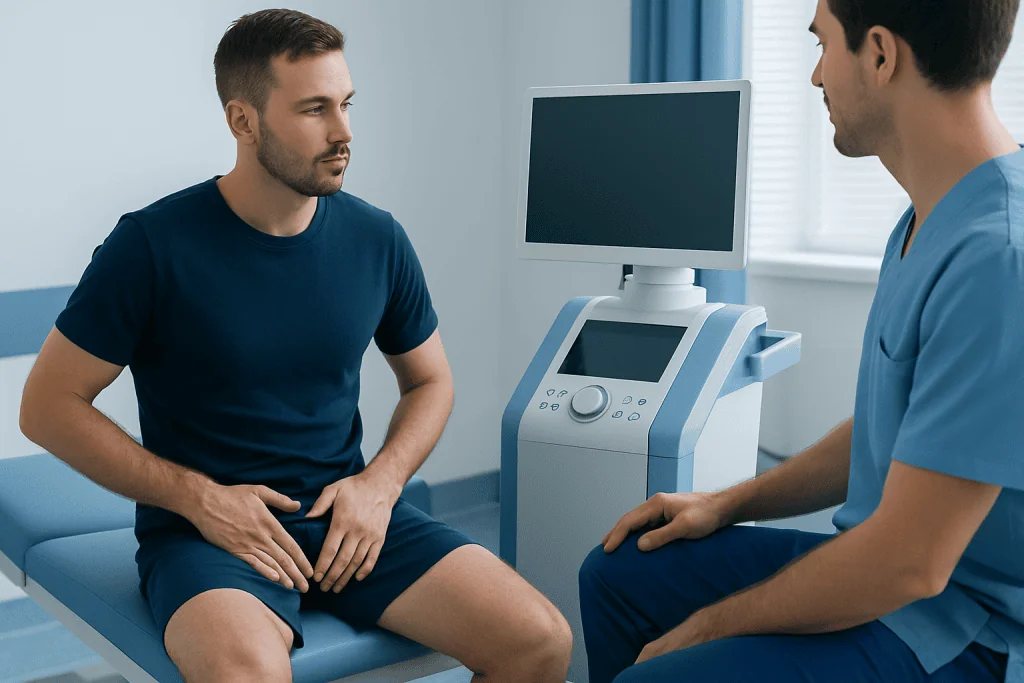
The pelvic floor contraction is often described as the feeling of stopping the flow of urine or preventing passing gas. A person may use this sensation once to identify the muscles, but should not regularly stop urine midstream as an exercise. Doing so repeatedly can interfere with normal bladder emptying and may raise the risk of urinary problems in some people.
When performed correctly, the anus and the area at the base of the penis gently tighten and lift inward. The penis may move slightly, and the testicles may lift a little. The movement should be controlled rather than forceful. The abdomen, buttocks, thighs and jaw should remain as relaxed as possible.
It can help to begin lying down or sitting in a supported chair, when other muscles are less likely to compensate. A mirror, careful self-observation, or guidance from a trained pelvic floor physiotherapist can be useful if it is difficult to recognize the contraction. People with pelvic pain may need assessment before starting strengthening exercises, because an overly tense pelvic floor may require relaxation-focused care instead.
How to Do Male Kegel Workouts

Before starting, empty the bladder if possible and choose a comfortable position. Breathe normally. On an exhale, gently tighten and lift the pelvic floor, then release it completely. Full relaxation between contractions is important because these muscles need both strength and the ability to let go.
A simple starting routine is to hold a light contraction for a few seconds, rest for at least the same amount of time, and repeat several times. As control improves, the hold and number of repetitions may be increased gradually. Some people also include a few quick contractions, in which the muscles are tightened and released promptly. A clinician or physiotherapist can recommend an appropriate plan based on symptoms and fitness.
Useful technique reminders include:
- Keep breathing; do not hold the breath or strain.
- Use a gentle lift rather than a hard squeeze.
- Avoid clenching the buttocks, inner thighs or abdominal muscles.
- Allow a full release after every repetition.
- Practice consistently, such as at regular points in the daily routine, rather than doing a very intense session occasionally.
There is no need to exercise during urination. If the exercise causes pain, cramping, increased urinary urgency, or worsening pelvic symptoms, the person should stop and seek professional advice.
Potential Benefits and Realistic Results
Male Kegel workouts may improve awareness, endurance and coordination of the pelvic floor. For men with stress urinary incontinence, such as leakage during coughing, lifting or exercise, better pelvic floor control may reduce leakage. They can also be part of care for dribbling after urination and may be recommended around prostate treatment.
Results are usually gradual rather than immediate. Some people notice improved control within several weeks, while others require a few months of regular, correctly performed training. The response depends on the underlying cause of symptoms, the condition of the muscles and nerves, consistency of practice, and whether other treatments are needed.
For sexual health, pelvic floor exercises may help some men improve erectile rigidity, ejaculatory control or confidence. However, erectile difficulties can be linked to circulation, diabetes, hormone changes, medication effects, stress, neurological conditions and relationship factors. A medical review remains important, particularly when symptoms are new, persistent, or accompanied by reduced exercise tolerance or other health changes.
After prostate cancer treatment, a clinician may recommend structured pelvic floor rehabilitation alongside broader follow-up. Men can read more about prostate cancer when seeking information about diagnosis and treatment pathways, but individual recovery planning should always come from the treating team.
Common Mistakes and How to Avoid Overtraining
The most common mistake is using nearby muscles rather than the pelvic floor. Holding the stomach in, squeezing the buttocks, or pressing the thighs together can create the impression of effort without training the intended muscles. Slow, gentle contractions are generally more useful than maximal squeezing.
Another frequent issue is doing too much too soon. Like other muscles, the pelvic floor can become fatigued. Excess training may contribute to aching, pelvic pressure, difficulty relaxing to pass urine or stool, or worsening urgency in some individuals. More repetitions are not necessarily better.
People should also avoid treating all pelvic symptoms as weakness. Pelvic pain, pain during ejaculation, constipation with straining, or a feeling of pelvic tightness may occur with an overactive or poorly relaxing pelvic floor. In these situations, relaxation, breathing, movement strategies and specialized assessment may be more appropriate than standard strengthening.
A pelvic health physiotherapist can assess muscle coordination and provide feedback when progress stalls. This can be especially helpful for men recovering from surgery, living with neurological conditions, or managing ongoing urinary symptoms.
Recovery After Prostate Procedures and Other Treatments
Pelvic floor exercises are often discussed before and after prostate surgery because temporary urinary leakage is common during recovery. Beginning training before surgery, when advised by the surgical team, may help a person learn the technique in advance. After surgery, exercises should only restart according to the clinician’s instructions, particularly while a urinary catheter is in place or soon after its removal.
Recovery timelines vary widely. The surgical approach, baseline bladder function, age, other health conditions and the type of prostate treatment can all affect urinary control. Kegel workouts are one component of recovery and may be combined with bladder training, fluid-timing advice, continence products, medication, or additional procedures when appropriate.
Men experiencing bothersome leakage after a prostate procedure should not feel they need to manage it alone. A urologist and pelvic floor physiotherapist can identify whether symptoms are expected in recovery and whether a more structured rehabilitation plan is needed. Treatment decisions should be individualized rather than based only on online exercise routines.
When to Seek Medical Care
Medical advice is appropriate for urinary leakage that is new, persistent, worsening, or affecting daily activities. It is also important to seek assessment before relying on Kegels for erectile dysfunction, because underlying medical conditions may need attention. A doctor may review symptoms, medications, bladder habits, neurological health and prostate history, and may recommend urine tests or other investigations.
Prompt medical care is needed for inability to pass urine, blood in the urine, fever with urinary symptoms, severe pelvic or testicular pain, new weakness or numbness in the legs or groin, or loss of bowel control. These symptoms are not typical effects of exercise and should be evaluated without delay.
Acibadem International’s multidisciplinary specialists and JCI-accredited hospitals provide assessment and treatment for urinary and pelvic health concerns for international patients. A qualified clinician can help determine whether pelvic floor training, medical treatment, physiotherapy, or another approach is most suitable.
Frequently asked questions
How often should men do Kegel exercises?
A manageable routine performed consistently is usually more helpful than a high-volume workout. The exact number and length of contractions should be tailored to comfort, symptoms and muscle control; a pelvic floor physiotherapist can provide a personalized program. If soreness, pelvic tightness or worsening symptoms occur, the routine should be reduced and reviewed.
How long do male Kegel workouts take to work?
Some men notice changes in bladder control within several weeks, but meaningful improvement may take a few months of correct, regular practice. Progress can be slower after surgery or when urinary symptoms have multiple causes. A lack of improvement should prompt review of technique and possible medical assessment.
Can male Kegels help erectile dysfunction?
Pelvic floor training may help some men with erectile function, particularly when poor pelvic floor control contributes to symptoms. However, erectile dysfunction can also be related to blood vessel health, diabetes, medications, hormones, stress or neurological conditions. A clinician can help identify the cause and discuss suitable treatment options.
Should men do Kegels while urinating?
Stopping urine flow once can help identify the pelvic floor muscles, but it should not become a regular exercise. Repeatedly interrupting urination may prevent normal bladder emptying and is not recommended as a training method. Exercises are best done when the bladder is empty or comfortably filled outside of urination.
Can Kegel exercises make pelvic pain worse?
They can, especially if the pelvic floor is already tense or unable to relax well. Pain, pressure, urinary urgency, constipation, or discomfort during ejaculation may indicate that strengthening alone is not appropriate. A doctor or pelvic health physiotherapist can assess whether relaxation-based treatment is needed.
Are male Kegels safe after prostate surgery?
They are often part of recovery, but the timing should follow the surgeon's or urologist's instructions. Exercise may need to wait until a catheter is removed and healing has progressed. A supervised pelvic floor rehabilitation plan can help ensure correct technique and safe progression.
This article is for general information only and is not a substitute for professional medical advice. Please consult a qualified doctor about your individual situation.
Persistent digestive symptoms? Get evaluated in Turkey
JCI-accredited · board-certified surgeons · reply within 24h
Add us as a Preferred Source to see more of our trusted health content across Google Search, AI Overviews and Discover.

More from the Health Library

Primary Care — Explained by Medical Evidence, Not Myths

Capillaries — Explained by Medical Evidence, Not Myths

Black Discharge — Explained by Medical Evidence, Not Myths

Substantia Nigra — Explained by Medical Evidence, Not Myths

Harlequin Fetus — Explained by Medical Evidence, Not Myths